
Steady heat for Hamilton Region's escarpment winters.
From the Hamilton Harbour lowlands up the Niagara Escarpment into Ancaster, Dundas, and Waterdown, Enbridge Gas reaches most of the region, and a gas fireplace gives you real heat at the flip of a switch through months of sub-zero nights. We'll help you find a trusted local dealer who knows which venting path actually works for your home.
Every Project Starts From One of These Five Situations
Heat you don't have to tend, across a five-month season.
Hamilton Region runs from the Lake Ontario shoreline through the city's harbourfront core, up the Niagara Escarpment into Ancaster and Dundas, and out to the rural edges of Flamborough and Glanbrook. Sitting in climate zone 5A with an average winter low of about -9.3°C, the region is milder than Ottawa or Sudbury, but it still gets a real heating season—late November through March, with stretches of hard frost and the occasional ice event off the lake. That's more than enough cold to make a fireplace a working heat source rather than an occasional-use amenity, especially in the older brick and stone housing stock scattered through Dundas, Ancaster, and Hamilton's downtown neighbourhoods.
Enbridge Gas mains cover most of urban Hamilton, Burlington, Stoney Creek, Ancaster, Dundas, and Waterdown, which is why gas fireplaces are the default upgrade for homeowners here rather than a fringe choice. Out toward the rural stretches of Flamborough and Glanbrook, where the mains don't always reach, propane fills the gap and most fireplace models can be configured either way. Every install still needs a permit through the local municipal building department—City of Hamilton or City of Burlington, depending on where you sit—and the gas line itself has to be run by a TSSA-licensed gas fitter, which is exactly the kind of coordination a full-service local dealer handles as part of the job rather than leaving you to schedule separate trades.
Three steps. No salesperson until you're ready.
Tell us about your project
Your postal code, your situation, and the fuel you're leaning toward—or let the answers point you to one.
See what's actually available
The brands dealers within 100 miles genuinely carry—real options, never a catalog mirage.
Get your dealer & Project Guide
A trusted local dealer, plus the free Project Guide & Parts List that names every component of the job.
Frequently Asked Questions
How much does a gas fireplace installation cost in Hamilton Region?
Across the region, a gas fireplace project typically runs $6,000-$15,000 CAD. The lower end usually covers a direct-vent insert dropped into an existing masonry firebox in one of Hamilton's older Durand or Kirkendall-area homes, where a gas line already reaches that wall. The upper end is more typical of new construction in Ancaster or Waterdown, where the unit gets framed in from scratch with fresh venting and a new gas line run from the meter. Homes on the escarpment or out in rural Flamborough that need a longer line run, or a propane tank set where Enbridge Gas mains stop, tend to land near the top of that range. A local dealer will give you a firm number after seeing the space.
Can I convert my existing wood fireplace to gas?
Yes, and it's one of the more common projects local dealers handle across the region, especially in Hamilton's older downtown neighbourhoods and the stone and brick homes around Dundas and Ancaster where the original masonry firebox is still intact. A gas insert drops into that firebox and vents through a liner run up the existing chimney, so you keep the look of the fireplace while gaining controllable heat output. Expect the project to land somewhere in the $6,000-$9,500 CAD range depending on whether the home is already plumbed for gas or needs a new line brought in from the street.
Is natural gas available everywhere in Hamilton Region, or do I need propane?
Most of the built-up parts of the region are on the grid. Enbridge Gas serves urban Hamilton, Burlington, Stoney Creek, Ancaster, Dundas, and Waterdown, so if your home already has a gas furnace or water heater, adding a fireplace to that line is usually straightforward. Out toward the rural edges of Flamborough and Glanbrook, and some escarpment properties off the main corridors, the mains don't always reach, and propane from a local supplier becomes the practical option—either off an existing tank or a new one your propane company sets and fills.
Do I need a permit to install a gas fireplace in Hamilton Region?
Yes. You'll need a building permit through your local municipal building department—City of Hamilton or City of Burlington are the two largest jurisdictions in the region—and the gas line work has to be completed by a TSSA-licensed gas fitter, which is separate from the general building permit. This is one of the main reasons homeowners go through a full-service hearth dealer rather than a general contractor: a good dealer coordinates the structural work, the gas fitting, and the final inspection sign-off as one job instead of you chasing multiple trades and permits yourself.
Will my gas fireplace still work if the power goes out?
Most modern gas fireplaces are built to run through an outage. Units with intermittent pilot ignition carry a battery backup, usually AA batteries built into the unit, that takes over automatically when the power drops so the fireplace still lights on demand. Valor fireplaces go further—the pilot assembly generates its own electricity through the thermocouple, so there's no battery to remember at all. That matters in Hamilton Region's rural and escarpment stretches, where ice events off the lake can knock out power for a stretch longer than the harbour-side neighbourhoods typically see. Ask your local dealer about the ignition system on any model you're considering.
What's the difference between a gas fireplace, gas insert, and gas stove?
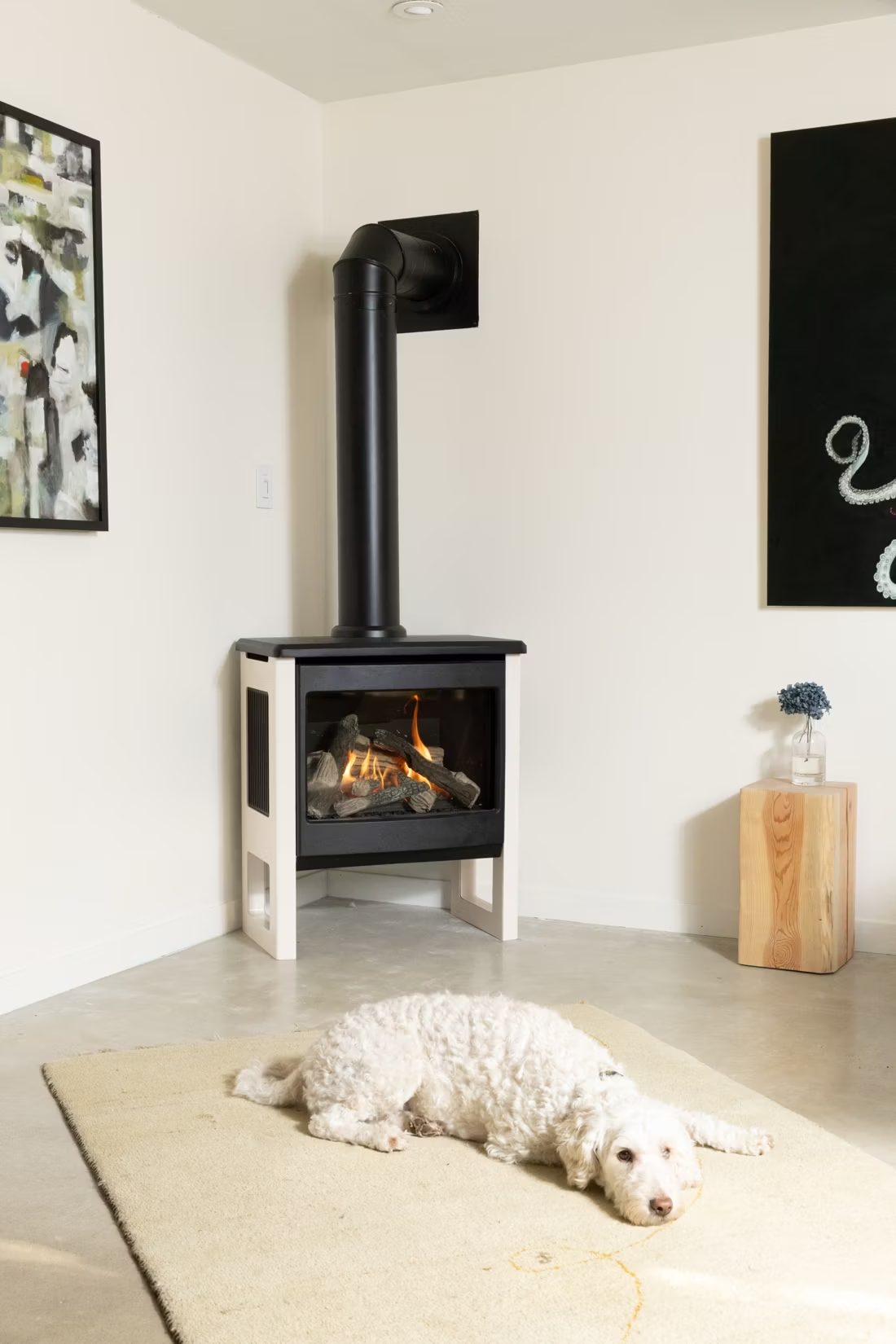
A gas fireplace is a fully built-in unit framed into a wall, the usual choice for new construction or a major remodel in Ancaster or Waterdown. A gas insert slides into an existing masonry firebox and uses that chimney as its vent path, which is why it's the common upgrade in Hamilton's older brick homes and Dundas's stone cottages. A gas stove is a freestanding cabinet-style unit that sits on the floor, useful in a room that has no existing chimney to work with. A local dealer can walk your space and tell you which of the three actually fits.
What's the difference between vented and vent-free gas fireplaces?
Direct-vent gas fireplaces pull combustion air from outside and exhaust it back outside through a sealed pipe, so nothing from the burn enters the room. Vent-free (ventless) gas appliances, common in parts of the United States, are not approved for use in Ontario, so every installation in Hamilton Region is a direct-vent or natural-vent configuration. That's not a limitation in practice—direct-vent units heat just as well and give you a wall or floor placement that doesn't depend on an existing chimney, while keeping indoor air clean through a long heating season.
How often should my gas fireplace be serviced?
Plan on an annual inspection, ideally in October or early November before the region's heating season gets underway. A technician checks the burner, pilot assembly, gas connections, and venting, and cleans the glass and interior—a much shorter visit than a wood chimney sweep, but still important for a unit that may run daily from late November through March. Expect to pay roughly $150-$250 CAD for a standard annual service call from a local gas technician.
Gas vs. wood—which makes more sense for a home in Hamilton Region?
Wood has real roots here—sugar maple, red oak, white ash, and yellow birch are all common regional species, and a wood stove or insert works without electricity, which matters if an ice event takes down power in Flamborough or along the escarpment. But some Hamilton Region municipalities now require certified low-emission appliances for wood installs in new construction, and wood systems typically call for a WETT inspection for insurance. Gas skips both of those hurdles, gives you instant thermostat-controlled heat with no ash or chimney sweeping, and with Enbridge Gas already running to most homes in the built-up parts of the region, it's usually the simpler starting point for a primary living space. Many households end up running both: gas for daily convenience, wood as backup or ambiance elsewhere in the home.
Can a gas fireplace run on a thermostat?
Most modern gas fireplaces can—turn it on and off from the couch with a remote, or set a room temperature and let the fireplace hold the comfort zone for you. If low maintenance matters to your family, this is the feature set that makes gas the convenience pick over wood and pellet.
Why do fireplace quotes vary so much?
Because a fireplace is an iceberg—there's more behind the wall than in front of it. A low quote often covers only the unit; the full scope includes vent pipe, gas line or electrical, framing, and the tile or stone that has to come off and go back on. Make every bidder price the whole job. If a dealer can't speak to the full scope with confidence, that's your signal to keep looking.
Can I put a TV above my fireplace?
Yes—with an asterisk. Fireplaces are hot and TVs don't like heat. Either put a mantel between them to deflect rising warmth, or choose a fireplace with heat-management technology that creates a cool zone on the wall above—the wall stays around 125 degrees, barely warm, while the room still gets full heat. If you like clean lines and don't want a mantel, heat management is the answer.
Why is a fireplace insert so efficient?
An insert does two things: it seals the chimney completely, so you stop losing air you already paid to heat, and it radiates warmth into the room through the firebox and glass. Most add a heat-exchange fan that pulls cool room air underneath, wraps it around the hot firebox, and pushes it back out warm. Your home is more efficient before you've even lit the first fire.
Stove and Fireplace Dealers in Hamilton Region
Listings include WhyFire partner dealers, dealers we have verified as authorized for the brands we recommend, and established local businesses that carry hearth products. Every listing shows which one it is. The ones marked Preferred run on WhyFire's software, so they can show you real pricing and book your appointment right here. No manufacturer pays for placement. How we verify dealers →
Peter Martin Appliances
Mt. Hope Heating And Cooling Ltd
Maintemp Heating & Ac
Erindale Contracting Ltd
Redwood Distribution
Goemans Fireplaces
Cobblestone Embers
Riverside Heating & Air Conditioning
Natural Gas Service in Hamilton Region
Confirm service at your address before planning a gas fireplace—a quick call settles it.
Enbridge Gas
Get your free Project Guide & Parts List for a gas fireplace in Hamilton Region.
Tell us about your home and where it sits in the region, and we'll help you find a trusted local dealer and send a free Project Guide & Parts List—the exact parts, including the vent kit, and a dealer recommendation for your gas project.
Find Your Fireplace →