
Find your fireplace anywhere in the Hamilton Region.
Wood, gas, pellet, and electric fireplace resources for the whole region—from the Hamilton harbourfront and Stoney Creek up the Niagara Escarpment to Ancaster, Dundas, Waterdown, and Flamborough. Tell us your fuel and we'll help you find a local dealer who actually installs it near you.
Every Project Starts From One of These Five Situations
Lake-moderated winters, Carolinian hardwood, and a region wired for every fuel.
The Hamilton Region sits along Lake Ontario's western end, split by the Niagara Escarpment that runs through Ancaster, Dundas, and Flamborough on its way toward Waterdown. Lake Ontario's moderating effect keeps winters here noticeably gentler than inland Ontario—average lows hover around -9.3°C, well short of what Ottawa or Sudbury see most winters—but the heating season still stretches from November into April across a region of roughly 710,000 residents. The area sits in the Carolinian and mixed-hardwood transition zone, and the wood species that show up on local dealer floors reflect it: sugar maple, red oak, white ash, and yellow birch, all dense-burning species that hold coals well through an overnight in a properly sized stove or insert.
Natural gas service from Enbridge Gas reaches most of the built-up areas from downtown Hamilton through Burlington and Stoney Creek, which is why gas fireplaces and inserts are the default choice for a lot of homeowners here, alongside furnaces. Wood heat still has a real foothold on the rural fringe—Flamborough, the Ancaster escarpment, and outlying properties toward Glanbrook—supported by a dense regional hardwood supply and Crown land firewood permits through the Ontario Ministry of Natural Resources. Some local municipalities now require certified low-emission appliances in new construction, and a WETT inspection is commonly required by insurers on any wood-burning install, so a properly documented CSA B365-compliant installation matters here regardless of fuel. This hub rolls up hearth retailers, service technicians, and fuel suppliers across the whole region, from the Hamilton core out through Burlington, Stoney Creek, Ancaster, Dundas, Waterdown, and Grimsby. Pick your fuel below for local dealers, installed costs, and unit recommendations specific to your community.
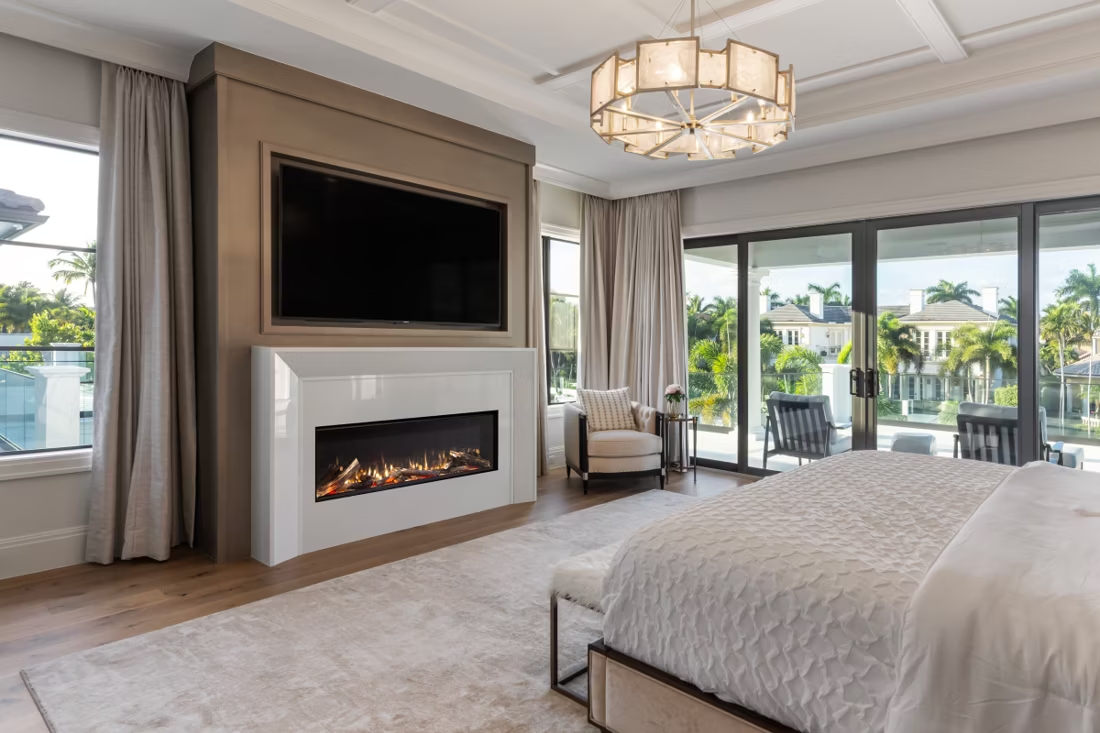
Four fuels. One honest answer for Hamilton Region.
Three steps. No salesperson until you're ready.
Tell us about your project
Your postal code, your situation, and the fuel you're leaning toward—or let the answers point you to one.
See what's actually available
The brands dealers within 100 miles genuinely carry—real options, never a catalog mirage.
Get your dealer & Project Guide
A trusted local dealer, plus the free Project Guide & Parts List that names every component of the job.
Frequently Asked Questions
Which fireplace fuel makes the most sense in the Hamilton Region?
All four fuels see genuine use here, but which one fits best usually comes down to where you live and what's already running your home. Gas is the default in the built-up parts of Hamilton, Burlington, and Stoney Creek, where Enbridge Gas service is already in the street and a direct-vent gas fireplace or insert slots in with minimal disruption. Wood holds on strongest in Flamborough, the Ancaster escarpment, and other outlying properties, where sugar maple, red oak, and yellow birch are readily available and a well-sized stove can carry a home through a -9.3°C night without trouble. Pellet stoves are a smaller but real category—Lacwood and Energex both distribute in the region—and they suit homeowners who want wood-like heat without cutting or stacking. Electric fireplaces show up everywhere as a supplemental unit for a bedroom, basement, or feature wall, and with a milder winter than Ottawa or Sudbury, some homeowners here lean on electric more heavily than colder parts of the province could get away with.
Do I need a permit to install a wood stove or gas fireplace in the Hamilton Region?
Yes, in almost every case. Installation permits go through your local municipal building department—Hamilton, Burlington, and the other lower-tier municipalities each issue their own—and any wood-burning appliance install needs to follow the CSA B365 installation code. Once the unit is in, most insurers will ask for a WETT inspection before they'll cover a wood stove or insert, so budgeting for that inspection up front saves a scramble later. Gas installations need a licensed gas fitter and a separate gas-line permit if you're extending service to a new location. Electric fireplaces usually skip the permit process unless you're hardwiring a built-in unit that needs its own circuit. Most retailers we help homeowners find handle this paperwork directly as part of the project.
Why do some municipalities in the region require certified appliances for new wood stoves?
The Hamilton Region sits in a dense hardwood belt—sugar maple, red oak, white ash, and yellow birch are all common and heavily burned locally—and some municipalities have responded by requiring certified low-emission appliances in new construction rather than leaving it optional. In practice this means any new wood stove or insert going into a new-build home needs to meet current emissions certification standards, which almost every stove sold by a reputable dealer already does. It's less a hurdle than a formality your dealer walks you through, and it lines up with what most insurers already expect to see alongside a WETT inspection.
Can I find a retailer in the region that carries more than one fuel type?
Most Hamilton Region hearth retailers stock at least two or three fuel types rather than specializing narrowly, which suits how households here actually use hearth appliances—gas as primary heat in town, wood as a serious secondary or primary heat source on the rural fringe, and electric filling in wherever a plug-and-play unit makes more sense than running venting. A multi-fuel dealer lets you compare a working wood, gas, and pellet display side by side and talk through what's realistic for your address, whether you're on Enbridge Gas service in Stoney Creek or off the gas grid out in Flamborough. We'll help you find the dealer whose fuel lineup and service area genuinely fits your project.
How does service and installation work if I'm outside downtown Hamilton?
Installation crews and service techs are concentrated around Hamilton, Burlington, and Stoney Creek but travel regularly to Ancaster, Dundas, Waterdown, Flamborough, and Grimsby. Expect scheduling to tighten once fall arrives and homeowners start thinking about their first cold snap, so booking a WETT inspection, gas safety check, or new install in late summer puts you ahead of the seasonal rush. For properties further out on the escarpment or toward the rural edges of the region, it's worth confirming trip charges up front and asking your installer about spare parts on hand for gas ignition systems, since a service callback can take longer to schedule once winter settles in.
What does a fireplace installation typically cost in the Hamilton Region?
Costs shift depending on fuel and how much venting or gas-line work the job needs. Wood stove or insert installs typically run $4,000-$9,000 CAD, with a WETT inspection adding a modest fee on top. Gas fireplaces, inserts, and stoves generally run $4,500-$10,000 CAD depending on whether an existing gas line is nearby or needs extending. Pellet stove or insert installs usually land around $4,000-$7,000 CAD. Electric fireplaces are the outlier—$300-$3,000 CAD for the unit itself, plus $500-$1,200 CAD in labour for anything beyond a straightforward plug-in placement. The region and fuel pages above break these numbers down further with local retailer pricing.
How many BTUs do I need in a fireplace?
Wrong question—and the industry's favorite way to confuse you. More BTUs isn't better if the fireplace cooks you out of the room you spent thousands to enjoy. Think in terms you can verify: how many square feet the unit heats, whether it's primary or backup heat, and whether you want it running overnight. Those three answers size a fireplace correctly every time.
Will we actually use a fireplace once we have one?
In my own home, the room with the fireplace has never been the same—it became the social hub. Game nights, holidays, date nights after the kids are down: the fire is where the house gathers. There's a reason people in this industry joke that we're really in the romance and entertainment business. You won't wonder whether you'll use it; you'll wonder how the room worked before.
Wood, gas, pellet, or electric—how do I choose?
Match the fuel to your life, not the other way around. Wood: lowest fuel cost and total power-outage independence, but you're hauling and stacking. Gas: press a button, set a thermostat, no maintenance to speak of. Pellet: wood economics with automatic feeding, in exchange for weekly cleaning and a need for electricity. Electric: plugs in anywhere with honest supplemental heat. Nobody regrets the fuel that fits how they actually live.
What is an in-home preview and do I need one?
It's a visit where a hearth professional measures your space, confirms the model you picked actually works in your home, and walks the specs—framing, gas line, venting, finish work—before anything is ordered. Some details you just can't know until you see the house. Never make a down payment without one; it's the single most-skipped step that burns buyers.
Stove and Fireplace Dealers in Hamilton Region
Listings include WhyFire partner dealers, dealers we have verified as authorized for the brands we recommend, and established local businesses that carry hearth products. Every listing shows which one it is. The ones marked Preferred run on WhyFire's software, so they can show you real pricing and book your appointment right here. No manufacturer pays for placement. How we verify dealers →
Peter Martin Appliances
Mt. Hope Heating And Cooling Ltd
Maintemp Heating & Ac
Erindale Contracting Ltd
Redwood Distribution
Goemans Fireplaces
Cobblestone Embers
Riverside Heating & Air Conditioning
Find a local Hamilton Region dealer.
Pick your fuel below and we'll put together a free Project Guide & Parts List—the right unit, the vent kit it needs, and the local dealer we recommend for your project.
Find Your Fireplace →