
Pellet heat is a niche fit for Wilson's mild winters.
With just a light winter heating load and winter lows averaging 26°F, Carter County doesn't demand the kind of solid-fuel heating that pellet stoves are built for. For the homeowners who still want one—for backup, ambiance, or a workshop—I'll match you with a trusted local dealer who can tell you what's realistic to install and maintain here.
Every Project Starts From One of These Five Situations
Gas and electric do most of the work here.
At 910 feet in south-central Oklahoma, Wilson sits in climate zone 3A—a mixed-humid zone where winters are short and mild compared to almost anywhere pellet stoves are considered essential. A winter low averaging 26°F and a heating season that's just a fraction of what a town like Bismarck or Duluth racks up in a single hard month, and it means most Carter County homes heat comfortably with a central gas furnace or an electric heat pump and never think twice about a supplemental stove. This is also cross-timbers country, where oak, hickory, and mesquite are the traditional fuels for the handful of households that do burn something solid—cordwood has deeper local roots than bagged pellets ever developed.
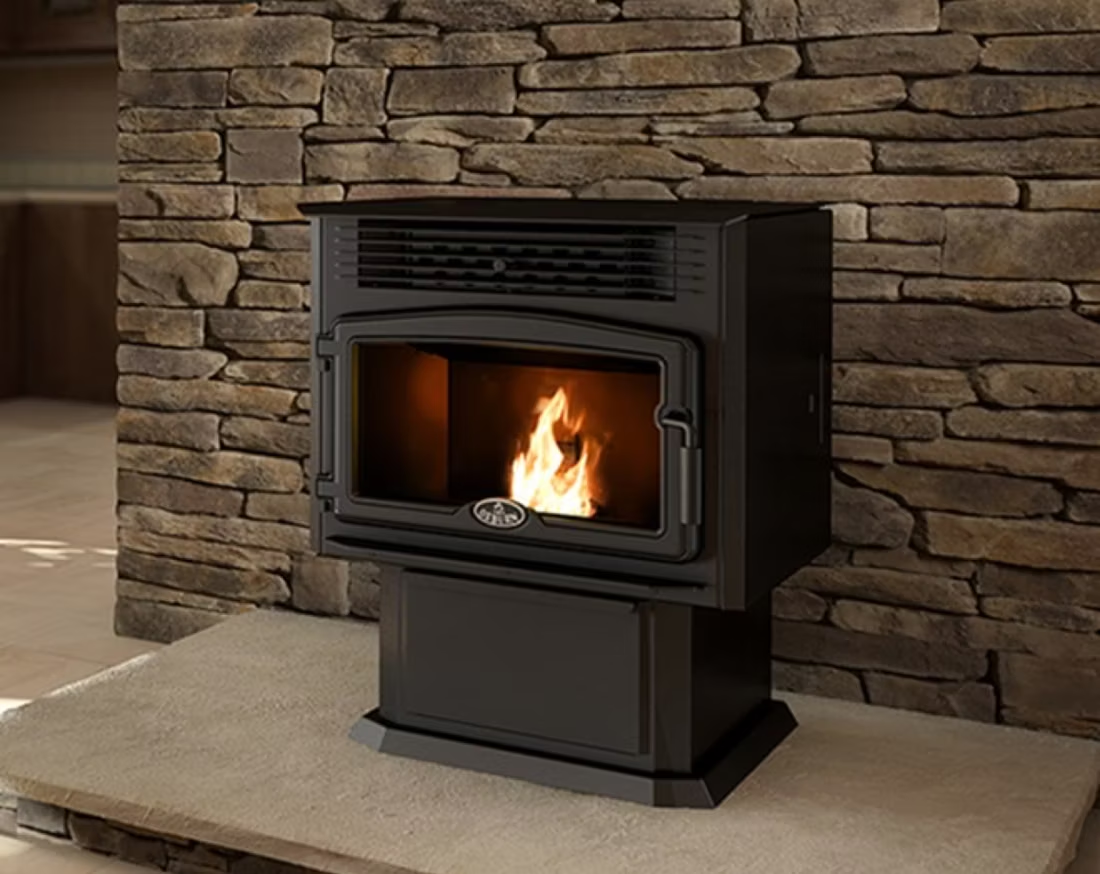
That doesn't mean pellet stoves are off the table, just that they're a specialty purchase rather than a default one. Regional pellet brands like Lignetics and Indeck Energy Services do distribute into Oklahoma, but with demand this thin around Wilson (population 1,611), you're more likely to source bags through a dealer based in Ardmore than to find them stocked locally. Electric service here runs through Oklahoma Gas & Electric and Red River Valley Rural Electric Association at competitive rates—around 11 to 12 cents per kWh—which keeps electric resistance and heat pump heat cheap enough that a pellet stove's fuel-cost advantage rarely closes the gap. Where pellet still makes sense is a workshop, a detached space without gas service, or a household that wants a visible flame without the mess of cordwood.
Three steps. No salesperson until you're ready.
Tell us about your project
Your zip code, your situation, and the fuel you're leaning toward—or let the answers point you to one.
See what's actually available
The brands dealers within 100 miles genuinely carry—real options, never a catalog mirage.
Get your dealer & Project Guide
A trusted local dealer, plus the free Project Guide & Parts List that names every component of the job.
Frequently Asked Questions
Are pellet stoves actually common in Wilson, OK?
Not really, and it's worth saying plainly: with only a light winter heating load and winter lows that average 26°F, most Carter County homes are perfectly served by a gas furnace or electric heat pump. Pellet stoves show up more as a specialty choice—a workshop heater, a detached garage, or a homeowner who just wants a stove for occasional use—rather than a primary heating strategy. If you're weighing pellet against a gas insert for a main living space, gas is almost always the more straightforward and better-supported option locally.
What does a pellet stove installation typically cost near Wilson?
Expect somewhere in the $3,000 to $6,500 range for a freestanding pellet stove with a hearth pad, venting through an exterior wall, and a dedicated electrical outlet for the auger and blower. Because Wilson is a small town without its own hearth retailer, most installers doing this work will be based out of Ardmore, and travel time can factor into the quote. A pellet insert going into an existing masonry fireplace—a less common setup here since wood fireplaces themselves are unusual in this climate—would run toward the higher end due to the liner work involved.
Will a pellet stove keep my house warm if the power goes out during an ice storm?
No, and this is the single biggest thing to understand before buying one here. Pellet stoves rely on an electric auger to feed fuel and a blower to push heat into the room, so they shut down the moment the power does—and Carter County does see ice-storm outages that can knock out Oklahoma Gas & Electric or Red River Valley Rural Electric Association service for days at a time. If outage resilience during winter storms is your main concern, a wood-burning appliance or a stove paired with a battery backup or small generator is a better match than pellet alone.
Where can I actually buy pellets near Wilson?
Regional brands like Lignetics and Indeck Energy Services do supply Oklahoma, but with a town this size, you shouldn't expect a local feed store or hardware shop to stock pallets year-round. Most Wilson-area owners either order through a dealer in Ardmore who can bring in a season's supply, or plan a periodic drive toward the Oklahoma City or Dallas-Fort Worth markets where pellet inventory is deeper. It's worth buying a season's worth in the fall rather than counting on last-minute local availability in January.
What size pellet stove makes sense for a home in Wilson?
Given how mild the winters run here, most homeowners installing a pellet stove are using it for supplemental heat in one room, a workshop, or a detached space—not as the sole heat source for a whole house. A small to mid-sized unit rated for 1,000 to 1,800 square feet covers the vast majority of these use cases comfortably. If you're trying to heat a full main living area as backup to gas or electric, size up slightly, but going bigger than that in a 3A climate usually means the stove runs on low output most of the time, which shortens auger and igniter life.
Do I need a permit to install a pellet stove in Wilson?
Yes, though the process runs through Carter County rather than a city building department—a town of about 1,600 people typically doesn't maintain its own inspections office. Your installer will need to pull a permit before cutting a wall penetration for venting, and the unit itself should carry EPA certification to satisfy inspection. Most dealers coming out from Ardmore handle this paperwork routinely, since they're working across several small unincorporated Carter County communities, not just Wilson.
Pellet stove vs. gas insert—which makes more sense for a Wilson home?
For most homes here, gas wins. Natural gas and propane service is well established in Carter County, gas inserts need far less hands-on maintenance than a pellet hopper you have to refill and clean weekly, and gas doesn't require sourcing bagged fuel from Ardmore or farther out. Pellet still has a place if you want a stove in a space without gas service, or if you like the look of a real flame with hopper-fed convenience over splitting oak and hickory. But if convenience and easy fuel access are the priority, gas is the more practical local choice.
What venting does a pellet stove need in a Wilson home?
Pellet stoves vent through a small-diameter pipe—typically 3 or 4 inches—straight out an exterior wall or up through the roof, using a power-vented system that doesn't require the tall masonry chimney a wood stove needs. That's actually one of the easier retrofits available for a Carter County home that never had a fireplace to begin with, since there's no chimney to build. Your installer will size the vent run based on the stove model and wall thickness, and clearance to combustibles still applies just like any solid-fuel appliance.
How much maintenance does a pellet stove need?
More than a gas insert, less than a wood stove. Plan on emptying the ash pan every few days during regular use, cleaning the burn pot weekly to keep clinkers from choking airflow, and a full professional cleaning and inspection once a year—ideally before the short Carter County heating season ramps up in late fall. Because pellet stoves here tend to run as supplemental or occasional-use appliances rather than daily primary heat, wear on the auger motor and igniter is usually lighter than in colder climates where the stove runs around the clock.
Why is my open fireplace making my house colder?
Open fireplaces suck—literally. As the fire burns, it consumes air your furnace already paid to heat and pulls it out through the chimney, so the house is actually colder after the fire goes out than before you lit it. An insert fixes this: it seals the chimney, puts fixed glass across the front, and turns that hole in your house into a real heat source.
What's the difference between an insert and a zero-clearance fireplace?
An insert is a fireplace that slides into a pre-existing wood-burning fireplace—if you don't have one, there's nothing to insert it into. A zero-clearance fireplace is built into a framed wall, which makes it the answer for remodels and new construction. Simple test: existing masonry fireplace means insert; blank or framed wall means zero-clearance.
Can a fireplace actually lower my heating bill?
Yes—by creating a comfort zone. A furnace heats every square foot of the house just to warm the one room you're in; a gas fireplace on low burns roughly a sixth of the gas a typical furnace does. Set the furnace around 55–60 degrees as a baseline, then heat the rooms your family actually uses. Families who heat this way commonly save $20–$60 a month.
Can I install a fireplace myself?
If you're putting a fire in your house on purpose, it's best to work with an expert. Unless you're genuinely experienced in framing, gas line, vent pipe, and the national code on clearances to combustibles, have a professional do it—and ideally the same company that sells you the fireplace, so warranty, service, and liability all live under one roof.
Nearby Dealers
Hearth shops serving Wilson and the surrounding area. Every listing shows whether it is a WhyFire partner, a dealer we have verified as authorized for the brands we recommend, or a local business carrying hearth products. No manufacturer pays for placement. How we verify dealers →
Heffley's Hearth & Home
Polar Bear Chimney Sweep
Ntx Bbq Supply
Fan & Flame
Pellet Brands Stocked Around Wilson
Manufacturers will point you to the nearest stocking dealer.
Get your free Project Guide & Parts List for a pellet stove in Wilson.
Tell me about your space—workshop, supplemental room, or backup heat—and I'll match you with a trusted local dealer, likely based out of Ardmore, and send a free Project Guide & Parts List with the exact vent kit and parts your project needs.
Find Your Fireplace →