
Zone heat and real ambiance for Texas County homes—no chimney required.
From Guymon to the ranch roads outside Hardesty and Optima, an electric fireplace drops into almost any wall, mantel, or existing hearth without venting, gas lines, or a masonry chimney. Find the right unit and get matched with a trusted local dealer.
Every Project Starts From One of These Five Situations
The easiest fireplace upgrade on the Panhandle.
Texas County stretches across the flat, wind-scoured farm and ranch country of the Oklahoma Panhandle, anchored by Guymon and home to roughly 18,000 people spread across a county the size of a small state. Winters here are moderate by national standards—average lows near 22°F and about 4,293 heating degree days a year, far milder than places like Bismarck, ND or Fargo, ND, where HDD counts run more than double. That means most homes don't need a heavy-duty primary heat source; they need something that adds warmth to a room, looks good doing it, and doesn't require tearing into a wall or running new gas line across a quarter-mile of pasture.
That's exactly where electric fireplaces fit in Texas County. Power to the county's scattered farms and ranches runs through rural electric cooperatives, and an electric fireplace is typically a simple 120-volt plug-in or a straightforward 240-volt hardwire—no chimney, no combustion venting, and in most cases no building permit. That makes it a natural fit for the manufactured and mobile homes common across the county's ag communities, for older farmhouses that never had a masonry fireplace to begin with, and for newer builds in and around Guymon where homeowners want the look of a fireplace in a bedroom, den, or basement without the cost of extending gas service.
Three steps. No salesperson until you're ready.
Tell us about your project
Your zip code, your situation, and the fuel you're leaning toward—or let the answers point you to one.
See what's actually available
The brands dealers within 100 miles genuinely carry—real options, never a catalog mirage.
Get your dealer & Project Guide
A trusted local dealer, plus the free Project Guide & Parts List that names every component of the job.
Frequently Asked Questions
How much does an electric fireplace installation cost in Texas County?
Most electric fireplace and insert installations in Texas County run $500 to $2,500. A plug-in freestanding unit or a small insert that drops into an existing opening sits at the low end and often needs no electrical work beyond an existing outlet. A built-in wall unit or a larger insert that requires a dedicated 240-volt circuit—common in ranch homes where the fireplace goes into an exterior wall far from existing wiring—runs higher once an electrician is involved. Because there's no venting or chimney work, electric installs are consistently the least expensive fireplace project available to homeowners here, well under typical wood or gas conversion costs.
Do I need a permit to install an electric fireplace in Texas County?
In most cases, no—a plug-in electric fireplace or insert that uses an existing outlet doesn't trigger a building permit. If your installer needs to run a new 240-volt circuit for a larger built-in unit, that electrical work typically does require a permit and inspection, which most local dealers or electricians handle as part of the job. This is one of the main advantages of electric heat for Texas County's rural properties: no combustion appliance inspection, no chimney clearance review, and none of the curtailment or emissions rules that apply to wood-burning appliances in other parts of the state.
Will my electric fireplace work if the power goes out?
No—and this is worth planning around on the Panhandle, where high wind events and ice storms occasionally knock out rural electric cooperative service for hours at a time. Electric fireplaces run entirely on grid power; there's no battery backup or standby fuel source the way some gas units have. For a primary residence that needs backup heat during outages, many Texas County homeowners pair an electric fireplace for everyday zone heat and ambiance with a wood stove, propane heater, or generator hookup for true emergency backup. If backup heat isn't a concern for your household, electric remains the simplest, lowest-maintenance option available.
What size electric fireplace do I need for my room?
Electric fireplaces are rated by square footage more loosely than wood or gas units since most are designed as supplemental zone heat rather than whole-home heating. A 1,500-watt unit will comfortably take the chill off a 400-to-600-square-foot room—a den, bedroom, or open living area typical of Texas County's ranch-style floor plans. For larger open-concept spaces common in newer Guymon builds, a larger insert or a 240-volt built-in with higher wattage output will perform better. Because electric units heat the room they're in rather than the whole house, oversizing isn't the risk it is with a wood stove—the bigger consideration is matching the fireplace's visual scale to your wall or mantel.
What's the difference between an electric insert, a built-in, and a freestanding electric fireplace?
An electric insert slides into an existing fireplace opening—a good option for older Texas County farmhouses with a masonry fireplace that's no longer used for wood. A built-in electric fireplace is designed to be framed into new construction or a remodeled wall, giving a flush, modern look but typically requiring a dedicated circuit. A freestanding or mantel-style unit needs no installation beyond plugging it in, making it the fastest option for renters, manufactured homes, or anyone who wants heat and ambiance without any construction. Local dealers carry all three; the right choice usually comes down to whether you're renovating, converting an existing hearth, or starting from scratch.
Is electric heat a good fit compared to wood in a county with this much local wood supply?
Texas County has real wood-burning tradition—oak, hickory, and mesquite are all common locally, and plenty of ranch homes keep a wood stove or fireplace running through the winter. But wood requires a chimney, seasoning and storing cordwood, and regular cleaning; electric requires none of that. For a second living area, a bedroom, a rental property, or a home where nobody wants to deal with ash and creosote, electric is often the more practical choice even in a county where wood is plentiful. Many households here run both—wood as the primary heat source in the main living area, electric for convenience and ambiance elsewhere in the house.
How much does it cost to run an electric fireplace day to day?
A typical 1,500-watt electric fireplace costs roughly 15 to 25 cents per hour to run on high heat, depending on the local rural electric cooperative's rate structure—noticeably cheaper than propane and comparable to running a space heater, but with a far better look. Most units let you run the flame effect without heat, which uses only a few watts, so you can get the ambiance of a fire year-round—including through Texas County's long, hot summers—without any real energy cost.
Are electric fireplaces available through local dealers, or is this a big-box purchase?
Both exist, but there's a real difference. Big-box and online retailers sell electric fireplaces as a standalone box with no install support and no sizing advice for your specific wall, circuit, or room. A local hearth dealer will size the unit to your space, handle any electrical work through a licensed electrician, and stand behind the install if something goes wrong—which matters more for built-in units requiring a dedicated circuit than it does for a simple plug-in model. For anything beyond a basic freestanding unit, working with a local dealer is worth the difference.
Can I install an electric fireplace in a manufactured or mobile home?
Yes—this is one of the more common electric fireplace projects across Texas County's ag communities. Because there's no combustion, no chimney penetration, and no clearance-to-combustibles requirement anywhere near what a wood or gas unit needs, electric fireplaces are generally the safest and most straightforward fireplace option for manufactured housing. The main thing to check is whether your home's electrical panel has capacity for a new circuit if you're installing a larger built-in unit—a local dealer or electrician can confirm that during a quick site visit.
Can I put a TV above my fireplace?
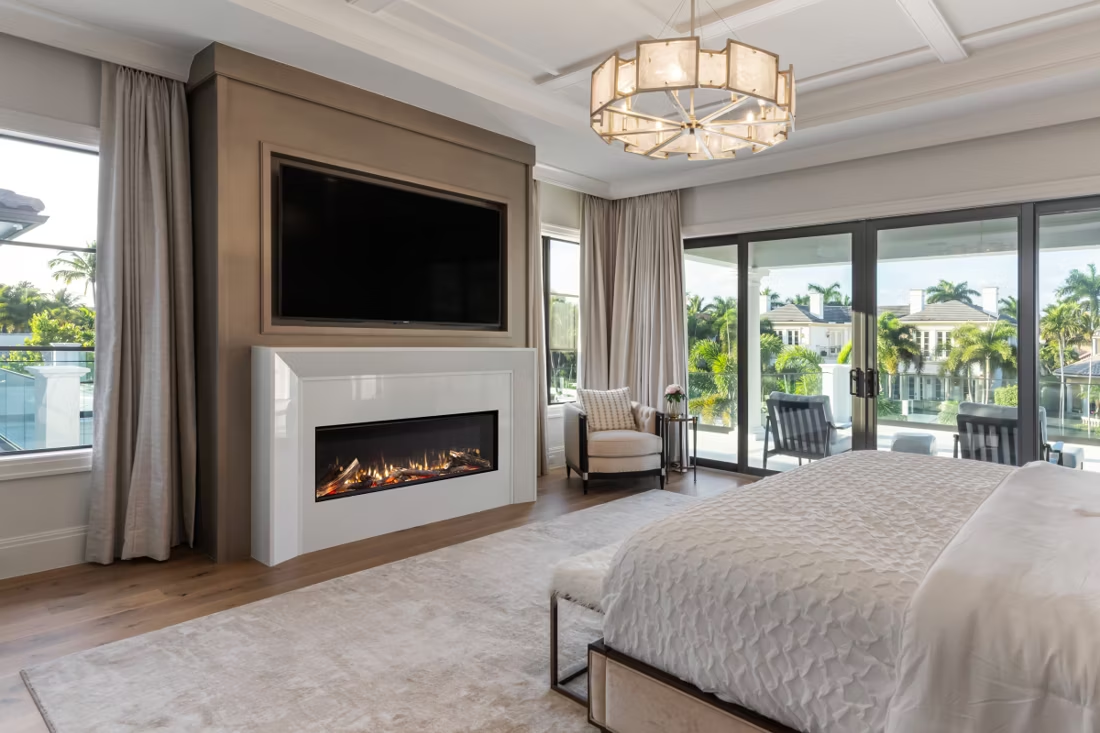
Yes—with an asterisk. Fireplaces are hot and TVs don't like heat. Either put a mantel between them to deflect rising warmth, or choose a fireplace with heat-management technology that creates a cool zone on the wall above—the wall stays around 125 degrees, barely warm, while the room still gets full heat. If you like clean lines and don't want a mantel, heat management is the answer.
Does an electric fireplace need a vent or chimney?
No—that's its superpower. An electric fireplace needs a wall and an outlet, period. No vent pipe, no gas line, no clearances to design around, which is why it works in bedrooms, offices, apartments, and walls where venting a gas or wood unit would be impractical or impossible. Installation is typically the simplest and least expensive of any fireplace type.
Can a fireplace actually lower my heating bill?
Yes—by creating a comfort zone. A furnace heats every square foot of the house just to warm the one room you're in; a gas fireplace on low burns roughly a sixth of the gas a typical furnace does. Set the furnace around 55–60 degrees as a baseline, then heat the rooms your family actually uses. Families who heat this way commonly save $20–$60 a month.
How much should I budget for a fireplace?
For an average home—covering the fireplace, the vent pipe, and basic installation—a budget between $3,900 and $5,500 gives you a lot of options across wood, gas, and pellet. By the time you add finish work, gas line, and electrical, the average complete installation lands between $5,000 and $12,000 all-in. In a remodel or new build, a good rule is to put about 2.5% of the total project cost toward the fireplace.
Find your electric fireplace in Texas County.
Tell us a bit about your home and we'll match you with the right electric fireplace or insert, plus a free Project Guide & Parts List and a trusted local dealer to install it.
Find Your Fireplace →