
Fireplaces Built for Panhandle Winters.
Wood, gas, pellet, and electric fireplace resources for every community in Texas County—from Guymon down to Hooker, Texhoma, and Goodwell. Find the right unit for the wind and cold out here, and connect with a trusted local hearth dealer.
Every Project Starts From One of These Five Situations
Wind, wide skies, and steady heating demand in the Oklahoma Panhandle.
Texas County stretches across roughly 2,046 square miles of high plains in Oklahoma's far northwest corner, sitting at 3,500 to 4,000 feet of elevation with almost no tree cover to break the wind. At an average winter low of 22°F and a winter heating season on the moderate-cold side, the climate here is moderate-cold—colder and windier than most of Oklahoma, but nowhere near the brutal season of a Fargo ND or Bismarck ND. What does matter locally is wind: sustained Panhandle gusts affect chimney draft and venting design more than they would in a sheltered valley town, which is one reason local installers pay close attention to cap selection and flue sizing. Oak and hickory are common firewood species hauled in from eastern Oklahoma, while native mesquite—pulled from river-bottom groves along the Beaver and Cimarron drainages—is a regional favorite for its dense, long-burning coals.
What you'll find on this hub: hearth retailers, service technicians, and fuel suppliers serving every corner of the county—Guymon (the county seat), Hooker, Texhoma, Goodwell, Optima, and the smaller rural communities scattered across the wheat and feedlot country in between. Pick your fuel below to get into specifics—local dealers, installation costs, and the resources that fit your project, whether you're heating a farmhouse on the county line or a home a few blocks from Panhandle State University in Goodwell.
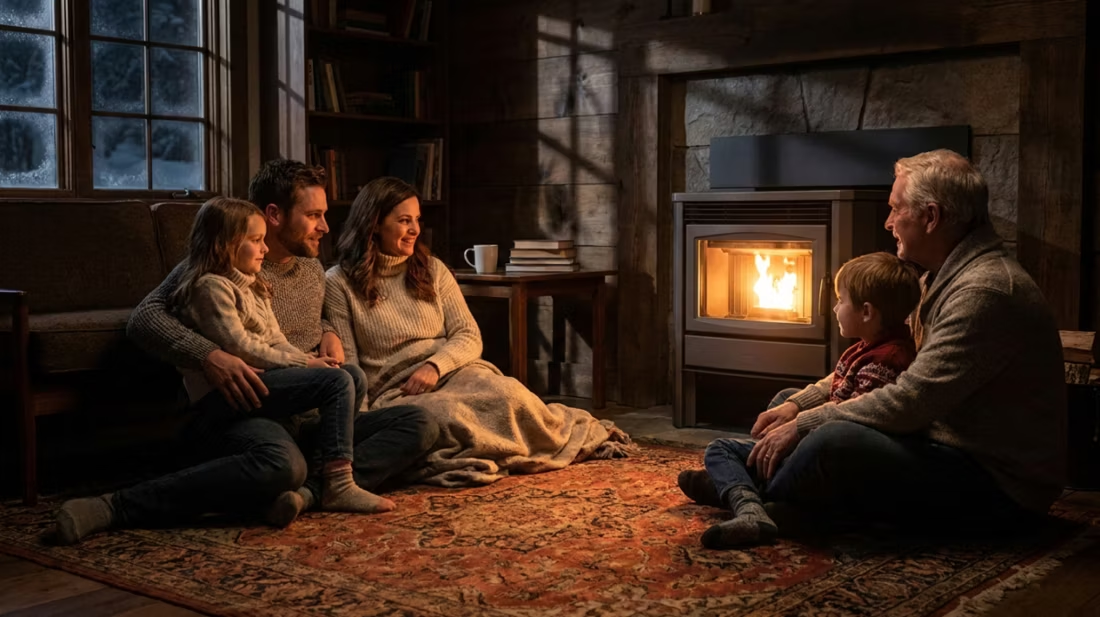
Four fuels. One honest answer for Texas County.
Three steps. No salesperson until you're ready.
Tell us about your project
Your zip code, your situation, and the fuel you're leaning toward—or let the answers point you to one.
See what's actually available
The brands dealers within 100 miles genuinely carry—real options, never a catalog mirage.
Get your dealer & Project Guide
A trusted local dealer, plus the free Project Guide & Parts List that names every component of the job.
Frequently Asked Questions
Which fuel works best in Texas County?
It depends on the home and the priorities of whoever's heating it. Wood remains a strong choice in rural Texas County—oak and hickory are trucked in regularly, and native mesquite from the river-bottom groves burns hot and long, which matters when winter wind is pulling heat out of a farmhouse faster than in a sheltered town. Gas is the convenience pick inside Guymon city limits, where natural gas service is common, and propane fills the same role for homes further out on the county roads. Pellet stoves work well here too—Lignetics is a widely stocked regional brand, and a hopper-fed stove sidesteps the wood-splitting labor while still giving you real heat during a winter power blip. Electric is mostly supplemental in a climate with this much winter heating demand, like this—good for a bedroom or a sunroom, but rural electric co-op service and this area's cold snaps mean it's rarely the sole heat source. Plenty of Texas County homes run wood or gas as primary heat with a pellet or electric unit for a secondary room.
Do I need a permit to install a fireplace in Texas County?
In most cases, yes. New wood stoves, wood inserts, gas fireplaces, gas inserts, gas stoves, and pellet stoves typically require a building permit—issued through the City of Guymon for in-town projects or the Texas County Building Department for anything outside city limits. Gas installations also need a separate gas line permit, and that connection work should go through a licensed gas-fitter regardless of whether you're on natural gas in Guymon or propane out on the county roads. Electric fireplaces are usually permit-free for simple plug-and-play units, but a built-in electric fireplace that requires new wiring or a dedicated circuit needs an electrical permit. Most local hearth retailers handle this paperwork as part of the installation, so you generally aren't filing it yourself.
Are there wood-burning or air quality restrictions in Texas County?
No—Texas County doesn't carry a non-attainment designation or a mandatory wood-burning curtailment program, so indoor wood stoves and fireplaces here aren't subject to the kind of yellow/red burn-day advisories you'd see in a basin community with winter inversions. The bigger concern locally is wildfire risk, not smoke: the Panhandle's open grassland, low humidity, and near-constant wind mean the National Weather Service office covering the region issues Red Flag Warnings fairly often, and those apply mainly to outdoor burning—brush piles, ag burns, fire pits—rather than a properly installed indoor wood stove with a certified chimney system. If you're burning wood indoors, the main local safety factor is making sure your chimney cap and flue are sized to handle sustained Panhandle wind rather than air quality rules.
Can one local hearth retailer handle all four fuel types?
Several Guymon-area dealers carry three or four fuel types rather than specializing narrowly. Panhandle Hearth & Home, for example, typically stocks wood, gas, and pellet units with a smaller electric fireplace selection—a solid stop if you're comparing across fuels before deciding. High Plains Stove & Fireplace tends to focus more heavily on wood and gas, given how much of their rural customer base still relies on cordwood and propane. A pure fuel supplier—someone selling split oak, hickory, or bagged pellets—isn't the same as a hearth retailer who sells and installs the appliance itself, so if you're shopping for a unit rather than fuel, confirm the business actually installs hearth appliances before you drive out.
How does service work in the rural parts of Texas County?
Most technicians serving Texas County are based in or near Guymon and travel out to the smaller towns and farm roads—Hooker, Texhoma, Goodwell, Optima, and the unincorporated communities in between. The flat terrain keeps drive times shorter than you'd expect for the distance, but expect a modest travel fee, often $40-$80, for calls well outside town. Scheduling annual service in late summer or early fall—before the first cold snap hits—is easier than trying to book a mid-January emergency call. If you're on a rural property, it's worth keeping backup batteries on hand for gas ignition systems and having a wood or pellet stove as a fallback heat source in case a winter storm knocks out power or blocks the county road to your place.
What's the typical cost range for fireplace installation across all fuel types in Texas County?
Costs vary by fuel and by how much existing infrastructure a home already has. Wood stove or insert installation: roughly $4,000-$8,500 for a typical retrofit, more if new chimney work is required. Gas fireplace, insert, or stove: roughly $4,000-$10,000, with the low end applying to homes that already have a gas line in place and the high end covering new propane tank setups or longer gas-line runs on rural properties. Pellet stove or insert: roughly $4,000-$7,000 for a standard install. Electric fireplace: $200-$3,000 for the unit itself, plus $300-$1,000 in labor for anything beyond a simple plug-in placement, such as a built-in with new wiring. For a breakdown tied to actual local pricing, see the county + fuel pages above.
Can I install a fireplace myself?
If you're putting a fire in your house on purpose, it's best to work with an expert. Unless you're genuinely experienced in framing, gas line, vent pipe, and the national code on clearances to combustibles, have a professional do it—and ideally the same company that sells you the fireplace, so warranty, service, and liability all live under one roof.
Wood, gas, pellet, or electric—how do I choose?
Match the fuel to your life, not the other way around. Wood: lowest fuel cost and total power-outage independence, but you're hauling and stacking. Gas: press a button, set a thermostat, no maintenance to speak of. Pellet: wood economics with automatic feeding, in exchange for weekly cleaning and a need for electricity. Electric: plugs in anywhere with honest supplemental heat. Nobody regrets the fuel that fits how they actually live.
How much should I budget for a fireplace?
For an average home—covering the fireplace, the vent pipe, and basic installation—a budget between $3,900 and $5,500 gives you a lot of options across wood, gas, and pellet. By the time you add finish work, gas line, and electrical, the average complete installation lands between $5,000 and $12,000 all-in. In a remodel or new build, a good rule is to put about 2.5% of the total project cost toward the fireplace.
I know I want a fireplace—where do I actually start?
Do two things today: snap a photo of the wall or fireplace you want to transform, and take a tape measure to the space—width, height, depth. Those two artifacts answer most of a hearth professional's first questions. Then settle fuel (wood, gas, pellet, or electric) and set a realistic budget: $3,900–$5,500 covers fireplace, vent, and basic install for most homes.
Stove and Fireplace Dealers in Texas County
Listings include WhyFire partner dealers, dealers we have verified as authorized for the brands we recommend, and established local businesses that carry hearth products. Every listing shows which one it is. The ones marked Preferred run on WhyFire's software, so they can show you real pricing and book your appointment right here. No manufacturer pays for placement. How we verify dealers →
Builders FirstSource-Garden City, Ks
Premier Homes
Find the right hearth dealer for your Texas County home.
Tell us your fuel and your town—Guymon, Hooker, Texhoma, Goodwell, or wherever you're at—and we'll match you with a trusted local dealer and send over a free Project Guide & Parts List: the exact parts, vent kit included, and the dealer we recommend for your project.
Find Your Fireplace →