
A niche fit for Skiatook's mild winters.
Pellet heat isn't the default here the way it is in colder climates—but for the right home, it's a real option. We'll help you figure out if it fits, then connect you with a local dealer who can install it correctly.
Every Project Starts From One of These Five Situations
Pellet stoves are the exception here, not the rule.
Skiatook sits in climate zone 3A at just 621 feet elevation, with an average winter low of 28°F and a winter heating load that's only about half what you'd find in a colder place like Duluth, MN. Most homes here heat with a central gas furnace or an electric heat pump run through Public Service Co of Oklahoma or Verdigris Valley Electric Cooperative, and that's plenty for a Tulsa County winter. There's no established firewood or bagged-pellet culture here the way there is in colder, forested regions, which is exactly why pellet appliances are flagged as a niche fit rather than a mainstream heating choice in this market.
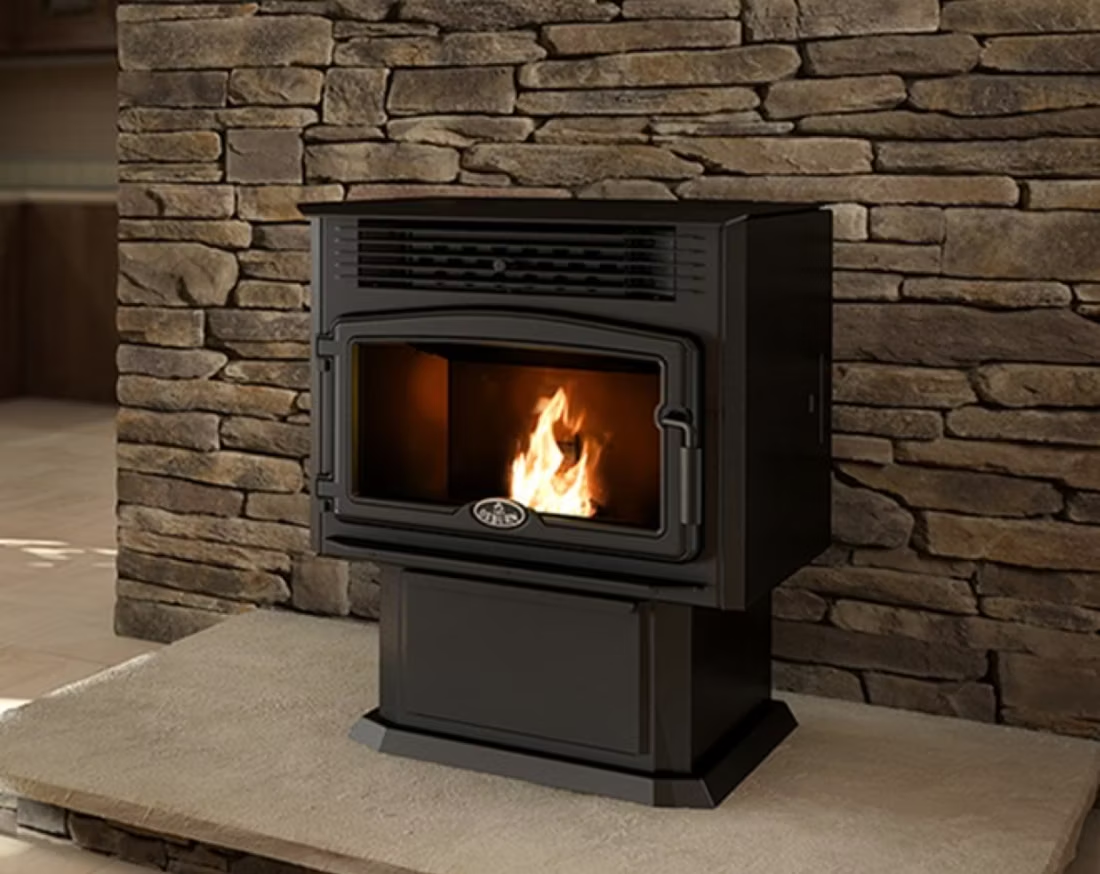
That doesn't mean a pellet stove is off the table—it means the reasons for wanting one look different. Homeowners on wooded acreage near Skiatook Lake sometimes add a pellet insert for the ambiance and zone heat without the mess of cordwood. Others like the idea of a controllable, thermostat-driven fire in a den or bonus room. Regional hardwood pellet producers like Lignetics and Indeck Energy Services do supply this part of Oklahoma, but you won't find a pellet stove dealer on every corner in a town of 8,463—so working with someone who actually stocks and services these units, rather than guessing at a big-box store, matters more here than in a place where pellet heat is the norm.
Three steps. No salesperson until you're ready.
Tell us about your project
Your zip code, your situation, and the fuel you're leaning toward—or let the answers point you to one.
See what's actually available
The brands dealers within 100 miles genuinely carry—real options, never a catalog mirage.
Get your dealer & Project Guide
A trusted local dealer, plus the free Project Guide & Parts List that names every component of the job.
Frequently Asked Questions
How much does a pellet stove installation cost near Skiatook?
Because pellet stoves are uncommon in this part of Tulsa County, there isn't a deep local sample of recent installs to point to, but across the broader region a typical freestanding pellet stove with PL-vent installation runs roughly $3,000 to $6,000, and a pellet insert into an existing fireplace often lands in a similar range depending on venting length and hearth pad needs. Because dedicated installers are thin in a market this size, expect your quote to come from a dealer serving the greater Tulsa area rather than a shop based in Skiatook itself—a local match through a free Project Guide & Parts List will get you a firm number.
Are pellet stoves actually common in Skiatook, or am I an outlier for wanting one?
You'd be an outlier, and that's worth saying plainly. With a winter heating load only about half what you'd find in a colder place like Duluth, MN, and winter lows averaging only 28°F, most Skiatook homes get by fine on a central gas furnace or electric heat pump through PSO or Verdigris Valley Electric Cooperative, with no need for a dedicated wood or pellet backup. Pellet stoves here tend to be chosen for ambiance in a single room, supplemental heat in a detached space, or as a hedge during winter cold snaps—not as a household's primary heat source the way they might be in a colder northern climate.
What kind of venting does a pellet stove need in a Skiatook home?
Pellet stoves use a small-diameter PL (pellet vent) pipe, typically 3 or 4 inches, and can vent horizontally straight out an exterior wall rather than requiring a tall Class A chimney. That's an advantage in a lot of Skiatook's newer ranch-style construction, which usually doesn't have an existing masonry fireplace to work around. A local installer will size the vent run based on where the stove sits relative to an exterior wall and how far it has to travel.
Where can I actually buy wood pellets locally?
Regional producers like Lignetics and Indeck Energy Services supply hardwood pellets into Oklahoma, but with pellet stoves this uncommon in Skiatook, you're more likely to find bagged pellets at farm and ranch retailers in the greater Tulsa area than at a dedicated hearth shop in town. Pricing isn't tightly standardized in a market this small, but expect somewhere in the $250–$320 per ton range for hardwood blends when you find a supplier carrying them—and plan to buy your season's supply early, since local stock isn't deep.
Will a pellet stove keep working if the power goes out?
Not on its own, and this is the trade-off worth understanding before you buy. Pellet stoves rely on an electric auger, igniter, and blower to feed fuel and move heat, so a standard unit shuts down the moment PSO or Verdigris Valley Electric Cooperative service drops—which can matter in a region that sees occasional winter ice storms. If backup heat during outages is a priority, ask your local dealer about models compatible with a small battery backup or UPS, or consider whether a vented gas appliance might better serve that specific need alongside a pellet stove used for everyday ambiance.
Do I need a permit to install a pellet stove in Skiatook?
Most jurisdictions require a building permit for any new solid-fuel appliance and its venting, and Skiatook is no exception—you'll want to check with the City of Skiatook Building Department before installation, particularly if the project involves a new wall penetration or hearth pad. Because pellet installs are infrequent here, it's worth confirming requirements directly rather than assuming they mirror a wood stove or gas fireplace permit process; a dealer who's pulled permits in Tulsa County before can usually handle this step for you.
How does a pellet stove compare to central heat for a Skiatook home?
With residential electric rates around 12–13 cents per kWh through PSO and Verdigris Valley Electric Cooperative, and only about half the winter heating load of a colder city like Duluth, MN, to cover, a lot of Skiatook homes already heat efficiently and cheaply on a central heat pump or gas furnace. A pellet stove's real value here is zone heating a specific room or adding a fire feature with more control than firewood—not necessarily cutting your whole-house heating bill, since the mild climate limits how much a supplemental appliance can offset central system runtime.
How much maintenance does a pellet stove actually need?
Less than a wood stove, but it's not zero. Plan on emptying the ash pan every few days during regular use, wiping the glass as needed, and vacuuming the burn pot and hopper area weekly. Once a year—ideally before the first cold snap—have a technician inspect the exhaust venting, clean the auger and blower assembly, and check the door gasket. Given how few pellet appliances are in service around Skiatook, it's worth confirming with your dealer up front which service providers in the Tulsa area actually work on pellet units.
Pellet stove or gas fireplace—which makes more sense in Skiatook?
For most homes here, gas is the more natural fit. Natural gas and propane appliances are common and well-supported in this market, require no fuel storage or ash cleanup, and run reliably alongside the central gas heat many Skiatook homes already have. A pellet stove makes sense if you specifically want the look and feel of a real flame with more fuel independence than gas offers, and you're comfortable managing bagged fuel storage and periodic maintenance for what will likely be a supplemental, not primary, heat source in this climate.
Why is my open fireplace making my house colder?
Open fireplaces suck—literally. As the fire burns, it consumes air your furnace already paid to heat and pulls it out through the chimney, so the house is actually colder after the fire goes out than before you lit it. An insert fixes this: it seals the chimney, puts fixed glass across the front, and turns that hole in your house into a real heat source.
How often does a pellet stove need cleaning?
A clean pellet stove is a happy pellet stove. Plan on cleaning the burn pot about once a week when you're burning regularly—ash and clinkers gum up the air holes just like a pellet barbecue. Most pellet stove problems trace back to skipped cleaning that nobody explained up front. Some designs make it easy with a trapdoor burn pot: pull a lever and the gunk drops into the ash pan.
Does a fireplace add value to my home?
On average, a fireplace adds back to the home about the same amount you spent installing it. Add the monthly savings from heating the rooms you actually use instead of the whole house—often hundreds of dollars a year—and the value case is strong before you even count what a fire does for how your family uses the room.
Can a fireplace actually lower my heating bill?
Yes—by creating a comfort zone. A furnace heats every square foot of the house just to warm the one room you're in; a gas fireplace on low burns roughly a sixth of the gas a typical furnace does. Set the furnace around 55–60 degrees as a baseline, then heat the rooms your family actually uses. Families who heat this way commonly save $20–$60 a month.
Nearby Dealers
Hearth shops serving Skiatook and the surrounding area. Every listing shows whether it is a WhyFire partner, a dealer we have verified as authorized for the brands we recommend, or a local business carrying hearth products. No manufacturer pays for placement. How we verify dealers →
Jack Wills
Diamond P Lawn & Garden
Copper Ridge, LLC
Turf Land Outdoor Power Equipment LLC
Buck Stove Energy Center
Beyond The Backdoor
Rick's House Of Fire
Pellet Brands Stocked Around Skiatook
Manufacturers will point you to the nearest stocking dealer.
Find your pellet stove option in Skiatook.
Tell us about your home and we'll put together a free Project Guide & Parts List—the right pellet stove or insert, the correct vent kit, and a trusted local dealer who actually installs and services these units in the Tulsa area.
Find Your Fireplace →