
Thermostat-Steady Heat for Rogers County Homes.
From Claremore to Catoosa to Oologah, pellet stoves give northeastern Oklahoma homeowners clean, dial-in heat without a wood pile out back. Find the right unit and connect with a trusted local dealer.
Every Project Starts From One of These Five Situations
Convenience heat built for a milder climate.
Rogers County sits in northeastern Oklahoma's Tulsa metro fringe, from Claremore and Catoosa out to Oologah and Chelsea. This is Zone 3A mixed-humid territory—winter lows average 24°F and the county's overall winter heating need runs less than two-thirds what a place like Duluth, Minnesota sees in an average winter. That's not a climate that demands round-the-clock wood-stove heat the way the northern tier does; it's one where a lot of homeowners want efficient, easy supplemental heat for the genuinely cold stretches and the ice storms that periodically knock out power across the county.
Rogers County has no air quality non-attainment status and no winter burn curtailment periods, so a pellet stove's clean-burning profile here is a bonus, not a regulatory necessity—homeowners choose pellet for the thermostat control, the low ash output, and not having to split, stack, or haul cordwood the way oak and hickory burners do elsewhere in the county. Regional suppliers including Lignetics and Indeck Energy Services keep hardwood pellets in local retail rotation, and a trusted local dealer can size a stove or insert correctly for your square footage and tell you honestly whether pellet, wood, or gas fits your home best.
Three steps. No salesperson until you're ready.
Tell us about your project
Your zip code, your situation, and the fuel you're leaning toward—or let the answers point you to one.
See what's actually available
The brands dealers within 100 miles genuinely carry—real options, never a catalog mirage.
Get your dealer & Project Guide
A trusted local dealer, plus the free Project Guide & Parts List that names every component of the job.
Frequently Asked Questions
How much does a pellet stove installation cost in Rogers County?
Most pellet stove and insert installations across Rogers County run in the $3,000 to $6,000 range, with the variables being whether you're installing a freestanding stove on a new hearth pad, converting an existing masonry fireplace to a pellet insert, and how far the vent run needs to travel through an exterior wall. Pellet venting is simpler and cheaper than wood-stove chimney work since it's a smaller-diameter PL vent rather than a full Class A chimney system, which is part of why pellet installs tend to land on the lower end of hearth-appliance pricing. A local dealer will give you a firm number after seeing your hearth and wall layout.
What size pellet stove do I need for a Rogers County home?
Because Rogers County's Zone 3A winters are milder than the northern half of the country—average lows around 24°F rather than the single digits or below-zero stretches places like Bismarck, North Dakota see—most homes here do fine with a small to mid-size pellet stove rather than a large-capacity unit. A stove rated for 1,000 to 1,800 square feet covers most living areas in Claremore, Catoosa, or Owasso homes; larger, more open floor plans or homes without central heat as backup may want a bigger hopper for longer unattended burn times. A local dealer will walk your home's layout and insulation before recommending a model.
Where can I find certified pellet stove installers near me?
Look for NFI (National Fireplace Institute)-certified installers, which indicates formal training on venting, clearances, and appliance-specific code requirements. Retailers serving Rogers County typically cover Claremore, Catoosa, and Owasso as a core service area, with some willing to travel to Oologah, Chelsea, or Talala for an added trip charge. Pellet stove installation is generally more straightforward than wood-stove chimney work, but improper vent termination clearances near windows or walkways are still a common code issue—stick with an installer who pulls the local building permit rather than a general handyman.
What's the difference between a pellet stove and a pellet insert?
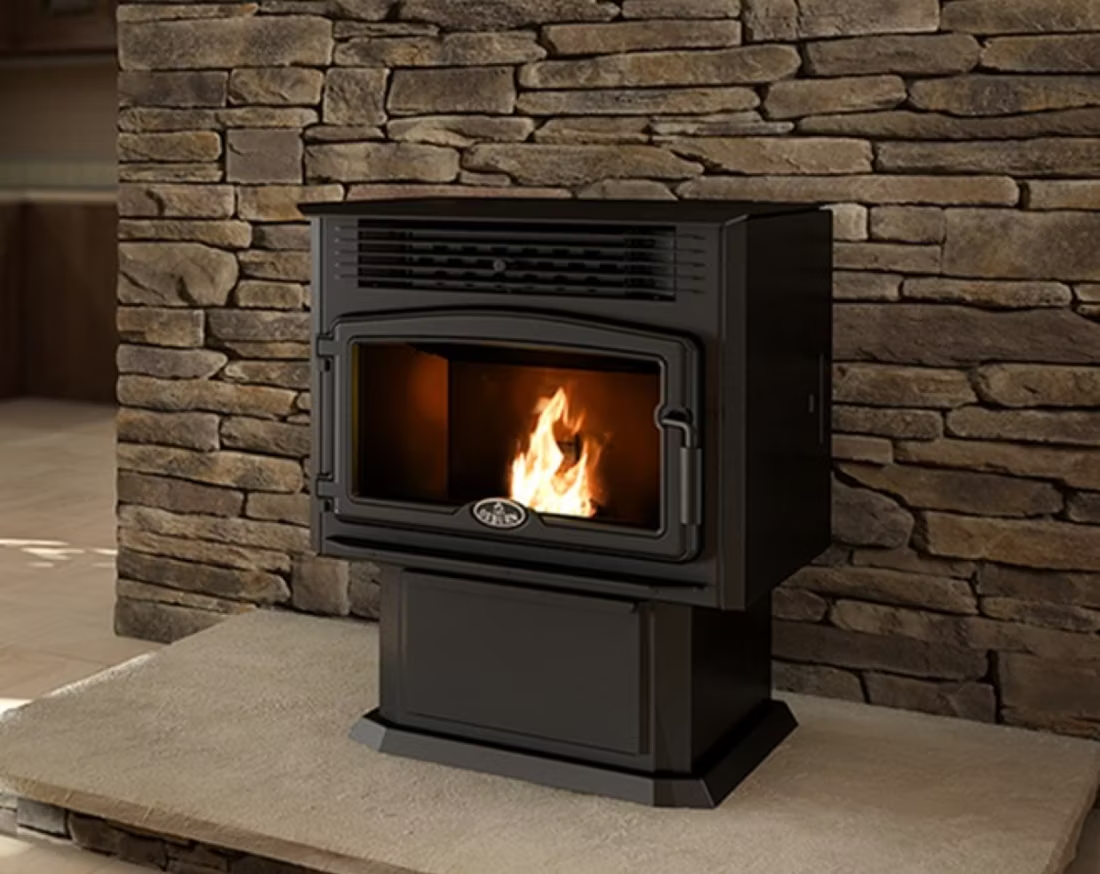
A pellet stove is a freestanding unit that sits on its own hearth pad and vents through an exterior wall or existing chimney—it can go almost anywhere with the right clearances. A pellet insert is built to slide into an existing masonry fireplace opening, using a vent kit run up through the old chimney flue to convert a rarely-used fireplace into an efficient, thermostat-controlled heat source. For Rogers County homes with an existing wood-burning fireplace that mostly sits cold, an insert is often the simpler upgrade since it reuses the masonry opening already in the wall.
Do I need a permit to install a pellet stove in Rogers County?
Yes, in most cases—a building permit is generally required for a new pellet stove or insert installation, whether you're inside Claremore, Catoosa, Owasso, or under Rogers County's own building department in unincorporated areas. The permit covers the vent termination location, clearances to combustibles, and hearth pad requirements. Most local dealers handle the permit application as part of the installation quote, so you typically aren't the one filing paperwork. Unlike some wood-heat regions, Rogers County has no seasonal burn curtailment to work around, since it isn't in an EPA non-attainment area.
What's the best pellet stove for Rogers County's climate?
Since Rogers County winters are moderate compared to the northern half of the country, most homeowners don't need the largest-hopper, longest-burn-time models built for sub-zero climates. A mid-size stove with a 40- to 60-pound hopper handles typical overnight burns fine at 24°F average lows. The bigger consideration locally is backup power: pellet stoves need electricity to run the auger and combustion blower, so during the ice storms that periodically hit northeastern Oklahoma and knock out power for days, a standard pellet stove goes dark along with everything else. If storm-driven outages are a real concern for your household, ask a local dealer about models with battery backup options or consider pairing pellet heat with a generator.
How often does a pellet stove need to be cleaned and serviced?
Plan on a full cleaning and inspection once a year, ideally before the fall heating season starts. Regular users should also empty the ash pan weekly during heavy-burn months and clean the burn pot every few days, since clogged burn pots are the most common cause of poor combustion and error codes. An annual service from a local dealer or technician checks the auger, combustion blower, gaskets, and vent termination—this matters even in a mild-winter county like Rogers, since a poorly maintained unit will underperform on the coldest nights of the year regardless of how few there are.
Where do I buy pellets in Rogers County, and how do I store them?
Hardwood pellets from brands like Lignetics and Indeck Energy Services are typically available through local hearth dealers and farm/hardware retailers serving the Claremore-Catoosa-Owasso corridor, usually sold in 40-pound bags. Because Rogers County sits in a humid Zone 3A climate, pellet storage matters more here than it does in a drier region—bags need to stay off concrete floors and away from moisture in a garage or shed, since pellets that absorb humidity swell and jam the auger. Buying a season's supply ahead of the first cold snap avoids scrambling when a stretch of freezing rain hits.
Pellet stove vs. wood stove—which is right for my Rogers County home?
Wood stoves burn local oak, hickory, or mesquite cordwood, work with zero electricity, and are the better choice if you want backup heat that survives an ice-storm power outage. Pellet stoves are more convenient day-to-day—load the hopper, set the thermostat, and walk away—with far less ash and no chimney creosote to manage, but they depend on grid power to run the auger and blower. In a county where mild Zone 3A winters mean you're not burning constantly for six months straight, a lot of homeowners choose pellet for the ease of use in normal weather and accept that a generator or backup wood stove elsewhere in the house covers the rare true emergency.
How often does a pellet stove need cleaning?
A clean pellet stove is a happy pellet stove. Plan on cleaning the burn pot about once a week when you're burning regularly—ash and clinkers gum up the air holes just like a pellet barbecue. Most pellet stove problems trace back to skipped cleaning that nobody explained up front. Some designs make it easy with a trapdoor burn pot: pull a lever and the gunk drops into the ash pan.
What's the difference between an insert and a zero-clearance fireplace?
An insert is a fireplace that slides into a pre-existing wood-burning fireplace—if you don't have one, there's nothing to insert it into. A zero-clearance fireplace is built into a framed wall, which makes it the answer for remodels and new construction. Simple test: existing masonry fireplace means insert; blank or framed wall means zero-clearance.
How much should I budget for a fireplace?
For an average home—covering the fireplace, the vent pipe, and basic installation—a budget between $3,900 and $5,500 gives you a lot of options across wood, gas, and pellet. By the time you add finish work, gas line, and electrical, the average complete installation lands between $5,000 and $12,000 all-in. In a remodel or new build, a good rule is to put about 2.5% of the total project cost toward the fireplace.
Does a fireplace add value to my home?
On average, a fireplace adds back to the home about the same amount you spent installing it. Add the monthly savings from heating the rooms you actually use instead of the whole house—often hundreds of dollars a year—and the value case is strong before you even count what a fire does for how your family uses the room.
Stove and Fireplace Dealers in Rogers County
Pellet Brands Stocked Around Rogers County
Manufacturers will point you to the nearest stocking dealer.
Find your pellet stove in Rogers County.
Tell us a bit about your home and we'll put together a free Project Guide & Parts List—the right pellet stove or insert, the exact vent kit for your setup, and a trusted local Rogers County dealer to install it.'
Find Your Fireplace →