
Steady pellet heat for Pottawatomie County winters.
From Shawnee to Tecumseh to McLoud, pellet stoves give central Oklahoma homes clean, thermostat-steady warmth without splitting or stacking oak and hickory. Find the right unit and get matched with a trusted local dealer.
Every Project Starts From One of These Five Situations
Low-maintenance heat for a climate that rarely turns brutal.
Pottawatomie County sits in Oklahoma's mixed-humid climate zone 3A, with an average winter low around 29 degrees and a fairly light overall heating load each year. That's a fraction of what a place like Duluth, Minnesota racks up in a single winter, so most homes here don't need—or want—a heating system engineered for weeks of sub-zero cold. What they do need is efficient, controllable heat for the cold snaps and occasional ice storms that roll through Shawnee, Tecumseh, McLoud, and Asher, plus the kind of visible flame that makes a living room feel finished.
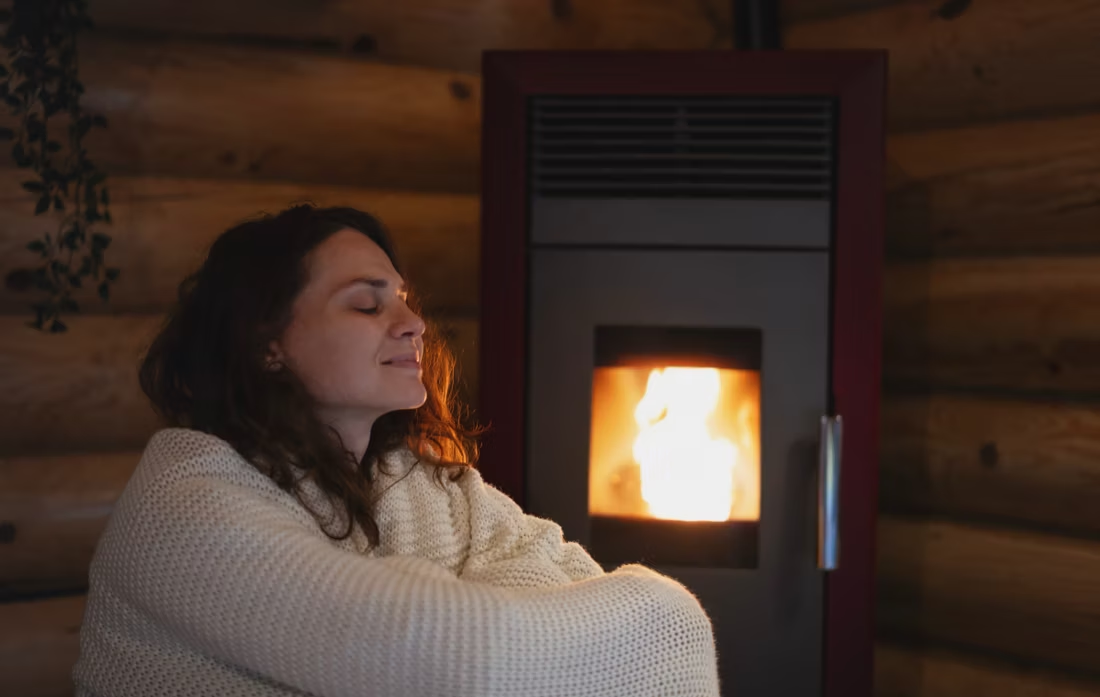
That's where pellet stoves earn their place. The county's hardwood tradition runs through oak, hickory, and mesquite, and plenty of homeowners still burn cordwood—but pellets from regional suppliers like Lignetics and Indeck Energy Services give you comparable heat output without the seasoning, splitting, or ash volume of a wood stove. With no air quality non-attainment issues or wood-burning curtailment periods in this part of Oklahoma, there's nothing standing between you and a permit-approved pellet install other than picking the right unit for your square footage. A local dealer handles the venting, the hearth clearance, and the paperwork with your city or county building office.
Three steps. No salesperson until you're ready.
Tell us about your project
Your zip code, your situation, and the fuel you're leaning toward—or let the answers point you to one.
See what's actually available
The brands dealers within 100 miles genuinely carry—real options, never a catalog mirage.
Get your dealer & Project Guide
A trusted local dealer, plus the free Project Guide & Parts List that names every component of the job.
Frequently Asked Questions
How much does a pellet stove installation cost in Pottawatomie County?
Most pellet stove installations run in the $3,000 to $6,000 range once you include the unit, direct-vent pipe through an exterior wall, and a hearth pad if your home doesn't already have masonry in place. Converting an existing wood-burning fireplace into a pellet insert is usually on the lower end of that range since it reuses the existing chimney chase. Homes in Shawnee or Tecumseh with an accessible exterior wall for horizontal venting tend to see faster, lower-cost installs than homes needing longer vent runs or electrical work for the hopper and blower circuit. A local dealer will give you a firm number after seeing your space.
What size pellet stove do I need for a Pottawatomie County home?
Because winters here are mild—an average low near 29 degrees and a fairly light overall heating load—most Pottawatomie County homes don't need a maxed-out unit rated for whole-home primary heat. A small to mid-size pellet stove (rated for 1,000 to 1,800 square feet) comfortably heats a main living area in most Shawnee, Tecumseh, or McLoud homes, with the central HVAC system covering the rest of the house on the coldest nights. If you're planning to run the stove as your primary heat source in an older, less-insulated farmhouse out toward Asher or Macomb, size up and let a local dealer walk through your insulation and layout before you buy.
Do I need a permit to install a pellet stove in Pottawatomie County?
Yes—a building permit is standard for any new solid-fuel appliance installation, whether you're inside Shawnee or Tecumseh city limits or in unincorporated parts of the county. Permits are issued through your local city building department, or through the Pottawatomie County building office if you're outside city limits. Unlike some Western states, there are no wood-smoke curtailment periods or non-attainment restrictions here, so the permit process is mostly about verifying clearances and venting rather than emissions compliance. Most dealers pull the permit as part of the installation.
What's the difference between a pellet stove and a pellet insert?
A pellet stove is a freestanding appliance that sits on a hearth pad and vents through a wall or existing chimney chase—it can go almost anywhere with the right clearances. A pellet insert is built to slide into an existing masonry fireplace opening, which is common in older Shawnee and Tecumseh homes that already have a wood-burning fireplace they'd rather not tend by hand. If you've got an existing firebox, an insert is usually the simpler and less expensive route since it reuses the chimney; if you're starting from a blank wall, a freestanding stove gives you more placement flexibility.
Will my pellet stove work during a power outage?
Not without a backup power source, and this is worth being upfront about. Pellet stoves rely on an electric auger to feed fuel and a blower to distribute heat, so when the power goes out—which happens during Oklahoma ice storms more than people expect—the stove stops running. Some homeowners pair a pellet stove with a small battery backup unit or portable generator specifically to keep it running through an outage; others keep a wood stove or fireplace elsewhere in the house as true off-grid backup. If outage-proof heat is a priority for your household, talk to your local dealer about backup power options before you buy.
Where can I buy pellets in Pottawatomie County?
Regional brands like Lignetics and Indeck Energy Services supply much of the pellet fuel sold through farm stores, hardware retailers, and hearth dealers across central Oklahoma, and most Shawnee-area retailers can order pallets or arrange delivery. Expect to pay roughly $220 to $300 per ton depending on the brand and whether you buy by the bag or the pallet—buying a full ton or more ahead of the season is typically the better per-bag price. Since heating season here is short compared to northern climates, most households get through winter on far less fuel than a home in a place like Fargo, North Dakota would burn in the same stove.
How often does a pellet stove need to be cleaned and serviced?
Plan on emptying the ash pan every few days to weekly depending on use, wiping the glass as needed, and vacuuming the burn pot and hopper area every couple of weeks during regular winter use. A full professional service—checking the auger motor, blower, gaskets, and venting—is recommended once a year, ideally before the first cold snap hits Pottawatomie County in late fall. Pellet stoves produce far less ash and creosote than wood stoves, so the maintenance load is lighter, but skipping the annual service is still the most common cause of ignition and feed problems.
Pellet vs. wood—which is right for my Pottawatomie County home?
Wood—burning local oak, hickory, or mesquite—works without electricity, offers the lowest fuel cost if you're cutting your own, and gives you the traditional fire experience many longtime county residents grew up with. Pellet stoves trade that off-grid independence for convenience: no splitting or stacking, more consistent heat output, easier ignition, and less ash to manage. Given how mild winters are here—nowhere near the multi-week deep freezes you'd see in Bismarck, North Dakota—most Pottawatomie County households value the low-maintenance, thermostat-like control a pellet stove offers over the self-sufficiency of wood, unless backup heat during outages is a hard requirement.
What's the best pellet stove for Pottawatomie County's climate?
Since this region doesn't demand extreme sustained output, most homeowners do well with a mid-efficiency, mid-size pellet stove rather than the largest units built for northern winters. Look for a model with a large hopper capacity if you want fewer refills during multi-day cold spells, and ask your local dealer about units compatible with the pellet brands actually stocked nearby, like Lignetics—matching the stove to locally available fuel avoids feed and burn-quality issues down the road. Beyond that, the decision usually comes down to hopper size, noise level of the blower, and whether you want a freestanding stove or an insert for an existing fireplace.
Why is my open fireplace making my house colder?
Open fireplaces suck—literally. As the fire burns, it consumes air your furnace already paid to heat and pulls it out through the chimney, so the house is actually colder after the fire goes out than before you lit it. An insert fixes this: it seals the chimney, puts fixed glass across the front, and turns that hole in your house into a real heat source.
What does it take to replace an existing fireplace?
Fireplaces are like icebergs—bigger behind the wall than in front of it. Replacement means removing the surrounding tile or stone (the finish material laps onto the fireplace face), pulling the old unit, setting the new one in the same enclosure, and re-finishing the wall. A hearth professional can determine what's behind your wall without demolition during an in-home preview.
Can a fireplace actually lower my heating bill?
Yes—by creating a comfort zone. A furnace heats every square foot of the house just to warm the one room you're in; a gas fireplace on low burns roughly a sixth of the gas a typical furnace does. Set the furnace around 55–60 degrees as a baseline, then heat the rooms your family actually uses. Families who heat this way commonly save $20–$60 a month.
Can I install a fireplace myself?
If you're putting a fire in your house on purpose, it's best to work with an expert. Unless you're genuinely experienced in framing, gas line, vent pipe, and the national code on clearances to combustibles, have a professional do it—and ideally the same company that sells you the fireplace, so warranty, service, and liability all live under one roof.
Pellet Brands Stocked Around Pottawatomie County
Manufacturers will point you to the nearest stocking dealer.
Find your pellet stove in Pottawatomie County.
Tell us a bit about your home and we'll put together a free Project Guide & Parts List—the right pellet stove or insert, the vent kit you'll need, and a trusted local dealer in Pottawatomie County who can install it correctly.
Find Your Fireplace →