
Set-and-forget heat for Pittsburg County's mild winters.
From McAlester to the smaller towns along Lake Eufaula, Pittsburg County winters are short and generally mild—pellet heat delivers steady, thermostat-controlled warmth without the wood pile. Find the right stove or insert and connect with a trusted local dealer.
Every Project Starts From One of These Five Situations
Convenience heat for a short, mild heating season.
Pittsburg County sits in southeastern Oklahoma's Climate Zone 3A, where the heating season is real but brief—average winter lows hover around 30°F and the county logs roughly 3,079 heating degree days a year. Compare that to a place like Duluth, Minnesota, which racks up over 9,000 heating degree days most winters, and it's clear why McAlester and the surrounding towns don't need—or want—the kind of round-the-clock, cordwood-fed heating setup that colder regions rely on. What Pittsburg County households want is heat that turns on when a cold front rolls through and turns off when it doesn't.
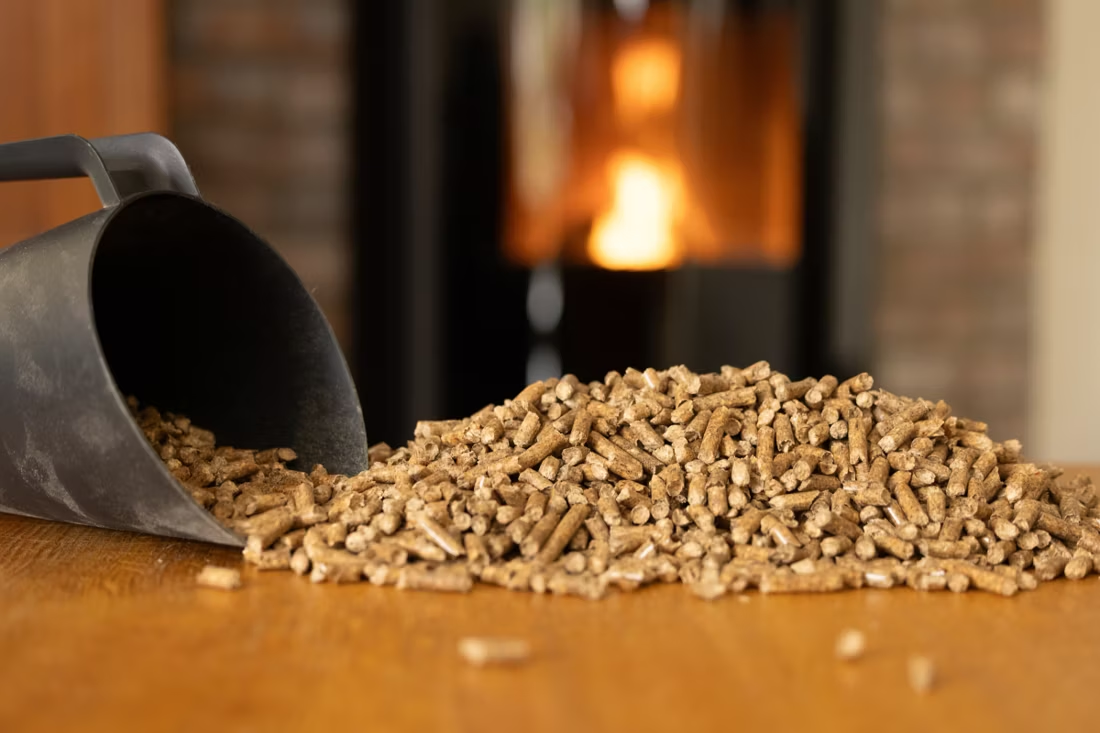
That's exactly the gap pellet stoves fill. Instead of splitting and stacking the oak, hickory, and mesquite that grow throughout the county's cross timbers and river-bottom land, pellet stove owners load a hopper with bagged fuel from suppliers like Lignetics or Indeck Energy Services and let a thermostat do the rest. With no air quality non-attainment issues or burn restrictions on the books here, there's no seasonal curtailment to plan around—the limiting factor is simply how cold it gets, not whether you're allowed to burn. The tradeoff worth knowing: pellet stoves need electricity to run the auger and blower, which matters in a county where ice storms occasionally take down power lines for days at a time.
Three steps. No salesperson until you're ready.
Tell us about your project
Your zip code, your situation, and the fuel you're leaning toward—or let the answers point you to one.
See what's actually available
The brands dealers within 100 miles genuinely carry—real options, never a catalog mirage.
Get your dealer & Project Guide
A trusted local dealer, plus the free Project Guide & Parts List that names every component of the job.
Frequently Asked Questions
How much does a pellet stove installation cost in Pittsburg County?
Pellet stove installations are generally less expensive than wood stove installs because venting requirements are simpler—most units vent through a smaller-diameter pipe straight through an exterior wall rather than requiring a full masonry chimney. Costs depend on the stove model, whether a hearth pad is needed for code clearance, and how far the vent run travels. A local dealer serving McAlester and the surrounding towns can walk your home during an in-person consultation and give you a firm number rather than a guess.
What size pellet stove do I need for a Pittsburg County home?
With average winter lows around 30°F and just over 3,000 heating degree days a year, most Pittsburg County homes don't need the largest, highest-output pellet stoves on the market—those are built for places that see sustained sub-zero stretches. A mid-size unit is usually enough to comfortably heat a main living area or an open floor plan of 1,000 to 1,800 square feet, and many homeowners here run their pellet stove as supplemental heat alongside a central system rather than as the sole heat source. A local dealer will size the stove to your actual square footage, insulation, and how you plan to use it—full-time heat versus occasional backup during a cold snap.
Where can I find certified pellet stove installers near me?
Look for installers with NFI (National Fireplace Institute) pellet-specialist certification, which covers proper venting, clearances, and combustion-air requirements specific to pellet appliances. Trusted local dealers serving Pittsburg County—including McAlester, Krebs, and Hartshorne—typically handle both the sale and the installation, which simplifies warranty coverage if something needs service down the road. Avoid a DIY vent run through an exterior wall; pellet stove venting has specific slope and clearance rules, and getting it wrong is the most common cause of poor draft and nuisance shutdowns.
What's the difference between a pellet stove and a pellet insert?
A pellet stove is a freestanding unit that sits on a hearth pad and vents through a wall or existing chimney—it can go almost anywhere with proper clearances, which makes it a good fit for homes without a masonry fireplace. A pellet insert is built to slide into an existing wood-burning fireplace opening, using the chimney cavity (with a proper liner) as the vent path. For Pittsburg County homes with an older open masonry fireplace that's more decorative than functional, an insert converts that space into an efficient, thermostat-controlled heat source without any structural changes.
Do I need a permit to install a pellet stove in Pittsburg County?
Most municipalities in Pittsburg County, including McAlester, require a building permit for a new solid-fuel heating appliance, and homes in unincorporated parts of the county fall under the county building department. Requirements typically cover clearance to combustibles, venting termination distance from windows and doors, and hearth pad compliance. Most local dealers include the permit paperwork as part of the installation, so it's worth confirming that's included when you get a quote.
What's the best pellet stove for Pittsburg County's climate?
Because Pittsburg County's heating season is mild and relatively short compared to northern climates, you generally don't need the biggest, highest-BTU stove on a dealer's floor. A mid-output stove that can idle down efficiently on warmer days but still push real heat during a January cold front is usually the sweet spot. Ask your local dealer about hopper capacity too—a larger hopper means fewer refills during the occasional multi-day cold stretch, without needing a stove sized for a much colder region.
How often does a pellet stove need cleaning and maintenance?
Ash pans should be emptied every few days to a week during regular use, and the burn pot needs periodic scraping to keep airflow clear—most owners do this weekly during heavy-use stretches. Beyond that, an annual professional inspection and cleaning of the venting, hopper, auger, and blower components is recommended before the start of each heating season, since Pittsburg County's mild winters mean stoves often sit unused for months at a time and benefit from a check before the first cold front hits.
Where can I buy pellet fuel in Pittsburg County?
Regional brands like Lignetics and Indeck Energy Services supply pellets carried by hearth retailers and farm supply stores throughout the area. Pellets are sold by the 40-pound bag or by the ton, and pricing varies by supplier and season—your local dealer can point you to current pricing and whether bulk-ton purchase and storage makes sense for your household's usage. Buying early in the fall, before demand picks up with the first cold weather, is generally the easiest way to lock in stock and price.
Pellet stove vs. wood stove—which is right for my Pittsburg County home?
Wood stoves burn cordwood—plentiful in Pittsburg County given the local oak, hickory, and mesquite—and keep working without electricity, which matters here given how ice storms occasionally knock out power for days. Pellet stoves need power to run the auger and blower, so they're not a true backup during an outage, but they're far more convenient day to day: no splitting, stacking, or hauling wood, more consistent heat output, and less ash and mess. For a county with a short, generally mild heating season, many homeowners choose pellet for its set-it-and-forget-it convenience, then keep a battery backup or a small generator on hand for the rare ice storm outage. If off-grid reliability during winter storms is the top priority, wood remains the more resilient choice.
How often does a pellet stove need cleaning?
A clean pellet stove is a happy pellet stove. Plan on cleaning the burn pot about once a week when you're burning regularly—ash and clinkers gum up the air holes just like a pellet barbecue. Most pellet stove problems trace back to skipped cleaning that nobody explained up front. Some designs make it easy with a trapdoor burn pot: pull a lever and the gunk drops into the ash pan.
Why is a fireplace insert so efficient?
An insert does two things: it seals the chimney completely, so you stop losing air you already paid to heat, and it radiates warmth into the room through the firebox and glass. Most add a heat-exchange fan that pulls cool room air underneath, wraps it around the hot firebox, and pushes it back out warm. Your home is more efficient before you've even lit the first fire.
Can a fireplace actually lower my heating bill?
Yes—by creating a comfort zone. A furnace heats every square foot of the house just to warm the one room you're in; a gas fireplace on low burns roughly a sixth of the gas a typical furnace does. Set the furnace around 55–60 degrees as a baseline, then heat the rooms your family actually uses. Families who heat this way commonly save $20–$60 a month.
What is an in-home preview and do I need one?
It's a visit where a hearth professional measures your space, confirms the model you picked actually works in your home, and walks the specs—framing, gas line, venting, finish work—before anything is ordered. Some details you just can't know until you see the house. Never make a down payment without one; it's the single most-skipped step that burns buyers.
Pellet Brands Stocked Around Pittsburg County
Manufacturers will point you to the nearest stocking dealer.
Find your pellet stove in Pittsburg County.
Tell us a bit about your home and we'll match you with a trusted local dealer and send over your free Project Guide & Parts List—sized for your space, with the right vent kit and parts for a pellet install in Pittsburg County.
Find Your Fireplace →