
Find your pellet stove in Okmulgee County.
Thermostat-controlled, low-maintenance heat for Okmulgee County homes—from Okmulgee to Henryetta and the smaller towns in between. Find the right unit and connect with a trusted local dealer.
Every Project Starts From One of These Five Situations
Consistent, low-maintenance heat for mixed-humid winters.
Okmulgee County sits in northeastern Oklahoma's Climate Zone 3A, where winters are moderate compared to the northern Plains—average lows around 26°F and a fairly short, moderate heating season, a fraction of what a place like Bismarck, ND racks up. Households across Okmulgee, Henryetta, Beggs, and Preston have long relied on oak, hickory, and mesquite for wood heat, but a growing number are turning to pellet stoves for the convenience: load a hopper, set a thermostat, and let the auger do the rest without the felling, splitting, and stacking that wood requires.
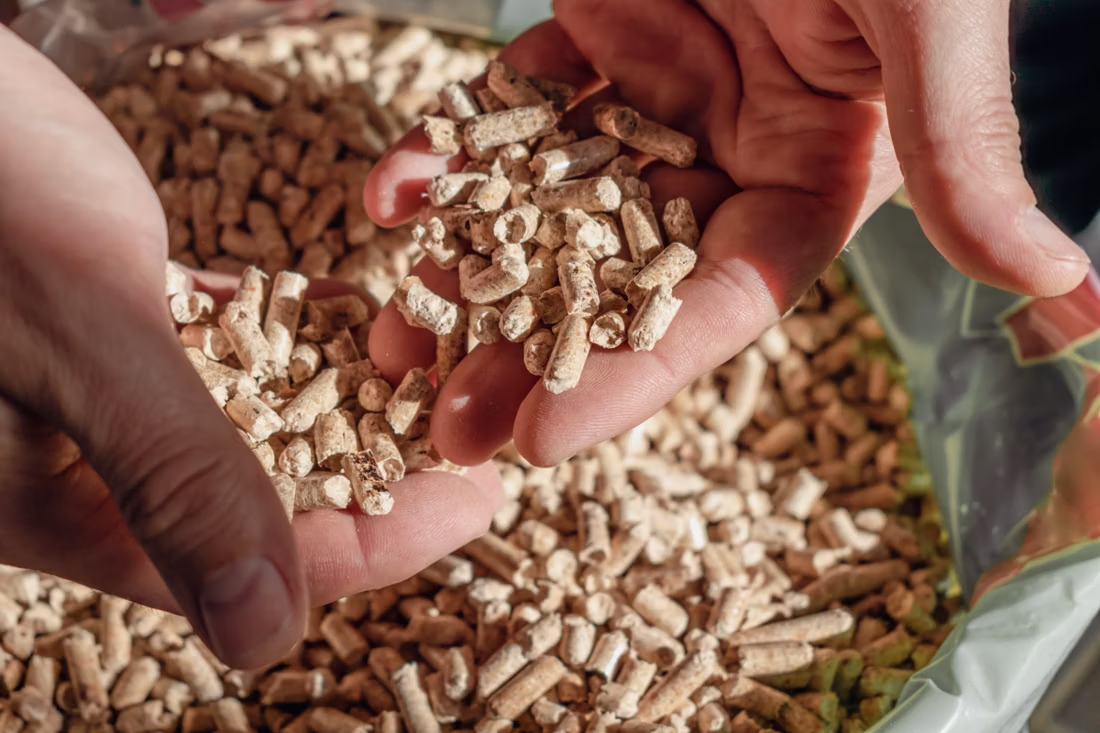
There's a real tradeoff worth knowing about, though: pellet stoves run on electricity for the auger, igniter, and combustion blower, and Oklahoma is no stranger to ice storms that have knocked out power across the region for days at a stretch. Most local dealers will talk you through battery backup or small-generator options if outage risk matters to your household. On the regulatory side, Okmulgee County has no wintertime air quality curtailment periods or burn restrictions, so there's no seasonal red-tape to navigate—just a standard building permit if you're venting through an exterior wall. Pellet fuel itself is widely available through regional suppliers like Lignetics and Indeck Energy Services, typically sold in 40-pound bags at farm and ranch stores throughout the area.
Three steps. No salesperson until you're ready.
Tell us about your project
Your zip code, your situation, and the fuel you're leaning toward—or let the answers point you to one.
See what's actually available
The brands dealers within 100 miles genuinely carry—real options, never a catalog mirage.
Get your dealer & Project Guide
A trusted local dealer, plus the free Project Guide & Parts List that names every component of the job.
Frequently Asked Questions
How much does a pellet stove installation cost in Okmulgee County?
A freestanding pellet stove with a through-wall vent kit typically runs $2,500 to $5,500 installed in Okmulgee County, depending on the model and how much venting work is needed. A pellet insert going into an existing masonry fireplace—using the chimney chase with a new liner—usually runs closer to $4,000 to $7,000. Homes without an existing fireplace or chimney will lean toward the through-wall option since it's simpler and less expensive than running new masonry venting. A local dealer can give you a firm number after seeing your wall or fireplace setup in person.
How does a pellet stove compare to burning oak or hickory in a wood stove?
Oak, hickory, and mesquite are the go-to firewood species around Okmulgee County, and a wood stove burning well-seasoned oak puts out serious heat with no electricity required—a real advantage during an ice storm. A pellet stove trades that off-grid independence for convenience: no splitting or stacking, a hopper that feeds itself for 24-plus hours on a fill, and a cleaner burn with far less ash. If you already have a supply of seasoned hardwood and don't mind the work, wood still has its place here. If convenience and consistent, thermostat-controlled heat matter more, pellet is the easier day-to-day appliance to live with.
Where can I buy pellet fuel in Okmulgee County?
Pellet fuel isn't something you order once and forget—most Okmulgee County households buy in bulk in the fall from farm and ranch stores like Tractor Supply and Atwood's, which regularly stock regional brands including Lignetics and Indeck Energy Services. Buying a season's worth (roughly 100-150 bags for a typical home) before cold weather hits avoids the scramble when a January cold snap sends everyone to the same shelf at once. Your local hearth dealer can also point you toward which pellet brands run cleanest in the specific stove model you buy.
Will my pellet stove work during a power outage?
No—not without backup power. Pellet stoves depend on electricity to run the auger that feeds fuel, the igniter, and the combustion blower, so when the power goes out, the stove stops. That's a real consideration in Okmulgee County, where ice storms have periodically knocked out power across northeastern Oklahoma for days at a time. Homeowners who want pellet convenience but also want heat during an outage typically pair the stove with a small inverter generator or a battery backup system sized for the stove's draw—worth discussing with your installer before you buy.
Do I need a permit to install a pellet stove in Okmulgee County?
Yes, a building permit is generally required for a new pellet stove installation, particularly when it involves venting through an exterior wall or into an existing chimney. Okmulgee County has no wintertime air quality curtailment periods or wood-smoke restrictions to worry about—unlike some western states, there's no advisory system that limits when you can run the stove. Most local dealers handle the permit paperwork as part of the installation, so it's rarely something you have to manage yourself.
What size pellet stove do I need for my Okmulgee County home?
Because Okmulgee County's winters are relatively mild—a fairly short, moderate heating season, well under half of what a colder climate like Duluth, MN sees—most homes here are well served by a small to medium pellet stove rated for 1,000 to 1,800 square feet, even used as the primary heat source in an open living area. Larger stoves make sense mainly for bigger, less-insulated farmhouses or homes using the stove to offset a big chunk of propane or electric heating costs. A dealer can size it more precisely based on your square footage and insulation.
How much maintenance does a pellet stove need?
Pellet stoves need more frequent light upkeep than a wood stove needs chimney sweeping, but each task is quick. Plan on emptying the ash pan and wiping the glass every few days during heavy use, cleaning the burn pot weekly, and having the exhaust vent and combustion blower professionally inspected once a year—typically in late summer before the heating season starts. Skipping the annual vent inspection is the most common cause of poor pellet stove performance, since a partially blocked vent affects both heat output and safe operation.
What's the best pellet stove for an Okmulgee County home?
Given the county's mild winters, most homeowners don't need the largest, highest-BTU pellet stove on the market—a mid-size unit with a reliable auto-ignition system and a simple thermostat control covers the vast majority of heating needs here. Look for a stove that's easy to service locally and matched to pellet brands your dealer regularly stocks, such as Lignetics or Indeck Energy Services, since consistent pellet quality affects burn efficiency and ash output more than most people expect. A local dealer can walk you through specific models once they know your square footage and how you plan to use the stove—daily heat versus occasional supplemental warmth.
Pellet stove vs. gas fireplace—which is right for my home?
A gas fireplace or insert gives you push-button, instant heat with no fuel to buy, load, or store—a real convenience advantage if you have natural gas or propane service to your home already. A pellet stove trades that instant-on simplicity for a genuine flame, the ability to run on locally purchased fuel rather than a metered utility, and generally lower operating costs per BTU when pellets are bought in bulk. For Okmulgee County homeowners who want a real fire and don't mind refilling a hopper every day or two, pellet is often the better fit. For those who want zero-maintenance heat and already have gas service, a fireplace insert is usually the simpler path.
What's the difference between an insert and a zero-clearance fireplace?
An insert is a fireplace that slides into a pre-existing wood-burning fireplace—if you don't have one, there's nothing to insert it into. A zero-clearance fireplace is built into a framed wall, which makes it the answer for remodels and new construction. Simple test: existing masonry fireplace means insert; blank or framed wall means zero-clearance.
Why is a fireplace insert so efficient?
An insert does two things: it seals the chimney completely, so you stop losing air you already paid to heat, and it radiates warmth into the room through the firebox and glass. Most add a heat-exchange fan that pulls cool room air underneath, wraps it around the hot firebox, and pushes it back out warm. Your home is more efficient before you've even lit the first fire.
What is an in-home preview and do I need one?
It's a visit where a hearth professional measures your space, confirms the model you picked actually works in your home, and walks the specs—framing, gas line, venting, finish work—before anything is ordered. Some details you just can't know until you see the house. Never make a down payment without one; it's the single most-skipped step that burns buyers.
How much should I budget for a fireplace?
For an average home—covering the fireplace, the vent pipe, and basic installation—a budget between $3,900 and $5,500 gives you a lot of options across wood, gas, and pellet. By the time you add finish work, gas line, and electrical, the average complete installation lands between $5,000 and $12,000 all-in. In a remodel or new build, a good rule is to put about 2.5% of the total project cost toward the fireplace.
Pellet Brands Stocked Around Okmulgee County
Manufacturers will point you to the nearest stocking dealer.
Find your pellet stove in Okmulgee County.
Tell us a bit about your home and we'll match you with a trusted local dealer, plus a free Project Guide & Parts List spelling out exactly what your pellet stove or insert project needs—including the vent kit.
Find Your Fireplace →