
Clean, thermostat-controlled heat for Okfuskee County's mild winters.
From Okemah to Paden, Bearden, and Weleetka, pellet stoves give Okfuskee County homes a low-mess, easy-to-run zone heat source. I'll match you with a trusted local dealer who can size the right unit and get it installed correctly.
Every Project Starts From One of These Five Situations
A practical fit for a mild, humid climate.
Okfuskee County sits in Oklahoma's climate zone 3A—mixed-humid, with hot summers and winters that rarely turn brutal. With a fairly short, mild heating season and an average winter low near 30°F, this isn't Bozeman or Fargo territory; it's a climate where a handful of genuinely cold weeks bookend a mostly mild heating season. That reality shapes what pellet heat is actually good for here: less "survive a week below zero" and more "warm up the living room without running the central furnace at full tilt" in Okemah, Paden, Bearden, Weleetka, and the county's scattered rural acreages.
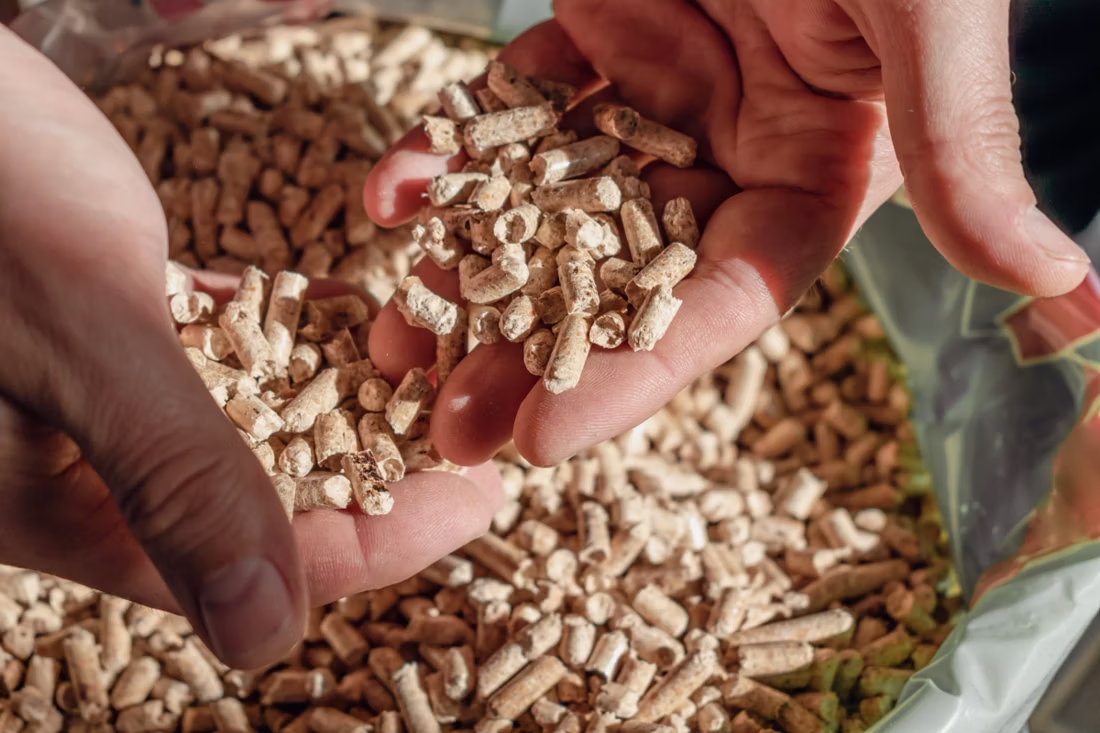
There are no air quality non-attainment issues or burn restrictions in Okfuskee County, so pellet stoves compete on their own merits—mainly convenience and control. Pellets arrive by the bag from regional suppliers like Lignetics and Indeck Energy Services, feed stores, and farm supply outlets around Henryetta and Shawnee, and a hopper-fed stove holds a steady, thermostat-set temperature without the tending a wood stove demands. The catch: pellet stoves run on electricity for the auger and blower, so reliable power from your rural electric cooperative (Canadian Valley Electric Cooperative serves much of the county) matters more here than it does with a wood-burning setup. Humidity is also worth planning around—zone 3A's damp summers mean pellets need dry, sealed storage to avoid clumping before they ever reach the hopper.
Three steps. No salesperson until you're ready.
Tell us about your project
Your zip code, your situation, and the fuel you're leaning toward—or let the answers point you to one.
See what's actually available
The brands dealers within 100 miles genuinely carry—real options, never a catalog mirage.
Get your dealer & Project Guide
A trusted local dealer, plus the free Project Guide & Parts List that names every component of the job.
Frequently Asked Questions
How much does a pellet stove installation cost in Okfuskee County?
A freestanding pellet stove typically installs for $3,000 to $6,000 in Okfuskee County, including the unit, venting, and hearth pad. A pellet insert going into an existing masonry fireplace usually runs $4,000 to $7,500, since it involves a stainless liner run up the existing chimney and often some minor masonry adjustment. Given the mild climate here, most homeowners are installing a stove for one or two rooms rather than whole-home heat, which keeps unit sizing—and cost—on the lower end compared to colder parts of the state.
What size pellet stove do I actually need in a climate this mild?
With an average winter low around 30°F and a fairly short, mild heating season overall, most Okfuskee County homes don't need a pellet stove sized for whole-home primary heat the way a home in a harder-winter climate would. A small to mid-size stove (rated for 1,000–1,800 square feet) is usually plenty to heat a living area or open-plan main floor and take real pressure off the central furnace during the coldest stretches in January and February. Going bigger than that mostly means more fuel burned for heat you don't need most of the season—a local dealer can size it against your actual floor plan rather than a generic chart.
Do I need a permit to install a pellet stove in Okfuskee County?
Most freestanding pellet stove installations go through the county building department in Okemah for a straightforward permit covering the venting and clearances—it's a quick process most local dealers handle as part of the install. Pellet insert conversions into an existing fireplace usually require the same permit plus a chimney liner inspection. Because Okfuskee County has no air-quality non-attainment designation, there's no additional emissions paperwork or curtailment rule to worry about, unlike some counties in the western part of the state.
Pellet stove or wood stove—which makes more sense here?
Both are viable in Okfuskee County—there's no air quality restriction pushing you toward one or the other, and local oak, hickory, and mesquite firewood is easy to source if you go the wood route. The real trade-off is convenience versus independence. A pellet stove loads from a hopper, holds a set temperature automatically, and produces very little ash, but it needs electricity to run the auger and blower. A wood stove needs more tending and cleanup but keeps working through a power outage. Given how mild most winters run here, many homeowners lean pellet for the low-maintenance daily use and accept that an ice storm outage means falling back on the central furnace or a backup plan for a day or two.
What happens to my pellet stove during a power outage?
It stops running—pellet stoves depend on electricity for the auger that feeds fuel and the blower that moves heat, so a power cut shuts the unit down regardless of how much fuel is in the hopper. Ice storms are the main outage risk in this part of Oklahoma, and rural lines served by Canadian Valley Electric Cooperative can take longer to restore than in-town service. If backup heat during outages matters to you, a small battery backup or generator sized for the stove's low draw is a reasonable add-on, or you may want a wood-burning unit as a secondary heat source for genuinely extended outages.
Where do I actually buy pellets in Okfuskee County?
Regional brands like Lignetics and Indeck Energy Services supply most of the bagged pellet fuel sold through farm supply stores, feed stores, and home improvement retailers in and around Henryetta and Shawnee, with some availability closer to home in Okemah. Because Okfuskee County sits in a humid climate zone, store pellets in a dry, sealed area—a damp garage or uncovered shed will cause bags to absorb moisture and clump, which hurts burn quality and can jam an auger. Buying a season's supply ahead of the coldest months (rather than restocking bag by bag) is common practice and avoids scrambling if a cold snap or ice event limits store runs.
What's the best pellet stove for a climate this mild?
You don't need the highest-BTU, longest-burn-time unit on the market for Okfuskee County's climate—that's more relevant in places with weeks of sub-zero nights. A mid-efficiency, moderate-output stove from a mainstream brand is usually the right call, with the emphasis on quiet operation, easy hopper access, and a thermostat that holds a comfortable temperature without cycling constantly. Since most homes here are using pellet heat to supplement central HVAC rather than replace it, ease of daily use matters more than maximum output. A local dealer can walk you through models actually stocked and serviceable in this area.
How much maintenance does a pellet stove need?
Plan on emptying the ash pan every few days during regular use, a deeper cleaning of the burn pot and heat exchanger tubes every couple of weeks, and a full professional service once a year—typically before the fall heating season starts. Because Okfuskee County winters don't demand daily burning for months straight the way colder climates do, many stoves here see lighter seasonal use, but the annual service (checking the auger, gaskets, and venting) still matters for safety and warranty compliance. Skipping it is the most common reason pellet stoves underperform or throw error codes mid-winter.
Are there any rebates or tax credits for a pellet stove in Oklahoma?
The federal government offers a 30% tax credit (up to $2,000) under the Inflation Reduction Act for high-efficiency biomass stoves rated at 75% HHV efficiency or better, and most current pellet stoves from major manufacturers qualify. Oklahoma doesn't currently layer a state-specific rebate on top of that for pellet appliances, so the federal credit is the main financial incentive available to Okfuskee County homeowners. Keep your dealer's efficiency documentation and receipts—you'll need them when you file.
Why is my open fireplace making my house colder?
Open fireplaces suck—literally. As the fire burns, it consumes air your furnace already paid to heat and pulls it out through the chimney, so the house is actually colder after the fire goes out than before you lit it. An insert fixes this: it seals the chimney, puts fixed glass across the front, and turns that hole in your house into a real heat source.
Why is a fireplace insert so efficient?
An insert does two things: it seals the chimney completely, so you stop losing air you already paid to heat, and it radiates warmth into the room through the firebox and glass. Most add a heat-exchange fan that pulls cool room air underneath, wraps it around the hot firebox, and pushes it back out warm. Your home is more efficient before you've even lit the first fire.
Can I install a fireplace myself?
If you're putting a fire in your house on purpose, it's best to work with an expert. Unless you're genuinely experienced in framing, gas line, vent pipe, and the national code on clearances to combustibles, have a professional do it—and ideally the same company that sells you the fireplace, so warranty, service, and liability all live under one roof.
What is an in-home preview and do I need one?
It's a visit where a hearth professional measures your space, confirms the model you picked actually works in your home, and walks the specs—framing, gas line, venting, finish work—before anything is ordered. Some details you just can't know until you see the house. Never make a down payment without one; it's the single most-skipped step that burns buyers.
Pellet Brands Stocked Around Okfuskee County
Manufacturers will point you to the nearest stocking dealer.
Find your pellet stove in Okfuskee County.
Tell me a bit about your home and heating goals, and I'll match you with a trusted local dealer plus a free Project Guide & Parts List—the exact parts, vent kit, and install plan for your Okfuskee County pellet project.
Find Your Fireplace →