
Find the right pellet stove for your Nowata County home.
Mild winters, steady demand—pellet heat that's easy to run and easy to size right, from Nowata to Delaware and South Coffeyville. I'll match you with a trusted local dealer.
Every Project Starts From One of These Five Situations
Consistent, low-maintenance heat for a mild-winter climate.
Nowata County sits in climate zone 3A, with an average winter low around 26°F and roughly 3,643 heating degree days a year—a fraction of what a place like Duluth or Fargo racks up. That's a climate where a pellet stove doesn't need to run around the clock, but it needs to be reliable during the cold snaps that do come through, and easy to load and forget the rest of the time. There's no air quality non-attainment issue here and no burn-ban culture to navigate, which simplifies the decision considerably compared to a lot of the country.
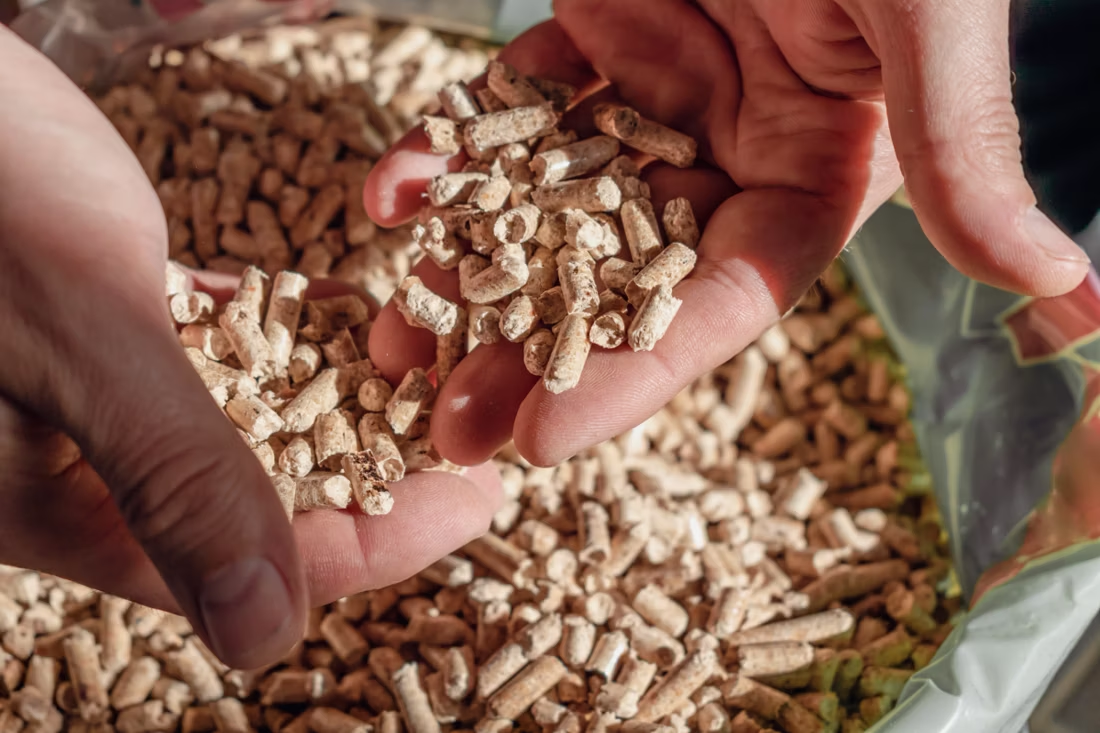
Local oak and hickory are the dominant hardwoods in the region, but pellet fuel sidesteps the cutting, splitting, and stacking altogether—you're buying bagged fuel by the ton rather than by the cord. Lignetics and Indeck Energy Services both distribute into this part of northeast Oklahoma, so supply isn't the concern it can be in more remote counties. A pellet stove or insert gives Nowata County homeowners a clean-burning, thermostatically controlled heat source that's simpler to live with day to day than a wood stove, while still delivering real supplemental or primary heat on the county's coldest nights.
Three steps. No salesperson until you're ready.
Tell us about your project
Your zip code, your situation, and the fuel you're leaning toward—or let the answers point you to one.
See what's actually available
The brands dealers within 100 miles genuinely carry—real options, never a catalog mirage.
Get your dealer & Project Guide
A trusted local dealer, plus the free Project Guide & Parts List that names every component of the job.
Frequently Asked Questions
How much does a pellet stove installation cost in Nowata County?
Pellet stove and insert installations in Nowata County generally run in the same range you'll see across most of the country—typically $2,500 to $6,000 depending on the unit, whether it's a freestanding stove or an insert going into an existing fireplace, and how much venting work is required. Because Nowata County's mild winters (3,643 heating degree days) mean most homeowners are installing for supplemental heat rather than a whole-home primary system, many buyers land toward the lower end with a mid-sized freestanding stove. A local dealer will give you a firm number after seeing your home and venting path.
Is pellet fuel actually available near Nowata County?
Yes. Lignetics and Indeck Energy Services both distribute pellet fuel into this part of northeast Oklahoma, so you're not relying on a single small supplier or long-distance shipping to keep a hopper full through the winter. That regional distribution matters more in a rural county like Nowata than it does in a big metro—you want a supplier who reliably restocks farm stores and hardware retailers in the area rather than one that treats the county as an afterthought. Your local dealer can tell you which suppliers are currently stocking near you and what a ton of pellets is running.
What size pellet stove do I need for my home?
Given Nowata County's relatively mild climate—average winter lows around 26°F and just over 3,600 heating degree days—most homes here don't need the largest pellet stoves on the market. A small to mid-sized unit (rated for 1,000 to 1,800 square feet) is usually plenty for supplemental heat in a main living area, and even for whole-home heat in a well-insulated, moderately sized house. Older farmhouses with less insulation or larger open floor plans should size up. A local dealer will walk your space and account for ceiling height, insulation, and layout before recommending a specific model.
What's the difference between a pellet stove and a pellet insert?
A pellet stove is a freestanding unit that sits on its own hearth pad and vents through a wall or existing chimney—it can go almost anywhere in a home with the right clearances. A pellet insert is built to slide into an existing masonry fireplace opening, turning an old wood-burning fireplace into an efficient, thermostatically controlled heat source. For Nowata County homes with an existing but underused fireplace, an insert is often the more practical upgrade since it reuses the chimney and closes off the drafty opening that comes with an old open hearth.
Do pellet stoves need electricity to run?
Yes—pellet stoves rely on an electric auger to feed fuel and a blower to distribute heat and exhaust, so they will not operate during a power outage without a backup power source. This is worth weighing carefully in rural Nowata County, where outages tend to run longer than in town. Homeowners who want heat that works no matter what often pair a pellet stove with a small backup generator, or choose a wood stove instead for guaranteed off-grid operation. If backup heat during outages is your top priority, say so when you talk to a local dealer—it changes the recommendation.
Do I need a permit to install a pellet stove in Nowata County?
Most jurisdictions in Nowata County require a building permit for a new pellet stove or insert installation, particularly anything involving new venting through a wall or roof. Requirements can vary between the city of Nowata and the unincorporated parts of the county, so it's worth checking with your local building authority before work starts. In practice, most established local dealers handle the permitting as part of the installation, which is one of the reasons it's worth working with a dealer rather than a big-box purchase and self-install.
How often does a pellet stove need cleaning and maintenance?
Pellet stoves need more frequent light cleaning than a wood stove but far less heavy maintenance than sweeping a wood-burning chimney. Plan on emptying the ash pan every few days during regular use, cleaning the burn pot weekly to keep it from clogging, and scheduling a full professional cleaning and inspection once a year—typically before the start of the heating season. Given Nowata County's shorter, milder heating season compared to colder parts of the country, most stoves here see lighter annual use, which usually means less buildup, but the annual service still matters for safety and efficiency.
Where can I buy pellet fuel in Nowata County?
Bagged pellets from brands like Lignetics are typically available through farm supply stores, hardware retailers, and some fuel distributors serving northeast Oklahoma, with Indeck Energy Services also supplying into the region. Pellets are sold by the 40-lb bag or by the ton (roughly fifty bags), and prices fluctuate seasonally—buying in late summer or early fall before demand picks up is usually the better move. Your local dealer can point you to the nearest reliable stockist and give you a sense of current per-ton pricing.
Pellet vs. wood—which is right for my Nowata County home?
Wood—burning local oak or hickory—works without electricity, offers the lowest fuel cost if you're cutting your own, and provides guaranteed heat during a power outage, which matters for rural properties in the county. Pellet stoves are easier to operate day to day, produce less ash, burn cleaner, and hold a steady, thermostat-controlled temperature without the labor of splitting and stacking cordwood—but they need electricity to run. Given Nowata County's relatively mild winters, either fuel can comfortably heat a home; the choice usually comes down to whether you value hands-off convenience or off-grid reliability more. A local dealer can walk you through both options for your specific house.
How often does a pellet stove need cleaning?
A clean pellet stove is a happy pellet stove. Plan on cleaning the burn pot about once a week when you're burning regularly—ash and clinkers gum up the air holes just like a pellet barbecue. Most pellet stove problems trace back to skipped cleaning that nobody explained up front. Some designs make it easy with a trapdoor burn pot: pull a lever and the gunk drops into the ash pan.
Why is my open fireplace making my house colder?
Open fireplaces suck—literally. As the fire burns, it consumes air your furnace already paid to heat and pulls it out through the chimney, so the house is actually colder after the fire goes out than before you lit it. An insert fixes this: it seals the chimney, puts fixed glass across the front, and turns that hole in your house into a real heat source.
Does a fireplace add value to my home?
On average, a fireplace adds back to the home about the same amount you spent installing it. Add the monthly savings from heating the rooms you actually use instead of the whole house—often hundreds of dollars a year—and the value case is strong before you even count what a fire does for how your family uses the room.
What is an in-home preview and do I need one?
It's a visit where a hearth professional measures your space, confirms the model you picked actually works in your home, and walks the specs—framing, gas line, venting, finish work—before anything is ordered. Some details you just can't know until you see the house. Never make a down payment without one; it's the single most-skipped step that burns buyers.
Pellet Brands Stocked Around Nowata County
Manufacturers will point you to the nearest stocking dealer.
Get your free Project Guide & Parts List for pellet heat in Nowata County.
Tell me a bit about your home and I'll match you with a trusted local dealer and send a free Project Guide & Parts List—the exact parts, including the vent kit, and the recommended dealer for your pellet stove or insert project.
Find Your Fireplace →