
Steady pellet heat for McClain County's mild winters.
Clean, thermostat-controlled heat for the short, mild winters south of Oklahoma City—from Purcell to Blanchard to Newcastle. Get matched with a trusted local dealer who can size and install the right unit for your home.
Every Project Starts From One of These Five Situations
A clean, low-fuss option for McClain County's short heating season.
McClain County sits just south of Oklahoma City along the I-35 corridor, covering Purcell (the county seat), Blanchard, Newcastle, Wayne, and Dibble. The county falls in climate zone 3A—mixed-humid—with an average winter low around 28°F and a fairly short, mild winter heating season. That's a fraction of what a place like Duluth, MN or Bozeman, MT sees in a single winter, which means most McClain County homes don't need a whole-house wood-burning setup. What they do need is dependable supplemental heat for the several weeks a year when overnight temperatures drop into the 20s and running a central furnace around the clock feels expensive.
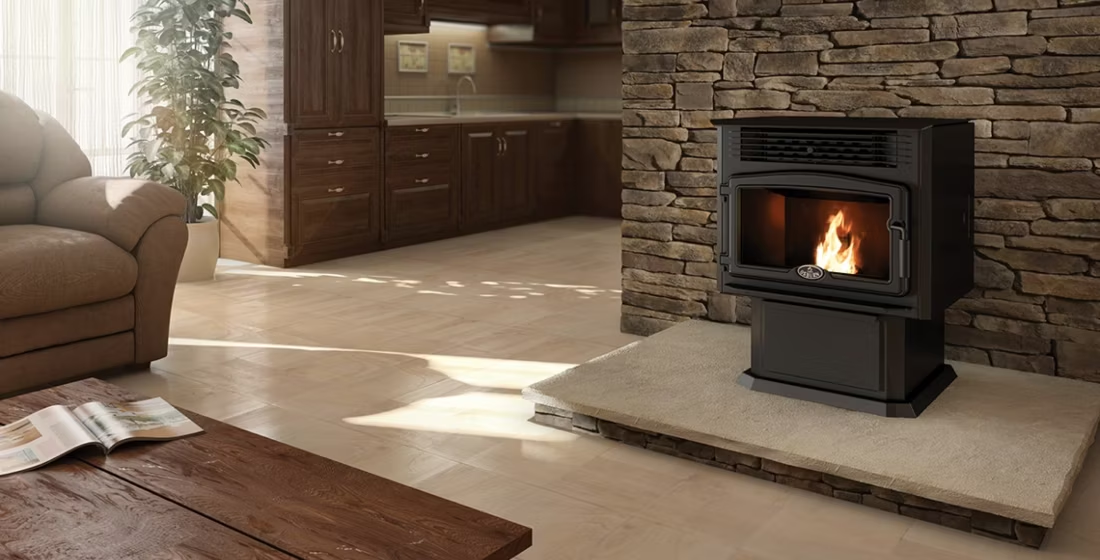
That's where pellet stoves fit well locally. They deliver consistent, thermostat-controlled heat without the splitting, stacking, and daily tending that cordwood requires—a real advantage in the newer subdivisions going up in Newcastle and Blanchard where lot sizes don't leave much room for a woodpile. Regional pellet producers like Lignetics and Indeck Energy Services supply bagged fuel that's readily available through local farm and hardware stores, and McClain County has no wood-smoke non-attainment restrictions to navigate, so running a stove on a cold snap is simply a matter of choosing the right size unit and having it installed and vented correctly by a local pro.
Three steps. No salesperson until you're ready.
Tell us about your project
Your zip code, your situation, and the fuel you're leaning toward—or let the answers point you to one.
See what's actually available
The brands dealers within 100 miles genuinely carry—real options, never a catalog mirage.
Get your dealer & Project Guide
A trusted local dealer, plus the free Project Guide & Parts List that names every component of the job.
Frequently Asked Questions
How much does a pellet stove installation cost in McClain County?
Most pellet stove and insert installations in McClain County run somewhere between $2,800 and $6,000, depending on the unit, whether you're inserting into an existing masonry fireplace or doing a freestanding install, and how much PL venting (the vent pipe pellet stoves use) has to be run through an exterior wall. A straightforward insert into an existing fireplace with a short vent run sits at the lower end; a freestanding stove in a new location—say a bonus room in one of the newer Blanchard or Newcastle subdivisions—costs more once wall penetration and venting are factored in. A local dealer will give you a firm number after seeing the space.
What size pellet stove do I need for a McClain County home?
Given the county's mild climate—winter lows averaging around 28°F and only a fairly short, mild winter heating season—most homes here don't need a stove sized for whole-house heat. A small to mid-size pellet stove rated for roughly 1,000 to 1,800 square feet is usually plenty to heat a main living area and take the edge off a central furnace during cold snaps. Homes using a stove as genuine primary heat, or larger open floor plans common in newer Newcastle and Blanchard construction, may want to size up. A local dealer can walk your floor plan and confirm the right BTU output for your layout.
Pellet stove or wood stove—which makes more sense in McClain County?
Both work here, but they solve slightly different problems. A wood stove burning local oak, hickory, or mesquite gives you the most heat per dollar and keeps working with no electricity—useful during the ice storms and severe spring weather that occasionally knock out power in the county. A pellet stove is easier to live with day to day: load the hopper, set the thermostat, and walk away, with far less ash and no chimney creosote buildup to manage. Since McClain County's heating season is short, many homeowners find the convenience of pellet outweighs the marginal cost savings of wood—but if backup heat during outages is the priority, wood stays in the conversation.
Where can I buy pellets locally in McClain County?
Bagged pellets from regional producers like Lignetics and Indeck Energy Services are typically stocked at farm and hardware stores serving Purcell, Blanchard, and Newcastle, with pricing generally running $230 to $300 per ton depending on the brand and time of year. Buying early in the fall before the first cold snap usually gets you better selection and avoids the scramble that happens once temperatures drop. A ton of pellets—about fifty 40-pound bags—typically covers a full heating season for a stove used as supplemental heat in this climate.
Do I need a permit to install a pellet stove in McClain County?
Most likely yes, though the process depends on where in the county you're located. Homes within Purcell, Blanchard, Newcastle, Wayne, or Dibble city limits go through that city's building department for a solid-fuel appliance permit; homes in unincorporated areas of the county go through McClain County directly. The permit process typically confirms the unit is installed to manufacturer clearances with proper PL venting through the wall or roof. Most local dealers handle the permit paperwork as part of the installation, so it's rarely something homeowners have to manage on their own.
How does venting work for a pellet stove?
Pellet stoves vent differently than wood stoves—instead of a full Class A chimney, they use a smaller PL (pellet vent) pipe that can run horizontally through an exterior wall, which is one reason installs tend to cost less than a comparable wood stove project. This also makes pellet a practical option for McClain County homes without an existing masonry chimney, including many of the newer builds in Newcastle and Blanchard. The vent run still needs to be sized and sloped correctly by an installer familiar with pellet-specific venting—a generic contractor unfamiliar with the requirements can get this wrong.
Will my pellet stove work during a power outage?
Not without a backup power source. Pellet stoves rely on an electric auger to feed fuel and a blower to circulate heat, so they shut down when the power does. That's worth thinking through in McClain County, where spring severe weather and occasional ice storms can knock out power for hours or longer. Many pellet stove owners in the county pair their unit with a small battery backup or a portable generator so they're not left without heat during exactly the kind of storm that makes them want it most. If uninterrupted backup heat is the top priority, a wood stove is worth comparing since it needs no electricity at all.
How much maintenance does a pellet stove need?
Plan on emptying the ash pan every few days during regular use and giving the burn pot a scrape weekly to keep the airflow clean—pellet stoves produce far less ash than wood, but they're not maintenance-free. A full annual cleaning and inspection, including the exhaust venting and combustion blower, is recommended before the start of each heating season, typically in early fall ahead of McClain County's first cold snap. Local dealers who sell pellet stoves generally offer this service, and it's worth budgeting for even in a mild-winter climate where the stove only runs a few months a year.
Pellet vs. gas—which is the better fit for a McClain County home?
Gas fireplaces offer instant on-off convenience and don't require any fuel storage, which appeals to homeowners who want zero hands-on involvement. Pellet stoves trade a little of that convenience for a genuine flame, lower running costs when pellet prices are favorable, and independence from a gas line or propane tank. In a mixed-humid, mild-winter climate like McClain County's, either fuel comfortably handles the supplemental heating job most homes actually need—the decision usually comes down to whether you already have gas service to the house and whether you want the look and feel of a real fire. A local dealer carrying both fuel types can walk through the tradeoffs for your specific home.
How often does a pellet stove need cleaning?
A clean pellet stove is a happy pellet stove. Plan on cleaning the burn pot about once a week when you're burning regularly—ash and clinkers gum up the air holes just like a pellet barbecue. Most pellet stove problems trace back to skipped cleaning that nobody explained up front. Some designs make it easy with a trapdoor burn pot: pull a lever and the gunk drops into the ash pan.
What's the difference between an insert and a zero-clearance fireplace?
An insert is a fireplace that slides into a pre-existing wood-burning fireplace—if you don't have one, there's nothing to insert it into. A zero-clearance fireplace is built into a framed wall, which makes it the answer for remodels and new construction. Simple test: existing masonry fireplace means insert; blank or framed wall means zero-clearance.
Can a fireplace actually lower my heating bill?
Yes—by creating a comfort zone. A furnace heats every square foot of the house just to warm the one room you're in; a gas fireplace on low burns roughly a sixth of the gas a typical furnace does. Set the furnace around 55–60 degrees as a baseline, then heat the rooms your family actually uses. Families who heat this way commonly save $20–$60 a month.
Does a fireplace add value to my home?
On average, a fireplace adds back to the home about the same amount you spent installing it. Add the monthly savings from heating the rooms you actually use instead of the whole house—often hundreds of dollars a year—and the value case is strong before you even count what a fire does for how your family uses the room.
Pellet Brands Stocked Around McClain County
Manufacturers will point you to the nearest stocking dealer.
Find your pellet stove in McClain County.
Tell us about your home and we'll match you with a trusted local dealer and a free Project Guide & Parts List—sized, vented, and ready for McClain County's mild winters.
Find Your Fireplace →