
Reliable pellet heat for Marshall County, from Madill to the shores of Lake Texoma.
Marshall County's winters are short and mild by national standards, but ice storms and cold snaps off the Red River valley still call for dependable, thermostat-controlled heat. Find the right pellet stove or insert and get matched with a trusted local dealer.
Every Project Starts From One of These Five Situations
Set-it-and-forget-it heat for mild Oklahoma winters.
Marshall County sits in south-central Oklahoma around Lake Texoma and Lake Murray, home to about 7,961 residents spread across Madill, Kingston, Mead, and Willis. In climate zone 3A, with an average winter low near 30°F and roughly 3,019 heating degree days a year, the heating season here is a fraction of what a place like Duluth or Bismarck sees—but that doesn't mean heat isn't needed. Ice storms and sudden cold fronts off the Red River are common, and a lot of homes around the lake are part-time cabins where a fire-and-forget heat source matters more than a wood pile that needs tending.
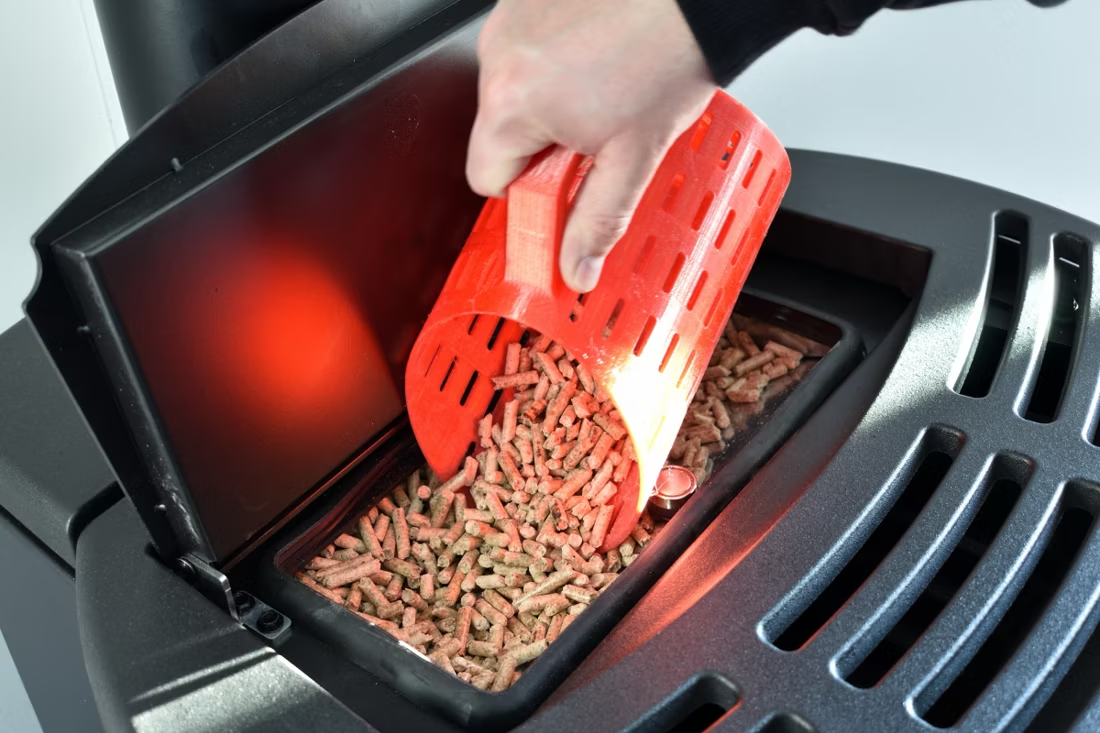
That's where pellet appliances fit well locally. There's no wood to split or season, no chimney draft to manage, and no air quality burn restrictions in Marshall County to work around—this county has none of the inversion or non-attainment issues that limit burning elsewhere. Bagged pellets from regional suppliers like Lignetics and Indeck Energy Services are widely available through farm and home stores in the Durant and Sherman, TX corridor, making pellet heat a practical, low-labor option whether you're heating a full-time home in Madill or a weekend place on the Texoma shoreline.
Three steps. No salesperson until you're ready.
Tell us about your project
Your zip code, your situation, and the fuel you're leaning toward—or let the answers point you to one.
See what's actually available
The brands dealers within 100 miles genuinely carry—real options, never a catalog mirage.
Get your dealer & Project Guide
A trusted local dealer, plus the free Project Guide & Parts List that names every component of the job.
Frequently Asked Questions
How much does a pellet stove installation cost in Marshall County?
Most pellet stove and insert installations in Marshall County fall between roughly $3,000 and $6,500, depending on whether you're installing a freestanding stove or converting an existing fireplace with an insert, and how much wall or roof venting work is required. A pellet insert going into an existing masonry fireplace with a simple through-wall vent kit tends to land on the lower end. A freestanding stove in a new location—say, a lake house without an existing hearth—runs higher once venting and a hearth pad are factored in. A local dealer will give you a firm number after seeing the space in person.
What size pellet stove do I need for my home?
Given Marshall County's mild winter lows around 30°F, most full-time homes don't need a large-capacity pellet stove to stay comfortable—a mid-size unit rated for 1,000 to 1,800 square feet handles the bulk of local homes, including many older houses in Madill and Kingston with less insulation than newer construction. Lake cabins around Texoma or Lake Murray that are used seasonally often do fine with a smaller unit sized for zone heating in the main living area rather than whole-house coverage. A dealer will factor in ceiling height, window count, and how the home is used before recommending a size.
Where can I find certified pellet stove installers near me?
Marshall County is a small, rural county, so the pool of local hearth dealers is limited—many homeowners in Madill, Kingston, and Willis end up working with installers based in nearby Durant (Bryan County) or across the Texas line in Sherman, who cover the Texoma area regularly. Look for NFI-certified installers regardless of where they're based; certification confirms training in proper venting and clearance work specific to pellet appliances, which differs from wood stove installation. Ask any installer how often they work in Marshall County—regular service in the area usually means faster response if something needs adjusting after install.
What's the difference between a pellet stove and a pellet insert?
A pellet stove is a freestanding appliance that sits on a hearth pad and vents through a wall or existing chimney—it can go almost anywhere in a room with the right clearances. A pellet insert is built to slide into an existing masonry fireplace opening, using a vent kit routed through the old chimney or straight out the back wall. For Marshall County homes with an existing fireplace they rarely use, an insert is usually the simpler retrofit. Homes without an existing fireplace, including many lake cabins, are typically better suited to a freestanding stove.
Do I need a permit to install a pellet stove in Marshall County?
Most pellet stove and insert installations require a building permit, typically issued through the city of Madill or Kingston if you're inside those limits, or through the county for unincorporated areas around the lake. Requirements mainly cover venting termination clearances and hearth protection. Most dealers who sell and install pellet appliances handle the permit paperwork as part of the job, so it's worth asking upfront whether that's included in your quote.
What's the best pellet stove for Marshall County's climate?
Because winters here are short and lows rarely drop far below freezing, you generally don't need the largest-capacity catalytic-style pellet stove on the market—mid-range units from brands like Harman, England's Stove Works, or Quadra-Fire tend to be a better fit for zone heating and occasional cold-snap coverage than an oversized unit built for sustained sub-zero climates. Look for a stove with a reliable auger feed and easy hopper access, since day-to-day convenience matters more here than raw BTU output. A local dealer can match a specific model to your square footage and how often you plan to run it.
How much maintenance does a pellet stove need?
Pellet stoves need more routine attention than a gas unit but far less than a wood stove's annual chimney sweep. Plan on emptying the ash pan every few days during regular use, cleaning the burn pot and glass weekly, and having the unit professionally serviced once a year—typically before the start of the heating season—to check the auger motor, exhaust fan, and venting. Marshall County's mild winters mean lighter overall usage than colder climates, which generally extends the interval between deeper cleanings, but annual servicing is still worth keeping on the calendar.
Where can I buy wood pellets in Marshall County?
Bagged pellets from regional producers like Lignetics and Indeck Energy Services are commonly stocked at farm supply and home improvement stores throughout the Durant and Sherman, TX area that serves Marshall County. Pellets are sold by the 40-pound bag or by the ton, and pricing fluctuates with regional supply—it's worth buying a season's worth early in fall before demand picks up during cold snaps. Your dealer can usually point you to the nearest reliable stock, since availability varies store to store in a county this size.
Pellet stove vs. wood stove—which is right for my Marshall County home?
Wood is abundant locally—oak, hickory, and mesquite are all common in Marshall County woodlots—and burning it costs less if you're willing to source, split, and season your own supply, plus it works without electricity during an outage. Pellet stoves trade that self-sufficiency for convenience: load the hopper, set the thermostat, and walk away, with less ash and no chimney creosote to manage. Since Marshall County has no air quality burn restrictions, either fuel burns freely here—the choice mostly comes down to how much hands-on wood work you want versus how much you value low-maintenance, consistent heat, especially for a part-time lake property you're not tending daily.
What's the difference between an insert and a zero-clearance fireplace?
An insert is a fireplace that slides into a pre-existing wood-burning fireplace—if you don't have one, there's nothing to insert it into. A zero-clearance fireplace is built into a framed wall, which makes it the answer for remodels and new construction. Simple test: existing masonry fireplace means insert; blank or framed wall means zero-clearance.
Why is my open fireplace making my house colder?
Open fireplaces suck—literally. As the fire burns, it consumes air your furnace already paid to heat and pulls it out through the chimney, so the house is actually colder after the fire goes out than before you lit it. An insert fixes this: it seals the chimney, puts fixed glass across the front, and turns that hole in your house into a real heat source.
Does a fireplace add value to my home?
On average, a fireplace adds back to the home about the same amount you spent installing it. Add the monthly savings from heating the rooms you actually use instead of the whole house—often hundreds of dollars a year—and the value case is strong before you even count what a fire does for how your family uses the room.
Can a fireplace actually lower my heating bill?
Yes—by creating a comfort zone. A furnace heats every square foot of the house just to warm the one room you're in; a gas fireplace on low burns roughly a sixth of the gas a typical furnace does. Set the furnace around 55–60 degrees as a baseline, then heat the rooms your family actually uses. Families who heat this way commonly save $20–$60 a month.
Pellet Brands Stocked Around Marshall County
Manufacturers will point you to the nearest stocking dealer.
Find your pellet insert in Marshall County.
Tell us a bit about your home—whether it's a full-time house in Madill or a place on Lake Texoma—and we'll match you with a trusted local dealer and a free Project Guide & Parts List for your pellet install.
Find Your Fireplace →