
Keep Your Family Warm and Safe—No Matter What
With winter lows averaging around 25°F and roughly 3,800 heating degree days a year, most Kingfisher County homes run on natural gas furnaces. A smaller number of homeowners still want a wood stove for backup heat, ambiance, or a shop or barn—and when they do, we match them with a local dealer who can size and vent it correctly.
Every Project Starts From One of These Five Situations
Wood heat is real here—it's just the exception, not the rule.
Kingfisher County sits in climate zone 3A, with about 3,806 heating degree days a year—a fraction of what a place like Fargo, ND or Minneapolis, MN sees in a typical winter. Winter lows average around 25°F, and cold snaps are usually short. That combination—mild winters plus widely available natural gas—means most homes in Kingfisher, Hennessey, Okarche, and the surrounding farmland are built and heated around a gas furnace, not a wood stove. Wood heat never became the backbone of home heating here the way it did in colder, forested parts of the country.
That doesn't mean wood is off the table. Kingfisher County sits in the Cross Timbers region, where oak, hickory, and mesquite grow on private land and get cut during land clearing, storm cleanup, or routine ranch maintenance—most of it isn't harvested under a public land permit system, since this is agricultural country rather than national forest. The homeowners who do install a wood stove here are usually after something specific: backup heat for the ice storms that occasionally take out power across central Oklahoma, the ambiance of a real fire in an older farmhouse, or supplemental heat in a detached shop, barn, or hunting cabin. For that smaller group, getting matched with a dealer who actually stocks and installs wood-burning units—rather than guessing at a big-box store—makes the difference between a stove that works and one that doesn't.
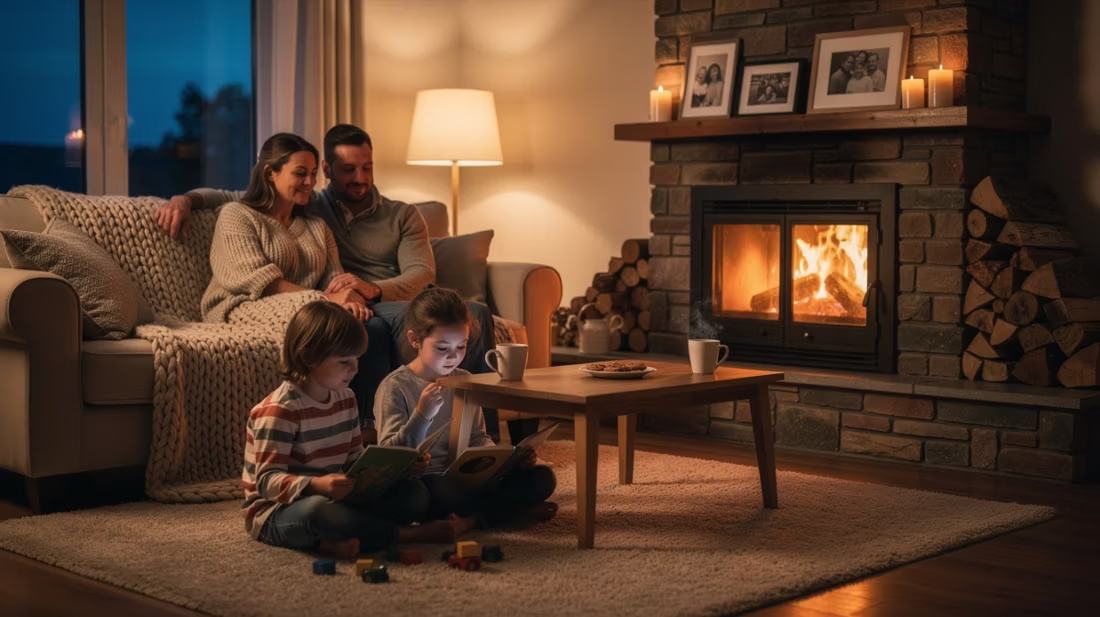
Three steps. No salesperson until you're ready.
Tell us about your project
Your zip code, your situation, and the fuel you're leaning toward—or let the answers point you to one.
See what's actually available
The brands dealers within 100 miles genuinely carry—real options, never a catalog mirage.
Get your dealer & Project Guide
A trusted local dealer, plus the free Project Guide & Parts List that names every component of the job.
Frequently Asked Questions
Is wood heat actually common in Kingfisher County?
No—and it's worth being upfront about that. With about 3,806 heating degree days a year and winter lows averaging around 25°F, Kingfisher County's climate doesn't demand the kind of sustained wood heat you'd see in a place like Bismarck, ND or Duluth, MN. Natural gas is the standard heating fuel across the county, and most new construction is built around a gas furnace from the start. Wood stoves still get installed here, but usually for backup heat during ice storms, ambiance, or a detached building—not as a household's primary heat source.
What does a wood stove installation cost in Kingfisher County?
Because wood stoves are a niche request here rather than a routine job, pricing isn't as standardized as it is for gas furnace work. Cost still comes down to the same factors everywhere—the stove itself, whether Class A chimney pipe needs to run through a roof or wall, and any hearth pad work required for code clearances. Since few local installers specialize in wood-burning appliances, it's worth getting a firm in-home quote rather than assuming a price off a manufacturer's website. A trusted local dealer can walk you through what your specific chimney or wall configuration will actually require.
Where does firewood come from in Kingfisher County if there's no national forest nearby?
Kingfisher County is agricultural land—wheat and cattle country in the Cross Timbers region—not national forest, so there isn't a Forest Service permit system for cutting firewood like you'd find in a mountain West county. Most local firewood comes from private land: oak and hickory cleared during land management, storm-damaged trees, or mesquite cleared from pastureland. If you're planning to burn wood regularly, it's worth lining up a source—a local tree service, a rancher clearing land, or a small firewood seller—since there isn't a dedicated public-land supply the way there is in forested states.
What wood species are available locally, and how do they burn?
Oak, hickory, and mesquite are the common species in Kingfisher County, all of which come from the Cross Timbers ecoregion that runs through central Oklahoma. Oak and hickory are dense hardwoods that burn hot and long once properly seasoned—figure six months to a year of drying time. Mesquite burns very hot and is popular for grilling and outdoor fires, but it pops and throws sparks more than oak or hickory, so it's less commonly used as the primary wood in an indoor stove. Whatever species you burn, make sure it's seasoned to below 20% moisture—green wood is the single biggest cause of poor stove performance and creosote buildup.
Do I need a permit to install a wood stove in Kingfisher County?
Yes—a new wood-burning appliance installation typically requires a building permit through the county building department (or the city, if you're inside Kingfisher or Hennessey city limits), covering the appliance clearances and chimney or venting work. Because wood stove installs are infrequent here compared to gas furnace work, it's worth confirming requirements directly with the local building office before you buy. A dealer experienced with wood-burning installs will usually handle the permitting as part of the job.
What's the best wood stove for Kingfisher County's mild winters?
Given winter lows that average around 25°F rather than the sub-zero nights you'd see in Fargo, ND, most Kingfisher County homes don't need an oversized, 20-plus-hour catalytic stove built for extreme cold. A mid-size non-catalytic stove—the kind offered by brands like Pacific Energy or Lopi—is usually plenty for supplemental heat or backup use. If the goal is a detached shop or barn rather than a full house, a smaller stove sized to that specific space, rather than the whole home, is the more practical call. A local dealer can size it against your actual square footage and use case.
How often should a wood stove chimney be inspected here?
The same rule applies in Kingfisher County as anywhere else: an annual inspection before burning season, per CSIA guidance. Because wood stoves see lighter, more occasional use here—backup heat during a winter storm, weekend use in a shop, rather than daily all-winter burning—creosote buildup tends to happen more slowly than in a primary-heat household. That said, skipping inspections is still the leading cause of chimney fires, and it's an easy step to overlook on a stove that only gets fired up a few times a season.
Why would someone choose wood over gas in Kingfisher County?
Gas is the practical default here—natural gas service is standard across the county, and a gas furnace or fireplace gives you instant, thermostat-controlled heat without hauling or stacking wood. Wood's real advantage in Kingfisher County is that it works without electricity or gas service, which matters during the ice storms that periodically hit central Oklahoma and knock out power for days at a time. For most households, gas covers day-to-day heating and a wood stove is a deliberate backup or ambiance choice rather than a replacement for the furnace.
How do I find someone who actually installs wood stoves in Kingfisher County?
This is the real challenge with a niche fuel choice—most local hearth dealers here are set up around gas fireplace and furnace work, since that's what the majority of the county needs. Finding an installer who's comfortable running Class A chimney pipe, sizing clearances, and pulling the right permit for a wood-burning unit takes some vetting. Rather than guessing at a big-box retailer with no local install support, we match Kingfisher County homeowners with a trusted dealer who actually handles wood-burning installations in this area, so the venting is sized correctly the first time.
Why is a fireplace insert so efficient?
An insert does two things: it seals the chimney completely, so you stop losing air you already paid to heat, and it radiates warmth into the room through the firebox and glass. Most add a heat-exchange fan that pulls cool room air underneath, wraps it around the hot firebox, and pushes it back out warm. Your home is more efficient before you've even lit the first fire.
Why is my open fireplace making my house colder?
Open fireplaces suck—literally. As the fire burns, it consumes air your furnace already paid to heat and pulls it out through the chimney, so the house is actually colder after the fire goes out than before you lit it. An insert fixes this: it seals the chimney, puts fixed glass across the front, and turns that hole in your house into a real heat source.
How much should I budget for a fireplace?
For an average home—covering the fireplace, the vent pipe, and basic installation—a budget between $3,900 and $5,500 gives you a lot of options across wood, gas, and pellet. By the time you add finish work, gas line, and electrical, the average complete installation lands between $5,000 and $12,000 all-in. In a remodel or new build, a good rule is to put about 2.5% of the total project cost toward the fireplace.
Does a fireplace add value to my home?
On average, a fireplace adds back to the home about the same amount you spent installing it. Add the monthly savings from heating the rooms you actually use instead of the whole house—often hundreds of dollars a year—and the value case is strong before you even count what a fire does for how your family uses the room.
Find your wood stove dealer in Kingfisher County.
Tell us about your home, your shop, or your backup-heat plans, and we'll match you with a trusted local dealer and send over a free Project Guide & Parts List—a plan for your wood stove project in Kingfisher County with the exact parts, including the vent kit, and our recommended local dealer.
Find Your Fireplace →