
Efficient pellet heat, without the wood-splitting, for Kay County homes.
Kay County winters average lows near 25°F with about 3,958 heating degree days—enough cold to want real supplemental heat, without the cutting and stacking that comes with a woodpile. Find the right pellet stove and connect with a trusted local dealer.
Every Project Starts From One of These Five Situations
Consistent warmth that doesn't ask much of you.
Kay County sits in north-central Oklahoma along the Arkansas River, home to Ponca City, Blackwell, and the county seat of Newkirk. The climate here—zone 3A, with winter lows averaging around 25°F and roughly 3,958 heating degree days—is milder than the northern-tier states where wood heat is often a survival necessity. It's cold enough for real heating bills in December and January, but not cold enough that most homes need a stove running around the clock. That's exactly the profile where pellet stoves earn their keep: steady, thermostatically controlled heat for a bonus room, sunroom, garage, or main living area, without anyone needing to season or split cordwood from the oak, hickory, and mesquite stands common across the county.
Kay County carries no air-quality non-attainment designation and no winter burn restrictions, so pellet stoves here run without the curtailment-period concerns that complicate wood burning in parts of the West. Regional pellet supply comes through brands like Lignetics and Indeck Energy Services, which helps keep per-ton pricing more predictable than in areas that rely on cross-country shipping. A pellet stove or insert also gives rural Kay County properties—where an outbuilding, shop, or detached living space is common—a clean, self-contained heat source that doesn't require running new ductwork.
Three steps. No salesperson until you're ready.
Tell us about your project
Your zip code, your situation, and the fuel you're leaning toward—or let the answers point you to one.
See what's actually available
The brands dealers within 100 miles genuinely carry—real options, never a catalog mirage.
Get your dealer & Project Guide
A trusted local dealer, plus the free Project Guide & Parts List that names every component of the job.
Frequently Asked Questions
How much does a pellet stove installation cost in Kay County?
Most pellet stove installations in Kay County run in the $3,000 to $6,500 range, depending on the unit, whether a dedicated electrical outlet needs to be added near the hearth, and the venting path. Pellet stoves vent through a smaller-diameter pipe than wood stoves and don't require a full masonry chimney, which keeps installation simpler and generally less expensive than a comparable wood stove install. Units going into an existing fireplace opening as an insert are usually on the lower end; freestanding stoves in a new location, where wall penetration and a fresh vent run are needed, land toward the higher end. A local dealer will give you a firm number after seeing the space.
What size pellet stove do I need for my Kay County home?
Because Kay County's winters are moderate—average lows near 25°F and under 4,000 heating degree days—most homes here don't need the largest pellet stoves on the market the way a home in Duluth, Minnesota or Fargo, North Dakota might. A small stove is usually plenty for a single room, sunroom, or shop; a medium stove handles a main living area or an older, less-insulated farmhouse common in the rural parts of the county. Very few Kay County homes need a large, primary-heat-rated unit unless the goal is to heat an entire home without running the central furnace much at all. A local dealer will size the stove to your square footage and insulation level during an in-home visit.
Where can I buy pellet fuel in Kay County?
Pellet fuel in Kay County typically comes through regional suppliers carrying brands like Lignetics and Indeck Energy Services, sold in 40-lb bags through hardware stores, farm and feed retailers, and some hearth dealers. Buying a season's supply in fall—before cold weather drives demand up—is the standard local strategy, and several dealers offer bulk pallet pricing for homeowners who plan to run a stove as a primary or heavy supplemental heat source. Rural properties around Blackwell and Newkirk sometimes need to plan a bit further ahead since delivery options are thinner outside Ponca City.
Do I need a permit to install a pellet stove in Kay County?
Most pellet stove installations require a building permit through your local jurisdiction—Ponca City, Blackwell, and Newkirk each handle permitting for homes within city limits, while unincorporated parts of Kay County go through the county building department. Because pellet stoves burn cleaner and vent differently than wood stoves, and because Kay County has no air-quality non-attainment designation, there are no curtailment-period or burn-ban restrictions to navigate—a real difference from Western counties where wood and even pellet burning can be regulated during winter inversions. Most dealers handle the permit paperwork as part of the installation.
Will my pellet stove work during a power outage?
No—pellet stoves rely on an electric auger to feed fuel and a blower to distribute heat, so they shut down when the power does. This matters in Kay County, where ice storms have historically knocked out power to parts of the county for extended stretches in winter. If backup heat during outages is a priority, some homeowners pair a pellet stove with a small battery backup or generator sized to keep the auger running, or install a wood stove or fireplace as a second, no-electricity-required heat source using local oak or hickory. If convenience is the main goal and outages aren't a major concern for your property, a pellet stove alone is a fine choice.
What's the difference between a pellet stove and a pellet insert?
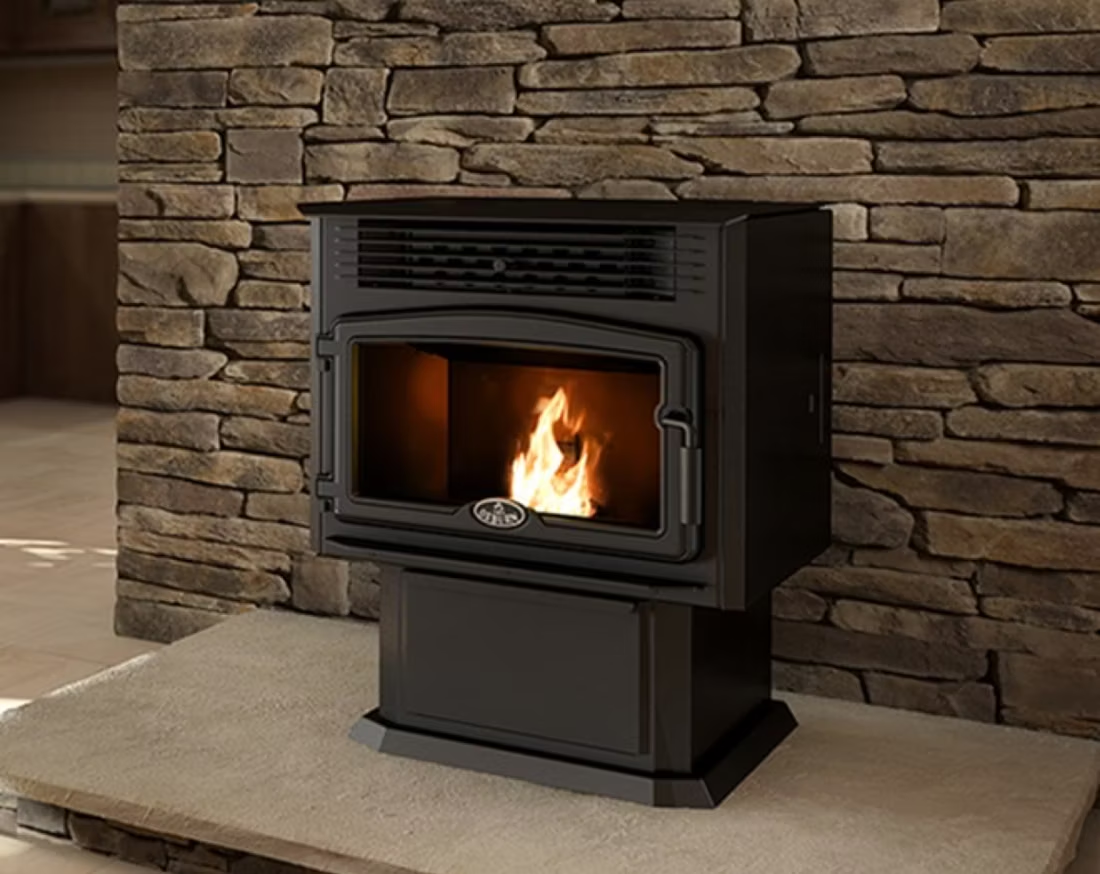
A pellet stove is a freestanding unit that can be placed almost anywhere with access to an exterior wall for venting and a nearby electrical outlet—a common choice for garages, shops, or rooms without an existing fireplace. A pellet insert is built to slide into an existing masonry fireplace opening, using a smaller vent liner through the existing chimney and a decorative surround to finish the look. For Kay County homes with an old, rarely-used wood fireplace, an insert is often the more practical upgrade—it keeps the existing look while adding real, controllable heat output that an open masonry fireplace never provided.
How often does a pellet stove need to be serviced?
Plan on cleaning the burn pot and ash area every few days during regular use, a full hopper and auger cleaning monthly, and a professional inspection and deep clean once a year—typically before the heating season starts in fall. This is considerably less involved than the annual chimney sweep a wood stove requires, since pellet stoves vent through a simpler, smaller-diameter pipe. Skipping the annual service is the most common cause of feed jams and reduced heat output, so it's worth scheduling with a local dealer or service provider each year.
How much does pellet fuel cost compared to running a furnace?
Bagged pellets typically run in the range of $4 to $6.50 per 40-lb bag locally, which works out to roughly $200 to $325 per ton depending on the brand and whether you buy by the pallet. For a Kay County home using a pellet stove as supplemental heat through a moderate winter—around 3,958 heating degree days—fuel costs tend to land well below running a central furnace at the same output, especially with natural gas or electricity rates factored in. A local dealer can walk through the math for your specific home and usage pattern.
Pellet stove vs. gas fireplace—which is right for my Kay County home?
Gas fireplaces offer instant on-off heat at the flip of a switch or remote, with no fuel to load and no ash to clean—a strong fit if your home already has gas service and you want zero-maintenance convenience. Pellet stoves require loading a hopper and emptying ash periodically, but they run on locally-supplied fuel from brands like Lignetics and Indeck Energy Services rather than piped or delivered gas, which appeals to homeowners who want more control over their fuel source. Both are common, standard choices across Kay County. If your priority is hands-off convenience, gas usually wins; if you want a heat source that isn't tied to a utility bill or propane delivery schedule, pellet is worth a closer look. A local dealer carrying both can walk through the tradeoffs for your specific home.
Why is a fireplace insert so efficient?
An insert does two things: it seals the chimney completely, so you stop losing air you already paid to heat, and it radiates warmth into the room through the firebox and glass. Most add a heat-exchange fan that pulls cool room air underneath, wraps it around the hot firebox, and pushes it back out warm. Your home is more efficient before you've even lit the first fire.
Why is my open fireplace making my house colder?
Open fireplaces suck—literally. As the fire burns, it consumes air your furnace already paid to heat and pulls it out through the chimney, so the house is actually colder after the fire goes out than before you lit it. An insert fixes this: it seals the chimney, puts fixed glass across the front, and turns that hole in your house into a real heat source.
How much should I budget for a fireplace?
For an average home—covering the fireplace, the vent pipe, and basic installation—a budget between $3,900 and $5,500 gives you a lot of options across wood, gas, and pellet. By the time you add finish work, gas line, and electrical, the average complete installation lands between $5,000 and $12,000 all-in. In a remodel or new build, a good rule is to put about 2.5% of the total project cost toward the fireplace.
What is an in-home preview and do I need one?
It's a visit where a hearth professional measures your space, confirms the model you picked actually works in your home, and walks the specs—framing, gas line, venting, finish work—before anything is ordered. Some details you just can't know until you see the house. Never make a down payment without one; it's the single most-skipped step that burns buyers.
Pellet Brands Stocked Around Kay County
Manufacturers will point you to the nearest stocking dealer.
Find your pellet stove in Kay County.
Tell us a bit about your home and we'll match you with the right pellet stove or insert, plus a free Project Guide & Parts List—the exact parts, including the vent kit, and our recommended local dealer for your Kay County installation.
Find Your Fireplace →