
Warmth on demand for Jefferson County's mild winters.
With average winter lows around 31°F and just 2,730 heating degree days, Jefferson County doesn't need a furnace-sized fire—it needs flexible, no-venting heat for chilly mornings on the ranch. Find the right electric fireplace or insert and connect with a trusted local dealer.
Every Project Starts From One of These Five Situations
Zero-clearance heat for a county spread thin.
Jefferson County is small—about 4,200 people spread across Waurika, Ringling, Terral, Addington, and the farm and ranch land along the Red River. Homes here run the gamut from older frame houses in town to manufactured homes on acreage, and a lot of them sit well outside any dense utility corridor. In a climate zone 3A county with mild winters like this one—average lows in the low 30s, and a heating season that's short compared to the northern Plains—most households don't need a whole-home heating overhaul. They need a way to take the chill off a specific room without running new gas line or building a chimney.
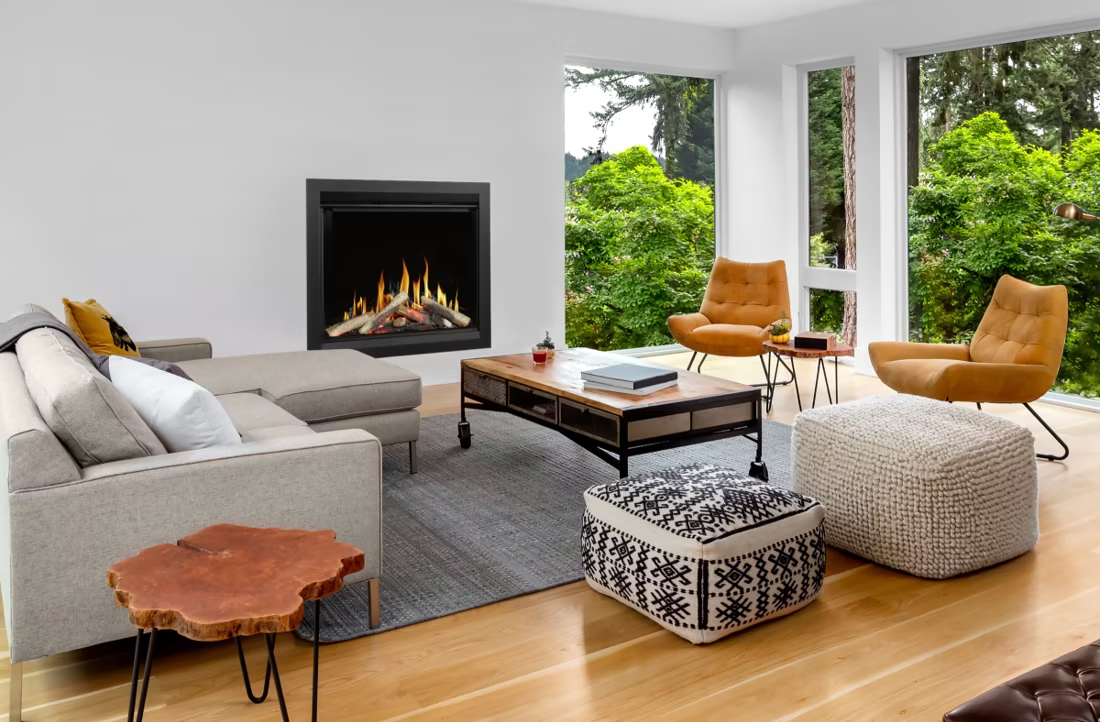
That's where electric fireplaces do real work in Jefferson County. A plug-in or hardwired unit installs with no venting, no combustion byproducts, and none of the clearance requirements that come with a wood or gas appliance. For a manufactured home outside Ringling or a converted den in an older Waurika house, that's often the fastest, least invasive path to supplemental warmth and a real focal point in the room. The tradeoff is honest: electric units run on the grid, so during the occasional ice storm that rolls through southern Oklahoma and knocks out power, they go dark—unlike a wood stove burning local oak or hickory. For most Jefferson County homes, that's an acceptable tradeoff for a heating season this short.
Three steps. No salesperson until you're ready.
Tell us about your project
Your zip code, your situation, and the fuel you're leaning toward—or let the answers point you to one.
See what's actually available
The brands dealers within 100 miles genuinely carry—real options, never a catalog mirage.
Get your dealer & Project Guide
A trusted local dealer, plus the free Project Guide & Parts List that names every component of the job.
Frequently Asked Questions
How much does an electric fireplace installation cost in Jefferson County?
Plug-in electric fireplace inserts and freestanding units are the least expensive hearth option available, typically running $300 to $1,200 installed, since most need nothing more than an existing outlet. Built-in or wall-mounted units that require a dedicated 120V or 240V circuit run higher—often $800 to $2,500 once an electrician is involved—especially in older Waurika or Terral homes where the panel may need updating to add a circuit. Because there's no venting or chimney work involved, electric installs are consistently the fastest and cheapest of any fuel type in the county.
Will an electric fireplace actually heat my room, or is it just for looks?
Most electric fireplaces produce a genuine 4,600 to 5,000 BTU of heat from a built-in fan-forced heater, which is enough to warm a single room of 300 to 400 square feet—plenty for the kind of supplemental heat Jefferson County's mild winters call for. With average lows around 31°F and just 2,730 heating degree days a year, most homes here aren't relying on the fireplace to replace central heat; they're using it to take the edge off a specific room, close off the living area on a cold morning, or add ambiance without a burning fire. If you're trying to heat a larger open floor plan or a drafty older farmhouse, talk to a local dealer about zone heating with more than one unit rather than oversizing a single fireplace.
Do I need a permit for an electric fireplace in Jefferson County?
A plug-in electric fireplace that uses an existing outlet typically doesn't require a permit—it's treated like any other appliance. A built-in unit that needs new wiring or a dedicated circuit does require an electrical permit through the Jefferson County Building Department, and the work should be done by a licensed electrician regardless of whether you're inside Waurika city limits or out in unincorporated county. There's no chimney, gas line, or combustion venting to inspect, which is one reason electric installs move faster than wood or gas projects locally.
What happens to my electric fireplace during a power outage?
It won't run. Electric fireplaces draw power for both the flame effect and the heater, so an outage takes the whole unit offline—no battery backup, no standby operation. Southern Oklahoma sees occasional winter ice storms that can knock out rural electric service for a day or more, and that's worth factoring in if you're counting on the fireplace for real emergency heat. Many Jefferson County households pair an electric fireplace for everyday convenience with a wood stove or fireplace burning local oak or hickory as a true backup—since wood doesn't depend on the grid at all.
What's the difference between an electric insert, a built-in wall unit, and a freestanding electric stove?
An electric insert drops into an existing masonry or wood-burning fireplace opening, giving you the look of a working fire without the chimney upkeep—a popular option for older Waurika and Ringling homes with an unused fireplace. A built-in wall unit is designed to be framed into new construction or a remodel, often flush-mounted for a modern look. A freestanding electric stove sits on the floor like a traditional wood stove and can go anywhere there's an outlet, making it a good fit for manufactured homes or additions where there's no existing fireplace opening. All three plug in or hardwire—none need venting.
Electric vs. wood—which makes more sense for my Jefferson County home?
Wood—burning local oak, hickory, or mesquite—delivers real heat output, works with zero electricity during outages, and fits the self-sufficient, rural character of the county, but it requires a chimney, clearances, and regular cleanout. Electric is nearly maintenance-free, installs in a fraction of the time, and produces zero smoke or ash, but it depends entirely on grid power and won't help if an ice storm takes the lines down. Given how mild the heating season is here—2,730 heating degree days is a light load compared to northern climates—a lot of Jefferson County homeowners run electric for daily convenience and keep a wood-burning option in reserve for outages or supplemental heat on the coldest nights.
Are electric fireplaces a good fit for manufactured and mobile homes?
Yes, and it's one of the more common installs across rural Jefferson County. Manufactured homes often can't accommodate the clearance and structural requirements of a wood stove or the venting needed for gas, but a plug-in or low-amp electric insert works within the home's existing electrical service in most cases. A licensed electrician should confirm the panel has capacity before adding a hardwired unit, particularly in older manufactured homes around Terral or Addington, but for straightforward plug-in units there's usually nothing extra needed.
How much does it cost to run an electric fireplace day to day?
A typical electric fireplace heater draws around 1,500 watts on high, which costs roughly 15 to 20 cents an hour to run depending on local electric rates—a few dollars for an evening of use. Because Jefferson County's winters are mild and most households only run the heater function occasionally rather than as their main source of heat, monthly cost is usually modest compared to central heating. Running the flame effect alone, without the heater engaged, uses only a few watts and costs pennies a day—a common choice for warm-season ambiance.
Electric vs. pellet stove—which is right for me?
Pellet stoves, stocked locally through regional brands like Lignetics and Indeck Energy Services, produce real furnace-level heat output and burn cleaner than cordwood, but they require a hopper to load, a vent through the wall or roof, and—like electric units—power to run the auger and blower. Electric fireplaces skip the fuel altogether: no bags to store, no hopper to fill, no venting to install. For Jefferson County's short heating season, electric is usually the simpler, lower-maintenance choice for supplemental warmth, while pellet makes more sense for homeowners who want a genuine primary heat source with the ambiance of a real flame.
Can I put a TV above my fireplace?
Yes—with an asterisk. Fireplaces are hot and TVs don't like heat. Either put a mantel between them to deflect rising warmth, or choose a fireplace with heat-management technology that creates a cool zone on the wall above—the wall stays around 125 degrees, barely warm, while the room still gets full heat. If you like clean lines and don't want a mantel, heat management is the answer.
Does an electric fireplace need a vent or chimney?
No—that's its superpower. An electric fireplace needs a wall and an outlet, period. No vent pipe, no gas line, no clearances to design around, which is why it works in bedrooms, offices, apartments, and walls where venting a gas or wood unit would be impractical or impossible. Installation is typically the simplest and least expensive of any fireplace type.
Should the dealer who sells my fireplace also install it?
Ideally, yes. A fireplace project involves vent pipe, gas line, electrical, and often tile or stone. Hire three or four separate trades and you own the liability and the game of telephone between them. One company selling and installing means one accountable party, start to finish—ask about factory training, on-time completion records, and what happens if an inspection fails.
Can I install a fireplace myself?
If you're putting a fire in your house on purpose, it's best to work with an expert. Unless you're genuinely experienced in framing, gas line, vent pipe, and the national code on clearances to combustibles, have a professional do it—and ideally the same company that sells you the fireplace, so warranty, service, and liability all live under one roof.
Find your electric fireplace in Jefferson County.
Tell us about your home and we'll put together a free Project Guide & Parts List—the right electric fireplace or insert for your space, matched with a trusted local dealer who can install it.
Find Your Fireplace →