
Every fuel type, every town in Jefferson County.
Wood, gas, pellet, and electric fireplace resources for the whole county—from Waurika down to the Red River crossings at Terral and Ringling. Pick a fuel and get matched with a local dealer who actually installs it in this part of Oklahoma.
Every Project Starts From One of These Five Situations
Mild Red River winters, 2,730 heating degree days, and a county that still burns oak and mesquite.
Jefferson County sits on the Oklahoma side of the Red River, with Waurika as the county seat and a population under 4,300 spread across ranch and farm country toward Ringling, Terral, Addington, and Ryan. Climate zone 3A and an average winter low of 31°F mean a genuinely mild heating season—2,730 heating degree days is roughly a third of what a place like Fargo, North Dakota logs in an average winter, so this isn't a county where anyone needs to plan around single-digit overnight lows. Oak and hickory from the cross-timbers stands and mesquite cleared off pastureland are the wood most local households burn, much of it self-sourced from ranch and farm property rather than purchased by the cord.
There's no non-attainment designation or inversion pattern here, so wood and pellet stoves run without curtailment restrictions of any kind—a real contrast to counties further west and north in Oklahoma with air-quality rules. Natural gas service is limited outside Waurika, so propane does most of the work for gas fireplace and furnace installs on rural properties. With a population this small, Jefferson County doesn't support a large hearth retail base of its own; most homeowners here get matched with dealers based in Duncan or as far as Wichita Falls, Texas, just across the river, who run installation crews out to the county on a scheduled basis. This hub rolls up retailers, service techs, and fuel suppliers covering the whole county—pick your fuel below for local dealers, install costs, and recommendations specific to your address.
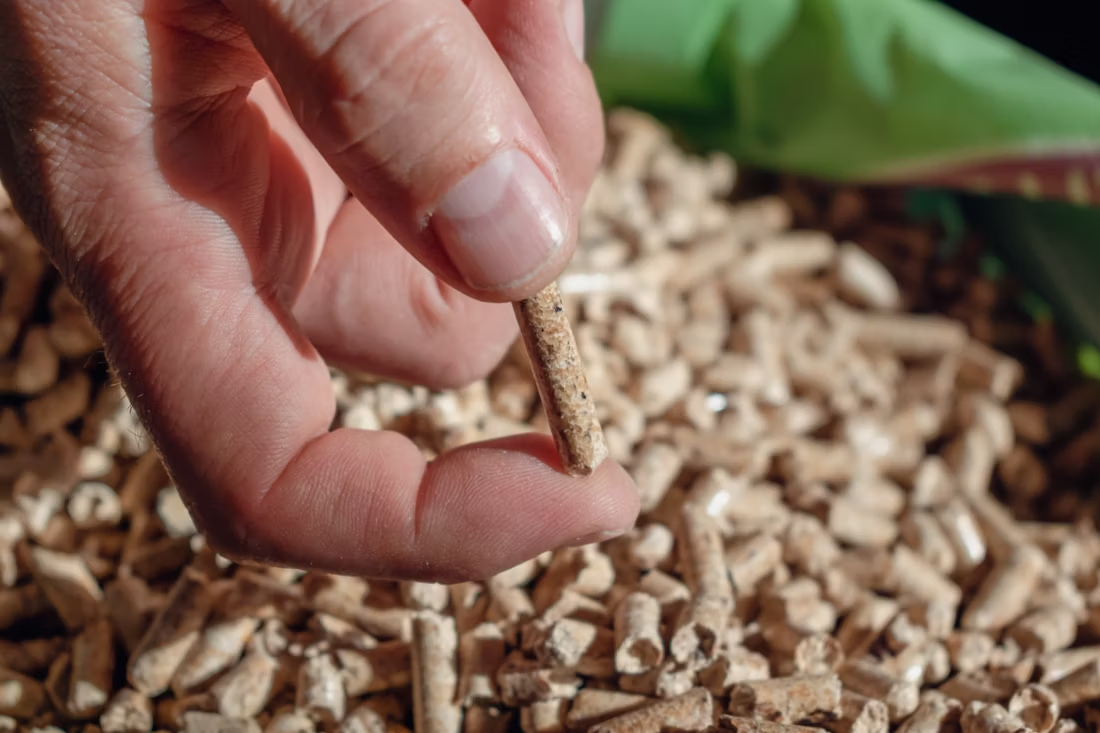
Four fuels. One honest answer for Jefferson County.
Three steps. No salesperson until you're ready.
Tell us about your project
Your zip code, your situation, and the fuel you're leaning toward—or let the answers point you to one.
See what's actually available
The brands dealers within 100 miles genuinely carry—real options, never a catalog mirage.
Get your dealer & Project Guide
A trusted local dealer, plus the free Project Guide & Parts List that names every component of the job.
Frequently Asked Questions
Which fireplace fuel makes the most sense in Jefferson County?
Given how mild the winters run here—an average low of 31°F and only 2,730 heating degree days—this is a county where the choice usually comes down to what's already on the property and how you want to use the fireplace, rather than raw heating necessity. Wood is a natural fit because oak, hickory, and mesquite are already being cleared off ranch and farm land; a lot of local households heat with what they cut themselves rather than buying cordwood. Gas is mostly a propane story here since natural gas service is limited outside Waurika, and propane fireplaces or inserts give you push-button heat without tending a fire. Pellet stoves have a smaller but real following—Lignetics and Indeck Energy Services both distribute pellets regionally, and a pellet stove is a low-maintenance option for a smaller home. Electric fireplaces work well here too, precisely because the mild climate means they don't need to carry the full heating load—they're a good fit for supplemental warmth or ambiance in a living room or bedroom.
Do I need a permit to install a wood stove or gas fireplace in Jefferson County?
It depends on where in the county you are. Inside Waurika or Ringling city limits, installs typically go through the local municipal building office; in unincorporated parts of the county, permitting often runs through the Jefferson County Courthouse in Waurika. Propane tank installations and gas line work are separately regulated—a licensed propane installer or gas fitter handles that piece and any required inspection. Wood stove installs in rural, unincorporated areas tend to have lighter permitting requirements than you'd see in a larger county, but manufacturer clearances and proper chimney or vent sizing still matter for insurance purposes even where no formal permit is pulled. Most hearth dealers we match homeowners with are familiar with what Jefferson County actually requires and handle the paperwork as part of the install.
Are there any burn restrictions in Jefferson County?
Jefferson County has no air-quality non-attainment designation and no winter inversion pattern, so there are no curtailment days restricting wood stove use the way you'd see in some western states. That said, this is dry cross-timbers and rangeland country along the Red River, and county burn bans do go into effect during drought conditions or high fire-danger stretches—those bans typically target outdoor and agricultural burning rather than indoor wood stoves, but it's worth checking with the county before doing any outdoor wood processing or brush clearing during a dry summer or fall.
Where do Jefferson County homeowners actually get their fireplace installed?
Because the county's population is under 4,300 and spread across small towns like Ringling, Terral, and Addington, there isn't a hearth showroom based in the county itself. Homeowners here typically get matched with a retailer out of Duncan, about half an hour north, or from the Wichita Falls, Texas market just across the Red River—both have dealers who run scheduled installation and service routes into Jefferson County rather than requiring you to drive product home yourself. We match you with whichever of those dealers actually services your specific town and carries the fuel type you're after.
How does scheduling work for installation and service out here?
Since installers are coming from Duncan or Wichita Falls rather than a shop down the road, expect a trip fee built into quotes for rural addresses and a bit more lead time than you'd get in a larger county. It's worth scheduling your annual chimney sweep or propane system check in late summer, before the fall install season books up regional crews. For properties well outside Waurika—toward Ryan or the river bottoms near Terral—ask your installer up front about their service radius and typical response time for a follow-up repair call, since a second trip out means another drive for them.
What does a fireplace installation typically cost in Jefferson County?
Pricing here tracks pretty closely with the wider Duncan/Wichita Falls region since that's who's doing most of the installs. Wood stove or insert installs generally run $3,500–$7,500, on the lower end of the national range since a shorter, milder heating season and simpler venting keep costs down. Propane fireplaces, inserts, and stoves typically run $4,000–$9,000 depending on whether a tank and line already exist on the property. Pellet stove or insert installs usually land around $4,000–$6,500. Electric fireplaces remain the least expensive option—$200–$2,500 for the unit, plus modest labor unless you're wiring in a dedicated circuit for a built-in. Rural trip fees for the installer's drive time are often quoted separately, so ask about that up front.
Can I install a fireplace myself?
If you're putting a fire in your house on purpose, it's best to work with an expert. Unless you're genuinely experienced in framing, gas line, vent pipe, and the national code on clearances to combustibles, have a professional do it—and ideally the same company that sells you the fireplace, so warranty, service, and liability all live under one roof.
Does a fireplace add value to my home?
On average, a fireplace adds back to the home about the same amount you spent installing it. Add the monthly savings from heating the rooms you actually use instead of the whole house—often hundreds of dollars a year—and the value case is strong before you even count what a fire does for how your family uses the room.
I know I want a fireplace—where do I actually start?
Do two things today: snap a photo of the wall or fireplace you want to transform, and take a tape measure to the space—width, height, depth. Those two artifacts answer most of a hearth professional's first questions. Then settle fuel (wood, gas, pellet, or electric) and set a realistic budget: $3,900–$5,500 covers fireplace, vent, and basic install for most homes.
Wood, gas, pellet, or electric—how do I choose?
Match the fuel to your life, not the other way around. Wood: lowest fuel cost and total power-outage independence, but you're hauling and stacking. Gas: press a button, set a thermostat, no maintenance to speak of. Pellet: wood economics with automatic feeding, in exchange for weekly cleaning and a need for electricity. Electric: plugs in anywhere with honest supplemental heat. Nobody regrets the fuel that fits how they actually live.
Stove and Fireplace Dealers in Jefferson County
Listings include WhyFire partner dealers, dealers we have verified as authorized for the brands we recommend, and established local businesses that carry hearth products. Every listing shows which one it is. The ones marked Preferred run on WhyFire's software, so they can show you real pricing and book your appointment right here. No manufacturer pays for placement. How we verify dealers →
The Ember Shop, Inc.
Home Escapes & More
Heffley's Hearth & Home
Polar Bear Chimney Sweep
Forrest Fireplaces
The Hearth Shop
Fan & Flame
Get matched with a local Jefferson County dealer.
Pick your fuel below and we'll put together a free Project Guide & Parts List—the right unit, the vent kit it needs, and the local dealer we recommend for your project, wherever you are in Jefferson County.
Find Your Fireplace →