
Find your electric fireplace in Harmon County.
Simple, code-compliant electric heat for Hollis, Gould, Vinson, and the rest of Harmon County—sized right for your home and installed by a trusted local dealer.
Every Project Starts From One of These Five Situations
Reliable warmth without the woodpile or the gas line.
Harmon County sits in the far southwest corner of Oklahoma along the Red River basin, home to about 1,662 people spread across Hollis, Gould, and the unincorporated crossroads of Vinson. The climate here (zone 3A) is mild by national standards—winter lows average around 26°F and the county logs roughly 3,392 heating degree days a year, well under a third of what a place like Fargo, ND sees in a typical winter. Most Harmon County homes don't need a heavy-duty heating system; they need something that takes the edge off cold mornings and adds a finished look to a living room, without the commitment of a full wood-burning setup or a new gas line.
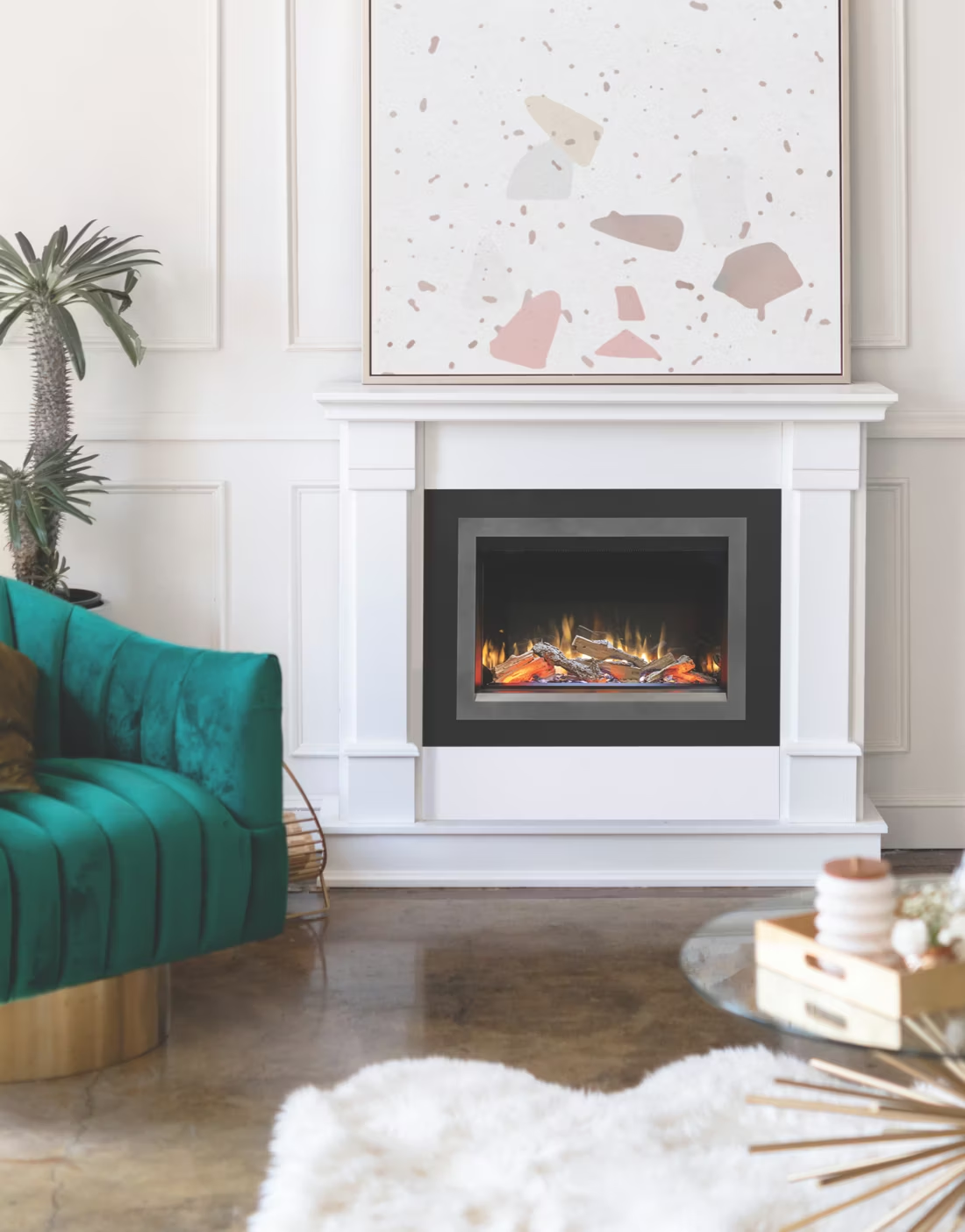
That's where electric fireplaces do their best work. Whether it's an insert dropped into an old masonry fireplace in one of Hollis's older homes or a wall-mounted unit in a newer build near Gould, electric units plug into standard household wiring (or a dedicated 240V circuit for larger built-ins) and skip the chimney, venting, and fuel storage that wood and gas demand. That matters in a county where the nearest hearth specialty dealer is usually a drive to Altus or Lawton—electric is the fuel type most homeowners here can get installed without waiting on a specialty gas-fitter or a masonry crew. The one honest tradeoff: electric fireplaces run on grid power, and rural Harmon County isn't immune to the occasional ice storm that takes down lines served by the area's rural electric cooperative. For true backup heat during an outage, most local homeowners still keep a wood stove burning oak, hickory, or mesquite in reserve.
Three steps. No salesperson until you're ready.
Tell us about your project
Your zip code, your situation, and the fuel you're leaning toward—or let the answers point you to one.
See what's actually available
The brands dealers within 100 miles genuinely carry—real options, never a catalog mirage.
Get your dealer & Project Guide
A trusted local dealer, plus the free Project Guide & Parts List that names every component of the job.
Frequently Asked Questions
How much does an electric fireplace installation cost in Harmon County?
Electric fireplaces are the least expensive hearth project you can take on. A plug-in freestanding unit or a small wall-mounted model that runs on a standard 120V outlet can be installed for a few hundred dollars—often just the cost of mounting hardware and an electrician's time to confirm the circuit. Larger built-in units or inserts that need a dedicated 240V circuit run higher, typically into the low thousands once new wiring is added. Because there's no chimney, venting, or gas line involved, electric is consistently the fastest and most affordable install of any hearth fuel type in the county.
What size electric fireplace do I need for my home?
Sizing depends more on the room than the whole house, since electric fireplaces are generally used as supplemental or zone heat rather than a home's primary heat source. A 1,000-1,500 watt unit comfortably takes the chill off a single living room or bedroom in the kind of older farmhouse or manufactured home common around Hollis and Gould. For open-concept spaces or larger rooms, look at higher-wattage models with a built-in thermostat so it isn't running full blast constantly. A local dealer can walk your space and recommend wattage based on room size and insulation.
Where can I find electric fireplace dealers near me in Harmon County?
Harmon County itself is small—under 1,700 residents spread across Hollis, Gould, and Vinson—so there isn't a hearth specialty showroom inside the county. Most homeowners here work with a dealer based in Altus or Lawton who covers the surrounding rural counties, or with a local electrician for straightforward plug-in installs. Find My Fireplace matches you with a trusted dealer who actually services Harmon County, rather than leaving you to guess which regional retailer will make the drive.
What's the difference between an electric fireplace, insert, and wall-mounted unit?
A freestanding electric fireplace looks like a stove or mantel unit and can go almost anywhere with an outlet nearby. An electric insert is built to slide into an existing masonry fireplace opening—a common upgrade for older Hollis homes with a fireplace that's no longer used for wood. A wall-mounted (or linear) unit mounts flush to the wall like a flat-screen TV, popular in newer construction where floor space matters. All three plug into standard household power, though larger inserts and wall units sometimes call for a dedicated circuit.
Do I need a permit to install an electric fireplace in Harmon County?
In most cases, a simple plug-in electric fireplace doesn't trigger a permit since there's no gas line, venting, or chimney work involved. If your installation requires new wiring, a dedicated circuit, or work inside a wall, an electrical permit may apply depending on whether you're inside Hollis city limits or in unincorporated Harmon County. A licensed electrician handling the circuit work will know which rules apply and typically pulls any needed permit as part of the job.
What's the best electric fireplace for Harmon County's climate?
With winter lows averaging around 26°F, most Harmon County homes are already running a propane furnace or heat pump as primary heat—the electric fireplace's job is to add supplemental warmth and ambiance to the room you actually spend time in. Infrared electric units tend to produce heat that feels warmer to the skin than standard resistance heaters at the same wattage, which is a good fit for zone-heating a single living space rather than fighting a whole-house heat load. Look for a model with a real thermostat rather than a simple high/low switch so it doesn't overheat a smaller Harmon County living room.
Will my electric fireplace still work during a power outage?
No—and that's worth planning around in Harmon County, where ice storms occasionally take down lines served by the area's rural electric cooperative. An electric fireplace, like any electric appliance, goes dark the moment power drops. If backup heat during outages matters to you, many local homeowners pair an electric fireplace for everyday convenience with a wood stove burning oak, hickory, or mesquite—all common locally—as insurance for the handful of days a year when the grid goes down.
Electric vs. wood-burning—which is right for my home?
Wood offers real backup heat during outages, the lowest ongoing fuel cost if you or a neighbor can source oak, hickory, or mesquite locally, and works without any grid dependence. Electric offers instant on-off convenience, no ash or creosote to manage, no chimney to maintain, and the lowest install cost of any hearth fuel—a real advantage in a county without a dedicated hearth dealer close by. Many Harmon County households land on both: wood for genuine backup heat, electric for the living room fireplace that gets used on a random Tuesday night without any prep.
Electric vs. pellet—which makes more sense here?
Pellet stoves need a steady fuel supply, and Harmon County doesn't have a local pellet retailer—homeowners typically order bags of brands like Lignetics or source through regional suppliers such as Indeck Energy Services and haul them in from Altus or Lawton. Electric fireplaces skip that logistics problem entirely: no fuel to store, no hopper to load, just power from the wall. The tradeoff is the same as with wood—a pellet stove keeps running through a grid problem if you're diligent about fuel on hand, while electric depends entirely on the local co-op keeping the lines up. For most Harmon County homes prioritizing simplicity over outage backup, electric is the easier fit.
Can I put a TV above my fireplace?
Yes—with an asterisk. Fireplaces are hot and TVs don't like heat. Either put a mantel between them to deflect rising warmth, or choose a fireplace with heat-management technology that creates a cool zone on the wall above—the wall stays around 125 degrees, barely warm, while the room still gets full heat. If you like clean lines and don't want a mantel, heat management is the answer.
Does an electric fireplace need a vent or chimney?
No—that's its superpower. An electric fireplace needs a wall and an outlet, period. No vent pipe, no gas line, no clearances to design around, which is why it works in bedrooms, offices, apartments, and walls where venting a gas or wood unit would be impractical or impossible. Installation is typically the simplest and least expensive of any fireplace type.
What is an in-home preview and do I need one?
It's a visit where a hearth professional measures your space, confirms the model you picked actually works in your home, and walks the specs—framing, gas line, venting, finish work—before anything is ordered. Some details you just can't know until you see the house. Never make a down payment without one; it's the single most-skipped step that burns buyers.
Does a fireplace add value to my home?
On average, a fireplace adds back to the home about the same amount you spent installing it. Add the monthly savings from heating the rooms you actually use instead of the whole house—often hundreds of dollars a year—and the value case is strong before you even count what a fire does for how your family uses the room.
Find your electric fireplace in Harmon County.
Tell us about your home and we'll put together a free Project Guide & Parts List—the right electric fireplace or insert for your space, matched with a trusted local dealer who can install it correctly.
Find Your Fireplace →