
Find the right fireplace for Harmon County's ranch country.
Wood, gas, pellet, and electric fireplace resources for Hollis, Gould, and the farms and ranches scattered across Harmon County. Get matched with a real local dealer instead of guessing at a big-box store two counties away.
Every Project Starts From One of These Five Situations
Mild winters, mesquite country, and a county too small for a big-box store.
Harmon County sits in the far southwest corner of Oklahoma, hugging the Red River and the Texas border, in climate zone 3A. Winters here are short and mild—the average low runs around 26°F, and the county logs roughly 3,392 heating degree days a year, a fraction of what a northern city like Fargo, ND racks up in a single season. Summers dominate the farm and ranch calendar more than winters do. Still, when a January norther blows down off the plains, homes need reliable heat, and locals have long leaned on what grows along the Red River bottoms and pastureland—oak, hickory, and the dense mesquite thickets that also fuel backyard smokers and shop wood stoves across the county.
With just over 1,600 residents spread across Hollis, the small community of Gould, and the ranchland between, Harmon County doesn't support its own hearth showroom. Most retailers and technicians covering the county are based in Altus, Lawton, or across the state line in Wichita Falls, Texas, and drive in for consultations, installs, and service calls. Pick your fuel below to see what's realistically available here—dealer coverage, typical installation costs, and the resources that fit a rural Harmon County home, whether that's a farmhouse outside Hollis or a place along the river.
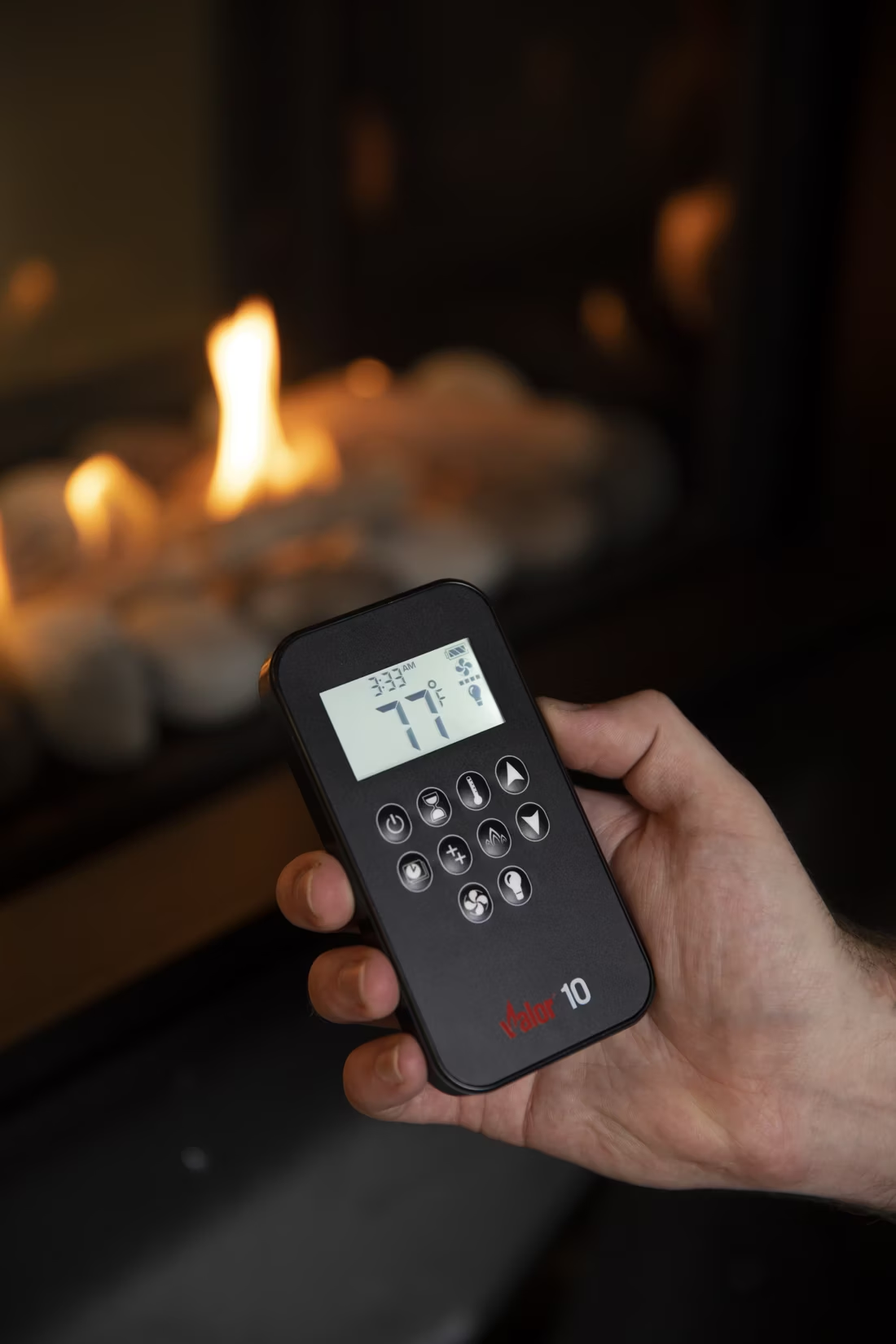
Four fuels. One honest answer for Harmon County.
Three steps. No salesperson until you're ready.
Tell us about your project
Your zip code, your situation, and the fuel you're leaning toward—or let the answers point you to one.
See what's actually available
The brands dealers within 100 miles genuinely carry—real options, never a catalog mirage.
Get your dealer & Project Guide
A trusted local dealer, plus the free Project Guide & Parts List that names every component of the job.
Frequently Asked Questions
Which fuel works best in Harmon County?
It depends on the home and the budget more than the climate—with only 3,392 heating degree days and winter lows averaging 26°F, Harmon County's heating season is short compared to most of the country. Wood is the traditional, low-cost choice for a lot of ranch properties: oak and hickory burn long and hot, and mesquite off the pastureland burns even hotter, so fuel is often free or nearly so for anyone with land to clear. Propane-fed gas fireplaces are the convenience pick for homes outside Hollis city limits, since there's no municipal natural gas line reaching most of the county. Pellet stoves work well but require planning ahead—pellets from suppliers like Lignetics or Indeck Energy Services typically ship in through Altus or Lawton rather than being stocked locally. Electric units are a fine supplemental option for a bedroom or sunroom but aren't asked to do much heavy lifting given how mild the winters run here.
Do I need a permit to install a fireplace in Harmon County?
Most installations do require a permit, though the process depends on where you live. Inside Hollis city limits, permits for wood stoves, gas fireplaces, gas inserts, and pellet stoves go through Hollis City Hall. In unincorporated Harmon County—which is most of the county's land area—requirements are lighter, but any gas or propane line work still needs a licensed installer, and a new wood-burning appliance should meet current EPA emissions standards regardless of jurisdiction. Electric fireplaces generally don't require a permit unless you're hardwiring a built-in unit into a new circuit. Local retailers who regularly work Harmon County properties usually know exactly which office to file with and can handle that paperwork as part of the installation.
Are there air quality restrictions on wood burning in Harmon County?
No. Harmon County sits on open plains with good air circulation and no history of the winter inversions or non-attainment status that trigger burn bans in some parts of the country. There's no local advisory system asking residents to curtail wood burning on high-pollution days. That said, a properly sized, EPA-certified stove is still the better long-term choice over an old uncertified unit—it burns cleaner, uses less wood per BTU, and holds a fire longer on a cold snap, which matters when the nearest chimney sweep might be driving in from Altus or Lawton.
Can one local dealer handle all four fuel types for a Harmon County home?
Some can, but given how small Harmon County is, you're generally choosing between a handful of multi-fuel dealers based in Altus or Lawton, or a Wichita Falls, Texas retailer that already services ranch properties across the state line. Dealers that stock wood, gas, pellet, and electric under one roof are worth prioritizing if you're still deciding between fuels—they can show you working units and talk through real trade-offs for a rural property, like fuel storage on a ranch versus running a propane line to a shop building. Smaller specialty shops may focus on just one or two fuels, so it's worth confirming coverage before you schedule a consultation for the drive out to Hollis or Gould.
How does service work for such a small, spread-out county?
Nearly every technician who services Harmon County is based somewhere else—Altus, Lawton, or Wichita Falls, Texas—and builds the drive into their route. Expect a modest trip charge for rural calls, and expect to book ahead: pre-season appointments in late summer or early fall are far easier to land than a mid-winter emergency visit when a technician is already stretched across three counties. For ranch properties well outside Hollis or Gould, it's worth scheduling your annual chimney sweep or gas inspection early and keeping basic spare parts—igniter batteries for propane units, a spare stovepipe gasket—on hand, since a same-day repair visit isn't always realistic out here.
What's the typical cost range for fireplace installation across fuel types in Harmon County?
Costs run a bit lower here than in many parts of the country, partly because labor and travel are priced for a rural market. Wood stove or insert installation typically runs $3,500–$8,000, with ranch properties often coming in on the lower end since chimney runs tend to be simple. Gas or propane fireplace installation runs $4,000–$9,000, with propane tank setup and line work as the main cost drivers for homes outside Hollis. Pellet stove installation runs $4,000–$6,500, with pellet fuel itself adding a modest but recurring cost since it ships in rather than being sourced locally. Electric fireplaces run $200–$2,500 for the unit plus $300–$1,000 in labor for anything beyond a simple plug-and-play install. Exact numbers depend on the dealer and the specifics of your home—the county + fuel pages above break down pricing further.
Can I install a fireplace myself?
If you're putting a fire in your house on purpose, it's best to work with an expert. Unless you're genuinely experienced in framing, gas line, vent pipe, and the national code on clearances to combustibles, have a professional do it—and ideally the same company that sells you the fireplace, so warranty, service, and liability all live under one roof.
Wood, gas, pellet, or electric—how do I choose?
Match the fuel to your life, not the other way around. Wood: lowest fuel cost and total power-outage independence, but you're hauling and stacking. Gas: press a button, set a thermostat, no maintenance to speak of. Pellet: wood economics with automatic feeding, in exchange for weekly cleaning and a need for electricity. Electric: plugs in anywhere with honest supplemental heat. Nobody regrets the fuel that fits how they actually live.
How much should I budget for a fireplace?
For an average home—covering the fireplace, the vent pipe, and basic installation—a budget between $3,900 and $5,500 gives you a lot of options across wood, gas, and pellet. By the time you add finish work, gas line, and electrical, the average complete installation lands between $5,000 and $12,000 all-in. In a remodel or new build, a good rule is to put about 2.5% of the total project cost toward the fireplace.
What are the biggest mistakes people make buying a fireplace?
Five come up constantly: budgeting for the unit but not the full job (vent, gas line, electrical, finish work); drowning in options instead of starting from style and fuel; buying without an in-home preview; handing installation to a handyman instead of a pro; and giving up out of sheer indecision. Every one is avoidable with a clear plan—step one, step two, step three.
Stove and Fireplace Dealers in Harmon County
Listings include WhyFire partner dealers, dealers we have verified as authorized for the brands we recommend, and established local businesses that carry hearth products. Every listing shows which one it is. The ones marked Preferred run on WhyFire's software, so they can show you real pricing and book your appointment right here. No manufacturer pays for placement. How we verify dealers →
Giblet Stove Sales
Home Escapes & More
Find your fireplace in Harmon County.
Pick your fuel below and we'll match you with a trusted local dealer serving Harmon County—plus a free Project Guide & Parts List with the exact parts, vent kit, and dealer recommendation for your project in Hollis, Gould, or anywhere in between.
Find Your Fireplace →