
Efficient Heat That Matches Oklahoma's Mild Winters.
From Sapulpa to Bristow, Drumright to Kellyville, pellet stoves give Creek County homes clean, thermostat-controlled zone heat without splitting or stacking cordwood. Find the right unit and connect with a trusted local dealer.
Every Project Starts From One of These Five Situations
Steady warmth, minimal upkeep.
Creek County sits in climate zone 3A, part of the Tulsa metro's mixed-humid belt, where the winter low averages 28°F and the heating season is fairly mild and short, roughly a third of the heating load a place like Minneapolis sees. That short, mild heating season is exactly where pellet stoves earn their keep: they're not built to carry a home through weeks of subzero nights the way a catalytic wood stove is, but they're very good at delivering steady, consistent zone heat to a living room, den, or shop through the cooler months from November into March.
The county's rolling oak-hickory woodland and the mesquite-dotted pastures further west have long supported wood heat, but a growing number of Creek County homeowners are choosing pellets for the convenience: no splitting, no creosote buildup, and a thermostat that holds a set temperature overnight. Pellets from regional brands like Lignetics and Indeck Energy Services are sold through farm and feed stores throughout the county, and with no air quality non-attainment designation or winter burn curtailment in Creek County, there's no seasonal restriction on when you can run a stove. The tradeoff worth knowing up front: a pellet stove's auger and combustion blower run on household current, so it won't provide heat during the ice-storm outages that occasionally hit this part of Oklahoma unless it's paired with a battery backup.
Three steps. No salesperson until you're ready.
Tell us about your project
Your zip code, your situation, and the fuel you're leaning toward—or let the answers point you to one.
See what's actually available
The brands dealers within 100 miles genuinely carry—real options, never a catalog mirage.
Get your dealer & Project Guide
A trusted local dealer, plus the free Project Guide & Parts List that names every component of the job.
Frequently Asked Questions
How much does a pellet stove installation cost in Creek County?
A freestanding pellet stove installation in Creek County typically runs $3,000 to $6,500, and a pellet insert into an existing masonry fireplace usually lands closer to $4,000 to $7,500. Pellet units vent through a simple wall-thimble pipe rather than a full masonry chimney, which keeps labor and material costs lower than a comparable wood-stove install in most cases. The bigger cost swings come from whether you need new electrical for the stove's blower and auger, and whether the hearth pad or wall clearance needs modification. Local dealers serving Sapulpa, Bristow, and Drumright will give a firm number after an in-home look at your venting path.
What size pellet stove do I need for a Creek County home?
Because Creek County's heating season is relatively short—winter lows average 28°F and the winters are fairly mild overall—most homes here use a pellet stove for zone heat in a main living area rather than as the sole heat source for the whole house. A small to mid-size unit (40,000–50,000 BTU) comfortably heats an open living room or den of 1,000 to 1,500 square feet. Homes using the stove as a genuine backup or primary heat source, or larger open floor plans, do better with a 60,000+ BTU unit. A local dealer can size the stove to your square footage and ceiling height rather than going by a rule of thumb.
Do I need a permit to install a pellet stove in Creek County?
Most jurisdictions within Creek County—including Sapulpa, Bristow, Drumright, and Kellyville—require a building permit for a new solid-fuel appliance installation, largely to confirm the venting and electrical work meet code. If you're in an unincorporated part of the county, permitting runs through the Creek County Building Department. There's no seasonal burn restriction to worry about here—Creek County has no air quality non-attainment designation, unlike some western states with winter inversion curfews—so once the unit is installed and inspected, you can run it as much as you'd like.
Pellet stove vs. wood stove—which makes more sense in Creek County?
Wood is abundant here—oak, hickory, and mesquite are all common locally, and plenty of Creek County homeowners already have a source lined up. A wood stove also keeps working during a power outage, which matters when ice storms roll through and knock out electricity for days at a time. A pellet stove trades that off for real convenience: no splitting or stacking, a hopper that holds a day or more of fuel, and consistent, thermostat-controlled heat with far less ash and no creosote buildup to manage. For a primary living space where someone's home to keep the hopper filled, pellet is usually the easier day-to-day choice. For true grid-down backup heat, wood still has the edge.
Where can I buy pellets in Creek County?
Wood pellets are sold through farm and feed supply stores throughout Creek County, along with regional brands like Lignetics and Indeck Energy Services that distribute across Oklahoma. Prices generally run in the $230 to $300 per ton range depending on the retailer and time of year—buying a season's supply (roughly 2 to 3 tons for a stove used as supplemental heat) before cold weather hits typically beats picking up bags one at a time in December. Pellets need to stay dry, which matters in Oklahoma's humid summers—store bags off the ground in a garage or shed rather than an uncovered porch.
What's the best pellet stove for a Creek County home?
Given the county's mild winter lows around 28°F, most homes don't need the largest, highest-output unit on the market—a mid-size non-catalytic pellet stove from a brand like Harman, Lopi, or Enviro handles a typical living-area install well. What matters more locally is a stove with a reliable auger and a hopper large enough to get through an overnight burn without a refill, since most Creek County pellet stoves run as supplemental heat in the evenings and overnight rather than 24/7 primary heat. A local dealer can walk through specific models based on your room size and whether you want a freestanding stove or an insert into an existing fireplace.
How much maintenance does a pellet stove need?
Pellet stoves need more frequent light maintenance than a wood stove needs heavy maintenance. Plan on emptying the ash pan every few days of regular use, wiping the glass weekly, and vacuuming the burn pot and hopper area every couple of weeks during the season. Once a year, before the stove sees regular fall use, have the venting, blower, and igniter professionally inspected—even though there's no chimney to sweep, the exhaust venting can still accumulate fly ash and needs a check. Most local hearth dealers offer this annual service, typically for less than a full wood-stove chimney sweep would cost.
Will my pellet stove work if the power goes out?
No—this is the one real limitation worth understanding before you buy. Pellet stoves rely on an electric auger to feed fuel and a blower to distribute heat and exhaust combustion gases, so a standard unit stops working the moment the power drops. Creek County sees occasional ice storms that knock out electricity for extended periods, so if backup heat during an outage is a priority, either plan for a small battery backup/inverter setup sized for the stove's draw, or consider a wood stove as a second heat source. Some newer pellet stove models are designed to run on a battery backup for a set number of hours—ask your local dealer which models support that option.
Pellet stove vs. gas fireplace—which fits Creek County better?
Gas fireplaces offer instant on-off operation and, with the right ignition system, can run during a power outage without any battery setup—a real advantage during a Creek County ice storm. Pellet stoves burn a renewable, often locally sourced fuel, tend to have a lower fuel cost per BTU than propane, and give more of a visible-fire experience than many gas units. For a primary living space where you want zero hands-on fuel handling, gas is the simpler choice. For homeowners who like the idea of burning a stored fuel they control the cost and supply of, and who are comfortable filling a hopper every day or two through the cooler months, pellet is a strong fit for Creek County's shorter heating season.
How often does a pellet stove need cleaning?
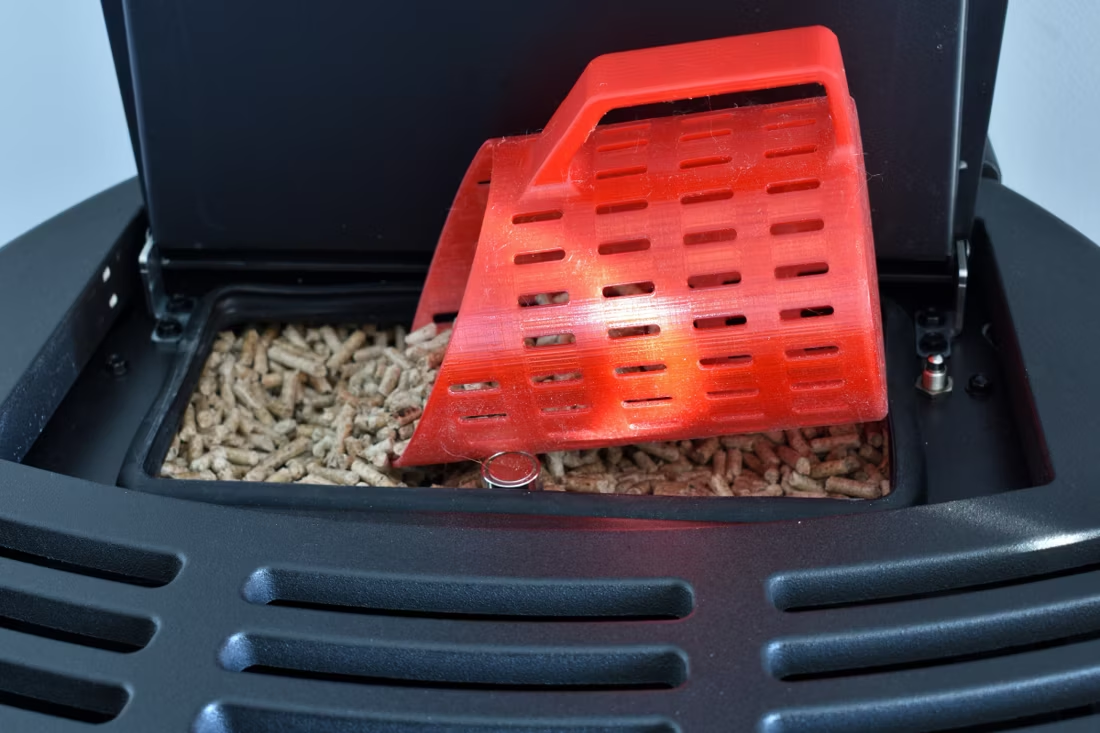
A clean pellet stove is a happy pellet stove. Plan on cleaning the burn pot about once a week when you're burning regularly—ash and clinkers gum up the air holes just like a pellet barbecue. Most pellet stove problems trace back to skipped cleaning that nobody explained up front. Some designs make it easy with a trapdoor burn pot: pull a lever and the gunk drops into the ash pan.
Why is my open fireplace making my house colder?
Open fireplaces suck—literally. As the fire burns, it consumes air your furnace already paid to heat and pulls it out through the chimney, so the house is actually colder after the fire goes out than before you lit it. An insert fixes this: it seals the chimney, puts fixed glass across the front, and turns that hole in your house into a real heat source.
Does a fireplace add value to my home?
On average, a fireplace adds back to the home about the same amount you spent installing it. Add the monthly savings from heating the rooms you actually use instead of the whole house—often hundreds of dollars a year—and the value case is strong before you even count what a fire does for how your family uses the room.
What is an in-home preview and do I need one?
It's a visit where a hearth professional measures your space, confirms the model you picked actually works in your home, and walks the specs—framing, gas line, venting, finish work—before anything is ordered. Some details you just can't know until you see the house. Never make a down payment without one; it's the single most-skipped step that burns buyers.
Pellet Brands Stocked Around Creek County
Manufacturers will point you to the nearest stocking dealer.
Find your pellet stove in Creek County.
Tell us a bit about your home and we'll match you with the right pellet stove or insert, plus a free Project Guide & Parts List and a trusted local dealer to install it.
Find Your Fireplace →