
Add real-flame ambiance to your Cotton County home.
Cotton Electric Cooperative powers nearly all of Cotton County, and a plug-in or built-in electric fireplace taps right into that service—no venting, no gas line, no chimney. Find the right unit for your Walters, Temple, or Randlett home, and get matched with a trusted local dealer.
Every Project Starts From One of These Five Situations
Simple heat that fits Cotton County's mild winters.
Cotton County sits in southwest Oklahoma along the Red River, home to about 3,654 residents spread across Walters, Temple, Randlett, and Devol. This is climate zone 3A—mixed-humid, with winters that rarely bite the way they do farther north. Average winter lows hover around 29°F, and the county has a fairly light winter heating load overall, a fraction of what a place like Fargo, ND (with a winter heating load nearly three times as heavy) sees in an average winter. Cotton County's oak, hickory, and mesquite stands are more useful for smoking meat and cabinetry than for heating—with loads this modest, full wood-burning setups are genuinely rare here, and most households lean on electric heat pumps, central gas furnaces, or a mix of both.
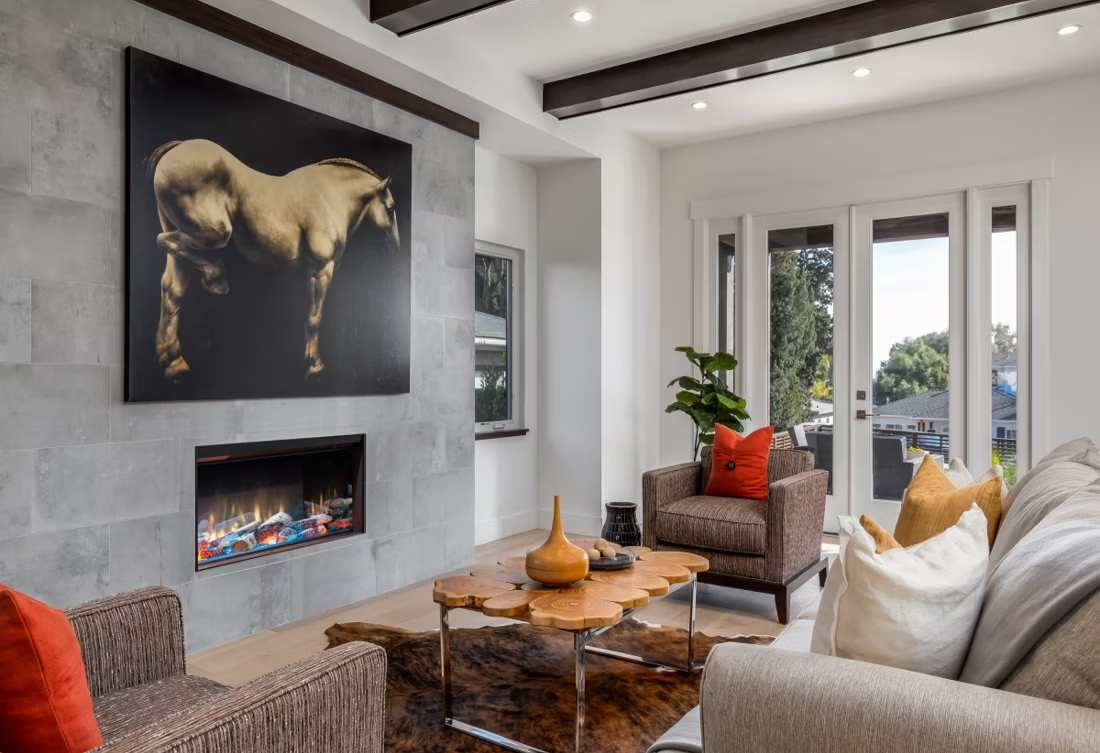
That's exactly where an electric fireplace fits. Cotton Electric Cooperative, headquartered in Walters, serves nearly the entire county with reliable power, and a plug-in or built-in electric fireplace draws on that existing service without any venting, gas line, or chimney to maintain. For manufactured homes and older site-built houses common throughout rural Cotton County, that's a real advantage—no structural changes, no combustion byproducts, and a unit that can go into a bedroom, sunroom, or den where running gas or venting wood would be impractical. Electric won't replace your furnace on a genuinely cold night, but for supplemental warmth and year-round ambiance in a county where mild winters are the norm, it's hard to beat the simplicity.
Three steps. No salesperson until you're ready.
Tell us about your project
Your zip code, your situation, and the fuel you're leaning toward—or let the answers point you to one.
See what's actually available
The brands dealers within 100 miles genuinely carry—real options, never a catalog mirage.
Get your dealer & Project Guide
A trusted local dealer, plus the free Project Guide & Parts List that names every component of the job.
Frequently Asked Questions
How much does an electric fireplace installation cost in Cotton County?
Electric fireplace installs are among the most affordable hearth projects available in Cotton County. A freestanding or plug-in unit that uses an existing 120V outlet can run as little as $200 to $800 for the unit itself, with no installation labor beyond setting it in place. A built-in electric fireplace or insert that needs a dedicated circuit—common for larger units—typically adds $300 to $800 in electrical work, bringing a full built-in project to roughly $1,000 to $2,500 in most cases, including surround or mantel work. A local dealer can give you a firm number once they know the unit and your home's existing wiring.
What's the difference between a plug-in and a built-in electric fireplace?
A plug-in electric fireplace is a freestanding or wall-mounted unit that runs off a standard 120V outlet—it can be moved, requires no electrician, and is the fastest way to add supplemental heat to a room in Temple, Randlett, or anywhere else in the county. A built-in electric fireplace or insert is designed to be recessed into a wall or existing masonry opening, often on a dedicated circuit for higher heat output, and gives a more finished, permanent look. For Cotton County homes converting an old wood-burning fireplace that's rarely used, an electric insert is a popular no-venting way to get a working feature back without touching the chimney.
Do electric fireplaces actually put out enough heat for Cotton County winters?
Yes, electric fireplaces produce genuine heat—most units put out 4,000 to 5,000 BTUs, enough to comfortably warm a single room of 400 to 1,000 square feet depending on insulation. Given Cotton County's mild winters (a 29°F average low and a fairly light winter heating load overall), that's plenty for zone heating in a den, bedroom, or sunroom without leaning harder on the central system. Electric fireplaces aren't designed to replace whole-home heating on the occasional hard freeze the county does see, but for the bulk of the season, an electric unit can meaningfully cut furnace or heat pump runtime in the room where you spend the most time.
Do I need a permit to install an electric fireplace in Cotton County?
In most cases, no permit is needed to install a plug-in electric fireplace since it uses an existing outlet. If you're adding a dedicated circuit for a built-in unit or insert, that electrical work does require a permit, which a licensed electrician pulls through Cotton County as part of the job. There's no chimney, gas line, or combustion venting involved, so electric fireplace projects are typically the simplest hearth installation to permit and inspect in the county.
Will my electric fireplace still work if the power goes out?
Cotton Electric Cooperative provides power to nearly all of Cotton County, and service is generally reliable, though rural lines can be affected during ice storms or severe thunderstorms. Because an electric fireplace runs entirely on grid power, it will go dark along with everything else during an outage—it's not a backup heat source the way a wood stove or battery-backed gas unit can be. If backup heat during outages matters to your household, pair an electric fireplace for everyday ambiance and zone heat with a propane or natural gas appliance, which is also well-supported throughout the county.
What's the best electric fireplace for Cotton County's climate?
For Cotton County's mild-winter climate, a mid-size electric insert or built-in from a brand like Dimplex, Napoleon, or SimpliFire covers most needs—enough heat output for a bedroom or living area without the higher draw of a whole-home solution. Look for a unit with a variable-speed blower and adjustable flame brightness, since many Cotton County households run these units for the ambiance alone during the county's long mild stretches and only lean on the heat function during an occasional cold snap. Local dealers can match wattage and BTU output to your specific room size.
Why don't more Cotton County homes use wood stoves given the local oak and hickory?
Wood-burning setups are genuinely uncommon in Cotton County. Even with local oak, hickory, and mesquite available, the county's modest heating need—a fairly light winter heating load overall, compared to nearly three times as heavy in a place like Bismarck, ND—means most households never build out a full wood-burning system with chimney and hearth pad. An electric fireplace delivers the same visual warmth and ambiance without the wood handling, ash cleanup, or chimney maintenance, which is a big part of why it's become the more practical choice for supplemental heat and fireplace ambiance across the county.
What's the difference between an electric fireplace, insert, and stove?
An electric fireplace is typically a built-in unit set into a wall or mantel surround, designed to look like a traditional fireplace. An electric insert is sized to slide into an existing masonry fireplace opening, converting an old wood-burning firebox into a no-venting electric unit. An electric stove is a freestanding, cabinet-style unit that sits on the floor, similar in shape to a wood or gas stove, and can be placed almost anywhere near an outlet. For Cotton County homes with an existing but rarely-used masonry fireplace, an insert is often the simplest upgrade; for new rooms or homes without a fireplace at all, a built-in unit or freestanding stove works just as well.
Electric vs. gas fireplace—which is right for my Cotton County home?
Gas fireplaces are the more common choice in Cotton County when a homeowner wants meaningful heat output and the option to run during a power outage—natural gas and propane are both well-established fuel sources locally. Electric fireplaces trade that heat capacity and outage resilience for simplicity: no gas line, no venting, no combustion byproducts, and a lower upfront cost. For primary or backup heat, gas usually wins in this climate. For ambiance, supplemental zone heat, or rooms where running a gas line isn't practical—a bedroom, apartment, or manufactured home addition—electric is the more practical fit. Some households in the county run both: gas in the main living space, electric elsewhere.
Can I put a TV above my fireplace?
Yes—with an asterisk. Fireplaces are hot and TVs don't like heat. Either put a mantel between them to deflect rising warmth, or choose a fireplace with heat-management technology that creates a cool zone on the wall above—the wall stays around 125 degrees, barely warm, while the room still gets full heat. If you like clean lines and don't want a mantel, heat management is the answer.
Does an electric fireplace need a vent or chimney?
No—that's its superpower. An electric fireplace needs a wall and an outlet, period. No vent pipe, no gas line, no clearances to design around, which is why it works in bedrooms, offices, apartments, and walls where venting a gas or wood unit would be impractical or impossible. Installation is typically the simplest and least expensive of any fireplace type.
Can I install a fireplace myself?
If you're putting a fire in your house on purpose, it's best to work with an expert. Unless you're genuinely experienced in framing, gas line, vent pipe, and the national code on clearances to combustibles, have a professional do it—and ideally the same company that sells you the fireplace, so warranty, service, and liability all live under one roof.
What is an in-home preview and do I need one?
It's a visit where a hearth professional measures your space, confirms the model you picked actually works in your home, and walks the specs—framing, gas line, venting, finish work—before anything is ordered. Some details you just can't know until you see the house. Never make a down payment without one; it's the single most-skipped step that burns buyers.
Find your electric fireplace in Cotton County.
Tell us a bit about your home and we'll match you with a trusted local dealer and send you a free Project Guide & Parts List—the exact parts and recommended installer for your electric fireplace project in Cotton County.
Find Your Fireplace →