
Find the Right Fireplace in Cotton County.
Gas, electric, and the occasional wood-burning fireplace for Walters, Devol, Randlett, and Temple. Find what a real local dealer can actually install for your home and climate.
Every Project Starts From One of These Five Situations
Practical Heat for Cotton County's Mild Winters.
Cotton County sits along the Red River in southwestern Oklahoma, an agricultural county of roughly 3,650 people anchored by Walters, the county seat, with Devol, Randlett, and Temple rounding out the map. This is climate zone 3A—hot summers, mild winters, and about 3,059 heating degree days a year, a fraction of what a place like Fargo, ND racks up each winter. The average winter low sits around 29°F, cold enough for occasional hard freezes and the ice storms that periodically move through this stretch of Oklahoma, but not cold enough to make wood heat a household necessity the way it is farther north.
What that means for hearth choices: gas and electric fireplaces are the practical fit here, valued as much for backup heat during winter outages as for everyday ambiance. Wood-burning fireplaces do exist—the oak, hickory, and mesquite growing along the Red River bottoms make solid firewood—but they're typically a secondary, ambiance-driven feature rather than the primary heat source they'd be in a colder climate. Pellet stoves are rarer still; Lignetics and Indeck Energy Services supply pellets to the broader region, but local demand is thin enough that few dealers here stock pellet equipment. This hub rounds up the retailers, technicians, and fuel suppliers serving Walters, Devol, Randlett, and Temple so you can see what's actually available and installable near you.
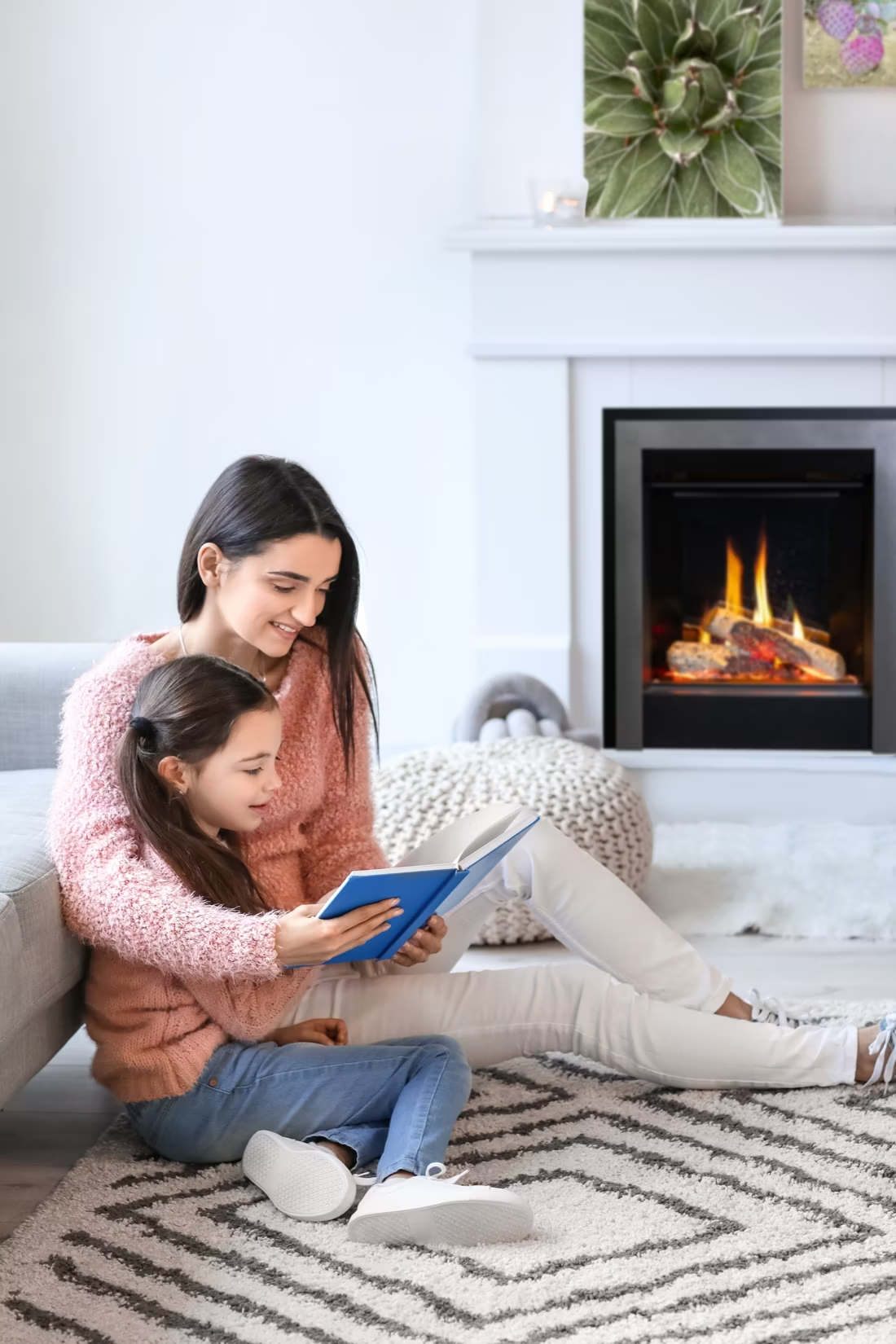
Four fuels. One honest answer for Cotton County.
Three steps. No salesperson until you're ready.
Tell us about your project
Your zip code, your situation, and the fuel you're leaning toward—or let the answers point you to one.
See what's actually available
The brands dealers within 100 miles genuinely carry—real options, never a catalog mirage.
Get your dealer & Project Guide
A trusted local dealer, plus the free Project Guide & Parts List that names every component of the job.
Frequently Asked Questions
Which fuel works best in Cotton County?
For most Cotton County homes, gas and electric are the practical picks. Propane-fired fireplaces and inserts deliver instant heat without relying on a woodpile, and they double as reliable backup heat when ice storms knock out power along the Red River bottoms. Electric fireplaces work well as supplemental heat in bedrooms and additions, and as ambiance features in living rooms—with average winter lows around 29°F, they're rarely asked to carry a whole house through winter. Wood-burning fireplaces are less common here than in colder climates; the local oak, hickory, and mesquite make fine firewood, but with only about 3,059 heating degree days a year, most households don't need a wood stove as a primary heater. Pellet stoves are the rarest of the four—thin local demand means few dealers stock the equipment, even though Lignetics and Indeck Energy Services distribute pellets regionally.
Do I need a permit to install a fireplace in Cotton County?
In most cases, yes, particularly for gas installations. Gas fireplaces, gas inserts, and propane tank setups typically require a building permit through the county building department, which operates out of the Walters courthouse, plus a licensed gas-fitter for the actual gas connection work. Wood-burning installations, while less common here, still require a permit and should meet current EPA emissions standards if you're installing a new stove or insert. Electric fireplaces usually skip the permit process unless you're doing a built-in installation with new wiring. Most local retailers handle the permitting paperwork as part of the install, so you typically don't have to navigate the county process yourself.
Are there air quality restrictions on wood burning in Cotton County?
No—Cotton County has no formal air-quality wood-burning restrictions, unlike basin or urban counties that deal with winter inversions or non-attainment status. The county's rural, low-density character and its low number of wood-burning households mean smoke buildup simply isn't the concern here that it is elsewhere. That said, if you do install a wood-burning stove or insert, choosing an EPA-certified unit still makes sense for efficiency and lower particulate output—it just isn't required by any local ordinance.
Can one local dealer handle all four fuel types?
It's less likely here than in a larger market. Given Cotton County's population of under 4,000, most hearth dealers serving the county are based out in Lawton or Wichita Falls and lead with gas and electric lines, since that's where the local demand sits. Some of those same dealers carry a wood insert or two as a secondary category for customers who specifically want one, but pellet equipment is thin on the ground countywide. If you want to compare fuel types side by side, expect to travel to a regional dealer's showroom rather than finding all four represented at a shop in Walters itself.
How does service work in rural areas of Cotton County?
Most technicians serving Cotton County are based out of Lawton, about 25-30 miles from Walters, and travel out to Devol, Randlett, and Temple for scheduled work. Expect a modest travel fee for rural calls, and plan on booking gas fireplace inspections and chimney service in late summer or early fall—appointment slots get tighter once the first cold front and ice-storm season hit. Because a gas or electric fireplace is often the backup heat plan during a winter power outage, it's worth getting that unit serviced before the season starts rather than waiting for an emergency call.
What's the typical cost range for fireplace installation across fuel types in Cotton County?
Gas fireplace, insert, or stove: roughly $4,000-$9,000 depending on propane line work and venting, with straightforward conversions on the lower end. Electric fireplace: $200-$2,500 for the unit itself, plus $300-$900 in labor for anything beyond a plug-and-play install. Wood stove or insert: $4,000-$8,500 for a typical install, though costs can run higher here since fewer local dealers specialize in wood and travel from Lawton or Wichita Falls adds to the bill. Pellet stove installs are rare enough in Cotton County that pricing varies widely by dealer—worth asking directly if you're set on that route.
How much should I budget for a fireplace?
For an average home—covering the fireplace, the vent pipe, and basic installation—a budget between $3,900 and $5,500 gives you a lot of options across wood, gas, and pellet. By the time you add finish work, gas line, and electrical, the average complete installation lands between $5,000 and $12,000 all-in. In a remodel or new build, a good rule is to put about 2.5% of the total project cost toward the fireplace.
Can I install a fireplace myself?
If you're putting a fire in your house on purpose, it's best to work with an expert. Unless you're genuinely experienced in framing, gas line, vent pipe, and the national code on clearances to combustibles, have a professional do it—and ideally the same company that sells you the fireplace, so warranty, service, and liability all live under one roof.
What is an in-home preview and do I need one?
It's a visit where a hearth professional measures your space, confirms the model you picked actually works in your home, and walks the specs—framing, gas line, venting, finish work—before anything is ordered. Some details you just can't know until you see the house. Never make a down payment without one; it's the single most-skipped step that burns buyers.
Wood, gas, pellet, or electric—how do I choose?
Match the fuel to your life, not the other way around. Wood: lowest fuel cost and total power-outage independence, but you're hauling and stacking. Gas: press a button, set a thermostat, no maintenance to speak of. Pellet: wood economics with automatic feeding, in exchange for weekly cleaning and a need for electricity. Electric: plugs in anywhere with honest supplemental heat. Nobody regrets the fuel that fits how they actually live.
Stove and Fireplace Dealers in Cotton County
Listings include WhyFire partner dealers, dealers we have verified as authorized for the brands we recommend, and established local businesses that carry hearth products. Every listing shows which one it is. The ones marked Preferred run on WhyFire's software, so they can show you real pricing and book your appointment right here. No manufacturer pays for placement. How we verify dealers →
Home Escapes & More
The Ember Shop, Inc.
Forrest Fireplaces
The Hearth Shop
Giblet Stove Sales
Find your fireplace in Cotton County.
Get matched with a trusted local dealer serving Walters, Devol, Randlett, or Temple, and receive a free Project Guide & Parts List—the exact parts, vent kit, and recommended dealer for your project.
Find Your Fireplace →