
Real Fireplace Ambiance, Zero Chimney Required.
Comanche County's winters are mild by national standards—averaging 28°F lows and a short, mild heating season, a fraction of what a place like Fargo, ND sees in a single winter. That makes electric fireplaces and inserts a natural fit for Lawton, Fort Sill housing, and the surrounding towns of Cache, Elgin, and Sterling: instant ambiance and supplemental warmth without a flue, gas line, or masonry chimney. Find the right unit and connect with a trusted local dealer who can wire it in correctly.
Every Project Starts From One of These Five Situations
Mild winters, maximum flexibility.
Comanche County sits in climate zone 3A—mixed-humid, with an average winter low around 28°F and a short, mild heating season. That's a fraction of the heating load a household in Bismarck, ND or Minneapolis, MN carries, and it means most homes here don't need a fireplace to serve as their primary heat source. What they do need is a clean, low-maintenance way to take the edge off a January cold snap and add real ambiance to a living room or bedroom—which is exactly the niche electric fireplaces fill. Lawton and the Fort Sill area have a steady mix of newer construction, rental housing, and military family turnover, and none of those situations lend themselves to ripping open a wall for a masonry chimney or running new gas line.
Because electric units don't burn fuel, there's no venting, no combustion air requirement, and none of the creosote or carbon monoxide concerns that come with wood or gas. A plug-in unit needs nothing more than a standard outlet; a hardwired built-in insert typically just needs a licensed electrician to tie into a dedicated circuit—most jurisdictions in Comanche County treat that as routine electrical work rather than a full mechanical permit process. The tradeoff is worth knowing upfront: electric fireplaces run on grid power from Public Service Company of Oklahoma (PSO), so during an ice storm outage they go dark along with everything else. For households that want backup heat during outages, a wood stove burning local oak or hickory is worth pairing alongside an electric unit used for daily ambiance.
Three steps. No salesperson until you're ready.
Tell us about your project
Your zip code, your situation, and the fuel you're leaning toward—or let the answers point you to one.
See what's actually available
The brands dealers within 100 miles genuinely carry—real options, never a catalog mirage.
Get your dealer & Project Guide
A trusted local dealer, plus the free Project Guide & Parts List that names every component of the job.
Frequently Asked Questions
How much does it cost to install an electric fireplace in Comanche County?
Electric fireplaces are the least expensive hearth product to install in Comanche County, and cost depends mainly on whether you choose a plug-in unit or a hardwired built-in. A freestanding or wall-mounted plug-in electric fireplace can run as little as $250-$800 installed, since it just needs to be set in place and plugged into an existing outlet. A built-in electric insert or a linear wall unit that requires a dedicated 120V or 240V circuit typically runs $1,200-$3,500 once you factor in the unit, a licensed electrician, and any surround or mantel carpentry. Compare that to the $4,500 and up you'd typically spend getting a wood or gas fireplace properly vented, and it's clear why electric is the go-to choice for renters, Fort Sill housing, and quick remodels around Lawton.
Is an electric fireplace enough heat for a Comanche County winter?
For most homes here, yes—as supplemental heat. Comanche County's climate zone (3A) and average winter low of 28°F mean the heating season is short and mild compared to colder parts of the country; a household in International Falls, MN deals with a winter heating load several times higher than what Comanche County sees in a typical year. A 1,500-watt electric fireplace can comfortably take the chill off a bedroom or den on the coldest nights without straining the central HVAC system, but it isn't sized to replace your furnace as primary heat. Most local homeowners use electric fireplaces exactly the way they're designed: zone heating and ambiance, not whole-home heating.
Do I need a permit to install an electric fireplace in Comanche County?
It depends on the unit. A plug-in electric fireplace that uses an existing outlet requires no permit at all—it's treated like any other appliance. A hardwired built-in insert or a linear electric fireplace tied into a new dedicated circuit typically requires an electrical permit, since a licensed electrician is running new wiring. Unlike wood or gas installs, there's no venting inspection, no chimney clearance check, and no gas-fitter involved, which is a big part of why electric projects move faster through the city of Lawton and Comanche County's permitting process than a wood or gas fireplace install.
Built-in electric insert or a freestanding electric fireplace—which fits my home?
If you already have an existing masonry fireplace opening—common in many of the older homes around Lawton—an electric insert slides into that opening and instantly modernizes it without touching the chimney. If you're in newer construction, a Fort Sill housing unit, or a rental where you can't modify a wall, a freestanding or wall-mounted plug-in unit gives you the same flame effect and heat output with zero commitment. Linear, wall-mounted built-ins are popular in newer Lawton-area construction where homeowners want a modern, low-profile look; mantel-style freestanding units tend to work better in traditional layouts and rentals throughout Elgin, Cache, and Sterling.
Will my electric fireplace still work if the power goes out?
No—electric fireplaces run entirely on power from Public Service Company of Oklahoma (PSO), so an outage during an ice storm or severe thunderstorm takes them offline along with the rest of your home's electrical system. If backup heat during outages matters to you, a wood stove is the more resilient option; Comanche County's native oak, hickory, and mesquite all burn well and a wood stove needs no electricity to produce heat. Many local homeowners run electric for everyday ambiance and convenience while keeping a wood-burning option in reserve for winter storms.
Electric vs. gas fireplace—which is right for my Comanche County home?
Gas fireplaces deliver more real heat output and can be configured to run on battery backup during outages, which matters more in areas with harsher winters. Electric fireplaces cost far less to install, need no gas line or venting, and are the simpler option for renters, Fort Sill housing, and quick updates to an existing room. Given Comanche County's mild climate—average lows around 28°F and a short, mild heating season—most homeowners don't need the higher heat output a gas unit provides, and electric covers the ambiance and light supplemental warmth most rooms actually need. Gas tends to win in primary living areas of homes with an existing gas line; electric tends to win everywhere else.
Electric vs. pellet stove—which makes more sense here?
Pellet stoves, using bagged fuel from regional suppliers like Lignetics or Indeck Energy Services, put out real heat and can serve as a supplemental or even primary heat source, but they need a vent through an exterior wall or roof, a hopper to refill, and—like electric units—power to run the auger and blower. Electric fireplaces skip the venting and the fuel storage entirely, which makes them a much simpler retrofit in an existing room. For Comanche County's mild winters, most homeowners looking purely for ambiance and light supplemental heat find electric to be the lower-effort choice; pellet makes more sense for someone who wants meaningful heat output and doesn't mind managing fuel bags and venting.
How much does it cost to run an electric fireplace day to day?
A typical electric fireplace draws around 1,500 watts on the heat setting, which costs roughly 15-20 cents per hour to run at current PSO residential electric rates—a fraction of what most homeowners assume. Running one for a few hours each evening during Comanche County's cooler months adds maybe $10-15 a month to a utility bill, and most units let you run the flame effect alone, with the heater off, for pure ambiance at almost no cost at all.
Where can I find a qualified installer for an electric fireplace in Comanche County?
For a plug-in unit, you don't need a specialized installer—most hearth retailers around Lawton will deliver and place the unit for you. For a hardwired built-in or linear electric fireplace, you want a retailer who works with a licensed electrician experienced in dedicated-circuit installs, since that's the part homeowners most often get wrong on a DIY basis. Find My Fireplace matches Comanche County homeowners with a trusted local dealer who knows which electric fireplace lines actually perform well and who can coordinate the electrical work—rather than leaving you to guess at a big-box store.
Can I put a TV above my fireplace?
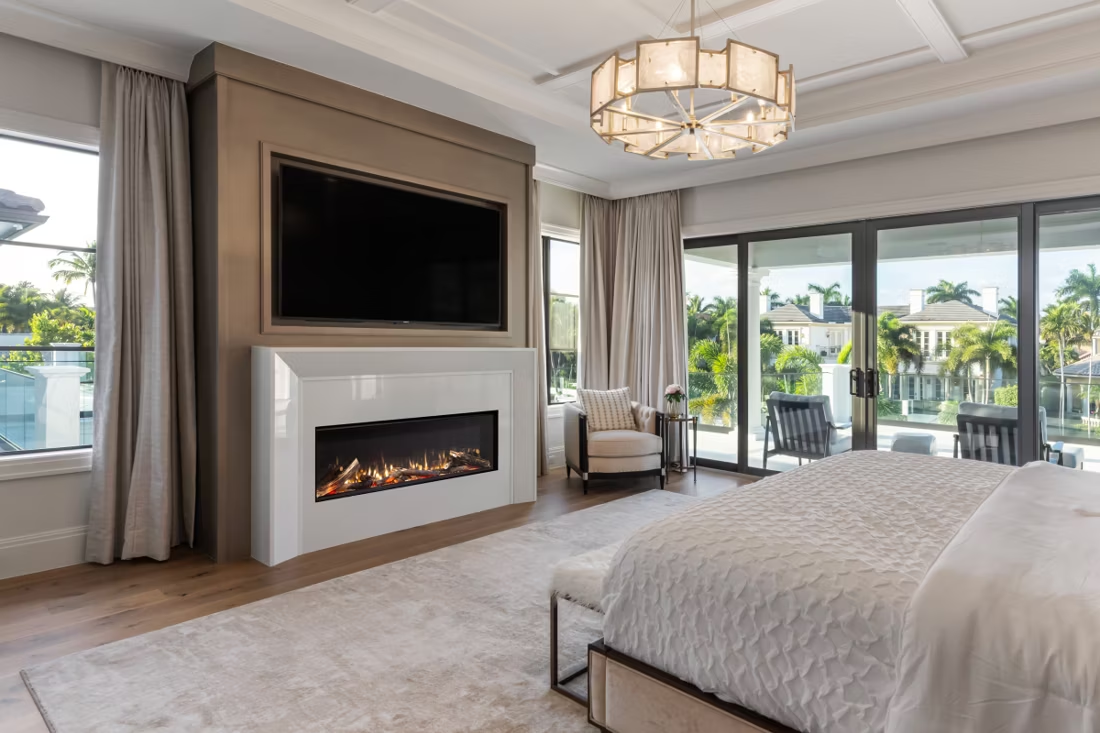
Yes—with an asterisk. Fireplaces are hot and TVs don't like heat. Either put a mantel between them to deflect rising warmth, or choose a fireplace with heat-management technology that creates a cool zone on the wall above—the wall stays around 125 degrees, barely warm, while the room still gets full heat. If you like clean lines and don't want a mantel, heat management is the answer.
Do electric fireplaces actually produce heat?
Yes—most put out around 4,800–5,000 BTUs from a standard outlet, which comfortably warms a bedroom, office, or den as a comfort-zone heater. What they won't do is carry a whole house the way wood, gas, or pellet can. Think of electric as ambiance-first with honest supplemental heat: flames on with no heat in July, flames plus warmth in January.
Can a fireplace actually lower my heating bill?
Yes—by creating a comfort zone. A furnace heats every square foot of the house just to warm the one room you're in; a gas fireplace on low burns roughly a sixth of the gas a typical furnace does. Set the furnace around 55–60 degrees as a baseline, then heat the rooms your family actually uses. Families who heat this way commonly save $20–$60 a month.
Can I install a fireplace myself?
If you're putting a fire in your house on purpose, it's best to work with an expert. Unless you're genuinely experienced in framing, gas line, vent pipe, and the national code on clearances to combustibles, have a professional do it—and ideally the same company that sells you the fireplace, so warranty, service, and liability all live under one roof.
Stove and Fireplace Dealers in Comanche County
Listings include WhyFire partner dealers, dealers we have verified as authorized for the brands we recommend, and established local businesses that carry hearth products. Every listing shows which one it is. The ones marked Preferred run on WhyFire's software, so they can show you real pricing and book your appointment right here. No manufacturer pays for placement. How we verify dealers →
Home Escapes & More
The Ember Shop, Inc.
Giblet Stove Sales
Forrest Fireplaces
The Hearth Shop
Gas & Electrical Equip
Fireplace Place
Bachles Fireplace Furnishings
Rick's House Of Fire
Mill Creek Lumber & Supply Okc
Aynes Enterprises
Find your electric fireplace in Comanche County.
Tell us about your home and room, and we'll match you with a trusted local dealer and send over a free Project Guide & Parts List—the exact unit, mounting or circuit requirements, and installer recommendation for your electric fireplace project in Comanche County.
Find Your Fireplace →