
Find the right fireplace for Comanche County's mild winters.
Wood, gas, pellet, and electric fireplace resources for every city in Comanche County—from Lawton and Fort Sill out to Cache, Elgin, Chattanooga, and Medicine Park. Find the right unit and connect with a trusted local hearth retailer.
Every Project Starts From One of These Five Situations
Southwest Oklahoma heating, from Fort Sill to the Wichita Mountains.
Comanche County sits in the mixed-humid climate of Zone 3A, with an average winter low around 28°F and roughly 3,280 heating degree days a year—a fraction of what a place like Duluth, Minnesota logs each winter. Cold snaps do happen (the February 2021 winter storm shut down the region for days), but most years the heating season is short and mild compared to the northern tier of the country. That said, the county still has a strong wood-heat culture: post oak, hickory, and mesquite grow across the ranchland and Wichita Mountains foothills around Cache and Meers, and a lot of local firewood is self-cut or bought by the cord from nearby land rather than shipped in.
What you'll find on this hub: hearth retailers, service technicians, and fuel suppliers serving every community in the county—from Lawton and the Fort Sill area to Cache, Elgin, Sterling, Chattanooga, Fletcher, Geronimo, Indiahoma, and Medicine Park. Pick your fuel below to drill into specifics—local dealers, installation costs, recommended units, and the resources that match your project. Whether you're warming a Lawton subdivision home or a cabin near the Wichita Mountains Wildlife Refuge, this is the starting point.
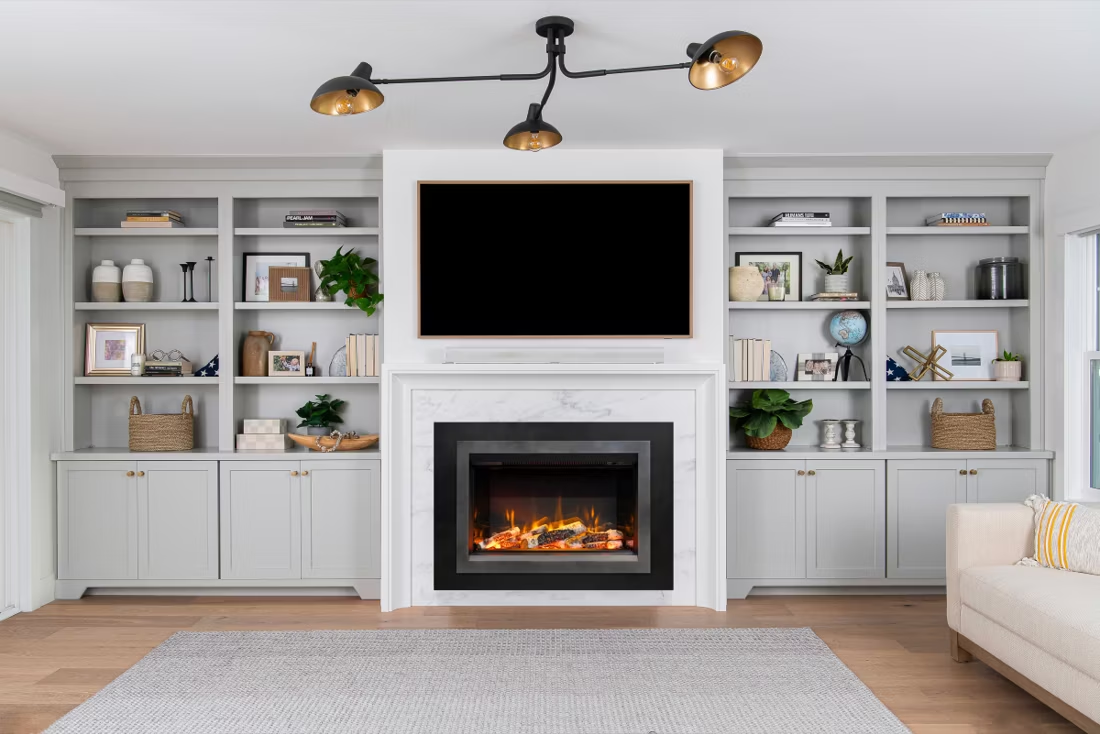
Four fuels. One honest answer for Comanche County.
Three steps. No salesperson until you're ready.
Tell us about your project
Your zip code, your situation, and the fuel you're leaning toward—or let the answers point you to one.
See what's actually available
The brands dealers within 100 miles genuinely carry—real options, never a catalog mirage.
Get your dealer & Project Guide
A trusted local dealer, plus the free Project Guide & Parts List that names every component of the job.
Frequently Asked Questions
Which fuel works best in Comanche County?
It depends on your home and how you use it. Wood remains part of the local heritage—oak, hickory, and mesquite are cut locally from the ranchland and mountain foothills around Cache and Meers—but with only about 3,280 heating degree days a year and winter lows averaging near freezing, most Comanche County homes don't rely on wood as their sole heat source; it's often a supplemental or ambiance choice. Gas fireplaces are the most common baseline for Lawton subdivisions and Fort Sill-area homes with natural gas service—fast heat, low maintenance, no wood to haul. Pellet stoves are a smaller niche here; Lignetics and Indeck Energy Services both supply the region, but demand runs lighter than in colder states. Electric fireplaces have grown popular in newer builds around Elgin and Sterling precisely because the mild climate doesn't demand a full-time primary heater—electric covers ambiance and shoulder-season warmth without a chimney.
Do I need a permit to install a fireplace in Comanche County?
In most cases, yes. New wood stoves, wood inserts, gas fireplaces, gas inserts, gas stoves, and pellet stoves typically require a building permit. Inside Lawton city limits, permits go through the City of Lawton; in Cache, Elgin, Sterling, Chattanooga, and the rest of unincorporated Comanche County, permits are handled through the Comanche County Building Department. Gas installations also need a separate gas line permit and a licensed gas-fitter for the connection work. New wood-burning appliances must meet current EPA 2020 NSPS emissions standards—this is a national requirement, not a local add-on. Electric fireplaces generally don't require a permit unless the installation involves hardwiring a built-in unit into a new circuit. Most local hearth retailers handle the paperwork as part of installation.
Are there air quality restrictions on wood burning in Comanche County?
No, not in the way you'd see in mountain-basin regions with winter inversions. Comanche County's open, wind-swept plains don't trap wood smoke the way a bowl-shaped basin like Klamath Falls does, and the county has no winter burn advisories or curtailment periods on the books. Oklahoma DEQ does occasionally issue summer ozone action day alerts, but those are tied to vehicle and industrial emissions, not residential wood heat. New wood stoves and inserts still must meet EPA 2020 NSPS emissions standards at the time of installation, but that's a federal manufacturing standard applied everywhere, not a response to local air quality problems.
Can one local hearth retailer handle all four fuel types?
Many Comanche County retailers carry at least two or three fuel types, and a few carry all four. Larger Lawton-area showrooms tend to stock wood, gas, and pellet units side by side and add electric as a smaller display line—useful if you want to compare a wood insert against a gas insert in the same visit. Smaller shops closer to Cache and Elgin sometimes specialize—focusing mainly on gas conversions for existing masonry fireplaces, or on wood and pellet for rural customers who still burn oak and hickory. If you're not sure which fuel fits your home, a multi-fuel dealer can walk you through working displays and talk through the trade-offs for your specific situation and budget.
How does service work in rural areas of Comanche County?
Most service technicians are based in or near Lawton and drive out to the smaller towns—Cache, Chattanooga, Sterling, Fletcher, Geronimo, Indiahoma, and Medicine Park. Distances in Comanche County are modest compared to sprawling rural counties out West; nearly every community is within about 30 miles of Lawton, so rural travel fees tend to be lower and scheduling is generally easier. Fall (September–November) is the best window to book annual chimney sweeps or gas inspections before the first cold front comes through—waiting until a hard freeze hits means longer lead times for both sweeps and gas techs.
What's the typical cost range for fireplace installation across all fuel types in Comanche County?
Ranges vary by fuel. Wood stove or insert installation: roughly $4,000–$8,500 for a typical retrofit into an existing masonry fireplace, more if new chimney or hearth work is needed. Gas fireplace, insert, or stove: roughly $4,000–$9,500 depending on whether a new gas line has to be run or an existing line is already in place. Pellet stove or insert: roughly $4,000–$6,500 for most installs. Electric fireplace: $200–$2,500 for the unit itself, plus $300–$1,000 in labor for anything beyond a simple plug-and-play placement. Because Comanche County's mild climate means simpler venting and less insulation work than colder regions, installs here often land toward the lower end of these national ranges—but exact pricing depends on your home and the retailer. See the county + fuel pages above for cost detail tied to specific local dealers.
How much should I budget for a fireplace?
For an average home—covering the fireplace, the vent pipe, and basic installation—a budget between $3,900 and $5,500 gives you a lot of options across wood, gas, and pellet. By the time you add finish work, gas line, and electrical, the average complete installation lands between $5,000 and $12,000 all-in. In a remodel or new build, a good rule is to put about 2.5% of the total project cost toward the fireplace.
Does a fireplace add value to my home?
On average, a fireplace adds back to the home about the same amount you spent installing it. Add the monthly savings from heating the rooms you actually use instead of the whole house—often hundreds of dollars a year—and the value case is strong before you even count what a fire does for how your family uses the room.
What is an in-home preview and do I need one?
It's a visit where a hearth professional measures your space, confirms the model you picked actually works in your home, and walks the specs—framing, gas line, venting, finish work—before anything is ordered. Some details you just can't know until you see the house. Never make a down payment without one; it's the single most-skipped step that burns buyers.
I know I want a fireplace—where do I actually start?
Do two things today: snap a photo of the wall or fireplace you want to transform, and take a tape measure to the space—width, height, depth. Those two artifacts answer most of a hearth professional's first questions. Then settle fuel (wood, gas, pellet, or electric) and set a realistic budget: $3,900–$5,500 covers fireplace, vent, and basic install for most homes.
Stove and Fireplace Dealers in Comanche County
Listings include WhyFire partner dealers, dealers we have verified as authorized for the brands we recommend, and established local businesses that carry hearth products. Every listing shows which one it is. The ones marked Preferred run on WhyFire's software, so they can show you real pricing and book your appointment right here. No manufacturer pays for placement. How we verify dealers →
Home Escapes & More
The Ember Shop, Inc.
Giblet Stove Sales
Forrest Fireplaces
The Hearth Shop
Gas & Electrical Equip
Fireplace Place
Bachles Fireplace Furnishings
Rick's House Of Fire
Mill Creek Lumber & Supply Okc
Aynes Enterprises
Find your fireplace in Comanche County.
Tell us about your home and we'll match you with a trusted local Comanche County dealer and send a free Project Guide & Parts List—the exact parts, vent kit, and recommended installer for your project, no matter which fuel you choose.
Find Your Fireplace →