
Find the right pellet stove for Cherokee County.
Steady, low-maintenance heat for the mild but real winters of Tahlequah, Park Hill, Hulbert, and the rest of Cherokee County. I'll match you with a trusted local dealer who can size and install it correctly.
Every Project Starts From One of These Five Situations
A clean, efficient option for a moderate heating climate.
Cherokee County sits in climate zone 3A with a moderate winter heating season and an average winter low around 28°F—a far cry from the deep-freeze demands of a place like Fargo ND or Duluth MN. That's actually a good match for pellet appliances: they don't need to run flat-out for months at a time, and the automated feed and thermostat control mean you're not tending a fire every few hours through a long, brutal winter. For homes in and around Tahlequah, Park Hill, and Hulbert, a pellet stove or insert can comfortably serve as a primary heat source in a well-insulated space, or a highly efficient supplement to a central system.
Cherokee County has no listed air quality non-attainment concerns, so pellet stoves here are chosen mainly for efficiency, convenience, and lower ash output rather than emissions compliance. Regional pellet brands including Lignetics and Indeck Energy Services supply the area, and with local oak, hickory, and mesquite common in the woodpile culture here, many households appreciate pellets as the lower-mess alternative to cordwood without giving up radiant, wood-fired heat. A qualified local dealer can help you decide whether a stove or an insert into an existing fireplace makes more sense for your home.
Three steps. No salesperson until you're ready.
Tell us about your project
Your zip code, your situation, and the fuel you're leaning toward—or let the answers point you to one.
See what's actually available
The brands dealers within 100 miles genuinely carry—real options, never a catalog mirage.
Get your dealer & Project Guide
A trusted local dealer, plus the free Project Guide & Parts List that names every component of the job.
Frequently Asked Questions
How much does a pellet stove installation cost in Cherokee County?
A typical pellet stove or insert installation in Cherokee County runs in the same general range seen across most of Oklahoma—expect the bulk of the cost to be the appliance itself, with venting and hearth pad work adding to the total. Because pellet stoves vent through a simple side-wall or through-roof pipe rather than a full masonry chimney, installation is usually simpler and less expensive than a comparable wood stove project. Your local dealer will give you a firm number after seeing your home, but expect the final figure to depend heavily on whether you're installing into an existing fireplace opening or placing a freestanding unit in a new location with fresh venting.
What size pellet stove do I need for my home in Cherokee County?
With winters this mild—average lows around 28°F and a moderate heating season overall—most Cherokee County homes don't need the largest hopper-capacity units built for northern climates. A mid-size stove is usually enough to heat a main living area or an open-concept main floor, while a smaller unit can supplement a central system in bedrooms or additions. Homes in Park Hill or rural parts of the county with older, leakier construction may need to size up slightly. A local dealer will walk your square footage, insulation, and floor plan before recommending a model—oversizing a pellet stove wastes fuel and can shorten burn-pot life.
Where can I find pellet fuel near Cherokee County?
Regional pellet brands including Lignetics and Indeck Energy Services supply pellets to dealers and hardware retailers across northeastern Oklahoma, and most hearth dealers in the Tahlequah area either stock bags directly or can point you to a reliable local supplier. Because Cherokee County's winters are shorter and milder than northern-climate markets, seasonal demand spikes are less extreme here, which generally means steadier local availability. Buying by the ton ahead of the coldest months is still the smart move if you're using a pellet stove as a primary heat source.
What's the difference between a pellet stove and a pellet insert?
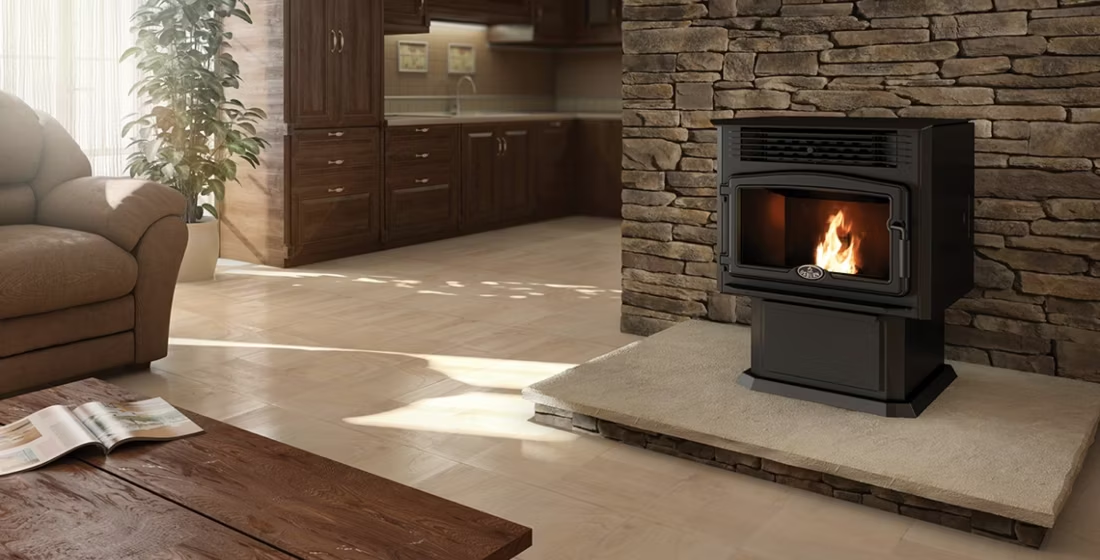
A pellet stove is a freestanding unit that sits on a hearth pad and vents through a wall or existing chimney chase—it can go almost anywhere with the right clearances. A pellet insert is built to slide into an existing masonry fireplace opening, turning a rarely-used wood fireplace into an automated, thermostat-controlled heat source. For Cherokee County homes with an existing fireplace—common in the older housing stock around Tahlequah—an insert is often the simpler retrofit since it reuses the existing opening and chimney chase for venting. Homes without an existing fireplace usually do better with a freestanding stove.
Do I need a permit to install a pellet stove in Cherokee County?
Most Cherokee County jurisdictions require a building permit for a new pellet stove installation, particularly when new venting is being run through a wall or roof. Requirements can vary slightly between the city of Tahlequah and unincorporated parts of the county, so it's worth confirming with your local building department before work starts. In practice, most established hearth dealers handle the permitting as part of the installation, so it's rarely something homeowners have to navigate on their own.
What's the best pellet stove for Cherokee County's climate?
Given the region's moderate winters—average lows near 28°F rather than the sub-zero nights of somewhere like Bismarck ND—Cherokee County homeowners generally don't need the maximum-BTU units aimed at extreme cold. Mid-output stoves from established pellet brands tend to be the sweet spot: enough heat for a main living area during genuine cold snaps, without oversized output that leaves you cycling the stove on and off constantly during the county's more typical 30s-and-40s weather. A local dealer can match specific models to your square footage and how much of your heating load you want the stove to carry.
How often should my pellet stove be serviced?
Pellet stoves need less maintenance than wood stoves, but they're not maintenance-free. Plan on a full cleaning of the burn pot, ash pan, and exhaust venting at least once a season, with more frequent ash pan emptying during heavy use. An annual professional inspection—checking the auger motor, igniter, and venting for blockage—is a good idea before each heating season starts, especially given how many households in Cherokee County only run their stove intermittently through the milder months and want it reliable when a genuine cold spell hits.
Will my pellet stove work during a power outage?
No—this is the key tradeoff to understand before buying. Pellet stoves rely on electricity to run the auger that feeds fuel and the fan that distributes heat, so they shut down when the power goes out. For Cherokee County, where ice storms can occasionally take down power for a day or more even though the overall climate is mild, homeowners who want backup heat during outages sometimes pair a pellet stove with a small battery backup unit, or consider a wood stove instead for a household's secondary heat source. Ask your local dealer about battery backup options if outage resilience matters to you.
Pellet vs. wood—which is right for my Cherokee County home?
Wood stoves burn local oak, hickory, or mesquite, work without electricity, and offer the traditional fire experience many Cherokee County households grew up with. Pellet stoves trade some of that off for real convenience: load the hopper, set the thermostat, and let the auger do the work, with far less ash and no chimney creosote buildup to manage. Given the county's relatively mild winters, either fuel can comfortably serve as a primary or supplemental heat source—the decision usually comes down to whether you want hands-off convenience (pellet) or self-sufficient, power-outage-proof heat (wood). A local dealer can show you both in person before you decide.
Why is my open fireplace making my house colder?
Open fireplaces suck—literally. As the fire burns, it consumes air your furnace already paid to heat and pulls it out through the chimney, so the house is actually colder after the fire goes out than before you lit it. An insert fixes this: it seals the chimney, puts fixed glass across the front, and turns that hole in your house into a real heat source.
Are pellet stoves loud?
They make some noise—there are two fans running plus an auger motor that turns as it feeds pellets. But there's a real range: premium models are engineered quiet, and the best offer a whisper-quiet mode you can comfortably watch TV next to. If noise matters in your room, ask to hear a stove running before you buy—it's a five-minute test that saves years of annoyance.
How much should I budget for a fireplace?
For an average home—covering the fireplace, the vent pipe, and basic installation—a budget between $3,900 and $5,500 gives you a lot of options across wood, gas, and pellet. By the time you add finish work, gas line, and electrical, the average complete installation lands between $5,000 and $12,000 all-in. In a remodel or new build, a good rule is to put about 2.5% of the total project cost toward the fireplace.
Can I install a fireplace myself?
If you're putting a fire in your house on purpose, it's best to work with an expert. Unless you're genuinely experienced in framing, gas line, vent pipe, and the national code on clearances to combustibles, have a professional do it—and ideally the same company that sells you the fireplace, so warranty, service, and liability all live under one roof.
Stove and Fireplace Dealers in Cherokee County
Pellet Brands Stocked Around Cherokee County
Manufacturers will point you to the nearest stocking dealer.
Get matched with a Cherokee County pellet stove dealer.
Tell me a bit about your home and I'll send a free Project Guide & Parts List—the right pellet stove or insert, the exact vent kit you'll need, and a trusted local dealer in Cherokee County to install it.
Find Your Fireplace →