
Real flame look, zero venting, and a mild-winter climate that suits it.
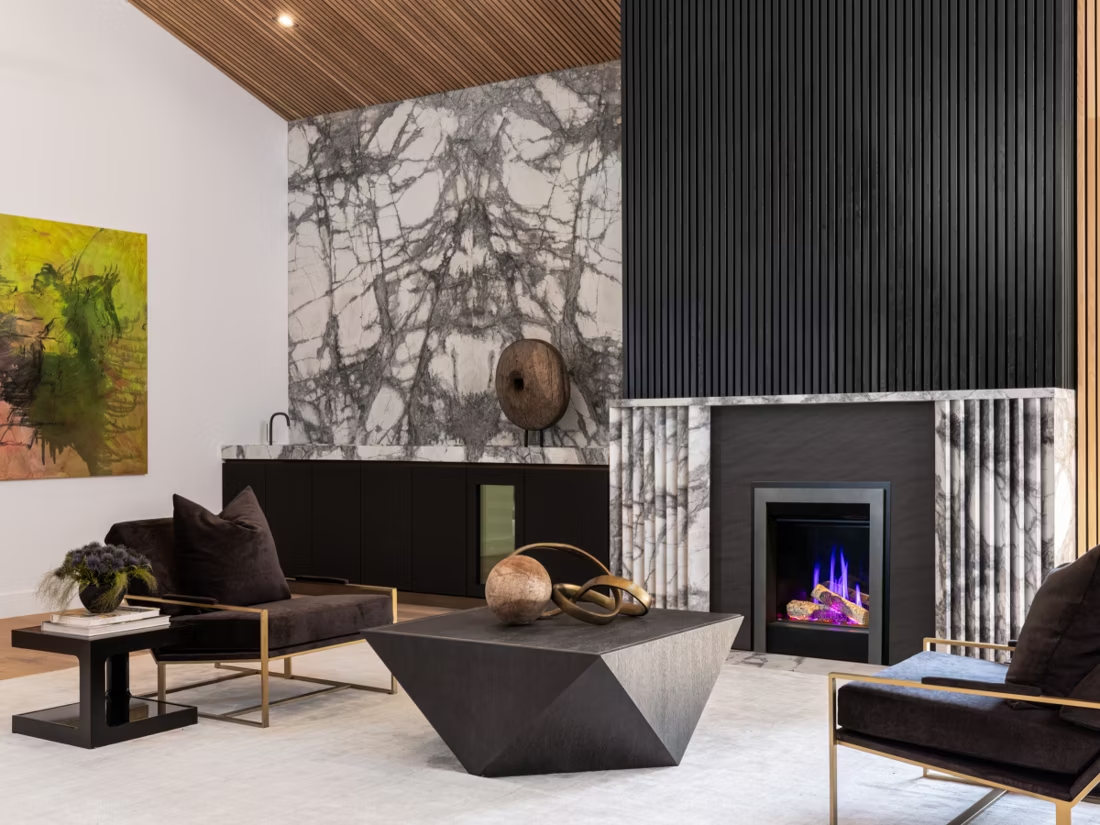
With winter lows averaging 28°F and such a light heating season, Canadian County doesn't need a cast-iron wood stove to get through the season—an electric fireplace or insert gives El Reno, Yukon, Mustang, and Piedmont homes instant ambiance and real supplemental heat without a chimney.
Every Project Starts From One of These Five Situations
A short, mild heating season makes electric the practical fit.
Canadian County sits in climate zone 3A, with an average winter low around 28°F and a mild, short heating season overall—a fraction of what a place like Fargo, ND deals with in a single January. Winters here are short and generally mild, which changes the fireplace calculus. Homeowners in El Reno, Yukon, Mustang, and Piedmont aren't trying to keep a house alive through a week of sub-zero nights; they're looking for a warm-looking focal point in the living room and maybe some zone heat on the occasional cold snap. That's exactly the job an electric fireplace is built for.
It's also worth being straight about what doesn't make sense here. Wood-burning stoves and pellet stoves are essentially not a fit for Canadian County—there's no non-attainment air quality restriction pushing homeowners toward pellet, and there's no sustained cold demanding a 20-hour overnight burn. The oak, hickory, and mesquite that grow around the county end up in backyard smokers far more often than in a wood stove firebox. Electric sidesteps all of that: no chimney, no venting, no cutting permits, and no creosote to manage—just plug it in (or add a dedicated circuit for a larger unit) and it works, whether you're in a 1970s ranch in El Reno or new construction out toward Mustang.
Three steps. No salesperson until you're ready.
Tell us about your project
Your zip code, your situation, and the fuel you're leaning toward—or let the answers point you to one.
See what's actually available
The brands dealers within 100 miles genuinely carry—real options, never a catalog mirage.
Get your dealer & Project Guide
A trusted local dealer, plus the free Project Guide & Parts List that names every component of the job.
Frequently Asked Questions
How much does an electric fireplace installation cost in Canadian County?
It depends heavily on the type of unit. A simple plug-in freestanding electric fireplace or a small electric insert that drops into an existing fireplace opening typically runs $300 to $1,200 installed, since no new wiring is usually required. A built-in wall unit for new construction or a remodel—with framing, a dedicated 120V or 240V circuit, and finish trim—generally lands between $1,500 and $4,000 depending on unit size and how much electrical work is involved. Because there's no venting or chimney to deal with, electric installs in El Reno, Yukon, Mustang, and Piedmont are almost always faster and cheaper than a comparable gas installation.
What's the difference between an electric insert, a built-in electric fireplace, and a freestanding electric stove?
An electric insert is sized to slide into an existing masonry or prefab fireplace opening, giving you flame effect and heat without touching your chimney (which typically just gets capped or left alone). A built-in electric fireplace is designed to be framed into a wall during new construction or a remodel, similar to how a gas fireplace would be installed, but without any venting requirement. A freestanding electric stove or unit is a plug-and-play option that sits anywhere near an outlet—no framing, no insert cutout, just place it and go. For Canadian County homes with an existing wood-burning fireplace that's rarely used, an insert is usually the simplest upgrade.
Do I need an electrician to install an electric fireplace?
Smaller electric fireplaces (typically under 1,500 watts) can often run on a standard 120V household outlet, no electrician required. Larger built-in units, especially wide linear models or anything drawing more power, usually need a dedicated 15- or 20-amp circuit, and some higher-output models call for 240V service—both of which call for a licensed electrician. OG&E service throughout Canadian County is standard residential voltage, so this is a straightforward job for a local electrician, but it's worth confirming amperage and voltage requirements on the specific model before you buy.
Will an electric fireplace actually heat a room, or is it just for looks?
A quality electric fireplace with a 1,500-watt heater puts out roughly 5,000 BTU, which is enough to comfortably heat a single room in the 400 to 1,000 square foot range—plenty for a living room or den. Given Canadian County's mild winter lows (averaging 28°F) and a light overall heating season, that's often enough to handle the coldest weeks as supplemental heat while your central HVAC or gas furnace covers the rest of the house. Electric fireplaces aren't designed to replace whole-home heating here, but as a zone heater for the room you actually spend time in, they do real work.
Do I need a permit to install an electric fireplace in Canadian County?
A plug-in freestanding unit generally needs no permit at all—there's no venting, no gas line, and no structural change. A built-in electric fireplace that requires new electrical wiring or a dedicated circuit typically does need an electrical permit, and where you get it depends on where you live: inside city limits in El Reno, Yukon, Mustang, or Piedmont, permits go through that city's building department; in unincorporated parts of the county, it's handled through the Canadian County building department. Most licensed electricians pull this permit as part of the installation.
Electric vs. gas fireplace—which is right for my Canadian County home?
Both are legitimate options here, and it usually comes down to what you want the fireplace to do. Gas fireplaces put out real, sustained heat (often 20,000+ BTU) and can serve as a genuine backup heat source during a power outage on models with battery-backup ignition—worth considering given Oklahoma's occasional ice storms. Electric fireplaces skip the gas line, venting, and combustion byproducts entirely, cost less to install, and are easier to add to a room that doesn't already have gas service. For a primary living space you want to actually rely on for heat, gas often wins; for ambiance plus modest supplemental warmth in a bedroom, basement, or secondary room, electric is usually the simpler and cheaper answer.
Can I put an electric insert into my existing wood-burning fireplace?
Yes, and it's one of the most common electric fireplace projects in Canadian County. An electric insert slides into the existing masonry firebox opening—no chimney work, no liner, no venting modifications needed, since electric units don't produce combustion byproducts. Many homeowners in older El Reno and Yukon neighborhoods with a rarely-used wood-burning fireplace choose this route specifically because it converts a drafty, high-maintenance feature into a clean, on-demand one without any masonry or chimney work at all.
What does it cost to run an electric fireplace in Canadian County?
Running costs are modest. At typical OG&E residential rates, a 1,500-watt electric fireplace running on its heat setting costs roughly $0.15 to $0.20 per hour to operate—a few dollars for an evening's use. Most units also let you run the flame effect alone, without the heater engaged, which draws only a small fraction of that power. Compared to running central heat to warm a single room, an electric fireplace used for targeted, occasional heat is generally the cheaper option.
Why don't wood or pellet stoves show up as recommendations for Canadian County?
Mostly because the climate and the market don't call for them. With such a light heating season and no air quality restrictions pushing households toward cleaner-burning appliances, there's little practical need for a wood stove capable of holding an overnight burn through sustained cold. The oak, hickory, and mesquite common to the county are far more likely to end up in a backyard smoker than a heating stove, and pellet brands like Lignetics and Indeck Energy Services that do serve the region are largely industrial or commercial suppliers rather than a retail hearth market. Electric and gas cover the local demand well, which is why those are the fuels we focus on for Canadian County.
Can I put a TV above my fireplace?
Yes—with an asterisk. Fireplaces are hot and TVs don't like heat. Either put a mantel between them to deflect rising warmth, or choose a fireplace with heat-management technology that creates a cool zone on the wall above—the wall stays around 125 degrees, barely warm, while the room still gets full heat. If you like clean lines and don't want a mantel, heat management is the answer.
Does an electric fireplace need a vent or chimney?
No—that's its superpower. An electric fireplace needs a wall and an outlet, period. No vent pipe, no gas line, no clearances to design around, which is why it works in bedrooms, offices, apartments, and walls where venting a gas or wood unit would be impractical or impossible. Installation is typically the simplest and least expensive of any fireplace type.
Does a fireplace add value to my home?
On average, a fireplace adds back to the home about the same amount you spent installing it. Add the monthly savings from heating the rooms you actually use instead of the whole house—often hundreds of dollars a year—and the value case is strong before you even count what a fire does for how your family uses the room.
Can a fireplace actually lower my heating bill?
Yes—by creating a comfort zone. A furnace heats every square foot of the house just to warm the one room you're in; a gas fireplace on low burns roughly a sixth of the gas a typical furnace does. Set the furnace around 55–60 degrees as a baseline, then heat the rooms your family actually uses. Families who heat this way commonly save $20–$60 a month.
Find your electric fireplace in Canadian County.
Tell us a bit about your home in El Reno, Yukon, Mustang, Piedmont, or elsewhere in Canadian County, and we'll put together a free Project Guide & Parts List—the right unit, the exact parts, and a trusted local dealer to install it.
Find Your Fireplace →