
Every fuel type, every town in Canadian County.
From El Reno and Yukon to Mustang and Piedmont, get matched with a local dealer who knows what actually installs well in this stretch of the OKC metro—no big-box guesswork, no shipping, just a trusted pro near you.
Every Project Starts From One of These Five Situations
Mild winters, a heating load well under half of northern states, and a county built around gas and electric heat.
Canadian County sits just west of Oklahoma City along the Canadian River, covering El Reno, Yukon, Mustang, Piedmont, Calumet, and Union City. Average winter lows near 28°F put this county's heating load well under half of what a place like Duluth, Minnesota carries most winters. Oak, hickory, and mesquite grow throughout the county and show up in backyard fire pits and the occasional decorative hearth, but the climate here simply doesn't demand the kind of sustained wood heat you'd see farther north.
That mild profile is why gas and electric are the fuels that actually make sense for most Canadian County homes. Gas fireplaces and inserts serve as a real supplemental heat source during the county's shorter cold snaps, and electric units are popular for ambiance and zoned warmth in bedrooms and living rooms without the venting work a wood or gas install requires. Wood-burning units are uncommon here beyond the occasional ambiance-focused installation, and pellet stoves have essentially no residential foothold—the regional pellet brands distributed through this area, like Lignetics and Indeck Energy Services, serve grilling and industrial markets rather than home heating. This hub rolls up hearth retailers, service techs, and fuel suppliers across the whole county, from El Reno out to Calumet and Geary. Pick your fuel below for local dealers and install details specific to your town.
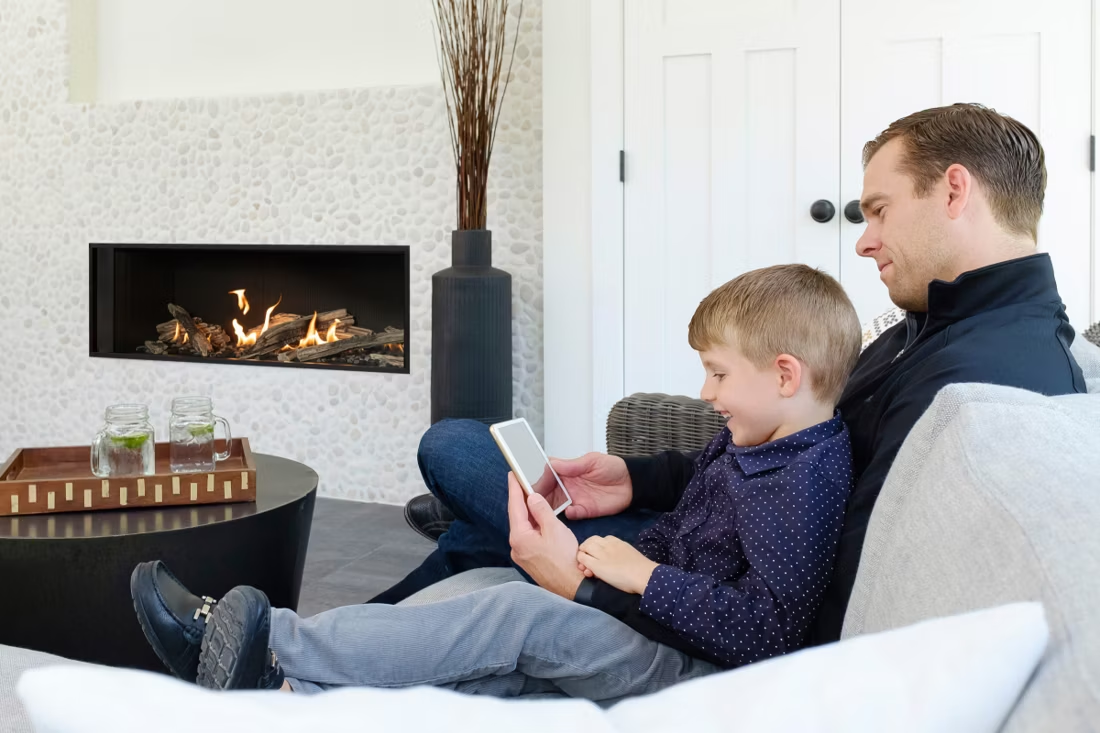
Four fuels. One honest answer for Canadian County.
Three steps. No salesperson until you're ready.
Tell us about your project
Your zip code, your situation, and the fuel you're leaning toward—or let the answers point you to one.
See what's actually available
The brands dealers within 100 miles genuinely carry—real options, never a catalog mirage.
Get your dealer & Project Guide
A trusted local dealer, plus the free Project Guide & Parts List that names every component of the job.
Frequently Asked Questions
Which fireplace fuel actually makes sense in Canadian County?
Gas and electric are the two fuels that fit this climate. With average winter lows around 28°F and a heating season that's short and mild, most Canadian County homes don't carry the kind of sustained cold load that makes wood or pellet heat worth the investment. A gas fireplace or insert gives you real supplemental warmth during the county's colder stretches without the wood supply, chimney maintenance, or venting complexity of a solid-fuel unit. Electric fireplaces are the easiest add for ambiance or zoned warmth in a bedroom or den—no gas line, no venting, and installation is often as simple as a dedicated outlet. Wood-burning fireplaces do exist here, mostly older builds or homeowners who want the look and occasional use, but they're the exception rather than the default.
Is a permit required for a gas fireplace install in El Reno or Yukon?
Yes. Each city in Canadian County—El Reno, Yukon, Mustang, and Piedmont—handles building permits separately through its own city building department, so requirements can differ slightly depending on which municipality you're in. A new gas line or gas fireplace install typically needs a permit plus a licensed gas fitter to make the connection, and an inspection follows before the unit is signed off. Electric fireplace installs usually only trigger a permit if you're adding a new dedicated circuit rather than plugging into an existing outlet. Most retailers we match homeowners with handle this paperwork as part of the installation, so it's rarely something you're navigating alone.
Are wood-burning fireplaces still an option here, or is that a dead end?
They're not a dead end, just uncommon as a primary heat source. Oak, hickory, and mesquite are all available regionally and burn well in a traditional fireplace or stove, and a small number of Canadian County homeowners do install or keep a wood-burning unit for the ambiance, occasional cool-weather use, or a rural property where they already have access to cut wood. What you won't find much of is wood as the main heating strategy for a house—with winters this mild, most people who want that wood-fire experience pair it with gas or electric as the home's actual primary heat, using the wood fireplace on the coldest evenings or for atmosphere.
Can I find a pellet stove dealer in Canadian County?
Realistically, no—not as a residential heating category. Pellet stoves haven't gained traction here the way they have in colder, higher-elevation parts of the country, and the regional pellet brands with distribution nearby, Lignetics and Indeck Energy Services, are supplying grilling pellets and industrial fuel rather than stocking home heating appliances for local dealers. If you're set on a pellet unit, you'll likely be looking outside the county for both the stove and ongoing pellet supply. For most homeowners here, a gas insert delivers similar supplemental-heat convenience without that sourcing headache.
What does a fireplace installation typically cost in Canadian County?
Gas fireplaces, inserts, and stoves generally run $4,000–$10,000 installed, with the higher end reflecting new gas line runs for homes in Piedmont or Calumet that are further from existing service. Electric fireplaces are the more affordable route—$200–$3,000 for the unit itself, plus $300–$1,000 in labor unless you're adding a new circuit for a built-in model. Wood-burning installs, when someone does pursue one, tend to land in the $4,500–$9,000 range depending on chimney condition, since most of the cost is venting rather than the unit itself. The county + fuel pages above break these numbers down by retailer.
How does service and installation scheduling work across a spread-out county like this?
Most retailers and technicians are based in or near El Reno and Yukon, the county's larger population centers, and run service routes out to Mustang, Piedmont, Calumet, and Union City on a regular schedule. Because the heating season here is shorter and milder than in northern climates, demand doesn't spike as sharply, but it's still smart to book gas fireplace inspections in late summer or early fall before the first cold front rolls through—that's when scheduling is easiest and you avoid a wait if something needs a part ordered.
What is an in-home preview and do I need one?
It's a visit where a hearth professional measures your space, confirms the model you picked actually works in your home, and walks the specs—framing, gas line, venting, finish work—before anything is ordered. Some details you just can't know until you see the house. Never make a down payment without one; it's the single most-skipped step that burns buyers.
Wood, gas, pellet, or electric—how do I choose?
Match the fuel to your life, not the other way around. Wood: lowest fuel cost and total power-outage independence, but you're hauling and stacking. Gas: press a button, set a thermostat, no maintenance to speak of. Pellet: wood economics with automatic feeding, in exchange for weekly cleaning and a need for electricity. Electric: plugs in anywhere with honest supplemental heat. Nobody regrets the fuel that fits how they actually live.
Does a fireplace add value to my home?
On average, a fireplace adds back to the home about the same amount you spent installing it. Add the monthly savings from heating the rooms you actually use instead of the whole house—often hundreds of dollars a year—and the value case is strong before you even count what a fire does for how your family uses the room.
How much should I budget for a fireplace?
For an average home—covering the fireplace, the vent pipe, and basic installation—a budget between $3,900 and $5,500 gives you a lot of options across wood, gas, and pellet. By the time you add finish work, gas line, and electrical, the average complete installation lands between $5,000 and $12,000 all-in. In a remodel or new build, a good rule is to put about 2.5% of the total project cost toward the fireplace.
Stove and Fireplace Dealers in Canadian County
Listings include WhyFire partner dealers, dealers we have verified as authorized for the brands we recommend, and established local businesses that carry hearth products. Every listing shows which one it is. The ones marked Preferred run on WhyFire's software, so they can show you real pricing and book your appointment right here. No manufacturer pays for placement. How we verify dealers →
Bachles Fireplace Furnishings
Rick's House Of Fire
Mill Creek Lumber & Supply Okc
Gas & Electrical Equip
Fireplace Place
Aynes Enterprises
The Hearth Shop
Get matched with a local Canadian County dealer.
Pick your fuel below and we'll put together a free Project Guide & Parts List—the right unit, the parts it needs, and the local dealer we recommend for your project.
Find Your Fireplace →