
Clean-burning pellet heat, built for Bryan County living.
With about 2,907 heating degree days and winter lows that average around 30°F, Bryan County doesn't need furnace-grade wood heat—it needs steady, thermostat-controlled warmth for the cold fronts that roll through Durant, Calera, and the Lake Texoma shoreline. Find the right pellet stove and connect with a trusted local dealer.
Every Project Starts From One of These Five Situations
Steady, low-maintenance heat for a mild climate.
Bryan County sits along the Red River in south-central Oklahoma, anchored by Durant—headquarters of the Choctaw Nation of Oklahoma—and the resort communities ringing Lake Texoma. Classified as climate zone 3A, the county logs roughly 2,907 heating degree days a year, less than half what a place like Fargo, ND or Duluth, MN sees each winter. Most winter days stay mild, but Arctic cold fronts still push through southeastern Oklahoma every year, and ice storms—not deep snow—are the real seasonal hazard here. There are no air quality nonattainment issues or wood-smoke curtailment periods in the county, so pellet appliances run without the burn-restriction rules some other regions impose.
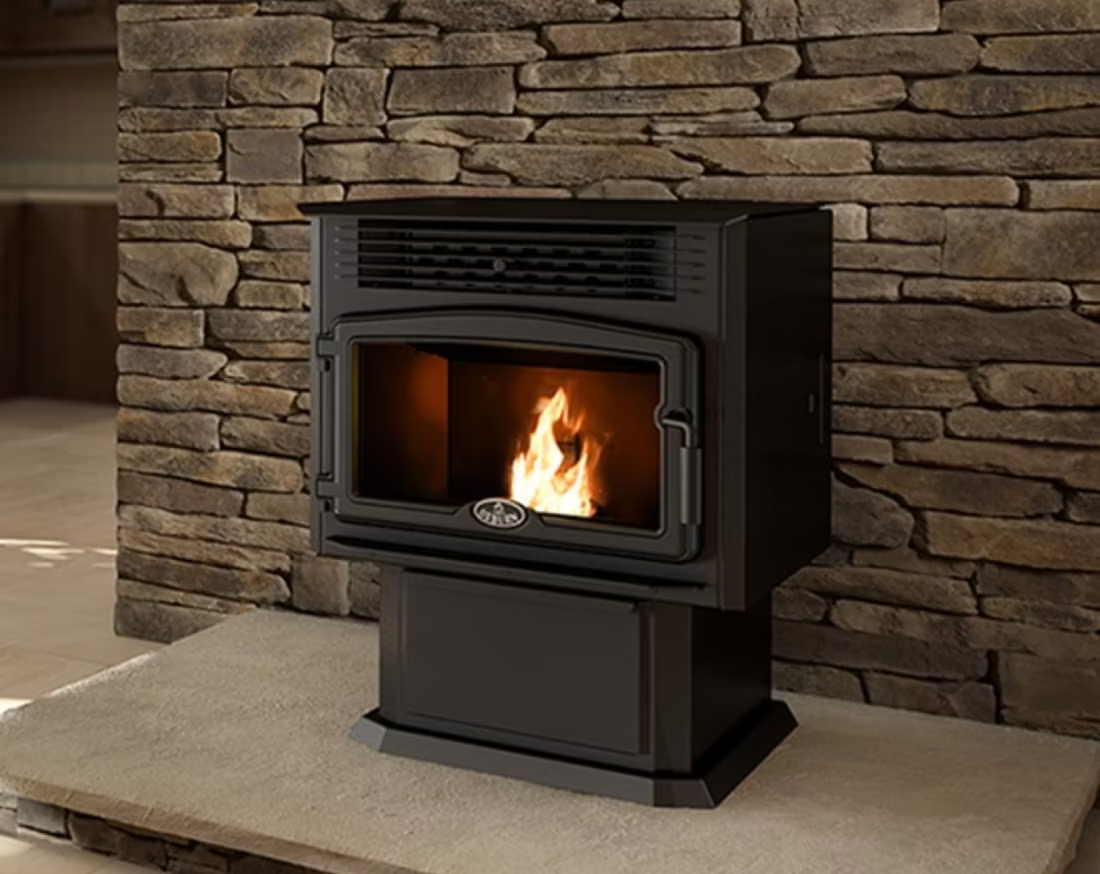
That mix of mild-but-unpredictable winters is exactly where pellet stoves earn their keep: load the hopper, set the thermostat, and let the unit modulate output automatically rather than tending a fire for a cold snap that might last three days. Bagged fuel from regional suppliers like Lignetics and Indeck Energy Services is widely stocked at farm and hardware stores across the county, so restocking doesn't mean a special trip. For newer ranch homes around Durant and Calera, and for older farmhouses with drafty rooms that central HVAC struggles to keep even, a pellet stove or insert delivers clean, consistent zone heat without the ash and smoke management that comes with burning local oak, hickory, or mesquite in an open hearth.
Three steps. No salesperson until you're ready.
Tell us about your project
Your zip code, your situation, and the fuel you're leaning toward—or let the answers point you to one.
See what's actually available
The brands dealers within 100 miles genuinely carry—real options, never a catalog mirage.
Get your dealer & Project Guide
A trusted local dealer, plus the free Project Guide & Parts List that names every component of the job.
Frequently Asked Questions
How much does a pellet stove installation cost in Bryan County?
Most pellet stove installations in Bryan County run in the $3,000 to $6,000 range, and installs tend to land toward the lower end compared to wood stoves because pellet units vent through a simple wall-mounted PL vent pipe rather than a full masonry or Class A chimney system. The bigger cost variable is usually electrical—pellet stoves need a dedicated outlet for the auger motor and combustion blower, and older homes around Durant or Achille sometimes need a circuit added. A pellet insert going into an existing fireplace typically costs less than a freestanding stove needing new venting run through an exterior wall. A local dealer can give you a firm number after seeing your home.
What size pellet stove do I need for my Bryan County home?
Because Bryan County's winters are mild by national standards—average lows around 30°F and roughly 2,907 heating degree days—most homes here don't need the largest pellet stoves on the market. A small to mid-size unit rated for 1,000 to 1,800 square feet handles a main living area comfortably, and many homeowners run their pellet stove as supplemental zone heat alongside central HVAC rather than as the sole heat source. Larger, more drafty farmhouses outside Durant or Calera sometimes step up a size, and homes right on Lake Texoma that catch more wind exposure may benefit from a slightly bigger hopper for longer unattended burn times during a multi-day cold front.
Where can I buy pellets in Bryan County?
Bagged wood pellets are stocked seasonally at farm supply and hardware stores throughout the county, with Lignetics and Indeck Energy Services among the regional brands most commonly available. Because Bryan County's mild climate means lower overall pellet consumption than colder states, it's worth buying a season's supply early in fall before stock runs low at smaller retailers—many households only need a few dozen bags to get through a typical winter. Local hearth dealers can usually point you toward the most reliable local source and, in some cases, arrange bulk delivery.
Do I need a permit to install a pellet stove in Bryan County?
Yes—a structural and, in most cases, an electrical permit is required, whether you're in Durant city limits or unincorporated Bryan County. Pellet stoves don't require the cutting or fuel-gathering permits that wood heat sometimes involves, but the appliance itself still needs to be installed to manufacturer clearance specs and local code, and the dedicated electrical circuit for the auger and blower typically needs its own inspection. Most local dealers coordinate the permitting as part of the installation, so it's rarely something homeowners have to manage themselves.
What's the difference between a pellet stove and a pellet insert?
A pellet stove is a freestanding appliance that sits on a hearth pad and vents through a wall or existing chimney—it can go almost anywhere in a home with the right clearances. A pellet insert is built to slide into an existing masonry fireplace opening, turning an old wood-burning fireplace into a thermostat-controlled heat source without new venting in most cases. For Bryan County homes with an existing but rarely-used fireplace, an insert is often the simpler retrofit; homes without a fireplace opening are better suited to a freestanding stove.
What's the best pellet stove for Bryan County's climate?
Because winters here are mild for most of the season but can turn sharply cold during an Arctic front, look for a stove with a wide modulation range—one that can idle low on a 45-degree evening and ramp up during a hard freeze without needing to be swapped for a bigger unit. Mid-size units from major pellet stove manufacturers with automatic thermostatic control suit most Bryan County homes well, since they're rarely asked to run flat-out for weeks the way a stove in a place like Bismarck, ND would be. A local dealer can match hopper size and BTU output to your specific square footage and insulation level.
How often does a pellet stove need cleaning and maintenance?
Pellet stoves need more frequent light maintenance than wood stoves but far less heavy cleaning. Plan on emptying the ash pot every few days during regular use, wiping the glass weekly, and doing a full burn-pot and hopper cleaning monthly during the heating season. An annual professional service—checking the auger, blower motor, and venting—is recommended before each burning season, similar to a furnace tune-up. Because Bryan County's season is shorter than in colder states, most units here see less overall wear over a given winter.
Will my pellet stove work during a power outage?
No—pellet stoves require electricity to run the auger that feeds fuel and the blower that circulates heat, so a standard unit will shut down in an outage. This matters in Bryan County because ice storms, not blizzards, are the region's main winter hazard, and ice can take down power lines for days at a time. Some homeowners pair a pellet stove with a small backup generator or battery inverter sized for the stove's low draw, and others keep a wood-burning option in reserve for extended outages, taking advantage of local oak and hickory. Ask your dealer about the stove's actual power draw if backup power is a priority for you.
Pellet stove vs. wood stove—which is right for my Bryan County home?
Wood stoves burn oak, hickory, or mesquite that's widely available locally, work without electricity, and appeal to homeowners who want the traditional fire experience—but they need a proper chimney, regular sweeping, and hands-on tending. Pellet stoves offer automatic, thermostat-controlled heat, cleaner burning with far less ash, and simpler wall venting, but they need continuous power and a steady bag supply. For Bryan County's mild-but-variable winters, where a stove often runs as supplemental heat rather than a home's sole source, many homeowners lean toward the convenience of pellet—though a wood-burning backup is worth considering given the county's history of ice-storm outages.
How often does a pellet stove need cleaning?
A clean pellet stove is a happy pellet stove. Plan on cleaning the burn pot about once a week when you're burning regularly—ash and clinkers gum up the air holes just like a pellet barbecue. Most pellet stove problems trace back to skipped cleaning that nobody explained up front. Some designs make it easy with a trapdoor burn pot: pull a lever and the gunk drops into the ash pan.
What's the difference between an insert and a zero-clearance fireplace?
An insert is a fireplace that slides into a pre-existing wood-burning fireplace—if you don't have one, there's nothing to insert it into. A zero-clearance fireplace is built into a framed wall, which makes it the answer for remodels and new construction. Simple test: existing masonry fireplace means insert; blank or framed wall means zero-clearance.
How much should I budget for a fireplace?
For an average home—covering the fireplace, the vent pipe, and basic installation—a budget between $3,900 and $5,500 gives you a lot of options across wood, gas, and pellet. By the time you add finish work, gas line, and electrical, the average complete installation lands between $5,000 and $12,000 all-in. In a remodel or new build, a good rule is to put about 2.5% of the total project cost toward the fireplace.
What is an in-home preview and do I need one?
It's a visit where a hearth professional measures your space, confirms the model you picked actually works in your home, and walks the specs—framing, gas line, venting, finish work—before anything is ordered. Some details you just can't know until you see the house. Never make a down payment without one; it's the single most-skipped step that burns buyers.
Pellet Brands Stocked Around Bryan County
Manufacturers will point you to the nearest stocking dealer.
Find your pellet stove in Bryan County.
Tell us about your home and heating goals, and we'll match you with a trusted local dealer and send over a free Project Guide & Parts List—the exact parts, venting, and installer recommendation for your Bryan County pellet project.
Find Your Fireplace →