
Consistent Warmth, Minus the Woodpile.
From Watonga to Canton, Geary, and Okeene, Blaine County winters are milder than most of the country—but they still bring ice storms and long cold stretches where a pellet stove's steady, hands-off heat makes sense. Find the right unit and get matched with a trusted local dealer.
Every Project Starts From One of These Five Situations
A practical middle ground for the plains.
Blaine County sits in western Oklahoma's rolling plains along the Cimarron River and Canton Lake, with roughly 4,560 residents spread across Watonga, Canton, Geary, Okeene, Longdale, and Hitchcock. Winters here are moderate compared to much of the country—average lows around 24°F and about 4,064 heating degree days a year, similar in severity to Oklahoma City. That's not brutal cold, but it's enough sustained heating season that a lot of households want something more efficient and more hands-off than a space heater, without the daily work of cutting and hauling oak, hickory, or mesquite for a wood stove.
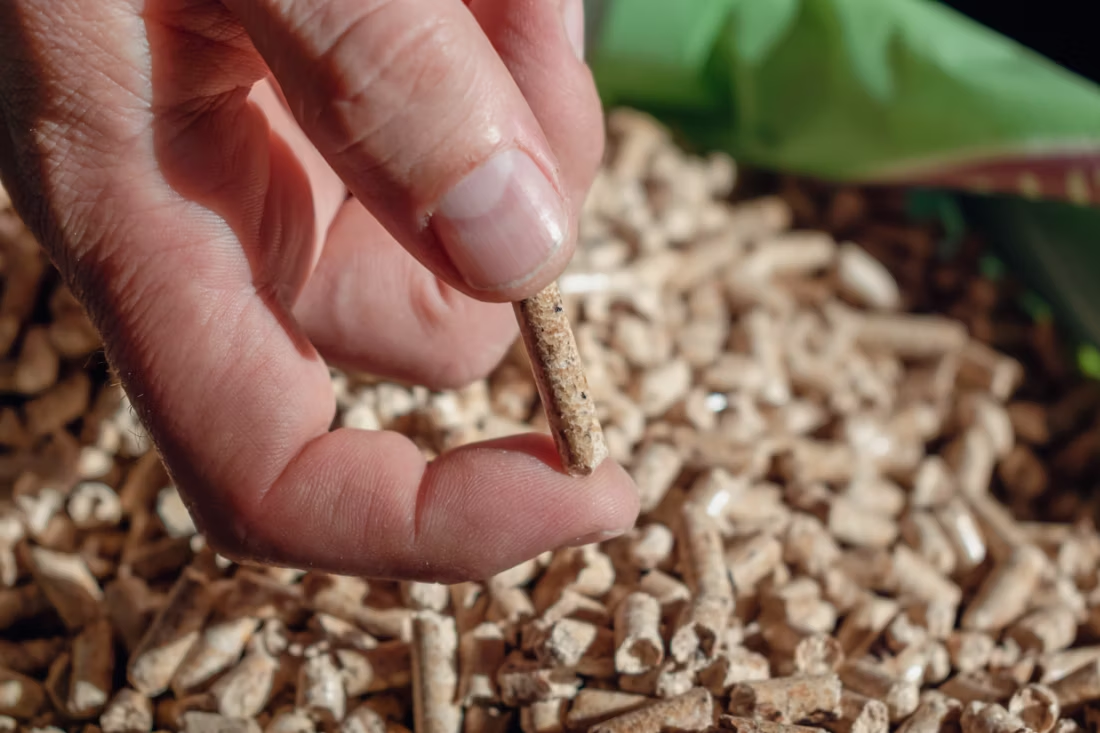
That's where pellet stoves fit. They burn compressed hardwood pellets—sourced regionally through suppliers like Lignetics and Indeck Energy Services—with a hopper and auger system that feeds the fire automatically, so there's no splitting or stacking cordwood and far less ash to deal with than a traditional wood-burning setup. Blaine County has no air quality non-attainment issues or winter burn curtailment periods, so there's nothing stopping regular use here the way there is in some parts of the country. The one honest tradeoff: pellet stoves need household electricity to run the auger and blower, and rural western Oklahoma sees its share of winter ice storms that can knock out power for days. A local dealer can walk you through battery backup options if that's a real concern for your property.
Three steps. No salesperson until you're ready.
Tell us about your project
Your zip code, your situation, and the fuel you're leaning toward—or let the answers point you to one.
See what's actually available
The brands dealers within 100 miles genuinely carry—real options, never a catalog mirage.
Get your dealer & Project Guide
A trusted local dealer, plus the free Project Guide & Parts List that names every component of the job.
Frequently Asked Questions
How much does a pellet stove installation cost in Blaine County?
Nationally, pellet stove installations typically run $3,000 to $6,000, and that range holds up reasonably well for Blaine County homes—the variables are the stove itself, whether you're venting through an existing masonry chimney or running new PL-vent pipe through an exterior wall, and whether any electrical work is needed near the install point for the hopper and blower. A straightforward freestanding stove venting through an exterior wall in an existing home is usually on the lower end; installations requiring new wall penetrations, longer vent runs, or dedicated electrical circuits push toward the higher end. A local dealer will give you a firm number after seeing the space.
What size pellet stove do I need for my home?
Sizing comes down to square footage, ceiling height, and how well-insulated the home is—older farmhouses around Watonga or Okeene with less insulation typically need more heating capacity per square foot than a newer build in Geary. As a rough guide, smaller stoves (rated for 500-1,000 sq ft) suit a single room or supplemental use, while mid-size units (1,000-2,000 sq ft) handle most main living areas in this climate given Blaine County's relatively moderate 4,064 heating degree days. Given how mild winters run here compared to colder parts of the country, most homes don't need the largest units on the market. A local dealer can size the stove correctly during an in-home visit rather than guessing off square footage alone.
What happens to my pellet stove during a power outage?
This is the honest downside of pellet heat: the auger, blower, and igniter all run on household electricity, so a standard pellet stove goes cold the moment the power does. That matters in Blaine County, where winter ice storms occasionally take down rural power lines for extended stretches. Some pellet stove models offer battery backup systems that can keep the unit running for a limited time during an outage, and a few high-end units are designed to run longer on minimal power draw. If reliable heat during outages is a priority for your household, a wood stove or a pellet model with backup power is worth discussing with your dealer—either way, it's a fair question to raise before you buy.
Pellet stove vs. wood stove—which makes more sense in Blaine County?
Wood is genuinely abundant here—oak, hickory, and mesquite are all common locally, and plenty of Blaine County households already have access to a woodlot or a neighbor who does. Wood stoves also keep working with no electricity, which matters during ice storms. Pellet stoves trade that self-sufficiency for convenience: load the hopper, set the thermostat, and the stove maintains a steady temperature with far less ash and no splitting or seasoning of logs. For households in town in Watonga or Geary who want low-maintenance heat and don't have a ready wood supply, pellet often wins. For rural properties with access to hardwood and a priority on power-outage backup, wood still has a strong case.
Do I need a permit to install a pellet stove in Blaine County?
Most jurisdictions require a permit for a new pellet stove installation, covering the appliance placement, hearth clearances, and venting path, and Blaine County is no exception in practice—check with your local building or fire code office before work begins. Reputable local dealers typically handle the permit application and inspection scheduling as part of the installation, which is one of the practical reasons to go through a trusted installer rather than a DIY setup.
What kind of venting does a pellet stove need?
Pellet stoves vent through a smaller-diameter pipe than wood stoves—typically PL vent pipe rather than full Class A chimney pipe—because the exhaust temperature is lower. Most installations run a short horizontal run through an exterior wall rather than up through the roof, which is one reason pellet installs are often less expensive than wood stove installs requiring full chimney construction. If you're converting an existing masonry fireplace, a liner adapted for pellet venting is usually needed rather than using the open flue as-is. Your local dealer will spec the exact venting kit for your home's layout.
Where do I buy pellets in or near Blaine County?
Regional pellet brands including Lignetics and Indeck Energy Services supply hardwood pellets that are commonly stocked by hearth retailers and farm supply stores across western Oklahoma. Pellets are typically sold in 40-pound bags, and most households buy by the pallet (usually around 50 bags) ahead of the heating season to avoid running low mid-winter. Given Blaine County's rural layout, it's worth confirming with your dealer whether they deliver pallets directly or whether you'll need to pick up and store bags yourself—dry, covered storage is essential either way, since pellets swell and clog the auger if they absorb moisture.
How much maintenance does a pellet stove need?
Pellet stoves need more frequent light maintenance than wood stoves, but each task is quick. Plan on emptying the ash pan every few days during regular use, cleaning the burn pot weekly to prevent clinker buildup, and running a full inspection and deep clean once a season—typically before the first cold snap arrives. Because there's no chimney creosote buildup the way there is with wood, you won't need the annual professional chimney sweep a wood-burning household requires, but you should still have the venting and exhaust fan checked periodically. Most local dealers offer this service or can point you to a technician who handles it.
Which pellet stove brands are available through Blaine County dealers?
Availability comes down to what your local dealer carries and services, since pellet stoves need occasional parts and technician support over their lifespan. Regional pellet fuel from Lignetics and Indeck Energy Services is widely stocked in this part of Oklahoma, and most established hearth dealers serving western Oklahoma carry a mix of national pellet stove manufacturers alongside the fuel. Rather than shopping by brand name alone, it's worth asking a local dealer which models they can service long-term in Blaine County—parts availability and a technician who knows the unit matter more over ten years than the badge on the front.
Why is my open fireplace making my house colder?
Open fireplaces suck—literally. As the fire burns, it consumes air your furnace already paid to heat and pulls it out through the chimney, so the house is actually colder after the fire goes out than before you lit it. An insert fixes this: it seals the chimney, puts fixed glass across the front, and turns that hole in your house into a real heat source.
How often does a pellet stove need cleaning?
A clean pellet stove is a happy pellet stove. Plan on cleaning the burn pot about once a week when you're burning regularly—ash and clinkers gum up the air holes just like a pellet barbecue. Most pellet stove problems trace back to skipped cleaning that nobody explained up front. Some designs make it easy with a trapdoor burn pot: pull a lever and the gunk drops into the ash pan.
Does a fireplace add value to my home?
On average, a fireplace adds back to the home about the same amount you spent installing it. Add the monthly savings from heating the rooms you actually use instead of the whole house—often hundreds of dollars a year—and the value case is strong before you even count what a fire does for how your family uses the room.
Can a fireplace actually lower my heating bill?
Yes—by creating a comfort zone. A furnace heats every square foot of the house just to warm the one room you're in; a gas fireplace on low burns roughly a sixth of the gas a typical furnace does. Set the furnace around 55–60 degrees as a baseline, then heat the rooms your family actually uses. Families who heat this way commonly save $20–$60 a month.
Pellet Brands Stocked Around Blaine County
Manufacturers will point you to the nearest stocking dealer.
Find your pellet stove in Blaine County.
Tell us a bit about your home and we'll match you with a trusted local dealer serving Blaine County, plus a free Project Guide & Parts List—the exact parts, including the vent kit, and the right pellet stove for your space.
Find Your Fireplace →