
Find the right pellet stove for your Beckham County home.
Mild winters, occasional Panhandle cold snaps, and a steady oak-and-hickory heating tradition—pellet stoves give Elk City and Sayre-area homes clean, thermostat-controlled heat without the wood-splitting. I'll match you with a trusted local dealer.
Every Project Starts From One of These Five Situations
Consistent, low-maintenance heat for a mild-winter county.
Beckham County sits in climate zone 3A in western Oklahoma, with a moderate winter heating season and average winter lows around 26 degrees—nowhere near the brutal cold of a place like Bismarck ND or Fargo ND, but enough real winter that a supplemental heat source pays off, especially during the occasional Arctic blasts that push through the Panhandle corridor. Homes here have long relied on oak, hickory, and mesquite for wood heat, but pellet stoves have picked up ground among Elk City and Sayre homeowners who want that same radiant warmth without splitting and stacking cordwood every fall.
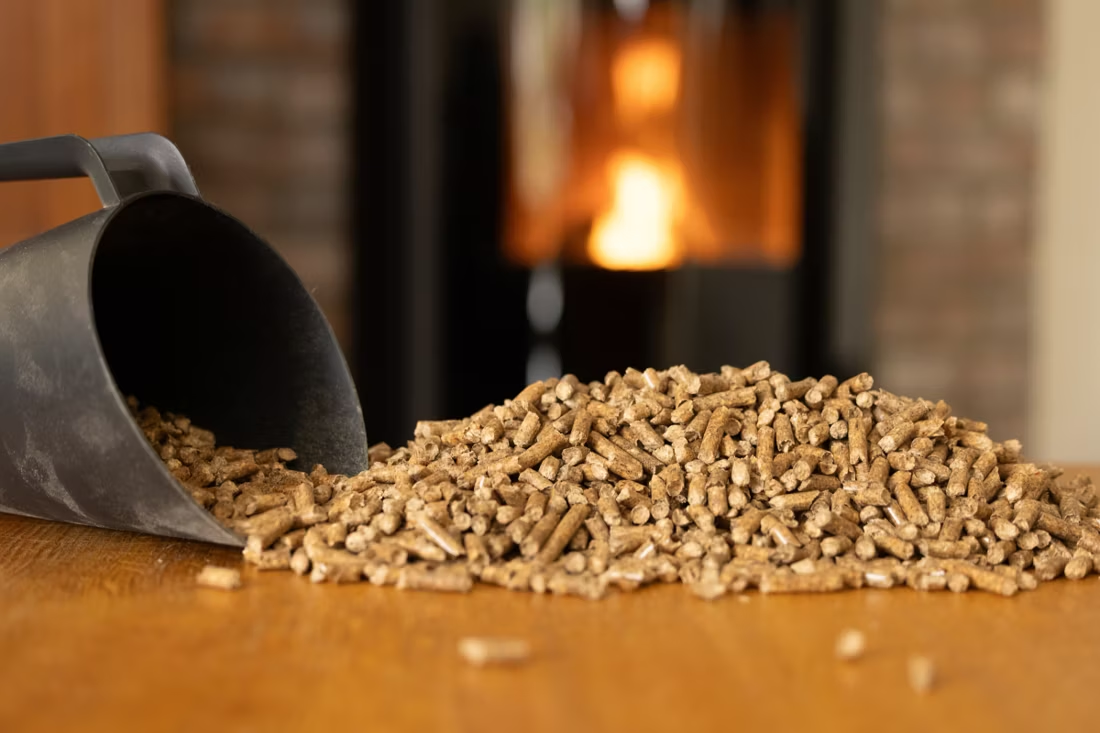
There's no local air quality non-attainment designation and no burn-ban culture to navigate in Beckham County, which simplifies things considerably compared to counties with winter inversion concerns. Pellet fuel itself is supplied regionally by brands like Lignetics and Indeck Energy Services, both distributed through farm supply and hardware retailers across western Oklahoma. A pellet insert or freestanding stove gives you a thermostat-set, hopper-fed fire that holds steady overnight, produces minimal ash, and works well as either primary heat in a well-insulated home or dependable zone heat for a drafty older farmhouse outside Sayre or Erick.
Three steps. No salesperson until you're ready.
Tell us about your project
Your zip code, your situation, and the fuel you're leaning toward—or let the answers point you to one.
See what's actually available
The brands dealers within 100 miles genuinely carry—real options, never a catalog mirage.
Get your dealer & Project Guide
A trusted local dealer, plus the free Project Guide & Parts List that names every component of the job.
Frequently Asked Questions
How much does a pellet stove installation cost in Beckham County?
A pellet stove or insert installation in Beckham County typically falls in a similar range to other zone-3 markets—generally $3,000 to $6,000 depending on whether you're installing a freestanding stove with new venting, or converting an existing wood fireplace into a pellet insert using the chimney as a vent chase. Homes without an existing chimney will need a horizontal through-wall vent kit, which is usually the more affordable route since pellet stoves don't require the tall Class A chimney runs that wood stoves do. A local dealer can give you a firm number after seeing your hearth setup or wall location.
Is pellet fuel easy to find in Beckham County?
Yes, though it's regional rather than hyper-local. Lignetics and Indeck Energy Services both supply pellets to farm and hardware retailers across western Oklahoma, and most Elk City and Sayre dealers either stock bags directly or can point you to a nearby supplier. Given the county's mild-to-moderate winter heating needs, most homeowners here use far fewer tons per season than a homeowner in a harder-winter climate, so running out mid-season is less of a concern than in colder states—but I'd still recommend buying your season's supply early, since pellet demand and pricing can shift with fuel and freight costs.
What size pellet stove do I need for my home?
Beckham County's climate zone 3A and relatively mild winter lows (averaging 26 degrees) mean most homes don't need the largest hopper-capacity units built for harsher climates. A small to mid-size pellet stove (rated for 1,000-1,800 sq ft) handles most single-story Elk City and Sayre homes as either primary or zone heat. Larger, poorly insulated older farmhouses—common in the rural stretches toward Erick and Carter—may need a bigger unit or a second heat source for the coldest nights when Panhandle cold fronts push through. A local dealer will size the stove to your square footage and insulation level during an in-home visit, which matters more here than picking a stove by BTU rating alone.
What's the difference between a pellet stove and a pellet insert?
A pellet stove is a freestanding unit that sits on the floor and vents through a wall or existing chimney chase—it can go almost anywhere with a nearby exterior wall. A pellet insert is built to slide into an existing masonry fireplace opening, which is a common upgrade path for older Beckham County homes that already have a wood-burning fireplace but want the convenience of a hopper-fed, thermostat-controlled fire instead of tending cordwood. For homes without an existing fireplace, a freestanding stove with a through-wall vent kit is usually the simpler and less expensive install.
Do I need a permit to install a pellet stove in Beckham County?
Most pellet stove installations require a building permit through the relevant city or county building department—in Elk City or Sayre, that means the city building office; in unincorporated parts of the county, it runs through Beckham County. Requirements are generally straightforward since pellet stoves don't need the same tall masonry chimney work that wood stoves do—most jurisdictions are primarily checking clearances, venting termination location, and electrical hookup for the auger and blower. A local installer will typically pull the permit as part of the job, so you're not left navigating it yourself.
What's the best pellet stove for Beckham County's climate?
Because Beckham County's winters are moderate compared to northern climates, most homeowners here don't need a stove built for 24-hour extreme-cold burns—a mid-efficiency unit that cycles on a thermostat and holds a comfortable room temperature is usually plenty. Look for a stove with a good ash-pan capacity and quiet auger operation if it's going in a main living space. Since pellet stoves require electricity to run the auger, hopper feed, and combustion blower, it's worth asking your dealer about battery-backup options—useful during the occasional ice storm or high-wind outage that hits western Oklahoma.
How often does a pellet stove need to be cleaned and serviced?
Pellet stoves need more frequent light cleaning than wood stoves but far less heavy chimney work. Plan on emptying the ash pan every few days to weekly depending on use, a deeper cleaning of the burn pot and exhaust passages every few weeks during heavy-use months, and a full annual service—checking the auger, igniter, gaskets, and venting—ideally before the season starts each fall. Because Beckham County's heating season is shorter and milder than colder-climate counties, most homeowners here get by with one professional service visit a year rather than mid-season cleanings.
Will my pellet stove work during a power outage?
Not without a backup power source. Pellet stoves rely on electricity to run the auger that feeds fuel, the igniter, and the combustion blower—unlike a wood stove, they can't operate on fuel alone. For Beckham County homeowners concerned about ice-storm outages, which do happen periodically in western Oklahoma, a small battery backup or generator hookup can keep a pellet stove running through a multi-hour outage. If uninterrupted heat during outages is the top priority, a wood stove or a vented gas unit with battery-backup ignition may be a better fit—ask your local dealer to walk through the tradeoffs for your situation.
Pellet stove vs. wood stove—which is right for my home?
Wood stoves burn oak, hickory, and mesquite—all common locally—offer real fire ambiance, and keep working without electricity, which matters if you're concerned about ice-storm outages. Pellet stoves are more convenient day-to-day: load the hopper, set the thermostat, and let it run with minimal ash and no splitting or stacking. Given Beckham County's relatively mild winter heating season, either fuel comfortably covers the season—the choice often comes down to whether you value hands-off convenience (pellet) or self-sufficient, off-grid capable heat (wood). Several local dealers carry both, and can talk through which fits your home and habits.
Why is my open fireplace making my house colder?
Open fireplaces suck—literally. As the fire burns, it consumes air your furnace already paid to heat and pulls it out through the chimney, so the house is actually colder after the fire goes out than before you lit it. An insert fixes this: it seals the chimney, puts fixed glass across the front, and turns that hole in your house into a real heat source.
What's the difference between an insert and a zero-clearance fireplace?
An insert is a fireplace that slides into a pre-existing wood-burning fireplace—if you don't have one, there's nothing to insert it into. A zero-clearance fireplace is built into a framed wall, which makes it the answer for remodels and new construction. Simple test: existing masonry fireplace means insert; blank or framed wall means zero-clearance.
How much should I budget for a fireplace?
For an average home—covering the fireplace, the vent pipe, and basic installation—a budget between $3,900 and $5,500 gives you a lot of options across wood, gas, and pellet. By the time you add finish work, gas line, and electrical, the average complete installation lands between $5,000 and $12,000 all-in. In a remodel or new build, a good rule is to put about 2.5% of the total project cost toward the fireplace.
What is an in-home preview and do I need one?
It's a visit where a hearth professional measures your space, confirms the model you picked actually works in your home, and walks the specs—framing, gas line, venting, finish work—before anything is ordered. Some details you just can't know until you see the house. Never make a down payment without one; it's the single most-skipped step that burns buyers.
Pellet Brands Stocked Around Beckham County
Manufacturers will point you to the nearest stocking dealer.
Find your pellet stove in Beckham County.
Tell me about your home and I'll match you with a trusted local dealer and send over a free Project Guide & Parts List—the exact parts, vent kit included, for your pellet project in Beckham County.
Find Your Fireplace →