
Keep Your Family Warm and Safe—No Matter What
Bartlesville runs on natural gas, but some homeowners still want the backup warmth and ambiance of a real wood fire. We'll help you figure out if it makes sense—and match you with a local dealer who can install it right.
Every Project Starts From One of These Five Situations
Bartlesville runs on natural gas—wood is the exception, not the rule.
Bartlesville sits in climate zone 3A with a winter heating load only about half that of a place like Duluth, MN or Fargo, ND, and an average winter low around 22°F—a real but moderate winter. As the historic home of Phillips 66 and long served by extensive natural gas infrastructure, Bartlesville is a gas town first. Most homes here heat with a gas furnace or gas fireplace, and wood-burning stoves are genuinely uncommon as a primary heat source.
That doesn't mean wood heat has no place here. Homeowners on acreage in the Cross Timbers—where oak and hickory are abundant and easy to source—sometimes want a wood stove for the ambiance of a real fire, or as insurance against the ice storms that periodically knock out power across Washington County for days at a time. If that's your situation, it's worth doing right: fewer local installers specialize in wood-burning appliances here than in colder states, so working with someone who actually knows code-compliant venting and clearances matters more, not less.
Three steps. No salesperson until you're ready.
Tell us about your project
Your zip code, your situation, and the fuel you're leaning toward—or let the answers point you to one.
See what's actually available
The brands dealers within 100 miles genuinely carry—real options, never a catalog mirage.
Get your dealer & Project Guide
A trusted local dealer, plus the free Project Guide & Parts List that names every component of the job.
Frequently Asked Questions
How much does a wood stove installation cost in Bartlesville?
Expect somewhere in the $3,500 to $7,500 range for a straightforward freestanding wood stove installation, including a hearth pad and Class A chimney pipe through the roof. That's on the lower end of what you'd see in a cold-climate market, partly because demand is lower and partly because most Bartlesville homes don't already have a masonry chimney to work with, so installers are usually building a full vent system from scratch rather than dropping an insert into an existing flue. Because wood stove specialists are less common locally than in, say, the Ozarks or further north, it's worth asking any installer directly about their experience with wood-burning appliances specifically, not just gas.
Is a wood stove even worth it in Bartlesville's climate?
For most homes, no—not as a primary heat source. With a winter heating season that's short and mild and winter lows averaging in the low 20s, Bartlesville's heating season is short and mild compared to genuinely cold climates, and natural gas heat is cheap and reliable here. Where a wood stove earns its keep is as supplemental or emergency heat: Washington County has been hit by damaging ice storms that knocked out power for a week or more in past winters, and a wood stove is one of the few heating appliances that keeps working when the grid doesn't. If that's your use case, it's a reasonable investment. If you're looking for whole-home heat, gas will almost always be the better fit here.
What kind of firewood is available locally?
Oak and hickory are the two most common species available around Bartlesville, both grown throughout the Cross Timbers ecoregion that covers much of Washington County, and both burn hot and long once properly seasoned. Mesquite shows up occasionally through suppliers who also serve central and western Oklahoma, and it burns very hot with a distinct smell, though it's less traditionally used for home heating than for grilling and smoking. Whatever species you choose, plan on 6-12 months of seasoning time before burning—freshly cut oak in particular holds a lot of moisture and won't burn efficiently or cleanly if used green.
Do I need a permit to install a wood stove in Bartlesville?
Yes. New wood-burning appliance installations require a building permit through the City of Bartlesville Building Inspections Division (or the Washington County building department if you're outside city limits), and the stove itself needs to meet current EPA emissions standards. Unlike some Western states, Oklahoma doesn't have air-quality curtailment programs tied to wood burning, since Bartlesville isn't in a non-attainment area—but the permit and inspection requirements for clearances and venting still apply, and a reputable local installer will pull that permit as part of the job.
Where can I buy or source firewood near Bartlesville?
Unlike Western states with large blocks of national forest land and public cutting permits, Washington County is almost entirely private land, so there's no Forest Service permit system to use here. Firewood typically comes from local tree services doing removals, private landowners clearing acreage, or seasonal firewood dealers who advertise locally—oak and hickory are the easiest to find. Expect to pay somewhere around $150 to $250 per cord depending on species and whether it's already seasoned and split.
Wood vs. gas—which makes more sense for a Bartlesville home?
For nearly all Bartlesville homes, gas is the more practical everyday choice—the city's natural gas infrastructure is extensive, gas heat is inexpensive to run, and it requires none of the wood handling, ash cleanup, or annual chimney maintenance that a wood stove does. Wood makes sense in narrower situations: rural properties with easy access to oak or hickory, homeowners who specifically want fire that works without electricity during ice storm outages, or anyone who simply wants the ambiance of a real wood fire in one room. Plenty of local homes run gas as primary heat and add a wood stove or fireplace purely for backup and atmosphere.
Will a wood stove actually work as backup heat during a power outage?
Yes, and this is probably the strongest practical argument for wood heat in Bartlesville. Both Public Service Company of Oklahoma and Verdigris Valley Electric Cooperative serve the area, and like most rural and semi-rural electric grids, both have experienced multi-day outages during major ice storms. A wood stove needs no electricity to produce heat—no igniter, no blower required for basic operation—which makes it one of the few heating options that keeps a room livable when the power's out and temperatures are dropping. If ice storm resilience is your main reason for considering wood heat, say so when you talk to a local installer, since it affects stove selection and placement.
What size wood stove do I need for my home?
Because most Bartlesville households are using wood as supplemental or backup heat rather than whole-home heat, small to medium stoves are more common here than the large, all-night-burn units you'd see in a colder climate. A small stove (rated for up to roughly 1,000 sq ft) is usually enough to heat a single living area or den comfortably. If you want a stove capable of covering a larger open floor plan on the coldest nights of the year, a medium unit (1,000-1,800 sq ft) is typically plenty given the area's mild winter lows. A local installer can size the right unit after seeing your layout and insulation.
How often does a wood stove need chimney inspection here?
Even with lighter seasonal use than you'd see in a colder state, an annual inspection before winter is still the right call—the CSIA recommends yearly inspections for any wood-burning appliance regardless of how often it's fired up. Creosote builds up more slowly in a stove that's only used occasionally during ice storms or cold snaps, but it still builds up, and a quick late-summer or early-fall sweep is far cheaper than dealing with a chimney fire. Because dedicated wood-burning specialists are less common around Bartlesville, it may be worth checking with installers in nearby Tulsa if you can't find a local CSIA-certified sweep.
Why won't my new wood stove get going like my old one?
New wood stoves are 70%+ efficient, so far less heat goes up the flue—which also means less draft to get a fire established. The rule: build a genuinely hot fire for about 45 minutes before you choke it down. Skip that and you get smoke in the room, creosote in the chimney, and a fire that never takes off. Most performance complaints trace straight back to this.
Why is my open fireplace making my house colder?
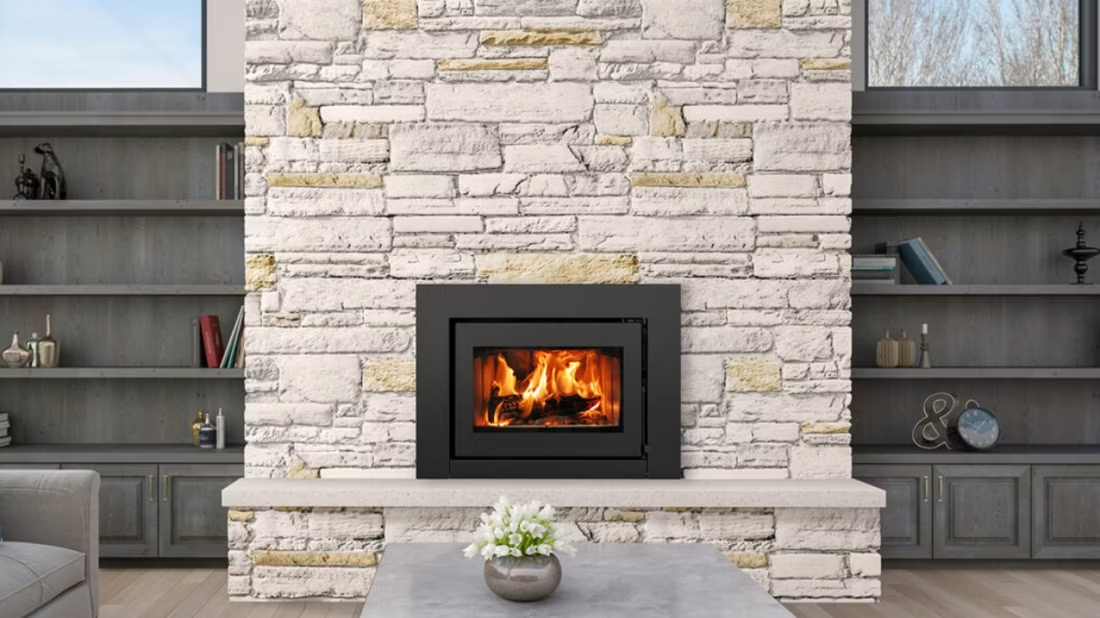
Open fireplaces suck—literally. As the fire burns, it consumes air your furnace already paid to heat and pulls it out through the chimney, so the house is actually colder after the fire goes out than before you lit it. An insert fixes this: it seals the chimney, puts fixed glass across the front, and turns that hole in your house into a real heat source.
Can a fireplace actually lower my heating bill?
Yes—by creating a comfort zone. A furnace heats every square foot of the house just to warm the one room you're in; a gas fireplace on low burns roughly a sixth of the gas a typical furnace does. Set the furnace around 55–60 degrees as a baseline, then heat the rooms your family actually uses. Families who heat this way commonly save $20–$60 a month.
How much should I budget for a fireplace?
For an average home—covering the fireplace, the vent pipe, and basic installation—a budget between $3,900 and $5,500 gives you a lot of options across wood, gas, and pellet. By the time you add finish work, gas line, and electrical, the average complete installation lands between $5,000 and $12,000 all-in. In a remodel or new build, a good rule is to put about 2.5% of the total project cost toward the fireplace.
Nearby Dealers
Hearth shops serving Bartlesville and the surrounding area. Every listing shows whether it is a WhyFire partner, a dealer we have verified as authorized for the brands we recommend, or a local business carrying hearth products. No manufacturer pays for placement. How we verify dealers →
Sharps Pawn
Turf Land Outdoor Power Equipment LLC
Copper Ridge, LLC
Diamond P Lawn & Garden
Find your wood fireplace in Bartlesville.
Tell us about your home and how you'd use a wood stove—backup heat, ambiance, or both—and we'll put together a free Project Guide & Parts List with the right unit, vent kit, and a trusted local dealer who can install it correctly.
Find Your Fireplace →