
Find your electric fireplace in Atoka County.
No chimney, no gas line, no venting—just plug-in warmth for the mild winters of Atoka County, from town homes in Atoka to farmhouses out toward Stringtown and Caney. Find the right unit and connect with a trusted local dealer.
Every Project Starts From One of These Five Situations
Simple heat for a climate that doesn't ask much of it.
Atoka County sits in climate zone 3A—mixed-humid southeastern Oklahoma with winter lows that average around 28°F and just 3,328 heating degree days a year. That's a fraction of what a place like Fargo, ND or Duluth, MN racks up in a single season, which means most homes here don't need a whole-house wood or gas system running around the clock. With around 4,618 residents spread across Atoka, Stringtown, Caney, Tushka, Lane, and the surrounding rural stretches, a lot of heating decisions here come down to supplementing central HVAC in one or two rooms rather than fighting subzero nights.
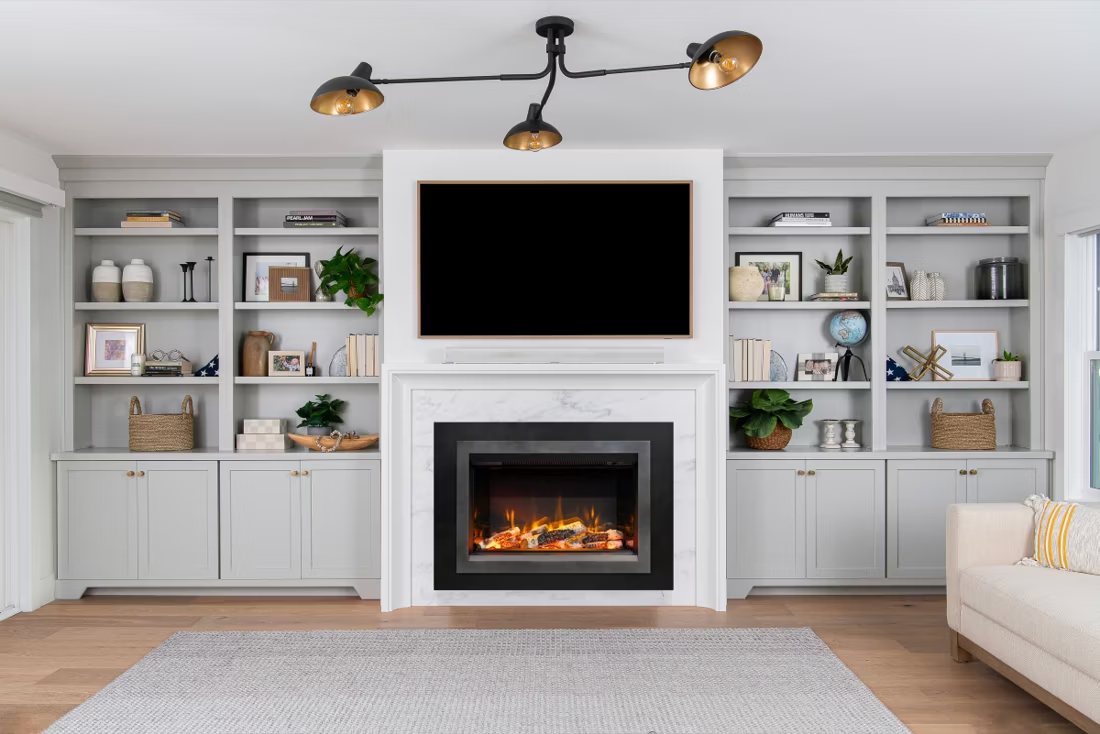
That's exactly the niche electric fireplaces fill well. A wall-mounted or built-in electric unit runs on a standard or dedicated circuit through your local electric cooperative—no gas line, no masonry chimney, no cutting permit season to track. For rural Atoka County homes without natural gas service, and for anyone who wants supplemental warmth in a den, bedroom, or bonus room without opening up a wall for venting, electric is often the least complicated project on this whole list. It won't replace a wood stove burning local oak or hickory on a cold front, but it doesn't need to—it just needs to look good and take the edge off.
Three steps. No salesperson until you're ready.
Tell us about your project
Your zip code, your situation, and the fuel you're leaning toward—or let the answers point you to one.
See what's actually available
The brands dealers within 100 miles genuinely carry—real options, never a catalog mirage.
Get your dealer & Project Guide
A trusted local dealer, plus the free Project Guide & Parts List that names every component of the job.
Frequently Asked Questions
How much does an electric fireplace installation cost in Atoka County?
Most electric fireplace projects in Atoka County run $400 to $1,200 installed. A plug-in freestanding or wall-mounted unit on an existing outlet sits at the low end—you're basically paying for the unit and a mounting bracket. Built-in electric inserts or units that need a new dedicated 20-amp circuit run higher, since that requires an electrician to run wire from your panel. Homes further out from Atoka toward Lane or Wardville may see a modest trip charge added by electricians covering rural service calls, but the work itself doesn't change based on location.
What size electric fireplace do I need for my home?
Because Atoka County's winters are relatively mild—28°F average lows and just over 3,300 heating degree days—most homeowners here are sizing for a single room rather than whole-house heat. A compact 1,000-2,000 BTU insert handles a bedroom or den; a 4,000-5,000 BTU unit covers a larger living room. Unlike a wood stove that has to carry a whole home through a hard freeze, electric units in this county are almost always doing supplemental duty alongside central heat, so oversizing for the coldest night of the year isn't the concern it would be further north.
Where can I find certified installers near me?
For a simple plug-in unit, no certified installer is required—most homeowners handle it themselves. For a built-in electric fireplace or one requiring a dedicated circuit, you'll want a licensed electrician, and any work tied into your home's wiring should be pulled through Atoka County's building permitting process if it involves new circuit runs. Local hearth dealers who carry electric units typically either employ a licensed electrician or can refer one who's familiar with rural Atoka County service, including homes out past Stringtown and Caney where panel upgrades are sometimes part of the job.
What's the difference between an electric fireplace, insert, and stove?
An electric fireplace is typically a built-in unit set into a wall or mantel surround, often the centerpiece of a room remodel. An electric insert is sized to slide into an existing masonry fireplace opening, giving an old wood-burning fireplace a flame-effect makeover without any chimney work. An electric stove is a freestanding cabinet-style unit that mimics a wood stove's look but plugs into a standard outlet. In Atoka County, inserts are popular for older homes with an existing fireplace that's rarely used for wood anymore, while freestanding stoves and wall units go into newer construction or rooms without a fireplace at all.
Do I need a permit to install an electric fireplace in Atoka County?
A plug-in electric fireplace on an existing outlet doesn't require a permit. If your installation needs a new dedicated circuit or any panel work, that electrical work should go through standard permitting with the county, and it needs to be done by a licensed electrician regardless of whether you're inside Atoka city limits or out in unincorporated parts of the county. Most dealers or electricians handling a built-in installation will tell you upfront whether your project crosses that line.
What's the best electric fireplace for Atoka County's climate?
Given the mild winters here—lows averaging around 28°F rather than the deep-freeze conditions of a place like Bismarck, ND—most Atoka County homeowners get the best value from a mid-range insert or wall unit with a strong flame-effect display and a 4,000-5,000 BTU heater rated for supplemental use. You don't need the highest-output unit on the market; you need one that looks good year-round (many owners run the flame effect without heat for most of the year) and kicks in real warmth during the handful of genuinely cold weeks each winter.
How much does it cost to run an electric fireplace here?
Running costs come down to your local electric rate, which for most of rural Atoka County means service through the local electric cooperative. A typical 1,500-watt electric fireplace run on the heat setting for a few hours a day costs roughly $10-$20 a month depending on your co-op's per-kWh rate—far less than running central heat for the same square footage. Most owners use the heat function only during genuinely cold stretches and keep the flame-only ambiance mode on the rest of the time, which draws minimal power.
Electric vs. wood—which is right for my home?
Wood is the traditional choice in Atoka County, where local oak, hickory, and mesquite are all common and self-sourced firewood is a real option for a lot of rural properties. Wood also keeps working if the power goes out, which matters during ice storms that occasionally hit southeastern Oklahoma. Electric, on the other hand, needs no chimney, no wood storage, and no cleanup—but it stops working the moment the co-op's lines go down, so it's not a backup heat source in an outage. For most homes here, electric works best as the low-maintenance, everyday supplemental heat in a room that doesn't already have a fireplace, while wood stays in reserve for the coldest nights or as the primary heat source on rural acreage.
Electric vs. pellet—which is right for my home?
Pellet stoves, using bagged fuel from regional suppliers like Lignetics or Indeck Energy Services, give you real combustion heat and a more substantial BTU output than most electric units, but they need a hopper refilled regularly and a vent to the outside. Electric fireplaces skip the venting and fuel handling entirely—you plug it in and you're done—but the heat output is lower and, like pellet stoves' auger and blower systems, electric units also depend entirely on grid power. For a low-maintenance secondary heat source in a single room, electric is usually the simpler pick in Atoka County; for a more serious heat source without the mess of cordwood, pellet is worth a look.
Can I put a TV above my fireplace?
Yes—with an asterisk. Fireplaces are hot and TVs don't like heat. Either put a mantel between them to deflect rising warmth, or choose a fireplace with heat-management technology that creates a cool zone on the wall above—the wall stays around 125 degrees, barely warm, while the room still gets full heat. If you like clean lines and don't want a mantel, heat management is the answer.
Does an electric fireplace need a vent or chimney?
No—that's its superpower. An electric fireplace needs a wall and an outlet, period. No vent pipe, no gas line, no clearances to design around, which is why it works in bedrooms, offices, apartments, and walls where venting a gas or wood unit would be impractical or impossible. Installation is typically the simplest and least expensive of any fireplace type.
Does a fireplace add value to my home?
On average, a fireplace adds back to the home about the same amount you spent installing it. Add the monthly savings from heating the rooms you actually use instead of the whole house—often hundreds of dollars a year—and the value case is strong before you even count what a fire does for how your family uses the room.
Can a fireplace actually lower my heating bill?
Yes—by creating a comfort zone. A furnace heats every square foot of the house just to warm the one room you're in; a gas fireplace on low burns roughly a sixth of the gas a typical furnace does. Set the furnace around 55–60 degrees as a baseline, then heat the rooms your family actually uses. Families who heat this way commonly save $20–$60 a month.
Find your electric fireplace in Atoka County.
Tell us a bit about your home and we'll put together a free Project Guide & Parts List for your electric fireplace project—matched with a trusted local dealer who can install it right.
Find Your Fireplace →