
Find the right hearth for your Atoka County home.
Wood, gas, pellet, and electric fireplace resources for Atoka, Caney, Stringtown, Tushka, Daisy, and the rural stretches in between. Local oak and hickory run deep here—we help you match the right fuel with a real local installer.
Every Project Starts From One of These Five Situations
Mild winters, deep hardwood country in Atoka County, Oklahoma.
Atoka County sits in southeastern Oklahoma's mixed-humid climate zone (3A), where winter lows average around 28°F and the heating season totals roughly 3,300 heating degree days—a fraction of what a place like Duluth, MN or Fargo, ND racks up in a single winter. That milder profile doesn't make heat unnecessary, though; it shapes what kind of heat makes sense. The oak, hickory, and mesquite forests that cover this part of the county have supplied firewood to local households for generations, and dense hardwood burns hot and long, which matters even in a shoulder-season climate where you might only run a stove hard for a few weeks at a stretch.
This hub covers hearth retailers, service technicians, and fuel suppliers reachable from every community in the county—Atoka, Caney, Stringtown, Tushka, Daisy, and Lane, plus the farms and rural properties along Highway 69 and around Lake Atoka and McGee Creek. Pick your fuel below to see local dealers, typical installation costs, and the specifics that matter for a rural southeastern Oklahoma home, whether you're heating a farmhouse near the lake or a place tucked back in the timber.
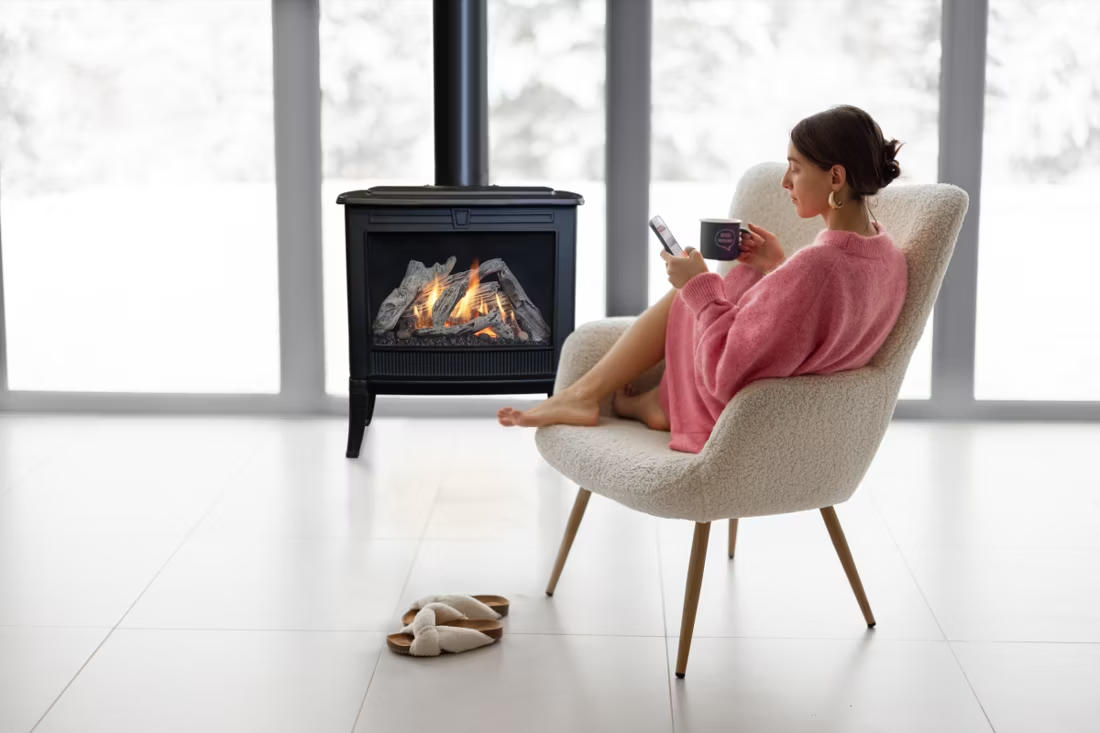
Four fuels. One honest answer for Atoka County.
Three steps. No salesperson until you're ready.
Tell us about your project
Your zip code, your situation, and the fuel you're leaning toward—or let the answers point you to one.
See what's actually available
The brands dealers within 100 miles genuinely carry—real options, never a catalog mirage.
Get your dealer & Project Guide
A trusted local dealer, plus the free Project Guide & Parts List that names every component of the job.
Frequently Asked Questions
Which fuel works best for a home in Atoka County?
It depends on how much heat you actually need and how you live. Wood is the traditional choice here, and it makes sense—oak and hickory are everywhere in this county, burn dense and long, and many rural properties already have a woodlot to draw from. But with winters averaging around 28°F and a heating season well short of what colder states deal with, a lot of local wood stoves get used seasonally rather than as the sole heat source. Gas, almost always propane out here since natural gas service is thin outside town limits, is the low-effort choice for consistent, thermostat-controlled heat. Pellet stoves are a solid middle ground—less mess than a woodpile, and Lignetics bags are stocked at regional farm stores. Electric fireplaces do fine as supplemental heat in bedrooms or dens, since the mild climate zone doesn't demand a whole-house electric heating load. Most households here end up mixing fuels—a wood or propane unit for the main living space, electric for a secondary room.
Do I need a permit to install a fireplace or stove in Atoka County?
It depends on where you're located. Inside city limits—Atoka, Caney, Stringtown, Tushka—a building permit is typically required for wood stove, gas, and pellet installations that involve new venting, gas lines, or structural work; check with the relevant town hall before scheduling. Out in the unincorporated parts of the county, which make up most of Atoka County's land area, there often isn't a formal permitting process for stove installations, though any gas line work should still go through a licensed propane installer and any new electrical circuit for a built-in electric unit should be done by a licensed electrician. If you're unsure which category your property falls under, a local installer who's done work in your area before can usually tell you in one phone call.
Are there air quality restrictions on wood burning in Atoka County?
No—Atoka County doesn't carry any non-attainment designation or winter inversion concerns, so there's no yellow/red burn advisory system like you'd find in a basin-bound city out West. That said, southeastern Oklahoma sees dry stretches and periodic county burn bans tied to wildfire risk rather than smoke pollution, so it's worth checking with the county fire department or Oklahoma Forestry Services before open burning during drought conditions. For stove installations specifically, new units still need to meet the federal EPA emissions standard that applies nationwide, but there's no additional local layer of restriction on top of that.
Is there a hearth dealer based in Atoka County, or do I need to go elsewhere?
Atoka County's population is small enough that it doesn't support a dedicated multi-fuel showroom within the county itself. Most residents work with a retailer based in McAlester or Durant, both about a 30-45 minute drive from the town of Atoka, and those dealers typically service the whole county as part of their normal delivery and installation radius. A handful of independent installers based closer to home—around Stringtown and Caney—handle wood stove and insert work without requiring you to visit a showroom at all, which can be the more practical route if you already know what you want. If you're still comparing wood, gas, pellet, and electric options side by side, a trip to a McAlester or Durant showroom to see working displays is usually worth the drive.
How does installation and service work if I'm out in the rural parts of the county?
Fine, but plan a little ahead. Technicians and installers covering Atoka County are almost always based in McAlester or Durant and drive out to Atoka, Caney, Tushka, Stringtown, Daisy, and the properties around Lake Atoka and McGee Creek. Expect a modest trip charge for service calls to the more remote parts of the county, and expect scheduling to tighten up once cooler weather arrives in October and November—booking your annual chimney sweep or gas inspection in late summer, before the rush, is the easiest way to avoid a wait. For wood stove households, keeping the oak and hickory supply seasoned a year ahead is standard practice around here, and it also means you're not scrambling if a delivery or a service appointment slips a week.
What does fireplace installation typically cost across fuel types in Atoka County?
Costs here tend to run below national averages, in line with the broader southeastern Oklahoma market. Wood stove or insert installation: roughly $3,500-$7,500 for a typical install, more if new chimney or hearth work is needed. Propane fireplace, insert, or stove: roughly $3,500-$8,500, with cost driven mainly by whether an existing propane line and tank are already in place. Pellet stove or insert: roughly $3,500-$6,000 installed. Electric fireplace: $200-$2,500 for the unit itself, plus $300-$900 in labor unless it's a plug-and-play model, which covers most wall-mount and insert installs. Rural delivery and trip charges can add a bit on top of these ranges depending on how far out your property sits from McAlester or Durant.
Can I install a fireplace myself?
If you're putting a fire in your house on purpose, it's best to work with an expert. Unless you're genuinely experienced in framing, gas line, vent pipe, and the national code on clearances to combustibles, have a professional do it—and ideally the same company that sells you the fireplace, so warranty, service, and liability all live under one roof.
Wood, gas, pellet, or electric—how do I choose?
Match the fuel to your life, not the other way around. Wood: lowest fuel cost and total power-outage independence, but you're hauling and stacking. Gas: press a button, set a thermostat, no maintenance to speak of. Pellet: wood economics with automatic feeding, in exchange for weekly cleaning and a need for electricity. Electric: plugs in anywhere with honest supplemental heat. Nobody regrets the fuel that fits how they actually live.
Can a fireplace actually lower my heating bill?
Yes—by creating a comfort zone. A furnace heats every square foot of the house just to warm the one room you're in; a gas fireplace on low burns roughly a sixth of the gas a typical furnace does. Set the furnace around 55–60 degrees as a baseline, then heat the rooms your family actually uses. Families who heat this way commonly save $20–$60 a month.
Does a fireplace add value to my home?
On average, a fireplace adds back to the home about the same amount you spent installing it. Add the monthly savings from heating the rooms you actually use instead of the whole house—often hundreds of dollars a year—and the value case is strong before you even count what a fire does for how your family uses the room.
Stove and Fireplace Dealers in Atoka County
Listings include WhyFire partner dealers, dealers we have verified as authorized for the brands we recommend, and established local businesses that carry hearth products. Every listing shows which one it is. The ones marked Preferred run on WhyFire's software, so they can show you real pricing and book your appointment right here. No manufacturer pays for placement. How we verify dealers →
Ntx Bbq Supply
Brinker's Service
Fan & Flame
Polar Bear Chimney Sweep
Find your fireplace in Atoka County.
Tell us about your home and we'll match you with a trusted local dealer and send a free Project Guide & Parts List—the exact parts, including the vent kit, and the recommended installer for your specific fuel and property in Atoka County.
Find Your Fireplace →