
Steady pellet heat for Alfalfa County's wheat-country winters.
From Cherokee to Aline, Carmen, Goltry, and Jet, Alfalfa County's roughly 4,400 residents deal with average winter lows near 24°F and about 4,100 heating degree days a year—cold enough to matter, mild enough that a pellet stove can carry a farmhouse through the season without a woodpile. Find the right unit and connect with a trusted local dealer.
Every Project Starts From One of These Five Situations
A clean, low-maintenance alternative to cordwood.
Alfalfa County sits in the wheat and cattle country of northwest Oklahoma, a rural stretch of about 4,400 people spread across Cherokee and small towns like Aline, Burlington, Carmen, Goltry, and Jet. The climate here—zone 3A, mixed-humid—is genuinely moderate by national standards. Average winter lows sit around 24°F and the county logs roughly 4,100 heating degree days a year, a fraction of what northern Plains towns like Fargo, ND or Bismarck, ND rack up. That means most Alfalfa County homes don't need a stove that can carry a house through weeks of subzero cold—they need dependable, even heat for the genuinely chilly stretches between November and March.
Many older farmhouses in the county still have a wood-burning fireplace or hearth built for local oak, hickory, or mesquite, but pellet stoves and inserts have become a practical alternative for households who want consistent heat without cutting, splitting, and stacking cordwood every fall. There's no county air quality restriction driving that shift—Alfalfa County has none of the inversion or non-attainment issues some regions deal with—it's simply about convenience for people already managing a farm or ranch operation. Regional pellet supply comes through companies like Lignetics and Indeck Energy Services, and because the county's population is small, most installation and service work is handled by dealers based in nearby hubs like Enid or Alva who cover the surrounding rural area.
Three steps. No salesperson until you're ready.
Tell us about your project
Your zip code, your situation, and the fuel you're leaning toward—or let the answers point you to one.
See what's actually available
The brands dealers within 100 miles genuinely carry—real options, never a catalog mirage.
Get your dealer & Project Guide
A trusted local dealer, plus the free Project Guide & Parts List that names every component of the job.
Frequently Asked Questions
How much does a pellet stove installation cost in Alfalfa County?
A pellet stove installation in a rural Oklahoma county like this one typically runs $3,000 to $6,000, depending on the unit, whether it's a freestanding stove or an insert going into an existing masonry fireplace, and whether a dedicated electrical circuit needs to be run for the auger and blower motor. Because Alfalfa County has a small population and no pellet dealer based in the county itself, most homeowners get quotes from installers working out of Enid or Alva who travel out to Cherokee, Aline, Carmen, and the surrounding area—factor in a modest trip charge for installs further from those hubs.
What size pellet stove do I need for my home?
With average winter lows around 24°F and about 4,100 heating degree days a year, Alfalfa County's climate is moderate enough that a mid-size pellet stove (rated for 1,500 to 2,000 square feet) handles most farmhouses and ranch homes as a primary heat source, while a smaller unit works fine as supplemental heat in a well-insulated home with central propane or electric backup. Older, less-insulated farmhouses—common throughout the county—often need to size up a step from what square footage alone would suggest, since drafty older construction loses heat faster than newer builds. A local dealer can size this correctly during an in-home visit rather than guessing off square footage alone.
Where can I find a pellet stove installer near me in Alfalfa County?
Alfalfa County itself is small enough that there isn't a dedicated hearth shop in Cherokee or the other towns—most installers serving this area are based in Enid or Alva and cover Alfalfa County as part of a wider northwest Oklahoma service territory. Look for installers with NFI certification, and confirm they'll pull any required electrical permit for the stove's auger and blower circuit. Since travel distance factors into scheduling and cost, it's worth asking upfront whether the dealer regularly services your specific town—Jet and Byron sit farther from Enid than Cherokee or Carmen do, and that can affect both price and lead time.
What's the difference between a pellet stove and a pellet insert?
A pellet stove is a freestanding unit that sits on a hearth pad and vents through a wall or existing chimney—it can go almost anywhere in a home with the right clearances. A pellet insert is built to slide into an existing masonry fireplace opening, which is a common retrofit for the older farmhouses scattered across Alfalfa County that were originally built with wood-burning oak or hickory in mind. If you already have a working fireplace and chimney, an insert typically costs less to install and reuses venting you already have. Homes without an existing fireplace opening are usually better suited to a freestanding stove.
Do I need a permit to install a pellet stove in Alfalfa County?
Most pellet stove installations require a building permit and, since these units need power for the auger and blower, an electrical permit as well. In Cherokee and the county's other incorporated towns, check with the local town office; in unincorporated parts of Alfalfa County, permitting typically runs through the county building department. Rural Oklahoma counties generally have lighter permitting requirements than metro areas, but it's still worth confirming before installation—most dealers based out of Enid or Alva who work this territory regularly are familiar with the process and can handle it as part of the install.
What's the best pellet stove for Alfalfa County's climate?
Because winters here are moderate—average lows near 24°F rather than the deep-negative nights of the northern Plains—most Alfalfa County homes don't need the largest hopper capacity or highest BTU output on the market. Mid-range models from widely available manufacturers like Harman, Englander, and US Stove cover the vast majority of homes here well, offering multi-day hopper capacity and thermostatic control that suits a farmhouse where nobody wants to reload pellets every few hours. For a primary-heat setup in an older, drafty farmhouse, ask a local dealer about stepping up hopper size so the auger doesn't need constant refilling during the coldest stretches of January and February.
Where can I buy wood pellets in Alfalfa County?
Pellets aren't something most Alfalfa County residents pick up at a local hardware store—supply generally comes through regional distributors like Lignetics and Indeck Energy Services, often stocked seasonally at farm supply stores in Enid or Alva and available by special order elsewhere. Pricing in this part of Oklahoma typically runs in line with the regional average, and buying a full winter's supply—often a ton or more—in late summer or early fall before demand picks up is the standard approach. Given the acreage most homes here sit on, dry barn or outbuilding storage is usually available, which helps if you want to buy in bulk rather than by the bag.
How often does a pellet stove need to be serviced?
Plan on a full cleaning and inspection once a year, ideally before heating season starts in the fall. That includes cleaning the burn pot and ash traps, checking the auger and hopper for pellet dust buildup, inspecting the exhaust vent, and cleaning the glass. Homes running a pellet stove as primary heat through a full Oklahoma winter may need a mid-season ash cleanout as well, since daily use builds up residue faster than occasional supplemental burning. Because dedicated hearth service techs aren't based in the county itself, scheduling annual service with an Enid- or Alva-based dealer at the same time as your fall pellet order is a practical way to stay on top of it.
Pellet stove vs. wood stove—which is right for my Alfalfa County home?
Wood stoves burn the oak, hickory, and mesquite that's traditionally available in this part of Oklahoma, work without electricity, and offer the lowest ongoing fuel cost if you have access to your own timber or a cheap local source. Pellet stoves are far more hands-off—load the hopper, set the thermostat, and let the auger do the rest—but they require electricity to run the auger and blower, which matters given how often ice storms and severe spring weather knock out power across rural Oklahoma. If backup heat during an outage is a priority, wood or a pellet stove paired with a small generator makes more sense than a pellet-only setup. For day-to-day convenience in a home with reliable power, pellet is usually the easier choice.
How often does a pellet stove need cleaning?
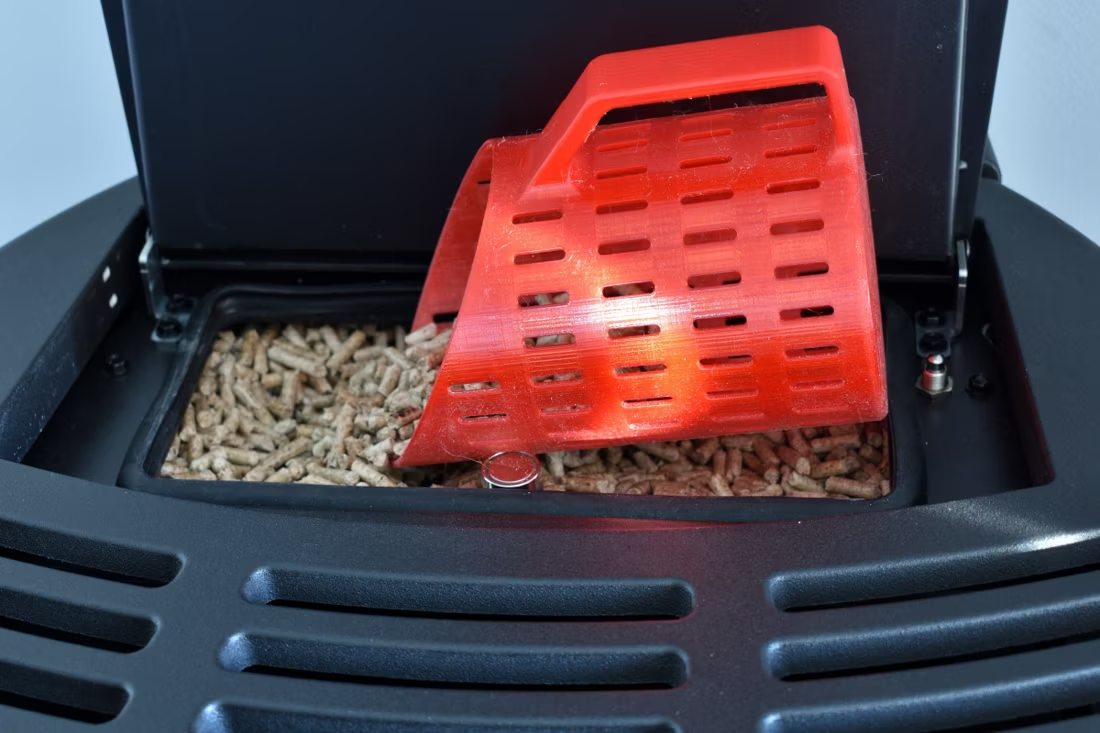
A clean pellet stove is a happy pellet stove. Plan on cleaning the burn pot about once a week when you're burning regularly—ash and clinkers gum up the air holes just like a pellet barbecue. Most pellet stove problems trace back to skipped cleaning that nobody explained up front. Some designs make it easy with a trapdoor burn pot: pull a lever and the gunk drops into the ash pan.
What's the difference between an insert and a zero-clearance fireplace?
An insert is a fireplace that slides into a pre-existing wood-burning fireplace—if you don't have one, there's nothing to insert it into. A zero-clearance fireplace is built into a framed wall, which makes it the answer for remodels and new construction. Simple test: existing masonry fireplace means insert; blank or framed wall means zero-clearance.
How much should I budget for a fireplace?
For an average home—covering the fireplace, the vent pipe, and basic installation—a budget between $3,900 and $5,500 gives you a lot of options across wood, gas, and pellet. By the time you add finish work, gas line, and electrical, the average complete installation lands between $5,000 and $12,000 all-in. In a remodel or new build, a good rule is to put about 2.5% of the total project cost toward the fireplace.
What is an in-home preview and do I need one?
It's a visit where a hearth professional measures your space, confirms the model you picked actually works in your home, and walks the specs—framing, gas line, venting, finish work—before anything is ordered. Some details you just can't know until you see the house. Never make a down payment without one; it's the single most-skipped step that burns buyers.
Stove and Fireplace Dealers in Alfalfa County
Pellet Brands Stocked Around Alfalfa County
Manufacturers will point you to the nearest stocking dealer.
Find your pellet stove in Alfalfa County.
Tell us a bit about your home in Alfalfa County and we'll match you with a trusted local dealer and a free Project Guide & Parts List—the exact parts, including the vent kit, for your pellet stove or insert project.
Find Your Fireplace →