
Keep Your Family Warm and Safe—No Matter What
Woodworth's cold winters (average lows near 19°F, with a long, demanding heating season) can justify a wood stove—but most homes here run on natural gas or electric. If wood is still the right call for your property, we'll connect you with a dealer who can size it correctly.
Every Project Starts From One of These Five Situations
Why wood isn't the default heat source in Woodworth.
Woodworth is a small unincorporated community in Mahoning County, tucked between Youngstown and the Pennsylvania line, with a population under 2,000. Winters here are genuinely cold—Climate Zone 5A, an average low of 19°F, and a long, demanding heating season each year—so supplemental heat matters. But unlike wooded, off-grid parts of the country, most Woodworth homes sit on smaller residential or suburban-adjacent lots served by Ohio Edison electric service and, for most streets, natural gas. That combination is why wood doesn't show up as a mainstream fuel choice on this page: there's no dedicated local wood-heat infrastructure, no nearby national forest permit office, and no regional cutting-permit program the way you'd find in a more rural or forested county.
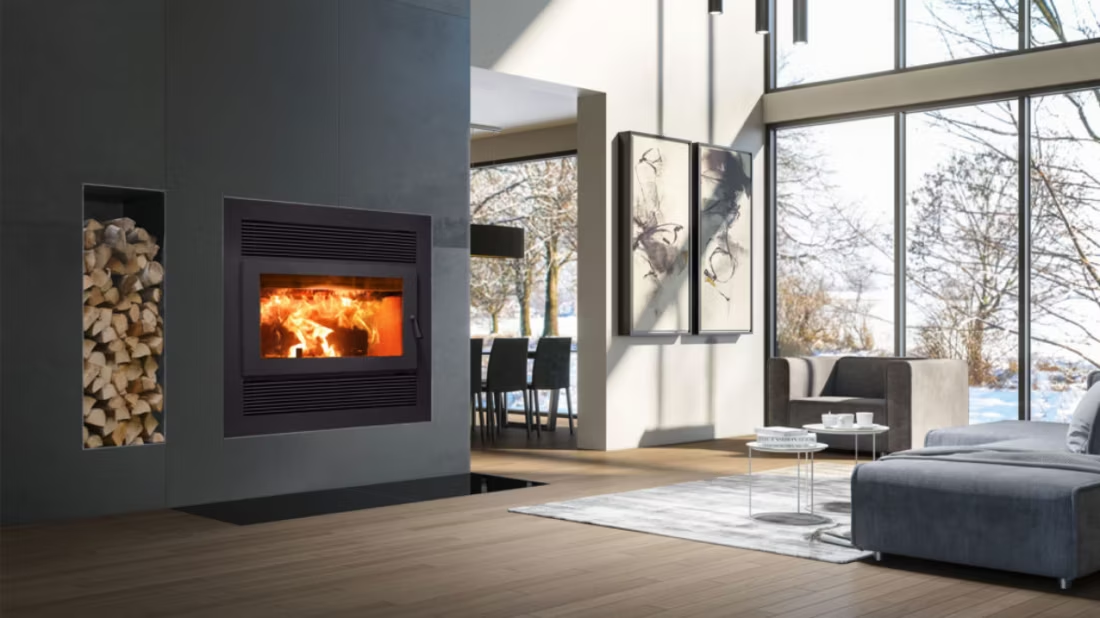
That doesn't mean a wood stove is off the table. Homeowners on larger parcels, older farmhouses with existing chimneys, or anyone who wants dependable heat during a winter power outage still install them here—and the local hardwood mix (oak, hickory, maple, cherry) burns long and hot when it's properly seasoned. If that's you, the right move is working with a dealer who installs to current code and sizes the unit to your actual house, not a big-box unit picked off a showroom floor.
Three steps. No salesperson until you're ready.
Tell us about your project
Your zip code, your situation, and the fuel you're leaning toward—or let the answers point you to one.
See what's actually available
The brands dealers within 100 miles genuinely carry—real options, never a catalog mirage.
Get your dealer & Project Guide
A trusted local dealer, plus the free Project Guide & Parts List that names every component of the job.
Frequently Asked Questions
Is a wood stove actually a good fit for a home in Woodworth?
For most Woodworth households, no—not as a primary heat source. The area is served by Ohio Edison electric and natural gas in most neighborhoods, and there's no local cutting-permit infrastructure or wood-supply network the way you'd find in a more rural, forested county. Where it does make sense: older farmhouses with an existing masonry chimney, properties with several acres of hardwood, or homeowners who specifically want a non-electric backup heat source for winter outages. If none of that describes your situation, gas or electric will likely serve you better and cost less to install.
How much does a wood stove installation cost near Woodworth?
Because wood heat is uncommon enough here that we don't track a dedicated local pricing benchmark for Woodworth specifically, the best guide is what comparable installations run across Mahoning County and the greater Youngstown area: roughly $3,500 to $8,000, depending on the stove, whether you're using an existing masonry chimney or need new Class A chimney pipe, and any hearth pad work required for code clearances. Homes without an existing chimney—which describes a lot of newer construction in this area—sit toward the higher end once venting is factored in.
Do I need a permit to install a wood stove in Woodworth?
Yes. Even though Mahoning County doesn't have the air-quality restrictions you'd see in a non-attainment area, a new solid-fuel appliance still requires a building permit through the county building department, and the stove itself needs to meet current EPA emissions standards. Because wood installs are infrequent here, it's worth confirming permit requirements directly with the county rather than assuming a contractor will handle it automatically—ask any installer you're considering whether permitting is included in their quote.
What size wood stove do I need for a Woodworth home?
With a winter cold enough to demand serious heating output and average lows around 19°F, Woodworth's climate is cold enough to justify a mid-size stove if you're using wood as a real heat source rather than ambiance. A stove rated for 1,000–2,000 square feet handles most single-family homes in this area as supplemental heat; a smaller unit is fine for a single room or a finished basement. Dense local hardwoods like oak and hickory put out more heat per load than softer woods, so sizing conservatively (rather than oversizing) usually keeps the burn efficient and avoids smoldering, creosote-heavy fires.
Where can I find a dealer or installer near Woodworth?
Because Woodworth itself is small, most hearth dealers and NFI-certified installers serving this area are based in or around Youngstown. That's not a problem—it just means the dealer worth using is one who's installed wood appliances in older Mahoning County farmhouses before and knows how local building code and chimney conditions typically shake out. We match homeowners here with a trusted installer rather than pointing you toward a big-box store that may not carry code-compliant venting for your specific chimney setup.
Should I get a freestanding wood stove or an insert?
If your home already has a working masonry fireplace and chimney—common in some of Woodworth's older houses—an insert is usually the better choice, since it uses the existing flue and turns a drafty, inefficient fireplace into a real heat source. If you don't have an existing chimney, a freestanding stove with new Class A pipe is the more straightforward (and often cheaper) path, since it doesn't require retrofitting an old masonry structure to modern clearance standards.
Is a wood stove worth having as backup heat during a power outage?
It's one of the more compelling reasons to install one here. Ohio Edison service in this part of Mahoning County can go down during winter ice storms, and a furnace—gas or electric—won't run without power to the blower and controls. A wood stove keeps producing heat with zero electricity required, which is a real advantage on a night when temperatures are near 19°F and the grid is down. If backup heat during outages is your main motivation, mention that to your installer, since stove placement and clearance requirements matter more when it's your only heat source.
Where do I get firewood near Woodworth?
There's no nearby national forest or public-land cutting permit program feeding this area, so firewood here typically comes from private landowners, local tree services, or seasonal firewood sellers who advertise by word of mouth. Oak, hickory, maple, and cherry are the common hardwoods in this part of Mahoning County, and all four season well—plan on splitting and stacking at least 6 to 12 months ahead of burning, since unseasoned wood is the leading cause of creosote buildup and poor stove performance.
Wood vs. gas vs. electric—what actually makes sense in Woodworth?
For most homes here, gas or electric is the more practical choice—both are standard, well-supported fuel options in this area with normal installation costs and no special permitting hurdles. Wood makes sense in specific situations: a home with an existing usable chimney, a property with its own hardwood supply, or a household that wants non-electric backup heat for winter outages. Pellet stoves, which need reliable power to run the auger and blower, don't solve the outage problem and aren't well supported by regional pellet infrastructure here either. If you're weighing options, tell your local dealer what you actually need the heat for—daily use, backup, or ambiance—and let that drive the fuel choice rather than picking wood by default.
Why won't my new wood stove get going like my old one?
New wood stoves are 70%+ efficient, so far less heat goes up the flue—which also means less draft to get a fire established. The rule: build a genuinely hot fire for about 45 minutes before you choke it down. Skip that and you get smoke in the room, creosote in the chimney, and a fire that never takes off. Most performance complaints trace straight back to this.
Why is a fireplace insert so efficient?
An insert does two things: it seals the chimney completely, so you stop losing air you already paid to heat, and it radiates warmth into the room through the firebox and glass. Most add a heat-exchange fan that pulls cool room air underneath, wraps it around the hot firebox, and pushes it back out warm. Your home is more efficient before you've even lit the first fire.
How much should I budget for a fireplace?
For an average home—covering the fireplace, the vent pipe, and basic installation—a budget between $3,900 and $5,500 gives you a lot of options across wood, gas, and pellet. By the time you add finish work, gas line, and electrical, the average complete installation lands between $5,000 and $12,000 all-in. In a remodel or new build, a good rule is to put about 2.5% of the total project cost toward the fireplace.
Can I install a fireplace myself?
If you're putting a fire in your house on purpose, it's best to work with an expert. Unless you're genuinely experienced in framing, gas line, vent pipe, and the national code on clearances to combustibles, have a professional do it—and ideally the same company that sells you the fireplace, so warranty, service, and liability all live under one roof.
Nearby Dealers
Hearth shops serving Woodworth and the surrounding area. Every listing shows whether it is a WhyFire partner, a dealer we have verified as authorized for the brands we recommend, or a local business carrying hearth products. No manufacturer pays for placement. How we verify dealers →
Kushners Garden & Patio
Weaver's Stove & Patio - Washingtonville
Brunk's Fireplace
By The Fire
Soot Seekers Chimney Service
Susi Builders Supply
Find your wood stove in Woodworth, Ohio.
Tell us about your home and why you're considering wood heat, and we'll connect you with a trusted local dealer and a free Project Guide & Parts List—sized correctly for your house, not a generic install.
Find Your Fireplace →