
Pellet Stoves in Willoughby: An Honest Look at Fit.
Willoughby's Lake Erie snowbelt winters get plenty cold, but this is natural-gas country. Here's what pellet heat can realistically do in a Cleveland-area home, and how to find a dealer who stocks it.
Every Project Starts From One of These Five Situations
Natural gas already does the job here.
Willoughby sits in Lake County on the snowbelt fringe of Lake Erie, at 637 feet elevation with a winter heating load about as heavy as Buffalo, NY across the lake—a cold-winter profile similar to that city. Average winter lows hover around 19°F, and lake-effect bands can dump snow for days at a stretch. Despite that real cold, Willoughby's housing stock is almost universally served by natural gas heat, which is why both wood and pellet appliances are flagged as uncommon choices here rather than mainstream ones—this isn't a rural, off-grid market where solid-fuel heat is the default backup.
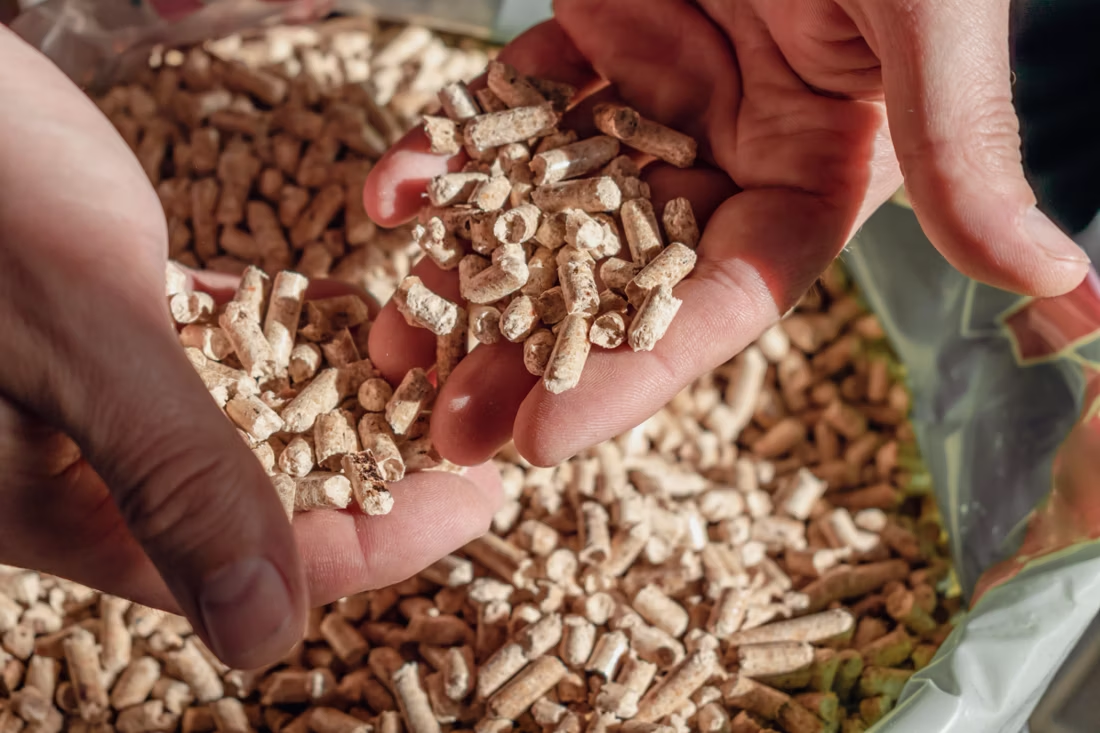
That said, a pellet stove or insert still makes sense for specific Willoughby homeowners: people converting an unused fireplace into a supplemental heat source, homes without natural gas service on certain streets, or anyone who wants a hedge against the kind of ice-storm outages that occasionally knock out power along the lakeshore. Regional pellet suppliers including Lignetics and Somerset Pellet Fuel already distribute bagged fuel through hardware stores and hearth shops across northeast Ohio, and Indeck Energy Services operates biomass facilities in the broader region, so fuel supply isn't the obstacle—appliance selection and finding a dealer who actually stocks and services pellet equipment is.
Three steps. No salesperson until you're ready.
Tell us about your project
Your zip code, your situation, and the fuel you're leaning toward—or let the answers point you to one.
See what's actually available
The brands dealers within 100 miles genuinely carry—real options, never a catalog mirage.
Get your dealer & Project Guide
A trusted local dealer, plus the free Project Guide & Parts List that names every component of the job.
Frequently Asked Questions
How much does a pellet stove installation cost in Willoughby?
Because pellet stoves are a niche purchase in a natural-gas market like Willoughby, you won't find the same volume of local pricing that a gas insert market would have. Nationally, a pellet stove installation—including the hearth pad, direct-vent pipe through an exterior wall, and electrical outlet for the auger and blower—typically runs $3,000 to $6,500. A pellet insert into an existing masonry fireplace usually lands in a similar range, depending on liner length. Since so few Willoughby retailers keep pellet units in regular stock, get a firm number from an in-home consultation rather than a phone quote.
Is a pellet stove a good fit for my Willoughby home?
It depends on what you're solving for. If you want a set-it-and-forget-it supplemental heat source for a family room, den, or finished basement, a pellet stove works well and is easier to live with day to day than cordwood—no splitting, no ash mess, no chimney draft issues. If you're hoping for backup heat during a power outage, know that pellet stoves need electricity to run the auger and combustion blower (typically 100-400 watts), so you'd need a small generator or battery backup to keep it running when Cleveland Electric Illuminating Company (CEI) power drops. For most Willoughby homes with existing gas furnaces, a pellet stove is a supplement, not a primary heat replacement.
Where can I find a dealer who actually carries pellet stoves near Willoughby?
This is the real bottleneck in a market like Willoughby's—most local hearth shops lean heavily toward gas because that's what the majority of customers ask for. Look for a dealer with NFI (National Fireplace Institute) pellet-specific certification, and ask directly whether they keep pellet units on the showroom floor or special-order them. A dealer who regularly services pellet equipment will also matter more here than in a pellet-heavy market, since routine hopper and auger maintenance isn't something every hearth technician in the area handles often.
What's the difference between a pellet stove and a pellet insert?
A pellet stove is a freestanding, self-contained unit that vents through a wall or existing chimney and can sit almost anywhere in a room with the right clearances. A pellet insert is built to slide into an existing masonry fireplace opening, using a liner run up your existing chimney for venting. For Willoughby's older housing stock—plenty of homes here still have a wood-burning fireplace that rarely gets used—an insert converts that fireplace into a working heat source without the mess of cordwood. Homes without an existing fireplace opening are better suited to a freestanding stove.
Do I need a permit to install a pellet stove in Willoughby?
Yes—any new solid-fuel appliance, including pellet stoves and inserts, requires a building permit through the City of Willoughby's building department, and the installation must meet current manufacturer venting specifications and clearances. Willoughby doesn't have the wood-smoke air quality restrictions you'd see in a non-attainment area—Lake County has no listed air quality curtailment periods—so once it's installed and permitted, there are no seasonal burn restrictions to plan around.
What pellet stove models work best for a climate like Willoughby's?
With a winter heating load about as heavy as Buffalo's, Willoughby sees enough sustained cold that hopper capacity and burn time matter if you're running the stove daily through January and February. Look for units with a hopper that holds at least 40-60 pounds of pellets, which typically gets you 24+ hours of burn time on a low-to-medium setting. A local dealer who special-orders pellet equipment can walk you through specific models—since pellet appliance brands aren't heavily stocked in this market, expect a slightly longer lead time than you'd get for a gas insert.
How much maintenance does a pellet stove actually need?
More than a gas fireplace, less than a wood stove. Expect to empty the ash pan every few days during regular use, clean the burn pot weekly to keep the combustion holes clear, and vacuum the hopper and auger area a few times a season. An annual professional service—checking the exhaust blower, gaskets, and venting—is recommended before each heating season. Because pellet stoves are uncommon in Willoughby, confirm with your dealer upfront that they offer ongoing service, not just the initial sale.
Where do I buy pellet fuel in Willoughby?
Bagged pellets from regional producers like Lignetics and Somerset Pellet Fuel show up at hardware stores and hearth shops throughout northeast Ohio, though selection in Willoughby specifically is thinner than it would be in a market where pellet stoves are the norm. Indeck Energy Services also supplies biomass fuel product in the broader region. Because demand is lower here, it's worth calling ahead each fall to confirm a store has pellets in stock rather than assuming you can pick some up on a whim in January.
Should I get a pellet stove or just stick with gas?
For most Willoughby homes, gas is the more practical primary choice—natural gas service is widely available, a direct-vent gas insert or fireplace requires far less hands-on maintenance, and it doesn't depend on electricity to operate the way a pellet stove does. Pellet makes more sense as a secondary or supplemental appliance: something that gives you a real, visible flame and a wood-like heat output without the cordwood handling, particularly in a room where you already have an unused fireplace. If your priority is a hedge against a CEI power outage with zero backup power planning, a vented gas fireplace with a standing pilot is actually the more reliable option of the two—pellet stoves need electricity, gas fireplaces with certain ignition systems don't.
How often does a pellet stove need cleaning?
A clean pellet stove is a happy pellet stove. Plan on cleaning the burn pot about once a week when you're burning regularly—ash and clinkers gum up the air holes just like a pellet barbecue. Most pellet stove problems trace back to skipped cleaning that nobody explained up front. Some designs make it easy with a trapdoor burn pot: pull a lever and the gunk drops into the ash pan.
Can a pellet stove heat a whole house?
It genuinely can. I burned a pellet stove as my only heat source for years after a furnace died, and it kept the entire house warm. Pellets feed automatically from a hopper, so you get wood-heat economics with thermostat-style control. Two honest caveats: it needs weekly cleaning during the season, and most models need electricity to run—ask about battery backup if outages are a concern.
What is an in-home preview and do I need one?
It's a visit where a hearth professional measures your space, confirms the model you picked actually works in your home, and walks the specs—framing, gas line, venting, finish work—before anything is ordered. Some details you just can't know until you see the house. Never make a down payment without one; it's the single most-skipped step that burns buyers.
Can I install a fireplace myself?
If you're putting a fire in your house on purpose, it's best to work with an expert. Unless you're genuinely experienced in framing, gas line, vent pipe, and the national code on clearances to combustibles, have a professional do it—and ideally the same company that sells you the fireplace, so warranty, service, and liability all live under one roof.
Nearby Dealers
Hearth shops serving Willoughby and the surrounding area.
Pellet Brands Stocked Around Willoughby
Manufacturers will point you to the nearest stocking dealer.
Find your pellet stove in Willoughby.
Tell us about your home and your goals for pellet heat, and we'll match you with a local dealer who actually stocks and services pellet equipment—plus a free Project Guide & Parts List with the exact parts, vent kit, and dealer recommendation for your project.
Find Your Fireplace →