
Keep Your Family Warm and Safe—No Matter What
Most Westlake homes run on natural gas furnaces, so a wood stove or insert here is usually a deliberate, ambiance-or-backup choice rather than a necessity. If that's you, we'll connect you with a local dealer who can tell you honestly whether it's worth it.
Every Project Starts From One of These Five Situations
Natural gas homes, a few wood-burning holdouts.
Westlake sits in Cuyahoga County on the west side of the Cleveland metro, at about 712 feet elevation with a solid winter heating season and an average winter low near 22°F. That's a real Ohio winter, but it's mild compared to the true snowbelt further east along Lake Erie, and nowhere near the extremes of a place like International Falls, MN. Almost every home in Westlake is built with a natural gas furnace as the primary heat source, and city building patterns here—established subdivisions with modest lot sizes—simply weren't designed around wood-burning as a main heat plan the way rural Appalachian Ohio was.
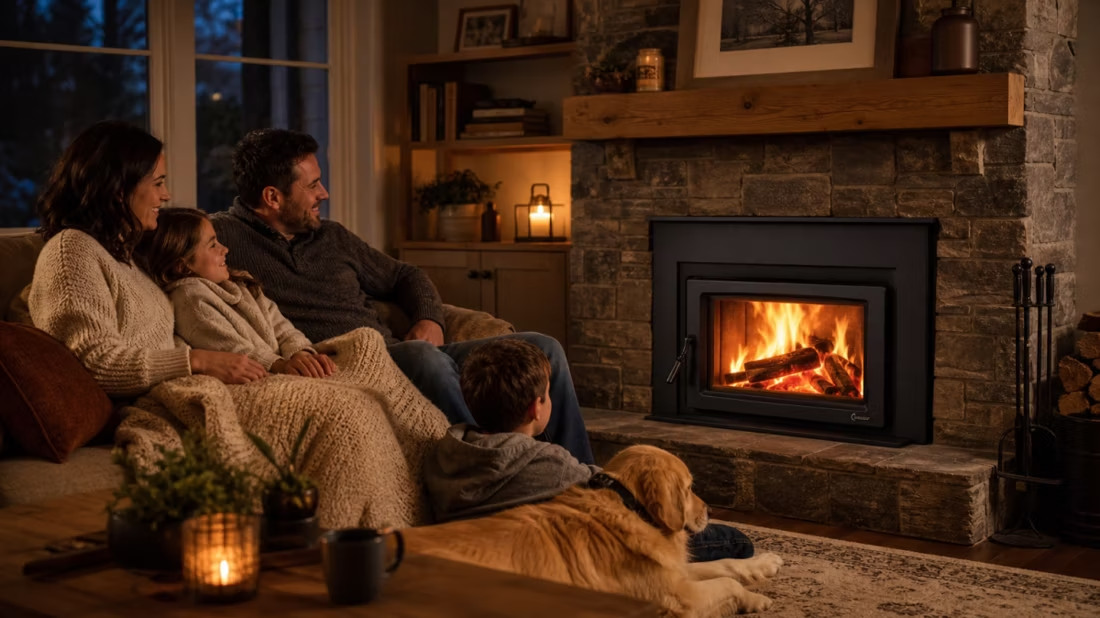
That said, wood hasn't disappeared. Older Westlake homes with existing masonry fireplaces sometimes get a wood-burning insert added for real heat output and the look of a live fire. A smaller number of homeowners install a freestanding wood stove for backup heat during the ice storms that occasionally knock out power along the lakeshore, or simply because they like tending a fire. Northeast Ohio hardwoods—oak, hickory, maple, cherry—are widely available from local firewood suppliers, though most Westlake buyers are purchasing seasoned cordwood by delivery rather than cutting their own; there's no adjacent national forest land or public cutting permit system the way there is out west.
Three steps. No salesperson until you're ready.
Tell us about your project
Your zip code, your situation, and the fuel you're leaning toward—or let the answers point you to one.
See what's actually available
The brands dealers within 100 miles genuinely carry—real options, never a catalog mirage.
Get your dealer & Project Guide
A trusted local dealer, plus the free Project Guide & Parts List that names every component of the job.
Frequently Asked Questions
Is it even practical to install a wood stove in Westlake?
It's possible, but it's a minority choice here. Because most Westlake homes already have a working gas furnace, a wood stove or insert typically gets installed as a secondary heat source in a family room or finished basement, or as a fireplace upgrade rather than the home's main heat plan. You'll still need a City of Westlake building permit for a new installation, proper clearances to combustibles, and a code-compliant chimney or Class A pipe if you don't already have masonry venting. A local hearth dealer will walk you through whether your specific home layout supports it before you commit to the project.
Why don't more homes in Westlake use wood heat?
Two practical reasons. First, natural gas service is broadly available across Cuyahoga County and Westlake's housing stock was largely built assuming gas furnaces, so the infrastructure for whole-home wood heat—big hearths, masonry chimneys, wood storage space—just isn't standard in newer subdivisions. Second, Westlake's lots tend to be closer together than rural Ohio properties, and smoke drifting toward a neighbor's yard is a bigger consideration in a denser suburb. None of that makes wood heat illegal or unsafe here—it just means it's usually a supplemental or aesthetic choice rather than a primary heating strategy.
What does a wood stove or insert installation cost in Westlake?
Nationally, a wood stove or insert installation typically runs $3,500 to $8,000 depending on the unit and venting work required. In Westlake specifically, most jobs skew toward a wood insert going into an existing masonry fireplace, which is usually less expensive than building new Class A chimney venting from scratch through a wall or roof. If your home doesn't have an existing fireplace or chimney, expect the estimate to land toward the higher end once new venting, hearth pad, and framing work are factored in. A local dealer will give you a firm number after seeing your specific chimney and layout.
What firewood species should I plan to burn in Westlake?
Oak, hickory, maple, and cherry are the standard hardwoods sold by Northeast Ohio firewood suppliers, and all of them season and burn well in a modern EPA-certified stove. Oak and hickory burn longest and hottest once properly seasoned (aim for at least six to twelve months of drying), while cherry and maple are easier to find split and ready sooner. Since Westlake isn't near public forest land with cutting permits, plan on buying seasoned, delivered cordwood from a local supplier rather than cutting your own—ask any supplier for moisture-tested wood rather than green-cut.
Should I get a wood stove or a wood-burning insert?
If your Westlake home already has a working masonry fireplace—common in the older sections of the city closer to Detroit Road—an insert is almost always the better fit. It slides into the existing firebox, uses a stainless liner through your current chimney, and turns a heat-losing open fireplace into a genuine heat source. A freestanding stove makes more sense if you're adding wood heat to a room with no existing fireplace, like a finished basement, since it can be installed with new Class A pipe wherever clearances allow. A local dealer can tell you within minutes which situation you're in.
Are there air quality restrictions on burning wood in Westlake?
Cuyahoga County and Westlake don't carry the non-attainment status or winter burn-ban restrictions you'd see in some western states with wood-smoke inversion problems—there's no seasonal curtailment program here. That said, because lots are closer together than in rural areas, it's worth being considerate of smoke drifting toward neighboring homes, and an EPA-certified stove (which burns dramatically cleaner and more completely than an old pre-1990s unit) is the better choice for that reason alone, not just for legal compliance.
Is a wood stove a good backup heat option for power outages in Westlake?
Yes, and this is one of the more practical reasons Westlake homeowners install one. Lake Erie's snowbelt effect can bring ice storms that knock out power for a day or more, and a gas furnace won't run without electricity for its blower and controls. A wood stove keeps producing real heat with zero electrical dependency, which matters given that Cleveland-area residential electric rates run anywhere from about $0.094 to $0.149 per kWh through Illuminating Company or Cleveland Public Power, depending on your account—outages aren't just uncomfortable, they can get expensive fast if you're relying on space heaters afterward.
Does adding a wood stove affect my homeowner's insurance in Westlake?
It can, so it's worth a call to your insurer before installation. Most carriers want to know about a new solid-fuel appliance, may require proof of a permitted installation and inspection, and sometimes send an adjuster or ask for photos of clearances and hearth pad dimensions. Working with an NFI-certified installer and keeping your Westlake building permit paperwork on file makes this conversation much easier, and it also matters if you sell the home—buyers and their insurers will ask about the installation history.
Wood vs. gas—which makes more sense for my Westlake home?
For most Westlake homeowners, gas wins on convenience: instant on-off operation, no ash or wood handling, and it uses infrastructure your home probably already has. Wood wins in narrower situations—genuine backup heat during an outage, the ambiance of a real fire, or a fireplace upgrade in an older home with existing masonry. Pellet stoves, which split the difference elsewhere, aren't a strong fit here either since they still require electricity to run the auger and aren't meaningfully more available locally than wood. If you're weighing it, a local dealer can walk through your actual fireplace or room setup rather than a generic recommendation.
What's the difference between an insert and a zero-clearance fireplace?
An insert is a fireplace that slides into a pre-existing wood-burning fireplace—if you don't have one, there's nothing to insert it into. A zero-clearance fireplace is built into a framed wall, which makes it the answer for remodels and new construction. Simple test: existing masonry fireplace means insert; blank or framed wall means zero-clearance.
Why is my open fireplace making my house colder?
Open fireplaces suck—literally. As the fire burns, it consumes air your furnace already paid to heat and pulls it out through the chimney, so the house is actually colder after the fire goes out than before you lit it. An insert fixes this: it seals the chimney, puts fixed glass across the front, and turns that hole in your house into a real heat source.
Can a fireplace actually lower my heating bill?
Yes—by creating a comfort zone. A furnace heats every square foot of the house just to warm the one room you're in; a gas fireplace on low burns roughly a sixth of the gas a typical furnace does. Set the furnace around 55–60 degrees as a baseline, then heat the rooms your family actually uses. Families who heat this way commonly save $20–$60 a month.
Does a fireplace add value to my home?
On average, a fireplace adds back to the home about the same amount you spent installing it. Add the monthly savings from heating the rooms you actually use instead of the whole house—often hundreds of dollars a year—and the value case is strong before you even count what a fire does for how your family uses the room.
Nearby Dealers
Hearth shops serving Westlake and the surrounding area.
Find your wood fireplace option in Westlake.
Tell us about your home and whether you're adding backup heat, upgrading an existing fireplace, or starting from scratch. We'll match you with a trusted local dealer and send over a free Project Guide & Parts List—a real plan for your Westlake wood project, including the vent kit, sized for your specific chimney or room.
Find Your Fireplace →