
Pellet heat for Vinton County's forested hills—no splitting required.
Clean, thermostat-controlled heat for the Appalachian foothills of Vinton County—from McArthur to Zaleski, Hamden to Wilkesville. Find the right pellet stove or insert, and connect with a trusted local dealer.
Every Project Starts From One of These Five Situations
Warmth without the woodpile in Ohio's most forested county.
Vinton County is one of Ohio's smallest and most heavily wooded counties, tucked into the Appalachian foothills of the southeastern part of the state and bordered by Zaleski State Forest and the Wayne National Forest. Winters here run cold for Ohio—average lows near 21°F and a winter heating load that put the county in climate zone 5A, a notch milder than the deep cold of Madison, WI, but still a real heating season that stretches from October into April. Oak, hickory, maple, and cherry blanket the ridges here, and wood heat has always been part of life in the county's farmhouses and cabins.
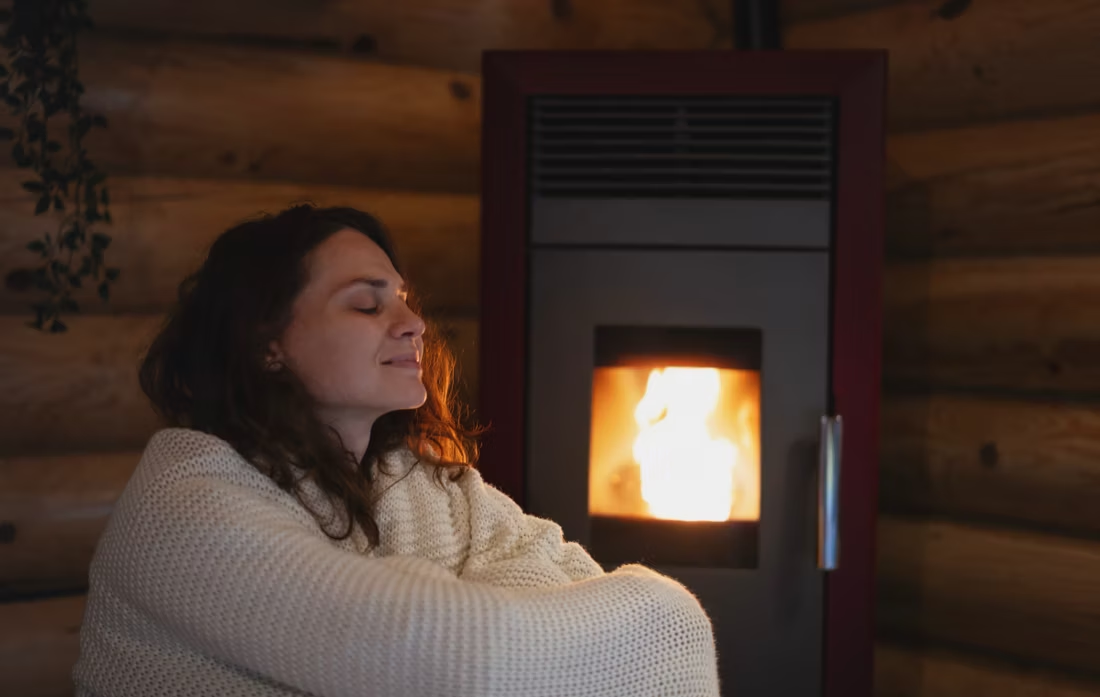
Pellet stoves give Vinton County homeowners the same local, forest-based heat tradition without the chainsaw, splitting maul, or wood shed. Bagged hardwood pellets from suppliers like Lignetics and Somerset Pellet Fuel are widely stocked across Appalachian Ohio, and bulk fuel producers such as Indeck Energy Services operate in the broader region. With no air-quality non-attainment issues or wood-smoke curtailment rules on the books in Vinton County, pellet stoves here are simply a clean, low-maintenance heating option—a good fit for a primary residence outside McArthur or a weekend cabin near Zaleski.
Three steps. No salesperson until you're ready.
Tell us about your project
Your zip code, your situation, and the fuel you're leaning toward—or let the answers point you to one.
See what's actually available
The brands dealers within 100 miles genuinely carry—real options, never a catalog mirage.
Get your dealer & Project Guide
A trusted local dealer, plus the free Project Guide & Parts List that names every component of the job.
Frequently Asked Questions
How much does a pellet stove installation cost in Vinton County?
Most pellet stove installations run somewhere between $3,000 and $6,000 nationally, covering the unit, venting, and any hearth pad work—a local dealer will give you a firm number after seeing your home. Pellet stoves vent through a smaller-diameter pipe than a wood stove and don't need a full masonry chimney, so installs are often simpler and less costly than a comparable wood setup. Older farmhouses common around McArthur, Zaleski, and Wilkesville that don't already have venting in place should plan toward the higher end of that range for wall or roof penetration work.
What size pellet stove do I need for my Vinton County home?
Sizing depends on square footage, ceiling height, and how drafty the house is—a real consideration in Vinton County's older farmhouses and cabins tucked into the hollows around Zaleski and Hamden. As a rough guide for a 5A climate with lows near 21°F: small stoves suit up to about 1,000 square feet, medium units cover 1,000 to 2,000 square feet, and large stoves can carry a well-insulated home beyond that. If you're heating a drafty, uninsulated structure or want the stove to be your primary heat source through the county's full winter, size up and let a local dealer confirm with an in-home visit.
Where can I find certified pellet stove installers near Vinton County?
Look for installers with NFI (National Fireplace Institute) certification, which covers proper venting, clearances, and hopper/auger setup for pellet appliances. Given the strong wood-heating tradition throughout this part of Appalachian Ohio, most local hearth dealers who install wood stoves also carry and install pellet units, and can advise on which makes more sense for your home. Because Vinton County is rural and sparsely populated, expect installers to travel in from McArthur or a neighboring county seat—factor a small travel charge into your quote.
What's the difference between a pellet stove and a wood stove?
A wood stove burns split cordwood you load by hand and requires no electricity to operate, which matters if you lose power during a winter storm. A pellet stove burns bagged hardwood pellets fed automatically by an auger, runs on a thermostat, and needs electricity to run the auger, igniter, and combustion blower. For Vinton County homeowners with easy access to local hardwood—oak, hickory, maple, cherry—a wood stove keeps the self-sufficient, cut-your-own tradition alive. For those who want set-it-and-forget-it convenience and don't mind depending on the grid, a pellet stove trades some of that independence for far less daily labor.
Do I need a permit to install a pellet stove in Vinton County?
Yes—a new pellet stove installation typically requires a building permit through the Vinton County building department, and the unit needs to meet current EPA emissions standards for wood- and pellet-burning appliances. Most local dealers handle the permitting as part of the installation, so it's rarely something you have to manage yourself. Vinton County has no air-quality non-attainment designation, so there are no wood-smoke curtailment periods to work around here, unlike some other parts of Ohio.
What's the best pellet stove for Vinton County's winters?
For a climate zone 5A home with average lows around 21°F, look for a pellet stove with a large hopper capacity—40 to 60 pounds or more—so it can run through a cold overnight without a refill. Brands like Harman, Lopi, and England's Stove Works are common choices in the Midwest and Appalachian Ohio and hold up well to daily winter use. If you're heating an older, less-insulated farmhouse near Zaleski or out in the hollows toward Wilkesville, ask your local dealer about a higher-BTU model rather than relying on stove square-footage ratings alone, which assume a tighter, better-insulated home.
How often does a pellet stove need to be cleaned and serviced?
Plan on emptying and vacuuming the ash pan every few days during regular use, and a full professional cleaning and inspection once a year—typically late summer before the heating season starts in earnest. The burn pot, exhaust fan, and venting all need periodic attention since pellet ash is finer and can clog components faster than wood ash. Given how rural much of Vinton County is, ask your dealer about service intervals and whether they offer in-home cleanings, since not every county has a chimney sweep or hearth technician within a short drive.
Where can I buy wood pellets near Vinton County?
Regional suppliers like Lignetics and Somerset Pellet Fuel distribute bagged hardwood pellets throughout Appalachian Ohio, and bulk producers such as Indeck Energy Services operate in the wider region as well. Farm stores, hardware stores, and hearth dealers in and around McArthur commonly stock pellets by the bag or by the pallet during heating season, with pricing that moves with fuel and demand—buying early in the fall, before the first cold snap, is usually your best bet for availability and price. Ask your local dealer which brands they stock and recommend for the BTU output and ash content of your specific stove.
Pellet stove vs. wood stove—which is right for my Vinton County home?
Wood stoves work without electricity, which is worth weighing in a rural county like Vinton where winter storm outages can last a while, and the local supply of oak, hickory, maple, and cherry makes self-cut firewood a realistic option. Pellet stoves trade that off-grid backup capability for consistent, thermostat-controlled heat, less daily tending, and cleaner burning with far less ash and creosote to manage. If you already have a woodlot or access to cheap firewood and don't mind the labor, wood stays economical. If convenience and consistent heat output matter more than off-grid resilience, pellet is usually the better fit—and plenty of homes in the area run one of each.
How often does a pellet stove need cleaning?
A clean pellet stove is a happy pellet stove. Plan on cleaning the burn pot about once a week when you're burning regularly—ash and clinkers gum up the air holes just like a pellet barbecue. Most pellet stove problems trace back to skipped cleaning that nobody explained up front. Some designs make it easy with a trapdoor burn pot: pull a lever and the gunk drops into the ash pan.
Why is a fireplace insert so efficient?
An insert does two things: it seals the chimney completely, so you stop losing air you already paid to heat, and it radiates warmth into the room through the firebox and glass. Most add a heat-exchange fan that pulls cool room air underneath, wraps it around the hot firebox, and pushes it back out warm. Your home is more efficient before you've even lit the first fire.
How much should I budget for a fireplace?
For an average home—covering the fireplace, the vent pipe, and basic installation—a budget between $3,900 and $5,500 gives you a lot of options across wood, gas, and pellet. By the time you add finish work, gas line, and electrical, the average complete installation lands between $5,000 and $12,000 all-in. In a remodel or new build, a good rule is to put about 2.5% of the total project cost toward the fireplace.
Can a fireplace actually lower my heating bill?
Yes—by creating a comfort zone. A furnace heats every square foot of the house just to warm the one room you're in; a gas fireplace on low burns roughly a sixth of the gas a typical furnace does. Set the furnace around 55–60 degrees as a baseline, then heat the rooms your family actually uses. Families who heat this way commonly save $20–$60 a month.
Pellet Brands Stocked Around Vinton County
Manufacturers will point you to the nearest stocking dealer.
Find your pellet stove in Vinton County.
Tell us a bit about your home and we'll match you with the right pellet stove or insert, plus a free Project Guide & Parts List—the exact parts, including the vent kit, and a trusted local dealer recommendation for your Vinton County project.
Find Your Fireplace →