
Instant Warmth for Upper Arlington's Coldest Nights.
Central Ohio winters push well below freezing for months at a time. Find the right gas fireplace or insert for your home and connect with a trusted local dealer who can install it correctly.
Every Project Starts From One of These Five Situations
Central Ohio winters call for heat you can trust.
Upper Arlington sits at 857 feet in Franklin County, in climate zone 5A, with a solid, sustained winter heating season and winter lows that average around 21°F. That's a real winter—colder and longer than most of the Southeast, though nowhere near as punishing as Fargo, ND or International Falls, MN. It's the kind of cold that shows up steadily from November through March and makes a reliable secondary heat source genuinely useful, not just decorative.
Many Upper Arlington homes were built in the 1920s through the 1960s—Colonials, Tudors, and ranches with existing masonry fireplaces that were designed for wood but rarely used that way today. Between small lots, tree preservation rules common in established UA neighborhoods, and the simple lack of any nearby public land for cutting your own firewood, wood heat never really took hold here the way it has in more rural parts of Ohio. Gas fills that gap well: Columbia Gas of Ohio serves nearly the entire city, and a direct-vent gas insert or fireplace delivers instant, consistent heat without chimney maintenance, ash, or smoke—a natural fit for a dense, established suburb where convenience and clean operation matter as much as warmth.
Three steps. No salesperson until you're ready.
Tell us about your project
Your zip code, your situation, and the fuel you're leaning toward—or let the answers point you to one.
See what's actually available
The brands dealers within 100 miles genuinely carry—real options, never a catalog mirage.
Get your dealer & Project Guide
A trusted local dealer, plus the free Project Guide & Parts List that names every component of the job.
Frequently Asked Questions
How much does a gas fireplace installation cost in Upper Arlington?
Most gas fireplace and insert installations in Upper Arlington run between roughly $3,800 and $9,500, depending on the unit, the venting path, and whether new gas line work is needed. Converting an existing masonry fireplace to a direct-vent gas insert—common in UA's older Colonials and Tudors—tends to land on the lower-to-middle end when a gas line is already nearby. New construction or remodels that require framing a built-in unit and running a fresh gas line push toward the higher end. A local dealer can give you a firm number after seeing your fireplace opening and chimney condition in person.
Can I convert my existing wood-burning fireplace to gas?
Yes, and it's one of the most common projects in Upper Arlington's older housing stock. A gas insert typically slides into the existing masonry firebox, with a stainless liner run up the existing chimney to vent safely. Because so many UA homes were built decades before central air and modern insulation, converting an underused wood fireplace to gas is often the easiest way to add real, usable zone heat to a living room or family room without touching ductwork. Expect the conversion itself to run in the $4,000 to $8,500 range depending on the insert and chimney condition.
Do I need natural gas service, or is propane an option?
Columbia Gas of Ohio provides natural gas service throughout nearly all of Upper Arlington, so most homeowners already have a gas line to the house for a furnace, water heater, or range—which makes adding a fireplace straightforward. Propane is uncommon inside city limits and is mostly seen on detached structures like pool houses or garages that sit farther from the existing gas meter. Nearly every gas fireplace model can be configured for either fuel, so this is rarely the deciding factor in what unit you choose.
Will a gas fireplace still work if the power goes out?
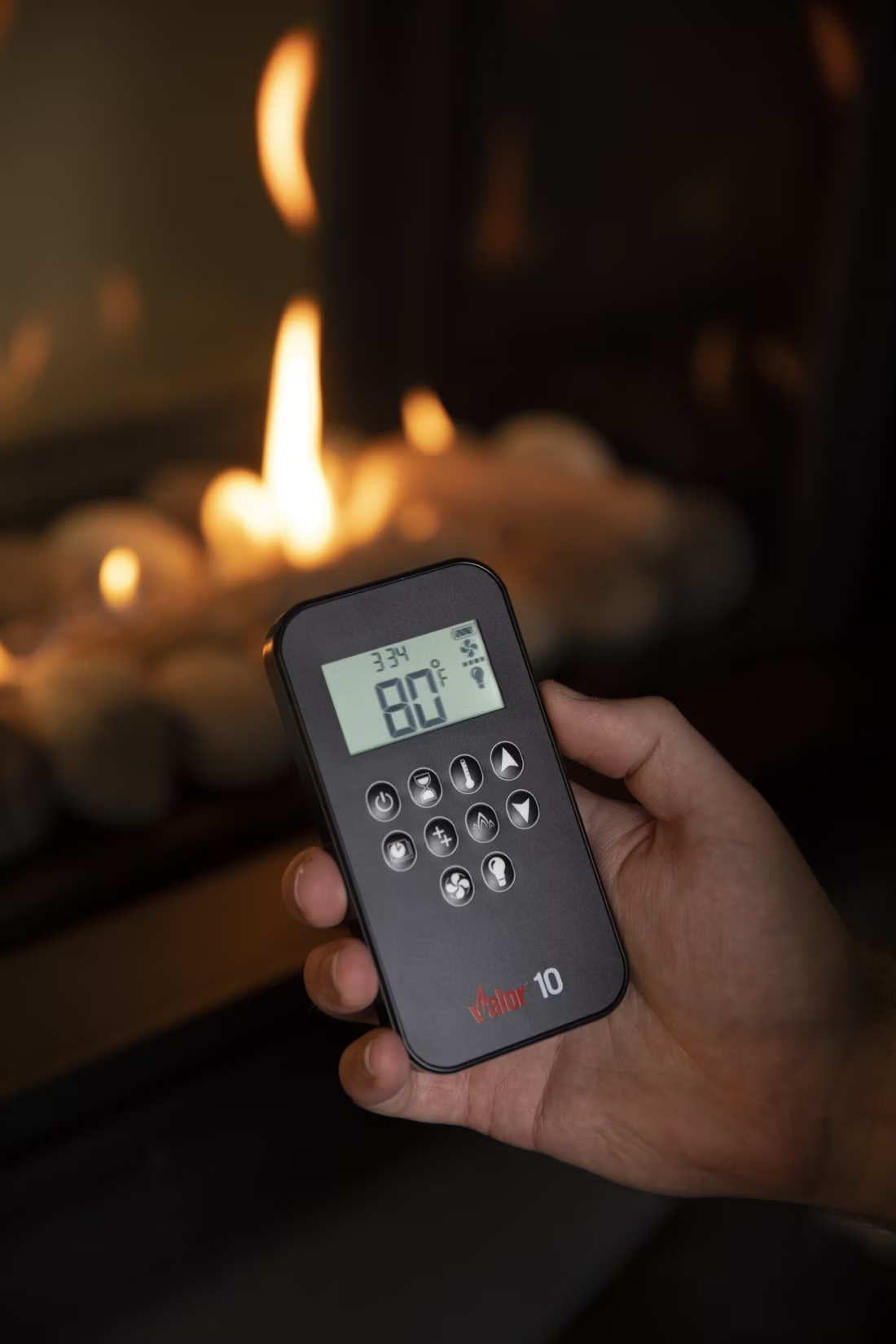
Most modern gas fireplaces will, which matters given how often ice storms and high winds knock out power in Central Ohio during the winter months. Units with IPI (intermittent pilot ignition) run on a battery backup that kicks in automatically when utility power drops, so the fireplace lights and operates normally. Valor fireplaces take a different approach: their pilot assembly generates its own electricity through the thermocouple, so there's no battery to remember or replace at all. If backup heat during an outage is a priority for your Upper Arlington home, ask your local dealer specifically about the ignition system on any unit you're considering.
What's the difference between a gas fireplace, insert, and stove?
A gas fireplace is a fully built-in unit framed into a wall—the right choice for a remodel or an addition without an existing chimney. A gas insert is built to drop into an existing masonry firebox, which describes a large share of the older Colonials and Tudors around Upper Arlington. A gas stove is a freestanding cabinet unit, less common here but sometimes used in a basement rec room or a ranch-style addition where there's no existing fireplace opening. For most UA homeowners upgrading a fireplace they already have, an insert is the simplest and most cost-effective path.
Do I need a permit to install a gas fireplace in Upper Arlington?
Yes. The City of Upper Arlington's Building and Zoning Division requires a permit for gas fireplace installations, and the gas line connection itself has to be run or verified by a licensed gas fitter. Most established hearth dealers who work in Franklin County handle the permit application, inspection scheduling, and gas line coordination as part of the installation, so you're not stuck managing separate trades yourself. Homes in some UA neighborhoods with design review requirements should also confirm any exterior venting placement is acceptable before work begins—your installer can flag this during the site visit.
What's the difference between vented and vent-free gas fireplaces?
Vented (direct-vent) gas fireplaces pull combustion air from outside and exhaust it back outside through a sealed pipe—they're the standard, code-friendly choice and what most Upper Arlington installers recommend by default. Vent-free units burn gas directly into the room air; Ohio permits them, but they come with strict room-size and ventilation requirements and release some combustion byproducts indoors. For most UA homes, especially anywhere kids, pets, or bedrooms are nearby, a direct-vent unit is the more common and more comfortable long-term choice. Ask your dealer to walk through both options if you're weighing an older vent-free unit already in the house.
How often does a gas fireplace need to be serviced?
Plan on an annual inspection, ideally in early fall before the unit sees regular use through a Central Ohio winter. A technician checks the burner, pilot assembly, venting, and gas connections, and cleans the glass and interior. This runs considerably less involved and less expensive than wood chimney sweeping—typically $150 to $250 in the Columbus area—but skipping it is still the most common cause of avoidable service calls and pilot outages mid-winter.
Gas vs. wood—why is gas so much more common in Upper Arlington?
Wood heat never established much of a foothold in Upper Arlington the way it has in more rural parts of Ohio—lots are smaller, tree ordinances limit what can be cut on private property, and there's no nearby public forest land for permitted cutting the way there is in less developed counties. Gas solves the practical problems wood creates in a dense suburb: no ash, no smoke, no firewood storage, and no chimney creosote buildup to manage. A handful of UA homeowners keep a wood-burning fireplace for occasional ambiance using purchased, kiln-dried oak or hickory, but for anyone who actually wants reliable heat from the fireplace, gas is the practical default here.
Why is my open fireplace making my house colder?
Open fireplaces suck—literally. As the fire burns, it consumes air your furnace already paid to heat and pulls it out through the chimney, so the house is actually colder after the fire goes out than before you lit it. An insert fixes this: it seals the chimney, puts fixed glass across the front, and turns that hole in your house into a real heat source.
Why is a fireplace insert so efficient?
An insert does two things: it seals the chimney completely, so you stop losing air you already paid to heat, and it radiates warmth into the room through the firebox and glass. Most add a heat-exchange fan that pulls cool room air underneath, wraps it around the hot firebox, and pushes it back out warm. Your home is more efficient before you've even lit the first fire.
What is an in-home preview and do I need one?
It's a visit where a hearth professional measures your space, confirms the model you picked actually works in your home, and walks the specs—framing, gas line, venting, finish work—before anything is ordered. Some details you just can't know until you see the house. Never make a down payment without one; it's the single most-skipped step that burns buyers.
Can I install a fireplace myself?
If you're putting a fire in your house on purpose, it's best to work with an expert. Unless you're genuinely experienced in framing, gas line, vent pipe, and the national code on clearances to combustibles, have a professional do it—and ideally the same company that sells you the fireplace, so warranty, service, and liability all live under one roof.
Nearby Dealers
Hearth shops serving Upper Arlington and the surrounding area.
Find your gas fireplace in Upper Arlington.
Tell us about your home and your existing fireplace, and we'll match you with a trusted local dealer plus a free Project Guide & Parts List—the exact parts, vent kit, and installer recommendation for your Upper Arlington gas project.
Find Your Fireplace →