
Find your pellet stove in Trumbull County.
Steady, thermostat-controlled heat for Warren, Niles, Cortland, and the rest of Trumbull County's long heating season—matched with a trusted local dealer who handles the venting and the permit.
Every Project Starts From One of These Five Situations
Consistent heat for a long Mahoning Valley winter.
Trumbull County sits in Ohio's Climate Zone 5A, with an average winter low around 17°F and roughly 6,380 heating degree days a year—a heating load in the same range as Buffalo, NY, and enough to keep a furnace running from October through April. Warren, Niles, Cortland, and the rural townships around the county all deal with long stretches of gray, damp cold rather than dramatic single-digit snaps, which is exactly the kind of steady-state heating load a pellet stove is built for.
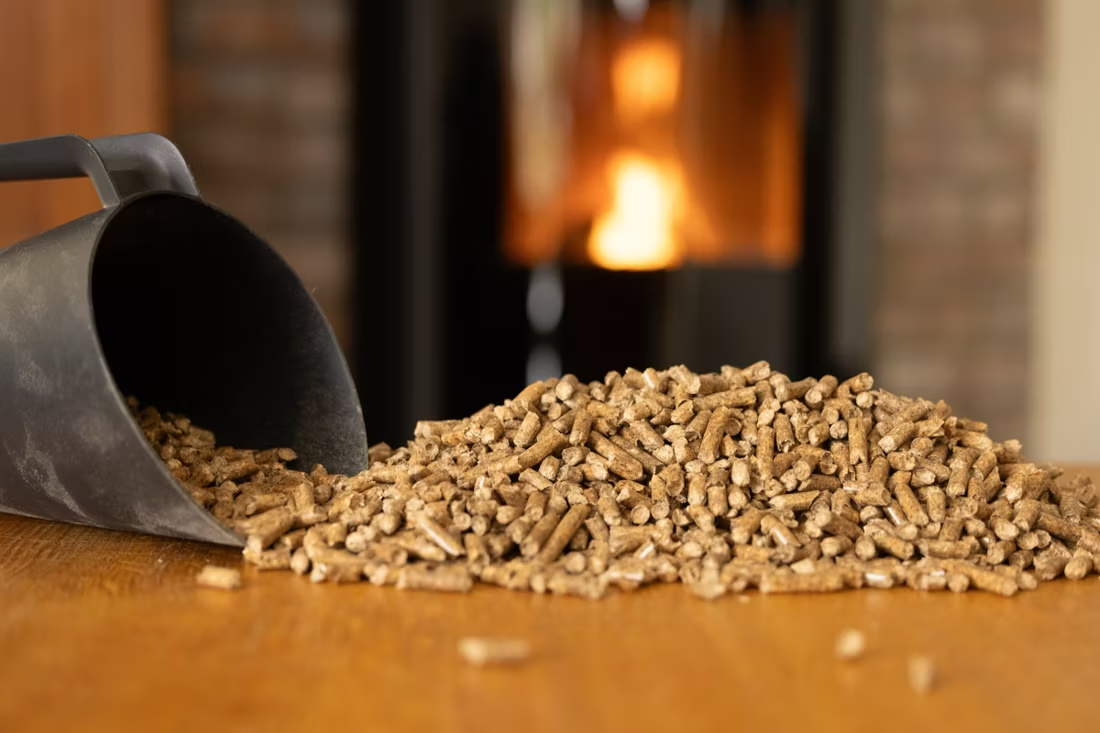
Trumbull County has no air quality non-attainment status and no winter burn curtailment periods, so a pellet appliance here runs on its own schedule rather than around advisory days. Fuel supply is also close at hand—Lignetics and Somerset Pellet Fuel both distribute into northeast Ohio, and Indeck Energy Services operates biomass and pellet-adjacent energy infrastructure in the region, part of a supply chain that draws on the same oak, hickory, maple, and cherry timber that fills local firewood lots. For homeowners who want set-it-and-forget-it heat without stacking cordwood, a pellet insert or freestanding stove is a practical fit for this part of the state.
Three steps. No salesperson until you're ready.
Tell us about your project
Your zip code, your situation, and the fuel you're leaning toward—or let the answers point you to one.
See what's actually available
The brands dealers within 100 miles genuinely carry—real options, never a catalog mirage.
Get your dealer & Project Guide
A trusted local dealer, plus the free Project Guide & Parts List that names every component of the job.
Frequently Asked Questions
How much does a pellet stove installation cost in Trumbull County?
Most pellet stove and insert installations in Trumbull County run in the $3,000 to $6,000 range, with the low end covering a freestanding stove with a simple through-wall vent kit and the high end covering an insert into an existing masonry fireplace with a full liner. Homes in Warren or Niles with an existing chimney typically land toward the middle of that range; new construction or rooms without any existing venting will run higher once wall penetration and exterior vent termination are added. A local dealer will give you a firm number after seeing the install location.
What size pellet stove do I need for a Trumbull County home?
With roughly 6,380 heating degree days a year and winter lows that hover around 17°F, most Trumbull County homes need a mid-size pellet stove rated for 1,500 to 2,000 square feet to hold comfortable heat through a full Mahoning Valley winter without running the hopper on high constantly. Older farmhouses and homes with less insulation around Newton Falls or Bristolville often size up a step, while a well-sealed newer build in Cortland or Champion can get by with a smaller unit used as supplemental heat alongside a furnace. A dealer will factor in your square footage, ceiling height, and floor plan before recommending a model.
Where can I find certified pellet stove installers in Trumbull County?
Look for installers with NFI (National Fireplace Institute) certification, which covers pellet-specific venting and clearance requirements that differ from wood stove installs. Local hearth dealers serving Warren, Niles, and the surrounding townships typically handle both the sale and the install as a package, which keeps warranty coverage and any manufacturer rebate paperwork in one place. Avoid having a general contractor install a pellet appliance without hearth-specific training—improper vent pipe pitch or termination clearance is the most common source of callbacks on pellet installs.
Pellet stove or wood stove—which makes more sense in Trumbull County?
Trumbull County sits in solid hardwood country, with oak, hickory, maple, and cherry all common in local woodlots, so wood heat has never been hard to fuel here. But a wood stove needs a chimney, seasoned cordwood, and regular tending, while a pellet stove runs off bagged fuel, feeds itself automatically, and burns cleaner with far less ash. If you already have a masonry chimney and access to cheap or free firewood, wood may cost less over time. If you want thermostat-style convenience and don't want to deal with splitting and stacking, pellet is generally the easier day-to-day appliance—and it vents through a simple wall penetration rather than requiring a full chimney.
Do I need a permit to install a pellet stove in Trumbull County?
Most municipalities in Trumbull County, including Warren and Niles, require a building permit for new solid-fuel appliance installations, and the vent termination location has to meet clearance-to-combustible and clearance-to-grade requirements. Rules vary slightly by township and city, so it's worth checking with your local building department before work starts—but in practice, most local dealers pull the permit as part of the installation and handle the inspection scheduling for you.
Will my pellet stove work if the power goes out?
No—pellet stoves rely on an electric auger to feed fuel and a blower to distribute heat, so a standard unit shuts down in a power outage. This matters in Trumbull County, where ice storms and heavy lake-effect snow squalls moving off Lake Erie can knock out power for hours at a time in outlying townships. Some homeowners pair a pellet stove with a small battery backup or generator specifically for this reason; others keep a wood stove or fireplace as backup heat for outages and use the pellet appliance for everyday convenience.
Where do I buy pellet fuel in Trumbull County, and what does it cost?
Lignetics and Somerset Pellet Fuel both distribute bagged hardwood and softwood pellets into the northeast Ohio market, and most local hearth dealers and farm supply stores in the Warren and Niles area stock one or both brands seasonally. Premium hardwood pellets in this region typically run in the $230 to $300 per-ton range, usually sold in 40-pound bags by the pallet (roughly 50 bags to a ton). Buying a full season's supply in late summer, before demand picks up, is generally the cheapest way to stock up.
How often does a pellet stove need to be cleaned and serviced?
A pellet stove needs more frequent attention than a gas unit but less than a wood stove—the burn pot and ash pan should be emptied every few days to weekly depending on use, the glass wiped down regularly, and the exhaust vent and hopper checked for buildup monthly during heavy winter use. A full professional service, including cleaning the auger, combustion blower, and vent pipe, is recommended once a year, typically in late summer before the heating season starts. Local dealers who sell pellet stoves in Trumbull County generally offer this service directly.
How is pellet stove venting different from a traditional wood stove or fireplace?
Pellet stoves use a smaller-diameter, power-vented exhaust system that can typically run horizontally through an exterior wall rather than requiring a full vertical masonry chimney. That makes a pellet stove installation possible in rooms that never had a fireplace or chimney to begin with—a common situation in Trumbull County's newer construction and ranch-style homes. It also generally keeps installation costs lower than a comparable wood stove project, since there's no chimney to build or line.
What's the difference between an insert and a zero-clearance fireplace?
An insert is a fireplace that slides into a pre-existing wood-burning fireplace—if you don't have one, there's nothing to insert it into. A zero-clearance fireplace is built into a framed wall, which makes it the answer for remodels and new construction. Simple test: existing masonry fireplace means insert; blank or framed wall means zero-clearance.
Why is a fireplace insert so efficient?
An insert does two things: it seals the chimney completely, so you stop losing air you already paid to heat, and it radiates warmth into the room through the firebox and glass. Most add a heat-exchange fan that pulls cool room air underneath, wraps it around the hot firebox, and pushes it back out warm. Your home is more efficient before you've even lit the first fire.
Can I install a fireplace myself?
If you're putting a fire in your house on purpose, it's best to work with an expert. Unless you're genuinely experienced in framing, gas line, vent pipe, and the national code on clearances to combustibles, have a professional do it—and ideally the same company that sells you the fireplace, so warranty, service, and liability all live under one roof.
Does a fireplace add value to my home?
On average, a fireplace adds back to the home about the same amount you spent installing it. Add the monthly savings from heating the rooms you actually use instead of the whole house—often hundreds of dollars a year—and the value case is strong before you even count what a fire does for how your family uses the room.
Stove and Fireplace Dealers in Trumbull County
Pellet Brands Stocked Around Trumbull County
Manufacturers will point you to the nearest stocking dealer.
Find your pellet stove in Trumbull County.
Tell us about your home and heating goals, and we'll match you with a trusted local Trumbull County dealer and send over a free Project Guide & Parts List—the stove, vent kit, and installation plan sized for your space.
Find Your Fireplace →