
Warm up Summit County homes without the wood pile.
From Akron's older brick two-stories to newer builds in Twinsburg and Green, gas delivers instant, low-maintenance heat for Summit County's cold, gray winters. Find the right unit and get matched with a trusted local dealer.
Every Project Starts From One of These Five Situations
Dense neighborhoods, cold winters, and a fuel that just works.
Summit County sits in climate zone 5A with a winter heating load a bit above the U.S. average and winter lows that average around 21°F—cold enough that supplemental heat matters, but nothing like the deep-freeze extremes of Duluth or Fargo. With more than 831,000 residents packed into Akron and its ring of suburbs—Cuyahoga Falls, Stow, Twinsburg, Hudson, Green, Barberton, Tallmadge—most homes sit on lots too small, or in neighborhoods too dense, for the firewood storage and cutting access that wood heat depends on. That's a big part of why gas, not wood, has become the default upgrade for local fireplaces and inserts.
Dominion Energy Ohio runs natural gas service through nearly all of the county's incorporated areas, so a direct-vent gas fireplace or insert is usually a straightforward gas-line tie-in rather than a new utility hookup. In the county's more rural fringes—parts of Richfield, Sagamore Hills, and outlying Twinsburg Township—propane fills the gap where gas lines haven't been run. Either way, the appeal is the same: flip a switch, get real heat, and skip the ash, creosote, and firewood logistics that don't fit well on a quarter-acre suburban lot.
Three steps. No salesperson until you're ready.
Tell us about your project
Your zip code, your situation, and the fuel you're leaning toward—or let the answers point you to one.
See what's actually available
The brands dealers within 100 miles genuinely carry—real options, never a catalog mirage.
Get your dealer & Project Guide
A trusted local dealer, plus the free Project Guide & Parts List that names every component of the job.
Frequently Asked Questions
How much does a gas fireplace installation cost in Summit County?
A direct-vent gas insert dropped into an existing masonry fireplace—common in Akron's older neighborhoods like Highland Square, Fairlawn Heights, and West Hill—typically runs $4,000 to $7,500 when a gas line is already nearby. A new built-in gas fireplace for a remodel or addition, which requires framing and a fresh gas run, tends to land between $5,000 and $11,000. Simpler direct-vent units in homes with gas already piped nearby can come in closer to $3,500. Propane setups in unincorporated pockets of the county sometimes add tank costs on top. A local installer will give you a firm number after seeing your chimney or wall cavity in person.
Can I convert my existing wood fireplace to gas?
Yes, and it's one of the most common jobs local hearth dealers handle in Summit County's older housing stock—Akron's early-1900s bungalows and Colonials, plus similar-era homes in Barberton and Cuyahoga Falls, were often built with a working masonry fireplace that's rarely used for actual wood fires today. A gas insert slides into that existing firebox and vents through the original chimney with a stainless liner, usually for $4,000 to $7,500 depending on the insert and whether new gas piping is needed. It keeps the mantel and brick surround you already have while giving you real, adjustable heat at the flip of a switch.
Do I need natural gas, or can I use propane?
Most of Summit County—Akron, Cuyahoga Falls, Stow, Twinsburg, Hudson, Green—sits inside Dominion Energy Ohio's natural gas service territory, so if your home already has a gas furnace or water heater, tying a fireplace into that line is usually simple. In more rural stretches of the county, including parts of Richfield Township and outlying Sagamore Hills, some homes still run on propane with a tank on the property. Nearly every gas fireplace model on the market can be configured for either fuel—your installer sets the orifice and regulator to match.
Will my gas fireplace still work during a power outage?
Most modern gas fireplaces will, as long as they use an IPI (intermittent pilot ignition) system with a battery backup—typically a few AA batteries tucked inside the unit that take over automatically when the power drops. Given how often Summit County sees ice and windstorms knock out power for a day or two in the winter, this is worth confirming before you buy. Valor's lineup takes a different approach: their pilot-based ignition generates its own electricity through the thermocouple, so the fireplace runs with no batteries at all. Ask your local dealer which ignition system is in the unit you're considering.
What's the difference between a gas fireplace, gas insert, and gas stove?
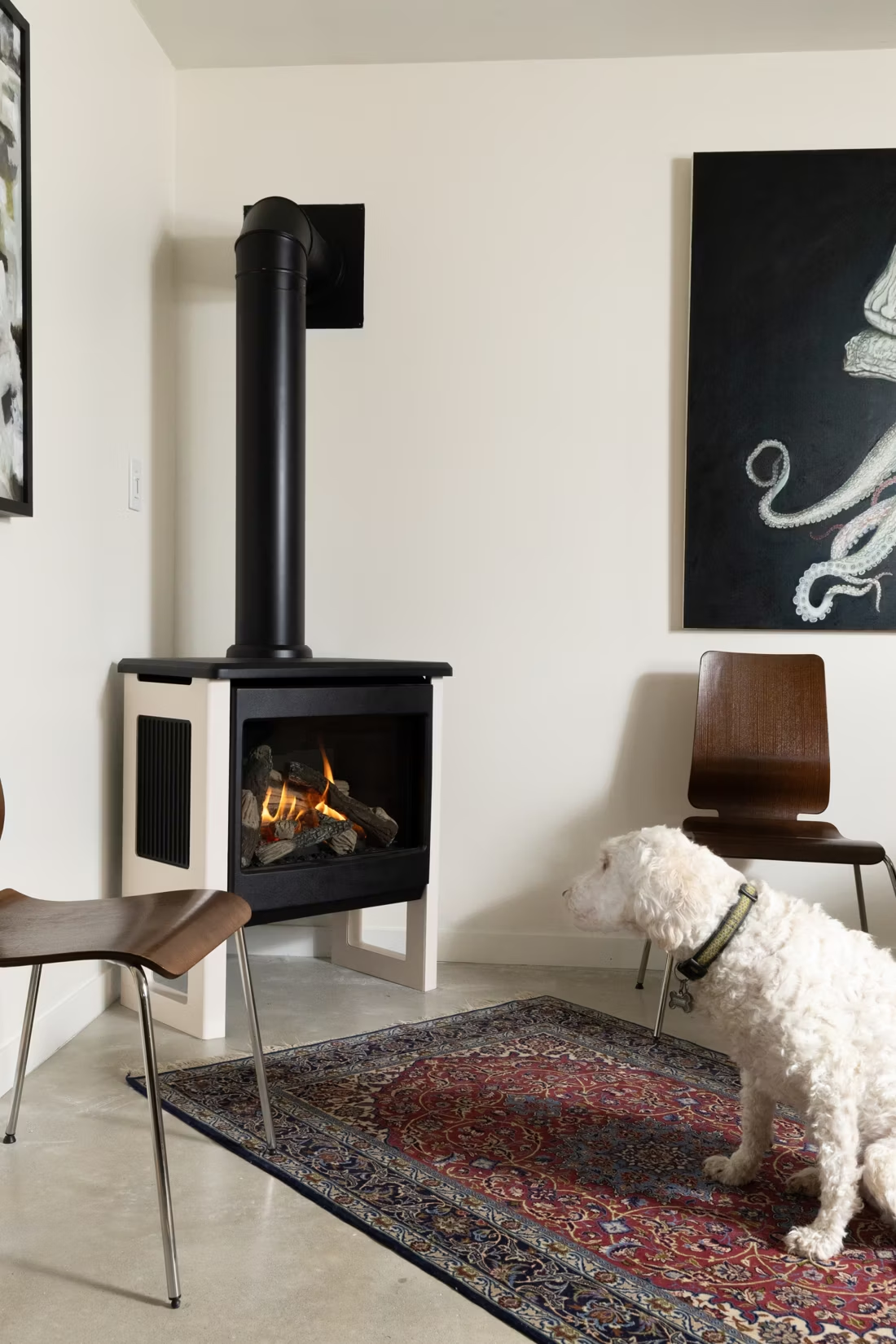
A gas fireplace is a fully built-in unit framed into a wall—the right call for new construction or a remodel without an existing chimney. A gas insert is built to slide into an existing masonry firebox, which is exactly the situation in a lot of older Akron and Barberton homes, using the existing chimney as the vent path. A gas stove is a freestanding, cast-iron-style unit that sits out in the room like a traditional wood stove but burns gas. For most Summit County homeowners with a fireplace they never actually use for wood, an insert is the natural fit.
Do I need a permit to install a gas fireplace in Summit County?
Yes—a building permit and a gas line permit are required for new gas fireplace or insert installations. Inside Akron, that goes through the city's Building Standards Division; in surrounding municipalities like Cuyahoga Falls, Stow, and Twinsburg, each has its own building department that issues permits separately; unincorporated areas fall under the Summit County Building Standards Department. In practice, most local hearth dealers handle this paperwork as part of the installation, since the gas line work also requires a licensed gas-fitter and a code inspection.
What's the difference between vented and vent-free gas fireplaces?
Vented (direct-vent) gas fireplaces pull outside air for combustion and exhaust the byproducts back outside through a sealed pipe—cleaner, safer, and universally code-compliant. Vent-free units burn gas directly into the room, which is more efficient on paper but releases water vapor and trace combustion byproducts into your living space, with strict room-size and ventilation rules attached. Vent-free models are legal in Ohio, but in Summit County's smaller, well-sealed suburban homes, direct-vent is by far the more common and more widely recommended choice—you get real heat without any indoor air quality trade-offs.
How often should my gas fireplace be serviced?
Plan on an annual inspection, ideally in early fall before the county's heating season kicks in around late October. A certified technician checks the burner, pilot assembly, venting, and gas connections, and cleans the glass and firebox interior. It's a quick visit compared to wood-stove chimney sweeping, but skipping it is how pilot and ignition problems go unnoticed until the first cold snap. Local gas appliance service providers typically charge $150 to $250 for the visit.
Why isn't wood heat more common here, and is gas really the better choice?
Summit County has plenty of native oak, hickory, maple, and cherry, but wood-burning fireplaces and stoves are genuinely uncommon across most of the county—Akron and its close-in suburbs are dense enough that firewood storage, seasoning space, and chimney retrofits just don't pencil out for most lots. A few rural pockets in Richfield, Bath, and Sagamore Hills townships still see the occasional wood stove for backup heat, but for the vast majority of Summit County homeowners, a gas fireplace or insert is the far more practical and far more common upgrade—no wood to stack, no ash to haul, and heat that starts the moment you want it.
Why is my open fireplace making my house colder?
Open fireplaces suck—literally. As the fire burns, it consumes air your furnace already paid to heat and pulls it out through the chimney, so the house is actually colder after the fire goes out than before you lit it. An insert fixes this: it seals the chimney, puts fixed glass across the front, and turns that hole in your house into a real heat source.
Why is a fireplace insert so efficient?
An insert does two things: it seals the chimney completely, so you stop losing air you already paid to heat, and it radiates warmth into the room through the firebox and glass. Most add a heat-exchange fan that pulls cool room air underneath, wraps it around the hot firebox, and pushes it back out warm. Your home is more efficient before you've even lit the first fire.
Does a fireplace add value to my home?
On average, a fireplace adds back to the home about the same amount you spent installing it. Add the monthly savings from heating the rooms you actually use instead of the whole house—often hundreds of dollars a year—and the value case is strong before you even count what a fire does for how your family uses the room.
Can a fireplace actually lower my heating bill?
Yes—by creating a comfort zone. A furnace heats every square foot of the house just to warm the one room you're in; a gas fireplace on low burns roughly a sixth of the gas a typical furnace does. Set the furnace around 55–60 degrees as a baseline, then heat the rooms your family actually uses. Families who heat this way commonly save $20–$60 a month.
Stove and Fireplace Dealers in Summit County
Find your gas fireplace in Summit County.
Tell us a bit about your home and we'll match you with a trusted local Summit County dealer and send over a free Project Guide & Parts List—the exact parts, including the vent kit, for your gas fireplace project.
Find Your Fireplace →