
Set It, Forget It, Stay Warm Through Mahoning Valley Winters.
Automated, thermostat-controlled heat for Struthers homes—no splitting, no stacking, no chimney sweep. Find the right unit and connect with a trusted local dealer.
Every Project Starts From One of These Five Situations
Consistent heat without the wood pile.
Struthers sits along the Mahoning River in the heart of Ohio's Rust Belt, at 955 feet with a solid six-month heating season and average winter lows around 19°F—comparable to many Midwest river towns, though nowhere near the deep-freeze extremes of Duluth or Fargo. The surrounding Mahoning Valley has plenty of oak, hickory, maple, and cherry, and wood heat has a long history here. But on Struthers's tighter residential lots—this is a dense city of about 10,000 people, not acreage out in the county—storing a full cord of split hardwood isn't always practical, and that's exactly where pellet stoves have picked up ground.
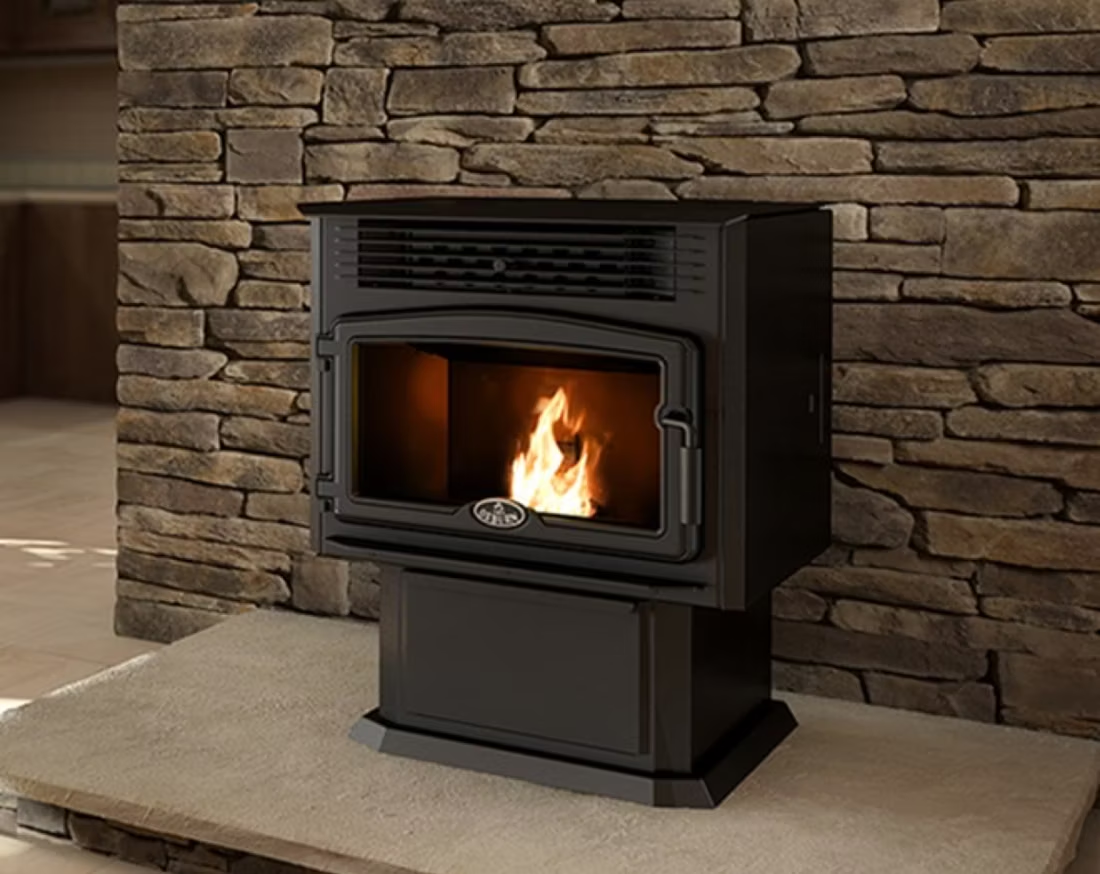
A 40-pound bag of pellets stacks in a closet instead of a woodshed, and a hopper-fed stove can run 24 to 50 hours on a single load without you touching it. Regional suppliers like Indeck Energy Services, Lignetics, and Somerset Pellet Fuel keep hardware stores and hearth shops across northeast Ohio stocked through the winter. Running the auger and blower does require electricity—Ohio Edison serves Struthers at a residential rate under 10 cents per kWh, among the more affordable rates in the region, so the fans and igniter typically add only a few dollars a month to your bill. The tradeoff is worth knowing upfront: unlike a wood stove, a pellet stove goes dark in a power outage unless it's paired with a battery backup.
Three steps. No salesperson until you're ready.
Tell us about your project
Your zip code, your situation, and the fuel you're leaning toward—or let the answers point you to one.
See what's actually available
The brands dealers within 100 miles genuinely carry—real options, never a catalog mirage.
Get your dealer & Project Guide
A trusted local dealer, plus the free Project Guide & Parts List that names every component of the job.
Frequently Asked Questions
How much does a pellet stove installation cost in Struthers?
Most freestanding pellet stove installations in the Struthers area run roughly $3,000 to $6,000, including the unit, venting, and a dedicated electrical outlet for the auger and blower. Pellet inserts that slide into an existing masonry fireplace typically land a bit higher, around $4,000 to $7,500, since the vent liner has to run through the existing chimney. Homes without a nearby outlet may need a licensed electrician to add one, which is a common add-on cost local installers will flag during a walkthrough.
What size pellet stove do I need for my home?
Pellet stoves are sized by hopper capacity and BTU output rather than just square footage. A small unit (40-lb hopper, roughly 1,500 sq ft coverage) suits a single addition or a smaller Struthers bungalow, while a mid-size stove (60-80 lb hopper, 2,000+ sq ft) is typical for a full main floor in one of the city's older two-story homes. If you're heating the whole house rather than supplementing a furnace, a local dealer will walk your rooms, check insulation and ceiling height, and size the unit so it isn't running on high constantly during January cold snaps—an undersized stove struggling nonstop wears out its igniter and auger faster than one properly matched to the space.
Where can I find certified pellet stove installers near me?
Look for installers with NFI (National Fireplace Institute) pellet-specific certification, since pellet appliances have different venting and electrical requirements than wood stoves. Because every pellet stove needs power at the unit, it's also worth confirming the installer coordinates directly with a licensed electrician rather than leaving that step to you. In the Struthers and greater Mahoning Valley area, most hearth shops that sell pellet stoves also handle the install and can pull the required city permit as part of the job.
What's the difference between a pellet stove and a pellet insert?
A pellet stove is a freestanding cabinet unit that sits on a hearth pad and vents through a wall or existing chimney chase—it can go almost anywhere with a nearby outlet. A pellet insert is built to slide into an existing masonry fireplace opening, using a vent liner run up through your current chimney. For Struthers's older housing stock, where many homes still have a traditional wood-burning fireplace from the original construction, an insert is often the simpler retrofit since it hides the mechanics behind your existing mantel and hearth. Homes without an existing fireplace typically go with a freestanding stove instead.
Do I need a permit to install a pellet stove in Struthers?
Yes—a building permit is typically required for a new pellet stove or insert installation through the City of Struthers Building Department, and Mahoning County code enforcement handles anything outside city limits. Because pellet units also need a dedicated electrical circuit, an electrical permit may be required alongside the mechanical one. Most local hearth dealers fold this paperwork into the installation quote, so you generally aren't tracking down permits yourself.
What's the best pellet stove for Struthers's climate?
With winter lows averaging around 19°F and a real heating season running from November through March, look for a stove with a larger hopper—60 to 80 pounds—if you want it to run overnight without a refill. Brands commonly stocked by northeast Ohio hearth dealers, like Harman and Englander, build units with auto-ignition and thermostat control that hold a steady temperature through a cold snap without you adjusting anything. If backup heat during an Ohio Edison outage matters to you, ask about battery backup options—a small UPS unit can keep the stove running for several hours if the power drops.
How often does a pellet stove need to be cleaned and serviced?
Pellet stoves need more frequent light cleaning than wood stoves but far less heavy chimney work. Plan on emptying the ash pan every few days during regular use, cleaning the burn pot weekly to prevent clinker buildup, and running a full inspection and vent cleaning at least once a year—usually before the season starts in the fall. A properly maintained pellet stove venting system rarely needs the kind of creosote-focused sweep a wood chimney does, since pellet combustion burns cleaner, but the exhaust fan and gaskets should still be checked annually by a certified technician.
Where can I buy pellets in Struthers?
Regional producers including Indeck Energy Services, Lignetics, and Somerset Pellet Fuel supply many of the hardware stores and hearth dealers across northeast Ohio, and bags are typically available seasonally at big-box retailers as well. Expect to pay somewhere in the $5-$6 per 40-lb bag range, or roughly $250-$300 per ton if you buy by the pallet—buying a full season's supply (2-3 tons for an average Struthers home) in late summer or early fall, before demand peaks, is usually the better price.
Pellet stove vs. wood stove—which is right for my home?
Wood stoves burn the oak, hickory, maple, and cherry that's plentiful in the Mahoning Valley, work without electricity, and give you the classic crackling fire—but they mean splitting, stacking, and sweeping a chimney regularly. Pellet stoves trade some of that hands-on character for convenience: load a bag, set the thermostat, and let the auger do the work, with a cleaner burn and easier ash cleanup. The real tradeoff is during an outage—a wood stove keeps heating a home when Ohio Edison lines go down in an ice storm, while a standard pellet stove shuts off unless you've added battery backup. For Struthers homeowners on smaller lots without space to store cordwood, pellet is often the more practical daily choice; for those who want guaranteed heat regardless of the grid, wood still has the edge.
What's the difference between an insert and a zero-clearance fireplace?
An insert is a fireplace that slides into a pre-existing wood-burning fireplace—if you don't have one, there's nothing to insert it into. A zero-clearance fireplace is built into a framed wall, which makes it the answer for remodels and new construction. Simple test: existing masonry fireplace means insert; blank or framed wall means zero-clearance.
Why is my open fireplace making my house colder?
Open fireplaces suck—literally. As the fire burns, it consumes air your furnace already paid to heat and pulls it out through the chimney, so the house is actually colder after the fire goes out than before you lit it. An insert fixes this: it seals the chimney, puts fixed glass across the front, and turns that hole in your house into a real heat source.
Can a fireplace actually lower my heating bill?
Yes—by creating a comfort zone. A furnace heats every square foot of the house just to warm the one room you're in; a gas fireplace on low burns roughly a sixth of the gas a typical furnace does. Set the furnace around 55–60 degrees as a baseline, then heat the rooms your family actually uses. Families who heat this way commonly save $20–$60 a month.
Does a fireplace add value to my home?
On average, a fireplace adds back to the home about the same amount you spent installing it. Add the monthly savings from heating the rooms you actually use instead of the whole house—often hundreds of dollars a year—and the value case is strong before you even count what a fire does for how your family uses the room.
Nearby Dealers
Hearth shops serving Struthers and the surrounding area. Every listing shows whether it is a WhyFire partner, a dealer we have verified as authorized for the brands we recommend, or a local business carrying hearth products. No manufacturer pays for placement. How we verify dealers →
Kushners Garden & Patio
By The Fire
Weaver's Stove & Patio - Washingtonville
Brunk's Fireplace
Susi Builders Supply
Soot Seekers Chimney Service
Pellet Brands Stocked Around Struthers
Manufacturers will point you to the nearest stocking dealer.
Find your pellet stove in Struthers.
Tell us a bit about your home and we'll match you with the right pellet stove or insert, plus a free Project Guide & Parts List—including the vent kit—and a trusted local dealer to install it.
Find Your Fireplace →