
Keep Your Family Warm and Safe—No Matter What
From the Ohio River bottoms around Portsmouth and New Boston to the Shawnee State Forest hill country, oak and hickory heat have kept Scioto County homes warm for generations. I'll match you with a trusted local dealer who can size and install the right stove for your place.
Every Project Starts From One of These Five Situations
Hardwood country, straightforward wood heat.
Scioto County sits in the Appalachian foothills of southern Ohio, where the Scioto River meets the Ohio River at Portsmouth. Winters here are moderate by national standards—an average low around 23°F and roughly 4,788 heating degree days, well short of what colder markets like Duluth, MN or Buffalo, NY see in a season. But moderate doesn't mean irrelevant: ice storms and river flooding routinely knock out power along the Ohio River corridor, and a wood stove in New Boston, Wheelersburg, or Lucasville still means heat when the grid doesn't cooperate.
The county has no air quality non-attainment issues and no winter burn curtailment periods to plan around—burn when you need to, without checking an advisory first. Firewood is abundant locally: oak, hickory, maple, and cherry are the common species cut and split across the county, much of it sourced from private timber and the Shawnee State Forest and Scioto Trail State Forest land that covers a large share of the county's hill country. A properly sized stove or insert turns that local hardwood into real heat and real backup security for river-town and hollow homes alike.
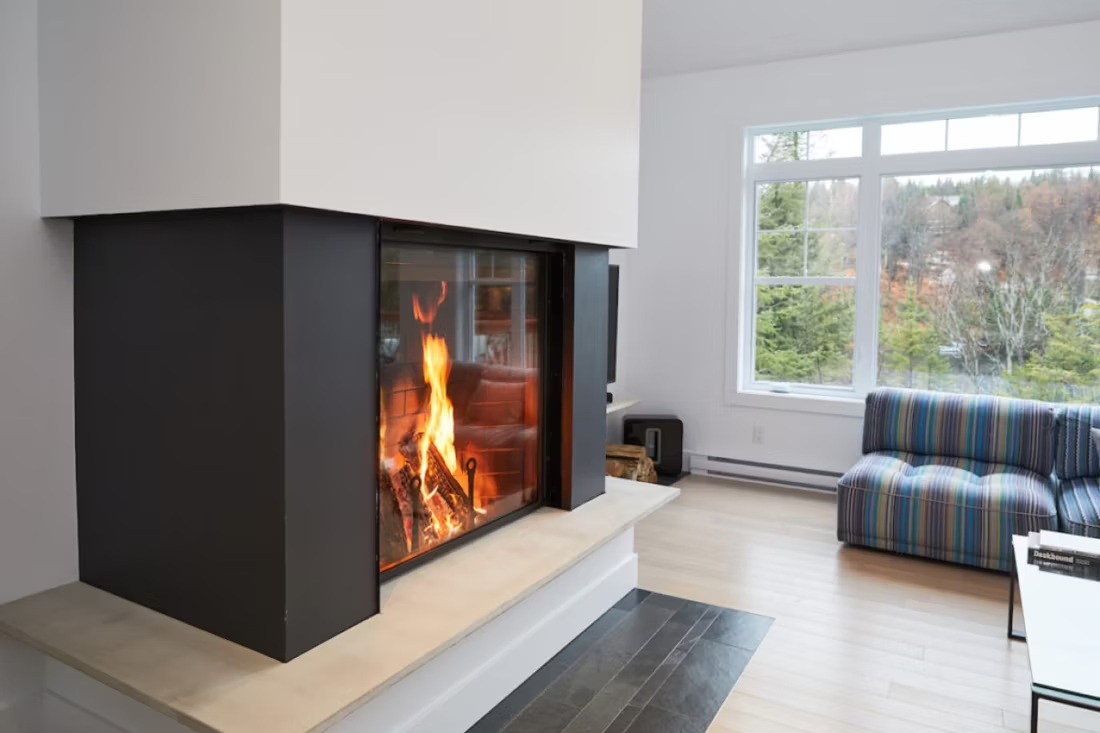
Three steps. No salesperson until you're ready.
Tell us about your project
Your zip code, your situation, and the fuel you're leaning toward—or let the answers point you to one.
See what's actually available
The brands dealers within 100 miles genuinely carry—real options, never a catalog mirage.
Get your dealer & Project Guide
A trusted local dealer, plus the free Project Guide & Parts List that names every component of the job.
Frequently Asked Questions
How much does a wood stove installation cost in Scioto County?
Most wood stove installations in Scioto County run in the $3,500 to $8,000 range, depending on the stove itself, whether a new Class A chimney needs to be run, and any hearth pad work required for clearance-to-combustible code compliance. Homes in Portsmouth's older housing stock with existing masonry chimneys are often on the lower end if the chimney checks out structurally; installations in newer construction without an existing flue—common in parts of Wheelersburg and Minford—run higher once full chimney and roof penetration work is added. A local dealer will give you a firm number after seeing your home.
What size wood stove do I need for my home?
Sizing comes down to square footage, ceiling height, and how drafty the house is—and a lot of Scioto County's housing stock is older farmhouses and river-town homes with less insulation than newer builds. Small stoves suit a single room or a cabin up to around 1,000 square feet; medium stoves handle 1,000 to 2,000 square feet, which covers most main living areas; larger stoves are for whole-home heating in bigger or leakier houses. Homes tucked into the hollows around Shawnee State Forest sometimes run a bit colder overnight than river-bottom homes at the same elevation, which can nudge sizing up a notch. A local dealer will walk your space and size it properly—an oversized stove smolders and builds creosote, an undersized one won't keep up on the coldest nights of the year.
Where can I find certified wood stove installers near me?
Look for NFI (National Fireplace Institute) or CSIA (Chimney Safety Institute of America) certification—both indicate real training in wood-burning appliance venting and clearances, not just general contracting experience. Trusted local dealers serving Scioto County typically cover Portsmouth, New Boston, and Wheelersburg as a core service area, with a modest travel charge for more rural stops like South Webster or Lucasville. Having the same company handle both the sale and the install simplifies warranty coverage and keeps code compliance in one set of hands—steer clear of handyman installs for anything involving a chimney or through-wall venting.
What's the difference between a wood stove and a wood insert?
A wood stove is a freestanding unit that sits on its own hearth pad and vents through new or existing chimney pipe—it can go almost anywhere with the right clearances. A wood insert slides into an existing masonry fireplace opening, which is common in Scioto County's older Portsmouth and river-town homes, and converts a drafty open hearth into a sealed, high-efficiency heat source using the existing chimney as the vent path. If your home already has a fireplace you rarely use because it barely puts out heat, an insert is usually the better upgrade. Homes without an existing fireplace opening are typically better suited to a freestanding stove.
Do I need a permit to install a wood stove in Scioto County?
Yes—new wood stove installations require a building permit, issued through the local building department covering your address (Portsmouth has its own permitting process; unincorporated parts of the county go through the county building department). Most local dealers handle the permit application and inspection scheduling as part of the installation, so it's not something you have to chase down yourself. Scioto County has no seasonal burn curtailment periods or air quality advisories to work around, which is one less thing to track compared to counties with winter inversion issues.
What's the best wood stove for Scioto County's climate?
Scioto County's winters are moderate—an average low near 23°F—so you don't need the extreme long-burn catalytic setups that colder markets like Bismarck, ND require, though catalytic models from Blaze King or Woodstock still work well if you want maximum efficiency and burn time from local oak and hickory. For most homes here, a solid non-catalytic stove from Pacific Energy, Lopi, or Jotul will comfortably heat the space and burn cleanly on the dense hardwoods—oak, hickory, maple, and cherry—that are the norm locally. Cherry and maple burn a bit faster and are nice for evening fires; oak and hickory are the workhorses for overnight heat retention. A local dealer can match the stove to your home's insulation and square footage.
How often should my chimney be inspected and cleaned?
The CSIA recommends an annual inspection for any wood-burning appliance, and that holds for Scioto County regardless of how mild the winter runs. Plan on a sweep and Level 1 inspection each late summer or early fall before burning season starts, especially for older masonry chimneys common in Portsmouth's historic housing stock, where mortar joints and liners can deteriorate with age. Heavier users burning most of the winter should watch for faster creosote buildup and may need a mid-season check. This is a step worth keeping on schedule—skipped inspections are the leading cause of chimney fires.
Where can I get firewood in Scioto County?
Local firewood suppliers around Portsmouth and the surrounding townships sell seasoned oak, hickory, and maple by the cord, typically running $180 to $275 per cord depending on species and how well-seasoned it is—hickory and oak command a bit more for their heat output. For self-cutting, Shawnee State Forest and Scioto Trail State Forest both cover significant acreage in the county and are worth checking with Ohio Department of Natural Resources for permitted cutting areas and any seasonal restrictions. Cherry also turns up regularly in local firewood mixes and burns cleaner than most people expect for a fruit wood.
Wood stove vs. pellet stove—which is right for me?
Wood stoves run on cordwood, work with zero electricity—a real advantage in Scioto County when ice storms or Ohio River flooding take out power for days—and pair well with the abundant local oak, hickory, and cherry available around Shawnee State Forest. Pellet stoves, using pellets from regional producers like Indeck Energy Services, Lignetics, or Somerset Pellet Fuel, are more convenient to load and burn cleaner with less ash, but they need electricity to run the auger and blower, so they go dark in an outage unless you've got a battery backup or generator. For homes prioritizing storm-proof backup heat, wood usually wins here; for in-town homes that just want easy, consistent heat and don't need outage resilience, pellet is a strong option. Local dealers carry both.
Why is my open fireplace making my house colder?
Open fireplaces suck—literally. As the fire burns, it consumes air your furnace already paid to heat and pulls it out through the chimney, so the house is actually colder after the fire goes out than before you lit it. An insert fixes this: it seals the chimney, puts fixed glass across the front, and turns that hole in your house into a real heat source.
What's the difference between an insert and a zero-clearance fireplace?
An insert is a fireplace that slides into a pre-existing wood-burning fireplace—if you don't have one, there's nothing to insert it into. A zero-clearance fireplace is built into a framed wall, which makes it the answer for remodels and new construction. Simple test: existing masonry fireplace means insert; blank or framed wall means zero-clearance.
Can a fireplace actually lower my heating bill?
Yes—by creating a comfort zone. A furnace heats every square foot of the house just to warm the one room you're in; a gas fireplace on low burns roughly a sixth of the gas a typical furnace does. Set the furnace around 55–60 degrees as a baseline, then heat the rooms your family actually uses. Families who heat this way commonly save $20–$60 a month.
Can I install a fireplace myself?
If you're putting a fire in your house on purpose, it's best to work with an expert. Unless you're genuinely experienced in framing, gas line, vent pipe, and the national code on clearances to combustibles, have a professional do it—and ideally the same company that sells you the fireplace, so warranty, service, and liability all live under one roof.
Get matched with a wood stove dealer in Scioto County.
Tell me about your home and I'll match you with a trusted local dealer and send over a free Project Guide & Parts List—the exact parts, vent kit, and installer recommendation for your Scioto County wood project.
Find Your Fireplace →