
Pellet heat that keeps up with Putnam County winters.
Thermostat-set, hands-off warmth for the flat farm country around Ottawa, Kalida, Leipsic, and Columbus Grove. Find the right pellet stove or insert and get matched with a trusted local dealer.
Every Project Starts From One of These Five Situations
Steady, automated warmth for Putnam County homes.
Putnam County sits in northwest Ohio's farm belt, a place of flat fields, small towns, and winters similar to what a homeowner in Madison, Wisconsin deals with most winters—settling into the high teens and low 20s for weeks at a stretch. Unlike parts of the country dealing with wood-smoke non-attainment issues, Putnam County has no air quality restrictions on solid-fuel appliances, which gives homeowners here a real choice between cordwood and pellets without a curtailment schedule to work around.
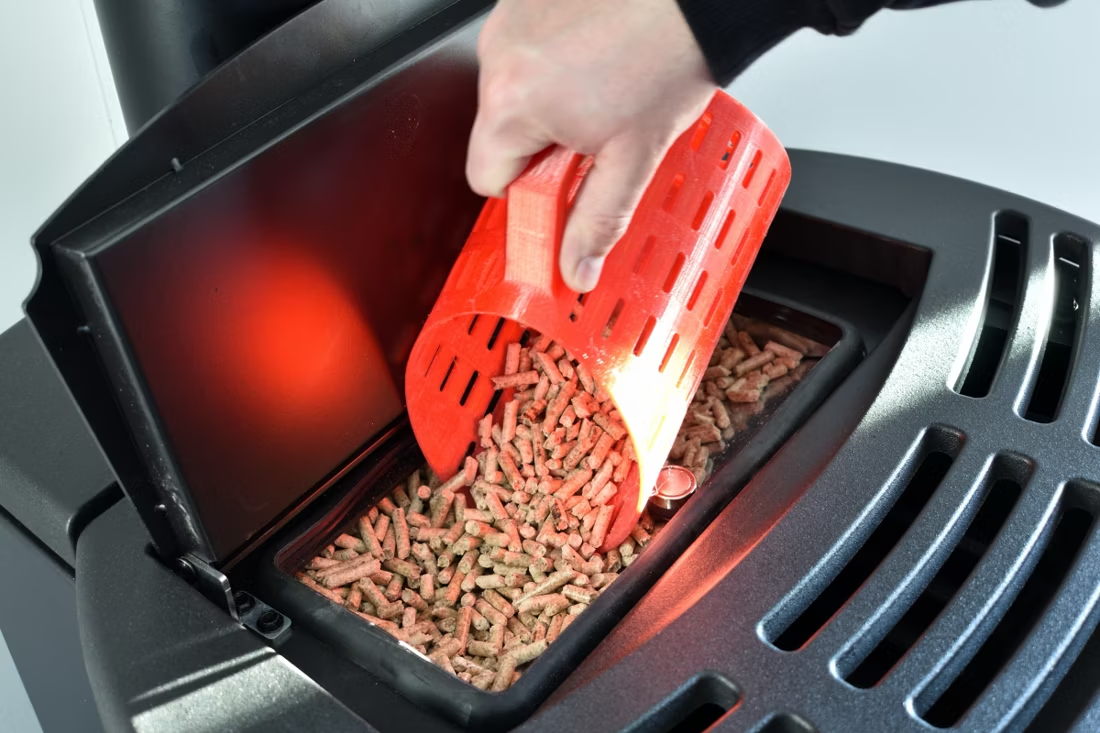
That's part of why pellet stoves have found a steady following across Putnam County's rural households—from Ottawa and Kalida out to Glandorf, Fort Jennings, and Continental. A pellet stove loads from a hopper, runs on a thermostat, and doesn't demand the daily tending that a wood stove does, which matters on a working farm where nobody has time to babysit a fire. Regional suppliers like Indeck Energy Services, Lignetics, and Somerset Pellet Fuel keep pellets moving through the area, and feed stores and farm co-ops common to this part of Ohio often carry bagged pellets alongside livestock feed and fencing supplies.
Three steps. No salesperson until you're ready.
Tell us about your project
Your zip code, your situation, and the fuel you're leaning toward—or let the answers point you to one.
See what's actually available
The brands dealers within 100 miles genuinely carry—real options, never a catalog mirage.
Get your dealer & Project Guide
A trusted local dealer, plus the free Project Guide & Parts List that names every component of the job.
Frequently Asked Questions
How much does a pellet stove installation cost in Putnam County?
A pellet stove installation in Putnam County typically runs $3,000 to $6,000 depending on the unit, whether you're venting through an existing chimney or a fresh wall penetration, and whether a hearth pad is needed for code clearance. Because pellet stoves vent horizontally through a wall in most cases—unlike wood stoves, which usually need a full chimney run—installation costs tend to land toward the lower end of that range for homes without an existing masonry fireplace. You'll also want a dedicated electrical outlet nearby, since the hopper auger, igniter, and blower all run on standard household power. Local dealers will quote a firm number after seeing your home.
What size pellet stove do I need for a Putnam County farmhouse?
Sizing comes down to square footage, ceiling height, and how well-insulated the home is—a common variable in Putnam County's mix of older farmhouses and newer construction. As a rough guide for this climate zone: small units (up to 1,000 sq ft) suit a single room or add-on, medium units (1,000–2,000 sq ft) cover most main living areas, and large units (2,000+ sq ft) can carry a whole modest farmhouse as primary heat. Older farmhouses around Kalida, Vaughnsville, and Miller City with less insulation and higher ceilings usually need to size up a notch compared to a tightly built newer home in Ottawa or Columbus Grove at the same square footage. A local dealer will walk through your home and size it properly rather than guessing off a chart.
Where can I buy pellets locally in Putnam County?
Pellets are available through regional suppliers including Indeck Energy Services, Lignetics, and Somerset Pellet Fuel, and many farm co-ops and feed stores throughout Putnam County stock bagged pellets alongside their usual agricultural inventory—a convenience of living in farm country where those stores are already part of the local supply chain. Pricing in this part of Ohio typically runs in the $220–$280 per ton range for premium hardwood pellets, though it fluctuates with hardwood pellet demand each fall. Buying a season's supply early, before the first cold snap, usually means better selection and avoids the scramble that happens once temperatures drop into the teens.
Do I need a permit to install a pellet stove in Putnam County?
Most pellet stove installations require a building permit through the Putnam County Building Department, and because the unit needs a dedicated electrical circuit, an electrical permit is often part of the job too. Wall-vent installations are generally simpler to permit than full chimney work since there's less structural change involved. Most local dealers handle the permitting and inspection scheduling as part of the install, so you're not left coordinating trades yourself.
Will my pellet stove work if the power goes out?
Not on its own—pellet stoves depend on electricity to run the hopper auger, igniter, and combustion blower, so a power outage shuts the unit down. That's a real consideration in rural Putnam County, where ice storms and downed lines during winter can knock out power for hours or longer. Some homeowners pair a pellet stove with a battery backup unit or a small generator sized to keep the stove running through an outage. If uninterrupted heat during outages is the top priority, a wood stove burning locally available oak or hickory is worth comparing, since it needs no power at all.
What's the best pellet stove for northwest Ohio's climate?
For a climate with long, cold winters and stretches of high-teens overnight lows, look for a pellet stove with a large hopper capacity—40 to 60 pounds—so it can run through a cold overnight without needing a refill. Higher-BTU units in the 40,000–50,000 range are common choices for Putnam County's larger farmhouses, while smaller 25,000–35,000 BTU units suit additions or well-insulated newer homes. Ask a local dealer about auger reliability and parts availability specifically, since a stove that's easy to service locally matters more over a 15-year lifespan than a slightly higher efficiency rating.
How often does a pellet stove need to be cleaned and serviced?
Pellet stoves need the burn pot and ash pan cleaned every few days to weekly during regular use, and a full professional service—including venting, auger, and blower inspection—once a year, typically before the fall heating season starts. This is far less involved than sweeping a wood chimney, but skipping the annual service is still the most common cause of ignition failures and auger jams. Local hearth dealers who sell pellet stoves in Putnam County generally offer this service directly, which is worth scheduling before the first cold nights of the season arrive.
What's the difference between a pellet stove and a pellet insert?
A pellet stove is a freestanding unit that sits on a hearth pad and vents through a wall or existing chimney—it can go almost anywhere with the right clearances, which makes it a common fit for Putnam County homes without an existing fireplace. A pellet insert is built to slide into an existing masonry fireplace opening, converting an old wood-burning fireplace into an automated, thermostat-controlled heat source while reusing the chimney you already have. For older homes around Ottawa or Leipsic with an existing fireplace that rarely gets used, an insert is often the more practical upgrade.
Pellet vs. wood—which makes more sense for a Putnam County home?
Wood—split from local oak, hickory, maple, or cherry, all common on farm woodlots throughout the county—costs less per BTU if you're cutting or buying it locally, works without electricity, and is the more resilient choice during winter power outages. Pellets cost more per ton but require far less daily effort: load the hopper, set the thermostat, and walk away, with a cleaner burn and less ash to manage. For a working farm household short on time, pellet often wins on convenience. For a household prioritizing backup heat during Putnam County's occasional ice-storm outages, wood remains the more dependable option. Plenty of local homes end up running both.
What's the difference between an insert and a zero-clearance fireplace?
An insert is a fireplace that slides into a pre-existing wood-burning fireplace—if you don't have one, there's nothing to insert it into. A zero-clearance fireplace is built into a framed wall, which makes it the answer for remodels and new construction. Simple test: existing masonry fireplace means insert; blank or framed wall means zero-clearance.
Why is my open fireplace making my house colder?
Open fireplaces suck—literally. As the fire burns, it consumes air your furnace already paid to heat and pulls it out through the chimney, so the house is actually colder after the fire goes out than before you lit it. An insert fixes this: it seals the chimney, puts fixed glass across the front, and turns that hole in your house into a real heat source.
Can I install a fireplace myself?
If you're putting a fire in your house on purpose, it's best to work with an expert. Unless you're genuinely experienced in framing, gas line, vent pipe, and the national code on clearances to combustibles, have a professional do it—and ideally the same company that sells you the fireplace, so warranty, service, and liability all live under one roof.
Does a fireplace add value to my home?
On average, a fireplace adds back to the home about the same amount you spent installing it. Add the monthly savings from heating the rooms you actually use instead of the whole house—often hundreds of dollars a year—and the value case is strong before you even count what a fire does for how your family uses the room.
Stove and Fireplace Dealers in Putnam County
Pellet Brands Stocked Around Putnam County
Manufacturers will point you to the nearest stocking dealer.
Find your pellet stove in Putnam County.
Tell us about your home and we'll match you with a trusted local dealer and send over a free Project Guide & Parts List—the exact stove, vent kit, and installation plan for your Putnam County pellet project.
Find Your Fireplace →