
The easiest fireplace upgrade in Pike County, Ohio homes.
No chimney, no gas line, no venting—just a fireplace that plugs in or wires into a dedicated circuit and works the same day, from Waverly to Piketon to the farmhouses along the Scioto River valley.
Every Project Starts From One of These Five Situations
No chimney? No problem in Pike County.
Pike County is small and rural—about 7,165 people spread across Waverly, Piketon, Beaver, and the farms and hollows along the Scioto River. Winters here sit in Climate Zone 4A with roughly 5,089 heating degree days and average lows around 22°F—a real Ohio Valley winter, but nowhere near the demand of a place like Duluth, Minnesota, which racks up closer to 10,000 HDD. That matters because it means most Pike County homes don't need a fireplace to carry the whole heating load—they need something that takes the edge off a cold snap, adds heat to one room, and doesn't require tearing into a wall.
That's exactly what electric fireplaces are built for. A large share of housing in Pike County is manufactured or older site-built farmhouses without an existing masonry chimney, and electric units sidestep that problem entirely—no flue, no clearance-to-combustibles headaches, no gas line from a propane supplier. Power comes through South Central Power Company's rural cooperative lines across most of the county, with AEP Ohio serving parts of the Waverly area—either way, a plug-in unit or a hardwired insert draws on infrastructure that's already there. No air quality restrictions apply to electric heat in Pike County, so the appeal here is pure convenience: flip a switch, get heat and ambiance, done.
Three steps. No salesperson until you're ready.
Tell us about your project
Your zip code, your situation, and the fuel you're leaning toward—or let the answers point you to one.
See what's actually available
The brands dealers within 100 miles genuinely carry—real options, never a catalog mirage.
Get your dealer & Project Guide
A trusted local dealer, plus the free Project Guide & Parts List that names every component of the job.
Frequently Asked Questions
How much does an electric fireplace cost to install in Pike County?
Plug-in electric fireplaces—freestanding stoves, mantel packages, or log-set inserts that use a standard 120V outlet—typically run $150 to $600 for the unit itself, with no installation labor required beyond mounting. Built-in wall units or larger inserts that need a dedicated 20-amp circuit run higher, generally $1,500 to $3,500 installed once you factor in an electrician to run new wiring, especially in older Pike County farmhouses where panel capacity can be tight. Manufactured homes usually fall on the lower end since most units can be trimmed to fit existing wall openings without structural work.
Do I need a permit for an electric fireplace in Pike County?
A simple plug-in unit that uses an existing outlet doesn't require a permit. If you're adding a built-in insert or wall unit that needs new wiring or a dedicated circuit, that electrical work generally does need a permit and should be pulled by a licensed electrician—Pike County doesn't run its own full residential building department for one- and two-family homes, so electrical permitting typically routes through a state-certified official under Ohio's Board of Building Standards program. Any electrician doing the work locally will know the correct process.
Can an electric fireplace actually heat a room in Pike County's winters?
Yes, for supplemental heat—most electric fireplaces put out around 5,000 BTU, which is enough to noticeably warm a single room (a living room, a bedroom over an unheated crawlspace, a converted porch) during the average 22°F lows Pike County sees most winters. It won't replace a furnace on the coldest nights, but it's a real way to turn down the thermostat and heat only the room you're using, which is a common strategy in older, harder-to-insulate farmhouses around Waverly and Beaver.
Are electric fireplaces a good fit for manufactured homes in Pike County?
Very much so, and it's one of the most common installs in this part of the county. Manufactured and mobile homes generally can't accommodate a masonry chimney or gas line venting without significant modification, and insurance carriers can be picky about wood stoves in these homes. Electric units avoid all of that—no venting, no clearance issues with the thinner wall construction typical of manufactured housing, and no open flame. A plug-in unit or a slim wall-mounted model handles the ambiance and supplemental warmth without touching the home's structure.
Should I get an electric fireplace as my primary heat source?
No—with 5,089 heating degree days and a winter that regularly dips into the teens overnight, Pike County needs a real primary heating system (furnace, heat pump, or wood stove) to carry a whole home through winter. Electric fireplaces are best treated as zone heat: warming the room you're in so you can ease off the central system, or providing backup ambiance in a room that's otherwise cold. Homeowners looking for a true primary heat source should look at wood stoves—oak, hickory, and maple are all common locally—or a heat pump upgrade instead.
What's the difference between an electric fireplace, insert, and stove?
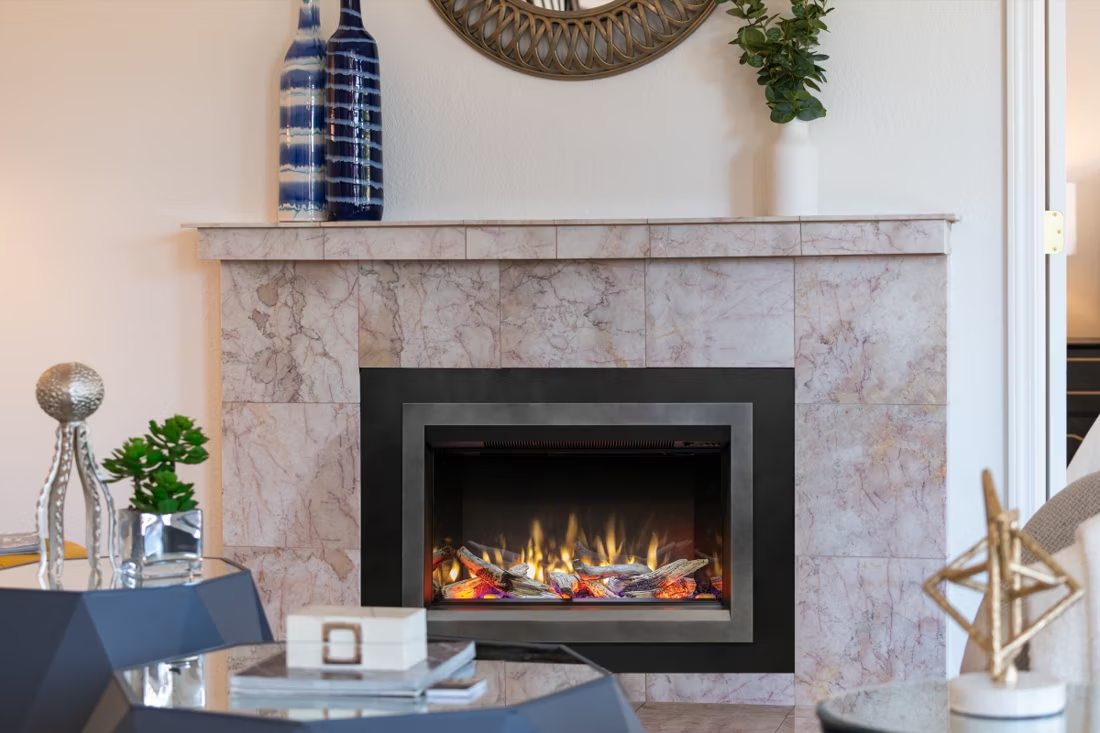
An electric fireplace is usually a built-in or wall-mount unit designed to look like a traditional fireplace, often with a mantel surround. An electric insert is sized to slide into an existing masonry fireplace opening, giving an old unused hearth a heat source and flame effect without touching the chimney. An electric stove is a freestanding cabinet-style unit that sits on the floor like a wood stove but plugs in—a popular option in Pike County homes that want the look of a stove without cutting a hole for venting. All three run on standard household power and none require a flue.
What will an electric fireplace cost to run in Pike County?
Most electric fireplaces draw around 1,500 watts on the heater setting, which works out to roughly 15 cents per hour of heating at typical South Central Power Company or AEP Ohio residential rates—call it $3 to $5 for an evening of use with the heater running. Running the flame effect alone with the heater off draws only a few watts, so leaving it on for ambiance costs next to nothing. That operating cost is one of the reasons electric fireplaces are popular for supplemental use rather than running the furnace harder across a whole house.
Wood vs. electric—which makes more sense for my Pike County home?
Wood has deep roots in this part of Ohio—oak, hickory, maple, and cherry are all common locally and burn well, and a wood stove can genuinely carry a home through winter, including during power outages. Electric can't do that; it needs the grid running. But electric wins on convenience and low-maintenance living: no cutting, stacking, or ash cleanup, no chimney to sweep, and no permit hurdles for a plug-in unit. Many Pike County households end up using both—wood in a main living space where a chimney already exists, electric in bedrooms, additions, or manufactured homes where venting isn't practical.
Where can I get an electric fireplace installed in Pike County?
For a plug-in unit, most retailers that carry electric fireplaces can also handle placement and mounting. For a built-in unit needing new wiring, you'll want a licensed electrician alongside whoever supplies the fireplace—coordinating those two matters more than it sounds, since the wrong circuit sizing is the most common mistake on built-in installs. Find My Fireplace matches Pike County homeowners with a trusted local dealer who knows what's actually installable in older farmhouses and manufactured homes around Waverly, Piketon, and Beaver, and hands over a free Project Guide & Parts List so you're not guessing at the electrical requirements yourself.
Can I put a TV above my fireplace?
Yes—with an asterisk. Fireplaces are hot and TVs don't like heat. Either put a mantel between them to deflect rising warmth, or choose a fireplace with heat-management technology that creates a cool zone on the wall above—the wall stays around 125 degrees, barely warm, while the room still gets full heat. If you like clean lines and don't want a mantel, heat management is the answer.
Do electric fireplaces actually produce heat?
Yes—most put out around 4,800–5,000 BTUs from a standard outlet, which comfortably warms a bedroom, office, or den as a comfort-zone heater. What they won't do is carry a whole house the way wood, gas, or pellet can. Think of electric as ambiance-first with honest supplemental heat: flames on with no heat in July, flames plus warmth in January.
Can I install a fireplace myself?
If you're putting a fire in your house on purpose, it's best to work with an expert. Unless you're genuinely experienced in framing, gas line, vent pipe, and the national code on clearances to combustibles, have a professional do it—and ideally the same company that sells you the fireplace, so warranty, service, and liability all live under one roof.
Can a fireplace actually lower my heating bill?
Yes—by creating a comfort zone. A furnace heats every square foot of the house just to warm the one room you're in; a gas fireplace on low burns roughly a sixth of the gas a typical furnace does. Set the furnace around 55–60 degrees as a baseline, then heat the rooms your family actually uses. Families who heat this way commonly save $20–$60 a month.
Stove and Fireplace Dealers in Pike County
Find your electric fireplace in Pike County.
Tell us a bit about your home and we'll match you with the right electric fireplace, insert, or stove—plus a free Project Guide & Parts List with the exact parts and a trusted local dealer to install it.
Find Your Fireplace →