
Find the Right Hearth for Your Pike County Home.
Wood, gas, pellet, and electric fireplace resources for every community in Pike County—from Waverly and Piketon out to Beaver, Latham, and Jasper. Find the right unit for your home and connect with a trusted local hearth retailer.
Every Project Starts From One of These Five Situations
Wood heat runs deep in Pike County's Appalachian hills.
Pike County sits in the Appalachian foothills of south-central Ohio, where the Scioto River cuts through steep, wooded ridgelines on its way toward the Ohio River. The county's roughly 440 square miles are covered in oak-hickory forest, with maple and cherry mixed in on the ridges—the same species that fill most Pike County woodsheds. Winters here are moderate by Midwest standards: average lows hover around 22°F, and the roughly 5,089 heating degree days put Pike County well shy of the sustained, brutal cold of places like Madison, Wisconsin or Burlington, Vermont. The heating season typically runs from late October through March, with cold snaps rather than months-long deep freezes driving most of the demand for backup and supplemental heat.
With just over 7,000 residents spread across a handful of small communities—Waverly (the county seat), Piketon, Beaver, Latham, and Jasper—Pike County doesn't support a large hearth retail network on its own. This hub pulls together the dealers, chimney sweeps, gas techs, and fuel suppliers who actually serve Pike County households, including those based in nearby Chillicothe and Portsmouth who make regular runs out this way. Pick your fuel below to see local dealers, typical installation costs, and the resources that fit your project—whether that's a wood stove for a farmhouse outside Waverly or a gas insert for a home near Piketon.
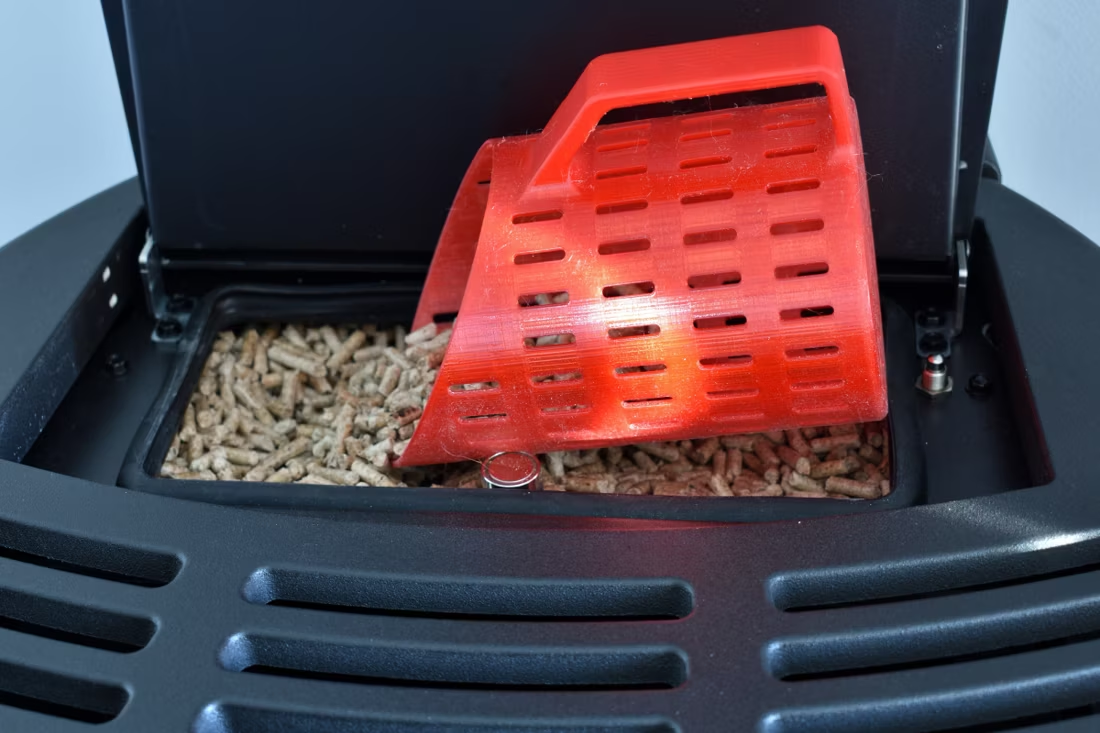
Four fuels. One honest answer for Pike County.
Three steps. No salesperson until you're ready.
Tell us about your project
Your zip code, your situation, and the fuel you're leaning toward—or let the answers point you to one.
See what's actually available
The brands dealers within 100 miles genuinely carry—real options, never a catalog mirage.
Get your dealer & Project Guide
A trusted local dealer, plus the free Project Guide & Parts List that names every component of the job.
Frequently Asked Questions
Which fuel works best in Pike County?
It depends on your home and how you use it. Wood remains a strong choice in Pike County—the oak, hickory, maple, and cherry that fill local woodlots burn long and hot, and plenty of households here still heat primarily with a wood stove or insert, especially outside Waverly and Piketon where lots are large enough to manage a woodpile. Gas is the convenience option, best suited to homes with existing propane service or, where available, natural gas hookups—instant heat without any wood-splitting. Pellet stoves split the difference: wood-like heat without the daily wood-hauling, and regional pellet supply from brands like Indeck Energy Services and Lignetics keeps fuel accessible. Electric fireplaces work well as supplemental heat in bedrooms or additions, but with average winter lows around 22°F and a real heating season running October through March, most Pike County homes lean on wood, gas, or pellet as the primary source and treat electric as a secondary comfort feature.
Do I need a permit to install a fireplace in Pike County?
In most cases, yes. New wood stoves, wood inserts, gas fireplaces, gas inserts, and pellet stoves typically require a building permit through the Pike County Building Department, and any gas line work needs a licensed gas-fitter and a separate gas permit. Wood-burning appliances installed today need to meet current EPA emissions standards—this matters most if you're replacing an older, uncertified stove inherited with a farmhouse. Electric fireplaces are usually permit-free unless you're doing a built-in installation with new wiring or a dedicated circuit. Most local retailers who install in Pike County—including those based in Chillicothe or Portsmouth—handle the permitting process for you as part of the job, so it's worth asking upfront rather than pulling the permit yourself.
Are there air quality restrictions on wood burning in Pike County?
No—Pike County doesn't have the kind of winter inversion or non-attainment issues that trigger burn advisories in some western basins. There's no local ordinance restricting wood stove use for home heating. That said, new wood-burning installations still need to meet EPA 2020 NSPS certification standards, and if you're clearing land or burning brush outdoors, Ohio EPA open-burning rules still apply—those are separate from indoor heating appliances. For day-to-day wood heat in a stove or insert, Pike County residents can burn without the curtailment periods you'd see in more air-quality-sensitive parts of the country.
Can one local hearth retailer handle all four fuel types?
Some can, but with a county population under 7,500, Pike County doesn't support a dense retail market of its own. Many households end up working with a multi-fuel dealer based in Chillicothe or Portsmouth—both a reasonable drive from Waverly—who can show working displays of wood, gas, pellet, and electric units side by side. If you're near Piketon or Beaver, it's worth checking a retailer's service radius before assuming they cover your address; most quote a 30-40 mile range. If you already know your fuel—say you've decided on a pellet stove—a specialist a bit further away may still beat a generalist closer to home on price and expertise.
How does service work in rural parts of Pike County?
Most chimney sweeps and gas techs who cover Pike County are based outside the county—commonly in Chillicothe or Portsmouth—and build routes that swing through Waverly, Piketon, Beaver, Latham, and Jasper on set days rather than on-demand. Expect to schedule annual service (chimney sweeping, gas appliance inspection, pellet stove cleaning) a few weeks ahead, especially in the fall before the October-to-March heating season ramps up. Rural service calls sometimes carry a modest travel fee. If you're on a gravel road or a less-visible rural address, a clear description of your driveway and any seasonal access issues helps technicians plan the visit.
What's the typical cost range for fireplace installation across all fuel types in Pike County?
Costs vary by fuel and by how much venting or gas line work is involved. Wood stove or insert installation: roughly $4,000–$8,500 for a typical retrofit, more if a new chimney liner or masonry work is needed. Gas fireplace, insert, or stove: roughly $4,000–$9,500, with propane conversions generally landing on the lower end if a tank and line are already in place. Pellet stove or insert: roughly $4,000–$7,000 for most installs. Electric fireplace: $200–$2,500 for the unit itself, plus $300–$1,000 in labor for anything beyond a simple plug-in unit, such as a wall-mount or built-in requiring new electrical work. See the county + fuel pages above for retailer-specific pricing.
Wood, gas, pellet, or electric—how do I choose?
Match the fuel to your life, not the other way around. Wood: lowest fuel cost and total power-outage independence, but you're hauling and stacking. Gas: press a button, set a thermostat, no maintenance to speak of. Pellet: wood economics with automatic feeding, in exchange for weekly cleaning and a need for electricity. Electric: plugs in anywhere with honest supplemental heat. Nobody regrets the fuel that fits how they actually live.
What is an in-home preview and do I need one?
It's a visit where a hearth professional measures your space, confirms the model you picked actually works in your home, and walks the specs—framing, gas line, venting, finish work—before anything is ordered. Some details you just can't know until you see the house. Never make a down payment without one; it's the single most-skipped step that burns buyers.
Can a fireplace actually lower my heating bill?
Yes—by creating a comfort zone. A furnace heats every square foot of the house just to warm the one room you're in; a gas fireplace on low burns roughly a sixth of the gas a typical furnace does. Set the furnace around 55–60 degrees as a baseline, then heat the rooms your family actually uses. Families who heat this way commonly save $20–$60 a month.
Should the dealer who sells my fireplace also install it?
Ideally, yes. A fireplace project involves vent pipe, gas line, electrical, and often tile or stone. Hire three or four separate trades and you own the liability and the game of telephone between them. One company selling and installing means one accountable party, start to finish—ask about factory training, on-time completion records, and what happens if an inspection fails.
Stove and Fireplace Dealers in Pike County
Listings include WhyFire partner dealers, dealers we have verified as authorized for the brands we recommend, and established local businesses that carry hearth products. Every listing shows which one it is. The ones marked Preferred run on WhyFire's software, so they can show you real pricing and book your appointment right here. No manufacturer pays for placement. How we verify dealers →
Suburban Propane Company
Allen Miller Fireplaces
Martin's Hearth And Home
Four Mile Bakery & Fireplace Store
Find your fireplace match in Pike County.
Pick your fuel below, and we'll match you with a trusted local dealer and send a free Project Guide & Parts List—the exact parts, vent kit included, and the dealer we recommend for your Pike County home.
Find Your Fireplace →