
Reliable pellet heat for Pickaway County's long Ohio winters.
From Circleville to Ashville and South Bloomfield, Pickaway County's flat Scioto River farmland sees a solid winter heating season most years. A pellet stove or insert gives farmhouses and newer subdivisions alike a clean, thermostat-controlled heat source. Find the right unit and connect with a vetted local dealer.
Every Project Starts From One of These Five Situations
Efficient heat for Pickaway County's farm country winters.
Pickaway County sits in the Scioto River valley south of Columbus, home to roughly 28,700 people spread across Circleville and smaller communities like Ashville, South Bloomfield, Commercial Point, and Darbyville. The climate here is Zone 5A, with average winter lows around 23°F and a solid winter heating season—not the brutal severity of Fargo ND or Duluth MN, but enough sustained cold from November through March that heating costs are a real line item for most households, especially in older farmhouses with drafty additions.
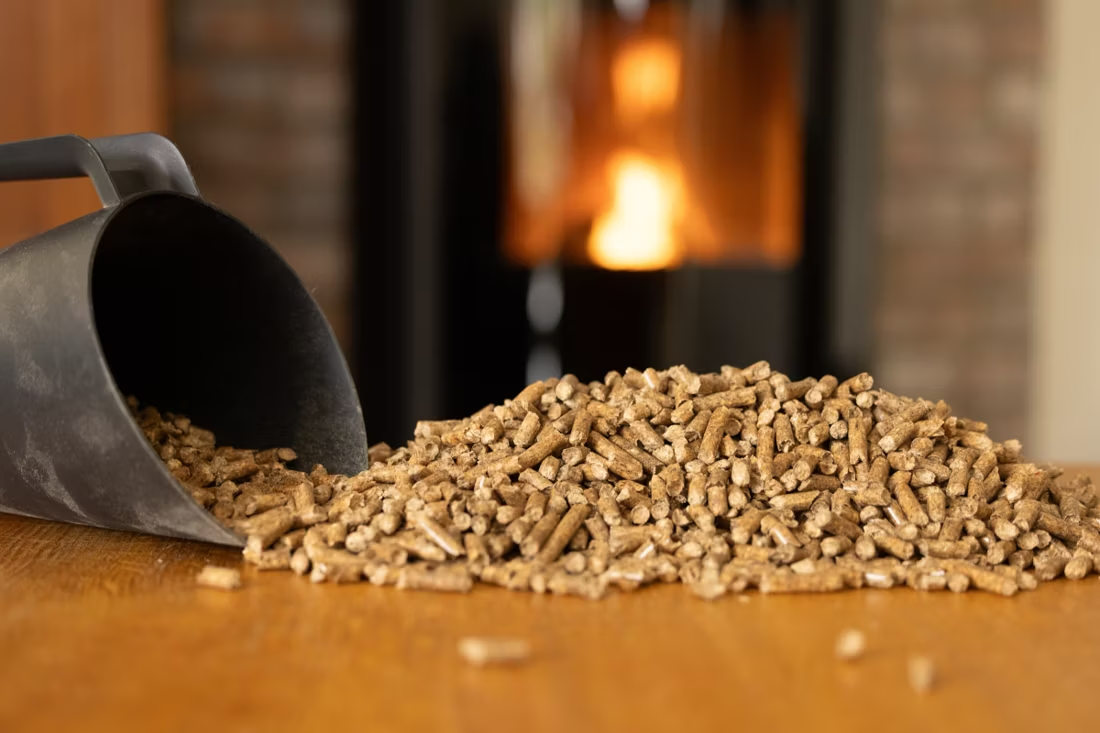
Unlike parts of the country dealing with wood smoke non-attainment issues, Pickaway County has no air quality restrictions on solid-fuel appliances, so pellet stoves run without curtailment concerns. Regional pellet supply is solid too—brands including Indeck Energy Services, Lignetics, and Somerset Pellet Fuel are commonly stocked by dealers serving central Ohio, meaning fuel availability isn't a seasonal gamble the way it can be in more remote regions. For homeowners already burning oak, hickory, maple, or cherry in a traditional wood stove, a pellet unit offers a similar radiant feel with automated hopper feeding, a thermostat, and none of the splitting and stacking.
Three steps. No salesperson until you're ready.
Tell us about your project
Your zip code, your situation, and the fuel you're leaning toward—or let the answers point you to one.
See what's actually available
The brands dealers within 100 miles genuinely carry—real options, never a catalog mirage.
Get your dealer & Project Guide
A trusted local dealer, plus the free Project Guide & Parts List that names every component of the job.
Frequently Asked Questions
How much does a pellet stove installation cost in Pickaway County?
Most pellet stove installations in Pickaway County run in the $3,000 to $6,000 range, depending on the unit, whether venting can run through an existing wall or chimney, and whether electrical work is needed for the hopper motor and blower. A pellet insert going into an existing masonry fireplace with an accessible flue tends to land on the lower end. New construction or installations requiring a fresh through-wall vent run and a dedicated electrical circuit push toward the higher end. A local dealer will give a firm number after seeing your home in person.
What size pellet stove do I need for my Pickaway County home?
Sizing depends on square footage, ceiling height, and how leaky or tight the home is—an important detail for the county's older farmhouses versus newer builds around South Bloomfield and Commercial Point. As a rough guide, smaller units (under 1,000 sq ft) work for a single room or an add-on, mid-size stoves (1,000 to 2,000 sq ft) cover most main living areas, and larger units handle open floor plans or whole-home heating in better-insulated homes. Given average winter lows around 23°F, undersizing means the stove runs on high constantly and burns through pellets fast; a local dealer can size it correctly during an in-home visit.
Where can I find pellet stove dealers near me in Pickaway County?
Look for hearth dealers that carry recognized pellet stove brands and stock regional pellet fuel—several central Ohio retailers carry Indeck Energy Services, Lignetics, and Somerset Pellet Fuel products, which keeps fuel sourcing simple after installation. Trusted dealers cover Circleville and the surrounding townships, and most handle sizing, permitting, and venting as part of the install rather than leaving you to coordinate separate trades. Avoid big-box or handyman installs for pellet appliances—proper venting slope and clearance work directly affects both safety and how well the unit actually heats.
What's the difference between a pellet stove and a pellet insert?
A pellet stove is a freestanding unit that sits on the floor and vents through a wall or existing chimney—it can go almost anywhere with the right clearances, which makes it a common choice for garages, additions, or homes without a fireplace. A pellet insert is built to slide into an existing masonry fireplace opening, using the existing chimney chase (with a proper liner) as the vent path. For Pickaway County homes with an old, underperforming wood fireplace, an insert is often the more practical upgrade since it reuses what's already there while dramatically improving heat output and efficiency.
Do I need a permit to install a pellet stove in Pickaway County?
Yes—new pellet stove installations generally require a building permit through the Pickaway County Building Department, since the appliance involves venting through an exterior wall or roof and sometimes new electrical circuits. Most local dealers handle the permit paperwork as part of the installation, so it's rarely something homeowners have to manage themselves. Because Pickaway County has no wood smoke air quality restrictions, there's no curtailment schedule to worry about once the stove is installed and running.
What's the best pellet stove for Pickaway County's climate?
With winter lows averaging around 23°F and a solid winter heating season, Pickaway County homes generally do well with a mid-size pellet stove rated for whole-room or main-floor heating rather than an entry-level unit built for supplemental warmth. Look for a unit with a reliable auger feed system and a hopper large enough to run overnight without a refill—a meaningful convenience during a cold January stretch. Since Indeck Energy Services, Lignetics, and Somerset Pellet Fuel pellets are all commonly available regionally, most standard pellet stove models will run fine on local supply. A dealer can match specific BTU output to your home's square footage and insulation level.
How often does a pellet stove need cleaning and maintenance?
Pellet stoves need more frequent attention than gas but less than wood: the ash pan and burn pot should be cleaned every few days to weekly during regular use, the hopper and auger checked periodically for jams, and the venting system inspected at least once a year—ideally before the heating season starts in the fall. Heavy users running the stove as a primary heat source through Pickaway County's full November-to-March season may need a mid-winter deep clean of the exhaust fan and venting. Most local dealers offer an annual service visit that covers all of this.
Where can I buy pellets locally in Pickaway County?
Pellet fuel is generally easy to source in central Ohio—brands like Indeck Energy Services, Lignetics, and Somerset Pellet Fuel are commonly stocked at regional hearth and farm supply retailers, and many dealers who sell and install stoves also sell bagged pellets by the ton. Buying early in the fall, before the coldest stretch hits, is the usual strategy to avoid picked-over supply during a hard winter. Ask your installing dealer about ton pricing and whether they offer seasonal pre-buy discounts.
Pellet stove vs. wood stove—which is right for my Pickaway County home?
Wood stoves burn cordwood—oak, hickory, maple, and cherry are all common locally—work without electricity, and offer lower fuel costs if you're cutting or sourcing your own wood. Pellet stoves run on bagged pellets, require electricity for the auger and blower, but offer thermostat control, longer unattended burn times, and far less mess than splitting and stacking cordwood. Because Pickaway County has no wood smoke restrictions, both options burn freely here without curtailment concerns. For farmhouses with generator backup or reliable power, pellet is often the lower-hassle choice for daily heating; for homes prioritizing power-outage resilience, a wood stove still has the edge.
Why is my open fireplace making my house colder?
Open fireplaces suck—literally. As the fire burns, it consumes air your furnace already paid to heat and pulls it out through the chimney, so the house is actually colder after the fire goes out than before you lit it. An insert fixes this: it seals the chimney, puts fixed glass across the front, and turns that hole in your house into a real heat source.
How often does a pellet stove need cleaning?
A clean pellet stove is a happy pellet stove. Plan on cleaning the burn pot about once a week when you're burning regularly—ash and clinkers gum up the air holes just like a pellet barbecue. Most pellet stove problems trace back to skipped cleaning that nobody explained up front. Some designs make it easy with a trapdoor burn pot: pull a lever and the gunk drops into the ash pan.
What is an in-home preview and do I need one?
It's a visit where a hearth professional measures your space, confirms the model you picked actually works in your home, and walks the specs—framing, gas line, venting, finish work—before anything is ordered. Some details you just can't know until you see the house. Never make a down payment without one; it's the single most-skipped step that burns buyers.
Can I install a fireplace myself?
If you're putting a fire in your house on purpose, it's best to work with an expert. Unless you're genuinely experienced in framing, gas line, vent pipe, and the national code on clearances to combustibles, have a professional do it—and ideally the same company that sells you the fireplace, so warranty, service, and liability all live under one roof.
Stove and Fireplace Dealers in Pickaway County
Pellet Brands Stocked Around Pickaway County
Manufacturers will point you to the nearest stocking dealer.
Find your pellet stove in Pickaway County.
Tell us a bit about your home and we'll match you with a trusted local dealer and send over a free Project Guide & Parts List—a plan for your Pickaway County pellet stove project with the exact parts, including the vent kit, and our recommended local installer.
Find Your Fireplace →