
Keep Your Family Warm and Safe—No Matter What
Most Perry Heights homes heat with natural gas, but a wood stove still makes sense for backup heat, a hunting property, or the ambiance of a real fire. We'll connect you with a local dealer who can tell you straight whether it's a good fit for your house.
Every Project Starts From One of These Five Situations
Natural gas dominates heat here—wood plays a supporting role.
Perry Heights sits in Perry Township, just west of Canton, at a modest 1,084 feet in northeast Ohio's Stark County. Winters are genuinely cold—average lows around 20°F and a solidly long heating season—but this is a settled suburban community of small lots and established natural gas lines, not a rural area with woodlots and forest access. Most homes here run furnaces or gas fireplaces as their primary heat, and wood-burning appliances are the exception rather than the norm.
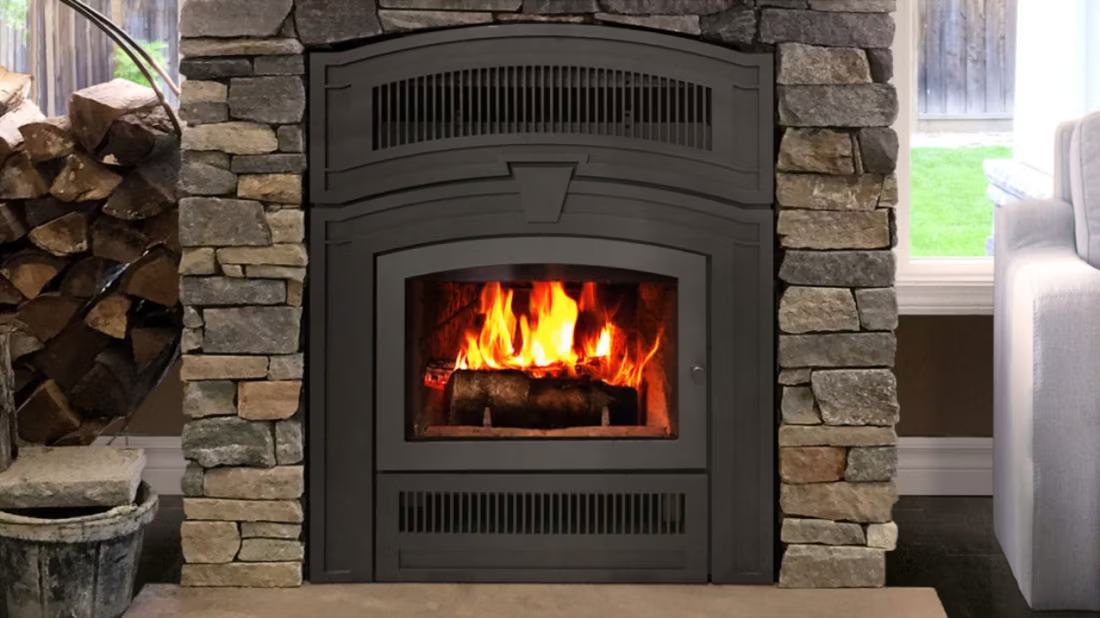
That doesn't mean wood heat is off the table. A number of Perry Heights and Stark County homeowners install a wood stove or insert as backup heat for winter power outages, as a secondary heat source in a den or finished basement, or simply for the atmosphere of a real fire. Local oak, hickory, maple, and cherry firewood is easy to source from tree services and firewood dealers around Canton and Massillon, even though there's no nearby national forest offering cheap self-cut permits the way there is out West. If wood heat interests you, a local dealer can walk you through whether your home and lot are a realistic fit before you spend anything.
Three steps. No salesperson until you're ready.
Tell us about your project
Your zip code, your situation, and the fuel you're leaning toward—or let the answers point you to one.
See what's actually available
The brands dealers within 100 miles genuinely carry—real options, never a catalog mirage.
Get your dealer & Project Guide
A trusted local dealer, plus the free Project Guide & Parts List that names every component of the job.
Frequently Asked Questions
How much does a wood stove installation cost in Perry Heights?
Because wood stoves are installed far less often here than gas furnaces or gas fireplaces, there isn't a large local sample to draw an exact average from. Based on typical northeast Ohio installations, expect somewhere in the $3,500 to $8,000 range for a freestanding stove with a new Class A chimney, with an insert into an existing masonry fireplace usually landing on the lower end. Homes without an existing chimney or hearth pad will sit toward the higher end once framing and roof penetration are added. A local dealer can give you a firm number after seeing your specific house.
Does wood heat actually make sense in Perry Heights, or is gas just better here?
Climate-wise, Perry Heights gets cold enough—20°F average winter lows and a solidly long heating season—that wood heat would work fine, similar to conditions in Madison, WI or Fargo, ND, just less extreme. The reason wood isn't common here has more to do with infrastructure than climate: natural gas lines already run to most homes, lots are small and close together, and there's no nearby public forest land offering cheap firewood permits the way rural Appalachian Ohio has. For most Perry Heights households, gas remains the more practical everyday choice. Wood tends to make the most sense as a supplemental or backup heat source rather than a whole-home primary system.
Do I need a permit to install a wood stove in Perry Heights?
Yes—new wood-burning appliance installations typically require a building permit through the Stark County Building Department, which covers Perry Township. Requirements generally include proper clearances to combustibles, a code-compliant hearth pad, and a Class A chimney system if you don't already have one. Because wood stove permits are less common here than gas or electric permits, it's worth confirming current requirements directly with the county before you buy—a reputable local installer will typically handle this paperwork as part of the job.
Where do Perry Heights homeowners get firewood?
There's no national forest or large public timberland near Perry Heights offering low-cost cutting permits, so most local wood comes from private firewood dealers and tree services around Canton, Massillon, and greater Stark County. Oak and hickory are the preferred species locally for their long, hot burn and slow-building creosote, while maple and cherry are common and burn well once properly seasoned. Expect to pay roughly $200 to $275 per cord for seasoned hardwood delivered locally—ask any supplier for wood that's been split and dried at least six to twelve months, since green wood is the most common cause of poor-burning, smoky fires.
Wood stove vs. wood insert—which fits a Perry Heights home better?
A wood insert slides into an existing masonry fireplace and uses your current chimney, which is often the simpler and cheaper path for the older homes found throughout Perry Heights and neighboring Canton neighborhoods. A freestanding wood stove can go almost anywhere with the right clearances but requires a full Class A chimney system if one doesn't already exist, which adds cost. If your home already has a working fireplace you rarely use, an insert is usually the more cost-effective way to turn it into a real heat source.
What size or type of wood stove works best for this climate?
Perry Heights winters are cold but not extreme compared to places like Duluth, MN or International Falls, MN, so most homes don't need the largest catalytic stoves built for round-the-clock, sub-zero burning. A mid-size non-catalytic stove from a brand like Pacific Energy or Lopi is typically enough to heat a living area or supplement a gas furnace during cold snaps and outages. Homeowners planning to rely on wood as a true primary heat source for a larger home should still look at a catalytic model for longer burn times overnight.
How often does a wood stove chimney need to be inspected in Perry Heights?
The Chimney Safety Institute of America recommends an annual inspection for any wood-burning appliance, and that holds true here even though usage tends to be lighter than in wood-dependent regions. If you're burning a few times a week through the winter for backup or supplemental heat, plan on a yearly sweep before the season starts, typically in early fall. Occasional or ambiance-only users should still get an annual check, since infrequent, cooler fires can actually build creosote faster than a hot, steady burn.
Are there wood-burning restrictions or air quality rules in Perry Heights?
No—Stark County and Perry Township don't carry the air quality non-attainment status or winter inversion issues that trigger burn curtailment programs in some western states. There are no local burn bans tied to wood smoke here. New installations still need to meet current EPA emissions standards for the stove itself, but you won't run into the kind of seasonal burning restrictions that homeowners in smog-prone valleys deal with.
Wood vs. gas—which should I actually install in Perry Heights?
For most Perry Heights homes, gas is the more practical primary choice—natural gas lines already reach most of the township, installation is generally simpler, and there's no wood handling, ash cleanup, or annual chimney sweep to budget for. Wood's advantage is that it keeps working when the power and gas both go out, and it gives you the option of cutting heating costs with self-sourced or locally purchased hardwood like oak and hickory. If you already have gas heat and are considering wood, think of it as backup and ambiance rather than a replacement—many homeowners here end up with gas as primary and a small wood stove or insert for storms and supplemental warmth in one room.
Why is my open fireplace making my house colder?
Open fireplaces suck—literally. As the fire burns, it consumes air your furnace already paid to heat and pulls it out through the chimney, so the house is actually colder after the fire goes out than before you lit it. An insert fixes this: it seals the chimney, puts fixed glass across the front, and turns that hole in your house into a real heat source.
Why won't my new wood stove get going like my old one?
New wood stoves are 70%+ efficient, so far less heat goes up the flue—which also means less draft to get a fire established. The rule: build a genuinely hot fire for about 45 minutes before you choke it down. Skip that and you get smoke in the room, creosote in the chimney, and a fire that never takes off. Most performance complaints trace straight back to this.
What is an in-home preview and do I need one?
It's a visit where a hearth professional measures your space, confirms the model you picked actually works in your home, and walks the specs—framing, gas line, venting, finish work—before anything is ordered. Some details you just can't know until you see the house. Never make a down payment without one; it's the single most-skipped step that burns buyers.
How much should I budget for a fireplace?
For an average home—covering the fireplace, the vent pipe, and basic installation—a budget between $3,900 and $5,500 gives you a lot of options across wood, gas, and pellet. By the time you add finish work, gas line, and electrical, the average complete installation lands between $5,000 and $12,000 all-in. In a remodel or new build, a good rule is to put about 2.5% of the total project cost toward the fireplace.
Nearby Dealers
Hearth shops serving Perry Heights and the surrounding area. Every listing shows whether it is a WhyFire partner, a dealer we have verified as authorized for the brands we recommend, or a local business carrying hearth products. No manufacturer pays for placement. How we verify dealers →
Custom Fireplace Shop
StarFire Distributors
Find your wood stove in Perry Heights.
Tell us about your home and how you'd use a wood stove, and we'll put together a free Project Guide & Parts List—including the right vent kit—and match you with a trusted local dealer who can tell you honestly whether wood makes sense for your house.
Find Your Fireplace →