
Instant Warmth for Any Room in Newark.
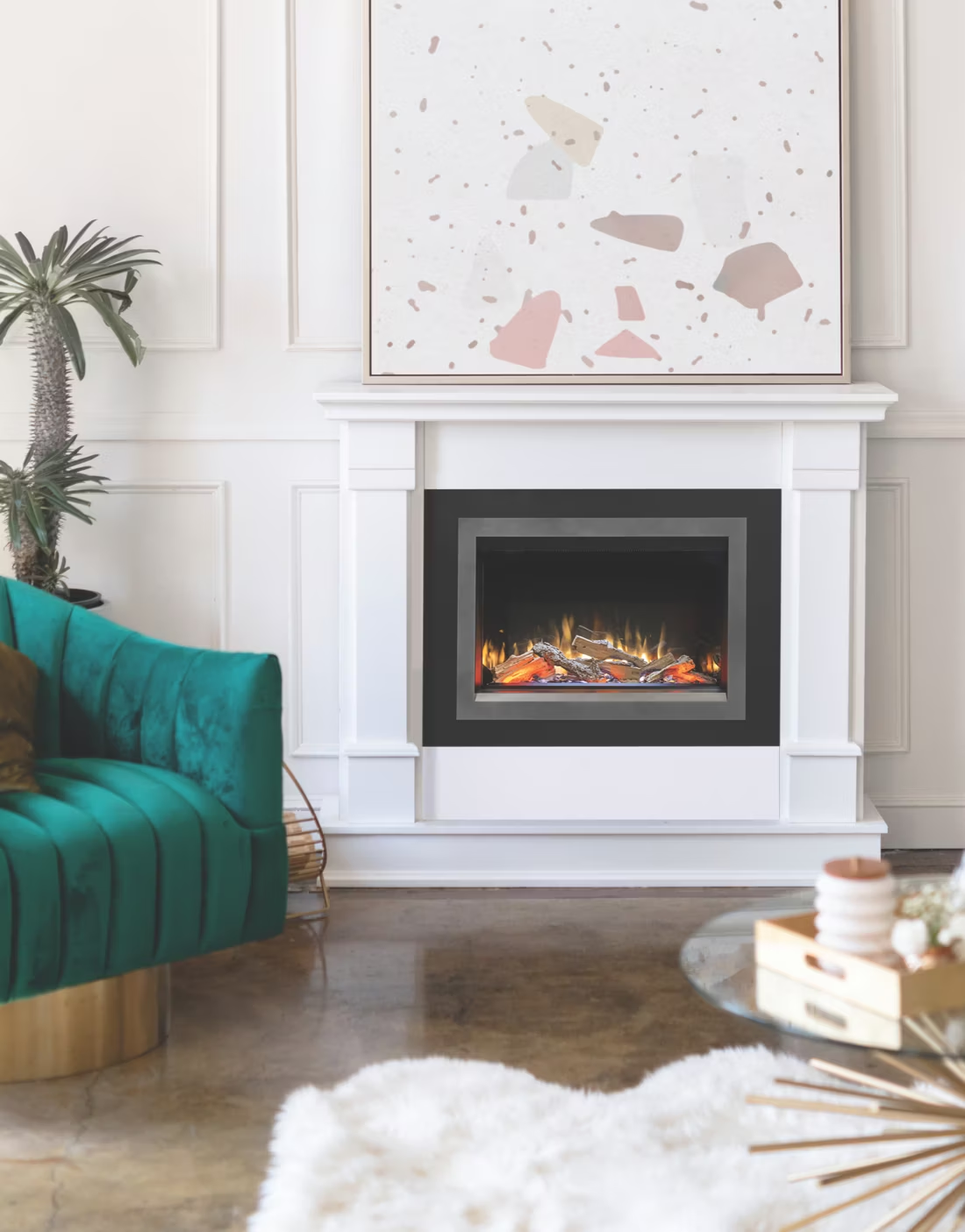
No chimney, no gas line, no venting—just plug in or hardwire and go. Find the right electric fireplace or insert for your Licking County home and get matched with a trusted local dealer.
Every Project Starts From One of These Five Situations
Heat without a gas line or a chimney to maintain.
Newark sits in a 5A climate zone with roughly 5,921 heating degree days and average winter lows around 18°F—a real Ohio winter, though nowhere near the extremes of Buffalo, NY or Minneapolis, MN. That moderate-but-genuine cold is exactly where electric fireplaces earn their keep: as zone heat in a finished basement rec room, a sunroom addition off an older Licking County farmhouse, or a bedroom in one of the century homes near the downtown square that was never ducted for central heat in the first place.","copy_context_p2
Electric is standard here precisely because it solves problems gas and wood can't touch without major renovation. A unit plugs into a standard outlet or ties into a dedicated 120V or 240V circuit, needs no combustion venting, and produces zero indoor emissions—an easy call for apartments and condos near the OSU Newark/COTC campus corridor, rentals, or any home where a chimney simply isn't in the plans. Ohio Power Co (AEP Ohio) serves Newark's residential accounts at roughly 14.35 cents per kWh, which keeps day-to-day running costs for a typical unit in the range of a few cents to about a quarter per hour of use.
Three steps. No salesperson until you're ready.
Tell us about your project
Your zip code, your situation, and the fuel you're leaning toward—or let the answers point you to one.
See what's actually available
The brands dealers within 100 miles genuinely carry—real options, never a catalog mirage.
Get your dealer & Project Guide
A trusted local dealer, plus the free Project Guide & Parts List that names every component of the job.
Frequently Asked Questions
How much does an electric fireplace installation cost in Newark?
Costs vary a lot by unit type. A freestanding or wall-mounted electric fireplace that plugs into an existing outlet can run as little as $300–$800 including the unit and basic mounting. A built-in electric insert or a linear wall unit that needs a dedicated 20-amp circuit run by a licensed electrician typically lands between $1,200 and $3,500 in the Newark area, depending on wall access and whether the electrician has to fish wire through plaster-and-lath walls common in the older homes around the downtown square. Local dealers will scope the wiring during an in-home visit before quoting a firm number.
Do electric fireplaces actually heat a room, or is it just for looks?
Most electric fireplaces sold today include a real heating element—typically a 1,500-watt resistance or infrared heater good for about 400 to 1,000 square feet, depending on the model and your home's insulation. That's enough to comfortably heat a finished basement, a converted garage, or a bedroom addition in Newark on all but the coldest nights of the year. On a sub-20°F night like the ones Licking County sees most winters, an electric unit works best as supplemental zone heat alongside your furnace rather than as the sole heat source for a whole house—a distinction your local dealer can walk you through based on your specific room.
Do I need a permit or an electrician to install an electric fireplace in Newark?
A plug-in unit that uses a standard existing outlet generally doesn't require a permit. A built-in or wall-mounted electric fireplace that needs a new dedicated circuit does require an electrical permit through the City of Newark or Licking County Building Department, and the wiring itself needs to be pulled by a licensed electrician—not a general handyman. Most local hearth and electrical dealers handle the permit paperwork as part of the installation, so you're not coordinating separate trades and inspections yourself.
What's the difference between an electric insert, an electric stove, and a built-in wall unit?
An electric insert is sized to slide into an existing masonry or wood-burning fireplace opening—a common upgrade for older Licking County homes with a fireplace that's no longer used for wood. An electric stove is a freestanding cabinet-style unit that mimics a wood stove's footprint and can go almost anywhere with an outlet nearby. A built-in or linear wall unit is designed to be framed into new construction or a remodel, similar to how you'd install a flat-screen TV recess. For a home with an existing fireplace opening, an insert is usually the simplest retrofit; for a room with no fireplace at all, a wall unit or freestanding stove is the better fit.
What will it cost to run an electric fireplace in Newark?
Ohio Power Co (AEP Ohio) bills residential customers in Newark at roughly $0.1435 per kWh. A typical 1,500-watt electric fireplace running on its heat setting costs about 21 cents an hour to operate, or a little over $5 for a full 24 hours of continuous use. Most owners run the heater intermittently—a few hours in the evening—and use the flame-only ambiance mode the rest of the time, which draws only a few watts. That makes electric one of the cheaper supplemental heat sources to operate compared to running a whole-house furnace harder to warm just one room.
Is electric a good fit for the older homes near downtown Newark?
Yes—it's often the most practical option. A lot of the housing stock around the Licking County Courthouse square and the historic district predates central forced-air heat, and running new gas lines or masonry chimney work into those walls can get expensive fast. An electric insert dropped into an existing but unused fireplace opening, or a wall-mounted unit on a dedicated circuit, sidesteps that entirely. It's also the go-to choice for the apartments and rental units clustered near the OSU Newark/COTC campus, where landlords want supplemental heat without venting modifications.
Electric vs. gas—which is right for my Newark home?
Gas fireplaces put out more real heat per unit and can run during a power outage with the right ignition system, which matters when Licking County gets an ice storm and the lights go out. Electric units cost far less to install, need no gas line or venting, and can go in rooms a gas line will never reach—an upstairs bedroom, a basement corner, a rental unit. If you already have gas service to the house and want a primary heat source for a main living area, gas is usually the stronger choice. If you want simple, affordable zone heat in a specific room without construction, electric wins. Some Newark homeowners do both: gas in the main living space, electric in a bedroom or den.
Will an electric fireplace work during a power outage?
No—and this is worth being direct about. Electric fireplaces require power to run both the heating element and any flame-effect display, so they shut off the moment your power does. If backup heat during Licking County's occasional winter ice storms and outages is a priority, a vented gas fireplace with battery-backup ignition is the better choice for at least one room in the house. Electric fireplaces are best understood as everyday convenience heat and ambiance, not an emergency heat source.
Where can I find a trusted electric fireplace dealer near Newark?
Find My Fireplace isn't a retailer—we don't sell or ship units. We match Newark homeowners with a trusted local dealer who knows what actually fits your wall, your circuit capacity, and Licking County's permitting requirements, then hand you a free Project Guide & Parts List so you walk into that conversation informed instead of guessing at a big-box store.
Can I put a TV above my fireplace?
Yes—with an asterisk. Fireplaces are hot and TVs don't like heat. Either put a mantel between them to deflect rising warmth, or choose a fireplace with heat-management technology that creates a cool zone on the wall above—the wall stays around 125 degrees, barely warm, while the room still gets full heat. If you like clean lines and don't want a mantel, heat management is the answer.
Does an electric fireplace need a vent or chimney?
No—that's its superpower. An electric fireplace needs a wall and an outlet, period. No vent pipe, no gas line, no clearances to design around, which is why it works in bedrooms, offices, apartments, and walls where venting a gas or wood unit would be impractical or impossible. Installation is typically the simplest and least expensive of any fireplace type.
Can a fireplace actually lower my heating bill?
Yes—by creating a comfort zone. A furnace heats every square foot of the house just to warm the one room you're in; a gas fireplace on low burns roughly a sixth of the gas a typical furnace does. Set the furnace around 55–60 degrees as a baseline, then heat the rooms your family actually uses. Families who heat this way commonly save $20–$60 a month.
Does a fireplace add value to my home?
On average, a fireplace adds back to the home about the same amount you spent installing it. Add the monthly savings from heating the rooms you actually use instead of the whole house—often hundreds of dollars a year—and the value case is strong before you even count what a fire does for how your family uses the room.
Nearby Dealers
Hearth shops serving Newark and the surrounding area.
Electric Service in Newark
An electric fireplace's heater draws about 1,500 watts—pennies per hour at local rates.
Ohio Power Co
Find your electric fireplace in Newark.
Tell us about your room and we'll match you with a trusted local Newark dealer and send over a free Project Guide & Parts List—the exact unit, circuit needs, and installer recommendation for your space.
Find Your Fireplace →